A Cautionary Ethics Tale From Texas

A Good Samaritan Teddy could relate to

In Texas, a 62-year-old man pulled over on the highway to help a couple whose truck had run out of gas. While he was assisting, the Good Samaritan apparently objected to the demeaning way the 31-year-old husband was addressing his wife, and said so. The husband then attacked the older man…who drew his concealed gun and shot him in the shoulder.

<sigh> Continue reading

Comment of the Day: “Unethical Business Practices: Online Reputation Services”

For those offended by the fact that this is the second Comment of the Day, I can only note that I haven’t posted a COTD for a while, so they can consider this one as making up for say, September 9.

Tgt has some uncomfortable truths about the practicalities of taking principled stands, in the context of my discussing the dishonest and bullying tactics of so-called online reputation protection services without specifically naming any one company.

There are gradients of this dilemma, which I’m not sure the author sufficiently acknowledges. For example, in the recent Defense of Marriage Act controversy in which law firm King & Spalding arguably dumped an unpopular representation because of inappropriate but no less threatening warnings from its biggest client, there are core professional values involved: once a lawyer ( or firm) accepts a representation, he or she may not, consistent with professional norms, drop the new client because of fear that the representation will have unpleasant consequences. There is no ethical obligation, however, to engage in a protest or civil disobedience when one objects to an abuse of official power. There is an obligation to do something, and it is ethically legitimate to choose a course that addresses the wrong without causing unnecessary harm to oneself or others. One not  cowardly by not being foolhardy.

Unless I accept John Adams’ rather perverse conviction that the only way one knows one is doing the right thing is when he is certain that the consequences will be personally ruinous, I don’t agree that I have failed an ethical obligation by choosing to flag unethical conduct without specifically inciting a company whose business it is to intimidate websites.

Besides, as I noted in my response to this comment, I am not through with these guys. Not by a longshot. But here is tgt’s Comment of the Day to my opening volley: Continue reading

Ethics Dunces, and Crude Ones at That: Ben and Jerry

Stop, you're killing me...

Sorry. I’m ready to be jeered as a humorless prude.  Ice cream flavors should not be named after gross double entendre Saturday Night Live skits. Ben and Jerry’s new Schweddy Balls ice cream (‘sweaty BALLS,” get it?? HAR!)  is just one more step in coarsening the culture, and an unnecessary one.

The skit was a one-joke parody of earnest NPR cooking shows in which a character named Mr. Schweddy talked about his signature holiday confection, rum balls, or “Schweddy balls.” It was funny (hardly hilarious, though; anyone who thinks that is hilarious is 12); it also aired after midnight. Ben and Jerry’s ice cream is sold during the day, the joke is old, and the only point to naming the ice cream after the joke is to sneak something crude into plain view. Wow. What an accomplishment.

The ice cream name is no more or less tasteless, rude and juvenile than naming a New York bar “Buck Foston,” or a TV show called “$#*! My Father Says.” The slobs and foul-mouthed jerks among us won’t rest until everyone talks like sailors and ugliness is everywhere, and they will do it while being applauded by self-styled “liberals” who are really just old-fashioned boors.

It’s not a big deal, any more; the boors are getting their way, because not enough people are willing to endure the guaranteed “Oh, lighten up!” and “Get off your high horse!” sneers that will follow any objections. I hope those big belly laughs from  “Sweaty Balls” ice cream are worth it, I really do. As long as it makes you guys happy.

“Sweaty Balls” ice cream. You slay me.

“The Star Thrower” and Ethics

My response to the Ethics Alarms reader who pronounced my efforts here pointless and futile received many kind responses from commenters, several of who have pointed me to the story of the man who threw starfish into the sea. I had never read it or encountered it is any way. The fable is often simplified to represent the lesson that just because one person cannot “save all the starfish dying on all the beaches,” saving one by throwing it back into to the sea is still worth the effort, if only to the starfish that is saved. I am grateful for that analogy to what I do, but even more grateful for being alerted to the original  “The Star Thrower,” by anthropologist/philosopher/ writer Lauren Eiseley (1907-2007)

He had a lot more wisdom to convey  to us. You can read “The Star Thrower ” here.

Comment of the Day: “Flying the Confederate Flag…”

Blogger Edward Carney, who writes about the revelations of daily life (check out his blog here) put his finger on a central issue in the Confederate flag debate in his Comment of the Day.  Flying or displaying the provocative banner sends multiple messages simultaneously, and the individual responsible for the flag  is also responsible for the consequence of all of them. Claiming that one means no offense while knowing that one of the messages is unequivocally offensive is disingenuous,  naive, or willfully rude.

Here is the Comment of the Day on the post, “Flying the Confederate Flag..”:

“I’ll say this for those citizens and politicians who insist on flying the Confederate flag at local monuments and public events: at least they can make the argument that it represents history and a set of values that is still acceptable, even laudable, today. They can make that argument, however disingenuous it may be. The same cannot be said of everyone. Continue reading

Comment of the Day on “The Twins and the Amazing Hockey Shot: the Public Flunks Its Ethics Test…Badly”

Reader Jim Weaver came up with an especially deflating and insulting Comment of the Day by taking literally my lament, in the post about the twin winning, then being denied, a cash prize while masquerading as his brother, that I was disappointed that after almost a decade of my ethics commentary that the public was still ethically out to lunch.

His comment:

“Did you really think that this blog would make a difference in America’s ethics? Is that really why you write this thing? If so, then you should be depressed because you are sadly deluded. 99.99% of the country has never heard of you or read your blog.

“I thought you wrote it to get attention and to try to drum up business for your training company. Just exactly how many readers do you have anyway?” Continue reading

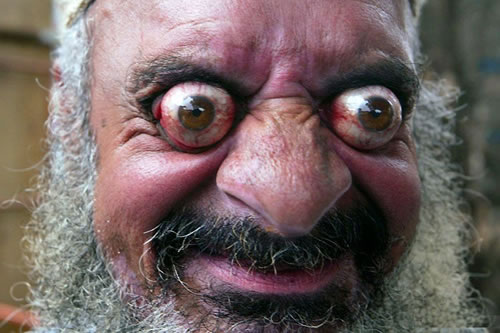
Ethics Train Wreck Warning: Affirmative Action for the Hideous

You won't need that portrait any more, Dorian...the Americans with Disabilities Act has you covered!

It is rare that an ethics train wreck of culture-wide proportions can be prevented with a firm, “Shut up, and go away!” This appears to be one of those times, however, and if anyone is reluctant, I hereby volunteer for the job.

Daniel S. Hamermesh, a professor of economics at the University of Texas, is shilling for his book, “Beauty Pays,” in which he proves the unremarkable fact that being attractive is an advantage in society , and being unattractive is an impediment. He recently hit the op-ed pages of the New York Times, writing, among other things, this:

“Why this disparate treatment of looks in so many areas of life? It’s a matter of simple prejudice. Most of us, regardless of our professed attitudes, prefer as customers to buy from better-looking salespeople, as jurors to listen to better-looking attorneys, as voters to be led by better-looking politicians, as students to learn from better-looking professors. This is not a matter of evil employers’ refusing to hire the ugly: in our roles as workers, customers and potential lovers we are all responsible for these effects.”

“How could we remedy this injustice?”

Whoa! There it is, the magic words that open the door for ham-handed social architects to do what they always to do, try to remedy the results of natural human proclivities and preferences with laws. Continue reading

The Twins and the Amazing Hockey Shot: the Public Flunks Its Ethics Test…Badly

Lets's face it: twins are trouble.

I am depressed today, for it is increasingly likely that I am wasting my life.

I began writing about ethics on-line after being stunned by the letters to the editor and calls to C-Span, not to mention the articles in the press, regarding President Clinton’s conduct in the Monica Lewinsky affair. The commentary was virtually ethics-free, and I realized that the vast majority of the American public had no idea how to apply ethical analysis to an event or problem. Their judgment regarding who was right and who was wrong appeared to be based entirely on rationalizations, biases, and non-ethical considerations.If they liked Clinton, he did nothing wrong. If they opposed his policies, he was scum. Objectivity and fair analysis only occasionally surfaced in the discussion at all, and the media coverage, if anything, was worse.

Now I’ve been doing this for almost a decade, and the verdict is clear: nothing has changed. In fact, the situation may have worsened. The sad proof at hand is the public’s reaction to The Tale of the One-in-a –Million-Hockey-Shot Scam, a feel-good story from last month that just turned sour. Continue reading

Ethics Reading Assignment…

If you are waiting for Irene to hit or simply looking for some ethical enlightenment, here are some scintillating posts from around the web on ethics, social norms and morality. It is also an opportunity to check out some of the excellent blogs and websites in the Ethics Alarms links, which I heartily recommend.

Here are...

Ethics Hero: Actor Ryan Gosling

Ryan Gosling....ready for action!

Caught on video: Hollywood hunk Ryan Gosling (“The Notebook”) saw a fight developing on the streets of NYC, dropped his bag of groceries and used his personal-trainer toned bod to break it up.

Stopping violence in public can be dangerous, and I wouldn’t recommend it for everyone. Gosling obviously knew what he was doing, however, and what he was doing was fulfilling the citizen’s duty to fix a problem when he or she can. Proactive participation in society, including discouraging misconduct whenever possible, is profoundly ethical, and too rare. The actor not only stopped a brawl, he also established himself as a member of that endangered species, the celebrity who deserves to be a role model.

Gosling doesn’t just play heroes in the movies—-he knows how to be the real thing.