“…but just shut the hell up about it, or we’ll have to suspend you. Love, The Administration”
Episodes like this, coming out of the wreckage we call higher education, raise at least three troubling questions:
1. If universities are this ignorant of the principle of free speech, why is anyone surprised that our younger generations are so willing to sacrifice it for political ends?
2. How can institutions run by administrators this immune to basic ethical decision-making reasoning be trusted to competently educate their students?
3. How many equally outrageous policies do schools inflict on their students that we don’t hear about?
FIRE, as usual, is on the case, and has written to the school to explain to them why this is abusive and a flagrant First Amendment violation. One student who had received a warning about her discussing about her suicidal feelings with her friends on campus, and was told not to have such conversations. She asked for clarification from Associate Dean of Students Mary Brundage, writing,
Just to clarify, the email said that if I spoke to students about it that it would create a distraction—which could create disciplinary action against me. . . . I was also wondering if I respond to concerned people, is that enough to get me in trouble? I do not want to worry others by not responding and I do not want to have the possibility of getting expelled by reaching out to my friends during this emotionally trying time and I see the possibility of misunderstanding or getting more concerned.
Hazel Juco, a 17-year-old student at John Glenn High School in suburban Detroit, went to the school’s bathroom to wash her hands. When she turned on the faucet, ugly brown water came out. She then used her cell-phone to take the picture above of the discolored water and posted it to Facebook and Twitter.
Juco says she was soon called to the principal’s office shortly after she posted the photo.“They told me I was being suspended… It’s inappropriate use of electronics in the restroom. And every girl takes selfies in the bathroom and makes it their profile pictures and no one has gotten in trouble,” she said. Indeed, that policy, it has been noted, didn’t seem to apply to the many students in the school whose cell phone use didn’t involve exposing health hazards that school administrators should not allow to exist.
Thanks to social media, the school’s outrageous conduct didn’t remain an internal matter, as it would have in an earlier era. Hazel’s photos were widely circulated, and eventually the news media became involved. After all, this is Michigan, and there was that little episode involving inept elected officials and agency administrators poisoning the Flint water supply just a few months back. Hazel Juco was hardly being an alarmist.
When reporters called Wayne-Westland Community Schools Superintendent Dr. Michele Harmala, and she said school administrators made a mistake by not reporting the water issue to maintenance, and the rule against students taking pictures in bathrooms was misapplied, since Juco was taking photos of polluted water rather than students using the toilet. It’s an easy mistake to make! Anyone could make it!
Sure.
The deteriorating pipe leading to the faucet is being replaced, and the suspension has been expunged from Juco’s record. How nice. Nonetheless, the fascist, incompetent and abusive administrators remain in their jobs, and though Hazel’s unjust punishment has been retracted, the message sent by it remains. The school has taught the lesson that it is dangerous to speak out, perilous to blow the whistle, and risky to point out the deficiencies of those with power.
Unless the counter-message is sent that Hazel did the right thing, and that serious career consequences await administrators and teachers who seek to cover up their own ineptitude by intimidating students, these episodes will continue.
As you can see in the video above [Trigger warning: if seeing a former governor who presumed to place himself before the nation as a qualified leader making an epic fool of himself on live television upsets you, as it does me—heck, those sitcom episodes when characters try to do stand-up and bomb horribly, like Cliff did on “Cheers” make me leave the room—don’t watch it. I mean it.], Libertarian candidate Gary Johnson, the designated “none of the above” for voters who believe Donald Trump has nothing to offer but chaos and Hillary Clinton is more untrustworthy than Richard Nixon (both correct assessments), went on “Hardball” with Chris Matthews and made Sara Palin look like Henry Kissinger, and Rick Perry seem like Carl Sagan.
During the interview on MSNBC yesterday, Chris Matthews asked Johnson, who sat beside his running mate, former Massachusetts governor Bill Weld,”Who’s your favorite foreign leader?” “Name one foreign leader that you respect and look up to,” Matthews asked. “Anybody.” Johnson looked like he had been asked for the dewpoint of feldspar.
“Mine was Shimon Peres,” V.P. Weld offered unhelpfully, picking the former Israeli leader who just died from a stroke. “I’m talking about living,” Matthews shot back, focusing on Johnson.
“Anywhere. Any continent. Canada, Mexico, Europe, over there, Asia, South America, Africa: Name a foreign leader that you respect,” Matthews said as Johnson continued to freeze. “I guess I’m having an Aleppo moment,” Johnson said, pathetically.
“But I’m giving you the whole world!” Matthews said. “Anybody in the world you like. Anybody. Pick any leader!”
“The former president of Mexico,” was the best Johnson could come up with. Whichever one he meant, by the way, he’s massive crook, like all Mexican presidents.
“Which one?” Matthews pressed.
“I’m having a brain freeze,” Johnson whined,
as Weld began going through the list of recent Mexican presidents.
“Fox! Thank you!” Johnson said when he finally heard the name of former Mexican president Vicente Fox, who Johnson probably vaguely recalled from the evident mush he calls a brain because Fox had just made the news by mocking Donald Trump’s debate performance.
Strike Three. Strikes one and two were doubles off the Green Monster by comparison.
Good lord.
Observations:
“How does somebody think there going to run for President and be this ignorant? Completely ignorant?” asked Joe Scarborough on “Morning Joe,” today. “He could not name a leader — living or dead — past or present! My children can answer those questions!”
Good points all. The answer is that Johnson is uninformed. Johnson is lazy. Johnson clutches under pressure. Johnson is not taking his own candidacy seriously. Johnson is a joke, but the proper response to it is weeping. At a time when the two parties have completely failed their responsibility to the American people by presenting unfit, untrustworthy candidates that the majority of the nation dislike, and the need for a viable third party option has never been greater, does Johnson study like a monk, prepare like a champion, and devote himself to being able to dazzle even the most skeptical voter with his expertise and mastery of issues? No! He apparently decides to boycott newspaper and TV news, and devote himself to Pokemon Go, or something. Surely he’s been doing something?
Diligence, responsibility, competence, respect for the nation and the public: Johnson has flunked all of these, spectacularly and beyond defending. Continue reading →
As those who have read here for a while know, among my fondest passions, virtually life-long, are baseball, theater and ethics. Today, I have the pleasure of seeing them all come together in a single event. How often does that happen?
At noon, I will be giving my most recent musical Continuing Legal Education ethics seminar, “Ethics Cabaret,” at Nationals Park in D.C. prior to the Mets-Nats game. “Ethics Cabaret,” like its six predecessors, presents legal ethics hypotheticals as parodies of pop, rock, Broadway or country-western standards, presented by a professional performer. In this case, the performer is American Century Theater veteran Esther Covington, who accompanies herself on the keyboard. I write the songs that make the young lawyers cry, but she sings them, beautifully and often hilariously.
Speaking of Barry Manilow, my favorite segment of the seminar is the parody of one of his signature songs, which you can hear above—it’s an ear-worm, so be careful. The legal ethics version is about “Bridge of Spies” and the many quandaries raised in the film, which I examined in this post earlier this year. The parody is called “Who is the Client?,” lyrics-only copyrighted by ProEthics. Here they are….you can sing them along with Barry’s version! Continue reading →
Last week, Georgetown University, one of the most prestigious liberal arts institutions in the nation, took a flying leap into full-fledged radical lunacy, basicly announcing that the entire school’s mission, budget, operations and culture must be centered on self-flagellation for the sins of slavery, and inviting the rest of the nation to do likewise.
As first steps, announced by Georgetown University President John J. DeGioia, the descendants of the slaves who built and worked at the Jesuit institution will be given the same edge in admission consideration as the children of faculty and alumni. Two buildings on Georgetown’s campus campus will be renamed, one for a slave, the other for a black Catholic educator who founded a local school for black girls. The university will also launch a center to study slavery and commission a memorial to slaves. That’s just the beginning.
What spawned all of this–and there is much more to come, if the report guiding the university is going to have the influence it promises—is the discovery that in 1838, a Georgetown University official, Father Thomas Mulledy, a co-president of the college, sold 272 slaves to a Louisiana plantation in order to keep the college open. Mulledy is being punished for this decision by having his name purged from a campus building and replaced by the name of one of the slaves who was sold. Now, nobody knows anything about “Isaac” other than his name. He could have been a bounder; he might have been a killer, a thief. Never mind. By virtue of simply being a black slave, he is now worthy of honor on the campus, and a priest who devoted himself to the college and his faith is consigned to oblivion.
Thus proceeds the airbrushing of history on our nation’s college campuses and elsewhere, as the leftist theory takes root that the way to control today’s minds is to remake the past to comfortable and politically correct specifications.
The building bearing the name of the other co-president who did not have the foresight to insist that the college dissolve rather than sell off assets in a completely legal and unremarkable transaction for the time will also be renamed, for a black Catholic educator who founded a local school for black girls…in other words, for someone with no connection to Georgetown University or reason to be honored there except her race.
Later, Georgetown is likely to enact other measures recommended in the report, such as mandating new students to take a“Historical Walking Tour of Black Georgetown,” touring the campus and the neighboring area to see sites that were involved with the institution of slavery. The report wants local public schools to collaborate with Georgetown to teach students about the university’s involvement with slavery. The University needs to “invest in diversity” by improving the “racial climate” on the campus through sensitivity training, also known as indoctrination. There will be ongoing studies on the current consequences of the school’s dependency on slave labor, and, of course, much research will be required to determine who the descendants of those 272 slaves are. No doubt about it: this will be the go-to school for those who want four years of concentration on an institution that was abolished in 1865. Continue reading →
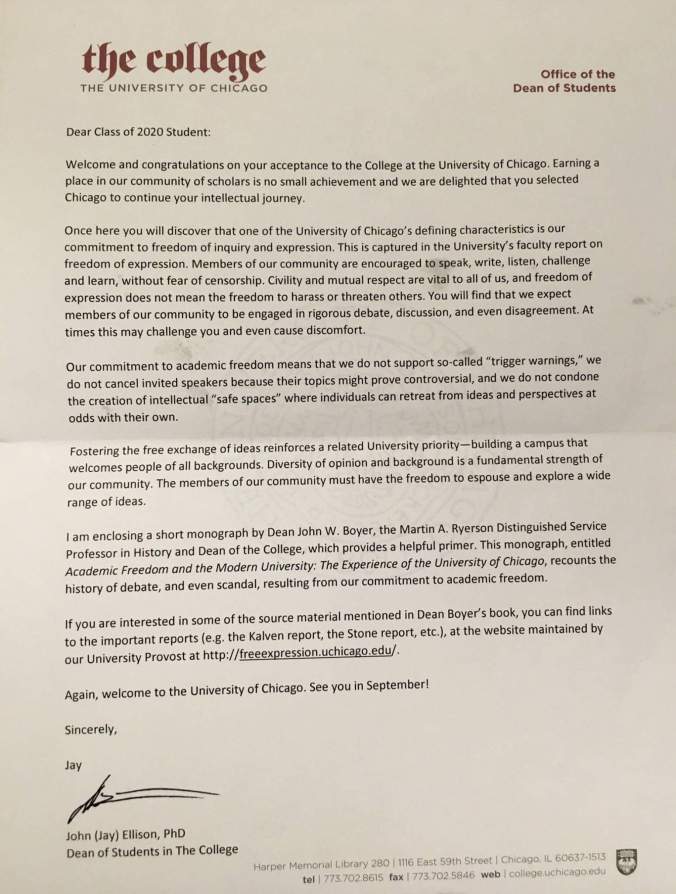
The tragedy is that we have to regard anything in this letter as the least bit remarkable. I now eagerly await the wave criticism of the message, condemning it as insensitive and racist.They have already started. Grand View University professor Kevin Gannon argued in a blog post,
Students ought to be challenged, even made uncomfortable, in order to learn in deep and meaningful ways. And, of course, collegiate education is where students must encounter perspectives different from their own… and that’s what this Dean and the anti-trigger-warnings, no-safe-spaces crowd are counting on-that the surface veneer of reasonableness in these admonitions to the Class of 2020 will obscure the rotten pedagogy and logical fallacies that infest this entire screed…Displaying empathy for the different experiences our students bring to the classroom is not a threat to our academic freedom. Allowing for a diversity of perspectives to flourish, even when that diversity might challenge the very structure of our course and its material, is not a threat but an opportunity.
Slate calls the letter “strange” and notes..
[T]he letter’s author, John Ellison, betrays a common misunderstanding of “trigger warnings” and “safe spaces”—both of which exist for the exact purpose of “building a campus that welcomes people of all backgrounds.” Trigger warnings are not intended to shield students from controversial material; they’re intended to warn students about disturbing content so that they won’t be shocked by it.
You know, like what happens in real life: we get an early warning before anything happens that might upset or “shock” us. Ellison understands perfectly: trigger warnings and safe spaces are part of a strategy to marginzlize individuals, groups and ideas by stigmatizing them as “controversial,” “disturbing,” and “shocking.”
I’ll also be watching to see if the university administrators will stand behind their bold words.
Maybe this will serve as a splash of ice water in the faces of Dean Ellison’s spineless and feckless colleagues around the country, like those in the University of Missouri, whose capitulation to campus race-baiters and grievance bullies has cost the school over 2,000 students. It may also be the final gasp of truly liberal higher education in the U.S.
“Now THAT’s not racism. Why do you murderous honkies have so much trouble understanding this?”
A roommate-wanted notice posted on Facebook by a Pitzer College student has turned into yet another racial controversy. The student, along with two Pomona College students, were seeking a fourth to join them in an off-campus house. The notice included “POC only” –person of color only—and this got them immediately called out as racists by some other students.
The ad is not racist. The text reflects a bias, as in “preference,” but that isn’t necessarily racism. Everyone has freedom of association in this country, or should. Human beings are more comfortable with those whom they perceive as being more like them. There is nothing wrong with that, but even if there is, it is human nature. There is nothing to be done about it, and there shouldn’t be anything done about it other than to help each other understand that tribalism is divisive and a pre-programmed bias that we should fight, because getting past it makes us better neighbors, members of society and human beings.
Still, I don’t want to live with someone who doesn’t want to live with me, but who is going to accept me into a living situation based on a feeling of obligation. A house seeking someone else to share the rent isn’t a public accommodation, and there is no ethical principle demanding that the roommates can’t or shouldn’t specify the kind of individual they think would best complete the group. What if the other three are all white, and are seeking someone different from them to make the house more diverse? Is it equally offensive if the ad sought an athlete, or someone overweight (who wouldn’t make the three hefty roomies feel unattractive), or a good student, or an actor, or someone with a good sense of humor? Why? Such requirements are not a per se indication of anything but personal preferences, and personal preferences aren’t racism.
Is the “POC only” addendum unethical? Technically, it fails Kant’s “what if everybody does it?” test, for if everybody did it, white students would have nowhere to live. There you have an example of where Kant’s Rule of Universality is worth musing about but often isn’t applicable. Some conduct is ethical despite Kant because the idea that it would become universal is too ridiculous. I want to live with a baseball fan. I don’t want to live with someone who is going to be listening to punk rock. If three roommates can look for a female fourth, or a gay fourth, or a Spanish-speaking fourth—and they can without nicking any ethics principles at all—then they can insist on racial or ethnic qualifications too.
Is it better ethics to be accepting of all equally? Sure it is. But not exhibiting exemplary ethics isn’t unethical. Again, it’s just human.
There is more to the story however. When some students commented on Facebook that the notice was racist, the replies from the students posting it and others expanded the controversy.
The Claremont Independent, a student paper that covers all five of the Claremont colleges (as well as two graduate schools), of which Pitzer is a member, published some of the comments, and they show the anti-white animus and double standards now roiling race relations in the U.S. Continue reading →
I gave an ethics training session for a local non-profit yesterday. At the end of the two hours, a staffer who was pursuing U.S. citizenship was obviously stimulated by the various issues and principles we had discussed and had many provocative questions, which he struggled to articulate in his second language, for he was Sorth Korean. “Why is it right for me to pay taxes to assist illegal immigrants?” he asked. “In Sorth Korea, they say we are decades behind the US is democracy, but Korean laws are enforced no matter who the law-breaker is. I see that law-breakers in the US who are rich and powerful or famous get special dispensations from the law. Doesn’t that mean that Korea is ahead of the U.S., at least in that respect?” (Gee, I wonder who he was referring to…)
He had insightful observations, as recent immigrants to the U.S. so often do. Finally he said, “Do you agree that political correctness is a great threat to liberty and democracy?”
Yes. Yes I do. I thought so the first time I heard the term “politically correct” in the Seventies, and was so certain that the concept’s loathsomeness (and the parallel loathsomeness of its advocates, frankly), ensured that it would be a short-lived phenomenon.
Which shows how smart I am…
***
Shortly after the July 7 massacre of five police officers in Dallas, Rohini Sethi, the vice-president of the University of Houston’s Student Government Association, posted this on Facebook:
The student governing body suspended her from her office and the group.
Student body vice president Rohini Sethi has been suspended by the SGA and is temporarily barred from participating in group activities. She is also due to attend a “diversity” workshop per the ruling….The University of Houston issued a statement this week that said the move is not a university action and doesn’t impact Sethi’s academic standing. “The University of Houston continues to stand firm in support of free speech and does not discipline students for exercising their constitutional rights,” the statement said.
The action came after minority student groups on campus condemned her statement as racist or “insensitive,”and demanded her removal. The accommodating president of the SGA complied. For her part, Sethi apologized and agreed to take a three-day cultural sensitivity workshop, though she wrote several Facebook posts defending her actions. Ultimately she was brought to heel, made a public statement along with the SGA head, and like a brain-washed prisoner of war, grovelled..
“I have chosen to take these steps on my own because of the division I’ve created among our student body. I may have the right to post what I did, but I still should not have. My words at the time didn’t accurately convey my feeling and cause many students to lose their faith in me to advocate for them. I will always continue to learn and be ready to discuss these issues.”
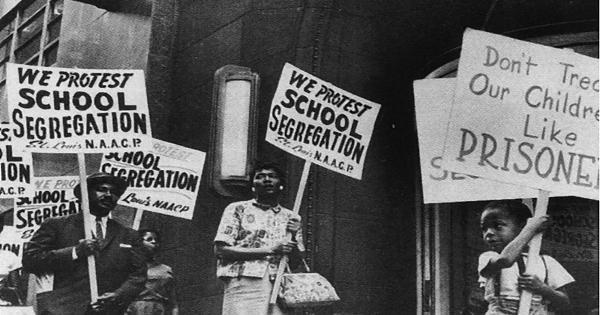
Not one but two colleges have advocated segregation in their policies this week:
Hampshire College explains on its website that it allows students to reside in “identity-based” housing communities, provided they have a “unique social identity” that has “historically experienced oppression,” arguing that such residences “give support to members of our community with social identities that have been historically marginalized in this country, and strive to counter systemic oppression.” The Massachusetts school’s confident promotion of such living arrangements “arises from our commitment to fostering diverse, socially just, and inclusive communities.” An informational booklet explains that “identity-based housing is an institutional structure designed to assist members of historically oppressed groups in supporting each other,” and “helps to create an added level of psychological comfort and safety for those who choose to live in those spaces, often providing the foundation for those students to be able to engage fully in the greater community.”
Translation: Black students don’t want to live with whites, but prefer “their own kind,” because whites are viewed as potentially dangerous. And that’s okay! Continue reading →
“This is Paul. Won’t you help him? Paul, like millions of other victims across the land, suffers from Constitution Ignorance Syndrome. This dread malady causes its victims to advocate fascist policies and to sound like idiots in their public statements. But there is hope for Paul, and those like him. Please give, and give generously, To Educate Paul a non-profit charity. Your gift is tax-deductible, and you will have made the United States a little less stupid with every penny you contribute to this vital cause.”
This was the guy that Donald Trump was supposedly going to endorse as retribution for Speaker Ryan’s negative comments? It’s comforting, isn’t it, that Trump isn’t that irrational? Ann Coulter is, but Trump isn’t. (At least in this case.)
Paul Nehlen is the arch conservative and certifiable ignoramus who is challenging House Speaker Paul Ryan in Wisconsin’s First Congressional District’s Republican primary. Interviewed last week on “Chicago’s Morning Answer,” Nehlen said that he wonders why we have any Muslims in the country, and suggested that there should be a public debate about tossing Muslims out of the U.S.