Ethics Footnotes, 1/17/21:Well, I’M Reading, Anyway…

Boy, only diehards are on Ethics Alarms today, yesterday too. I don’t get it; it’s a long weekend, but so what? It’s not like everyone is traveling on long weekends while American are still trembling in terror over the Wuhan virus. Must ethics take a holiday? Apparently so...

1. How can anyone have sympathy for New Yorkers? The city is falling apart. Crime is up, the wealthy are fleeing, corporations are fleeing, the mayor has eliminated admission tests for much of the public school system and stated that his goal is to redistribute wealth, Times Square has returned to pre-Rudy squalor, and tourism was falling like a rock even before the pandemic. They voted for a confessed socialist as mayor (and for his communist, conflict-of-interest flaunting wife)—perhaps acceptable as a novelty—then re-elected him after a disastrous first term. Now, six months ahead of this year’s Democratic mayoral primary that will decide who the next mayor will be because the city’s minorities wouldn’t vote for a Republican if he was running against Nero, the natives are getting restless. Polls show that New Yorkers regard de Blasio’s pet issues of combating climate change and pollution on the bottom of their priority list, but only 56% of respondents said they hold a “very or somewhat unfavorable” view of the guy that was the architect of the city’s collapse. Why isn’t it more like 90%? I suppose for the same reason they elected him twice. In democracy, you get what you deserve. Civic literacy is the individual’s ethical responsibility, nobody else’s.

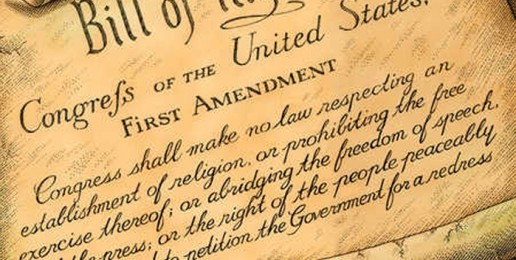
2. Now THIS is an incompetent elected official…Pennsylvania Lt. Gov. John Fetterman (D) actually said in a video posted last week—I wouldn’t kid you!-–“This idea that saying that Pennsylvania was ‘rigged’ or that we were ‘trying to steal the election,’ that’s a lie. And you do not have the right, that is not protected speech.” Fetterman goes on to say that Twitter should have immediately removed any tweet from President Donald Trump that questioned the integrity of the election, and, in the immortal mark of someone who doesn’t know the First Amendment from a Yorkshire Terrier, compared Trump’s claims to “yelling fire in a crowded theater when there is none.”

This idiot is reportedly considering a run for the U.S. Senate in 2022.

To be fair, Fetterman’s view of the free speech,which is to say “there is none unless progressives approve,” appears to be on the way to becoming the predominant one in the Democratic Party.

Don’t blame me, I voted for Kodos…

Continue reading →

From The “Scared Yet” Files: The Rest Of The Story On The Persecution Of Professor Charles Negy

Nagy Tweet

As Ethics Alarms noted back in August (which seems like years ago), the University of Central Florida set out to destroy Professor Negy, who was tenured and has taught at the university for decades by inviting students to bring formal complaints against him “based on abusive or discriminatory behavior by any faculty or staff.” Students were already demanding his dismissal because he dared to post the accurate tweet above, but the institution knew it couldn’t fire him for that.

Negy’s lawyer,Samantha K. Harris, described the process:

Since June 4th, a litany (we don’t know the exact number, because they won’t say) of complaints has been lodged against Negy for his classroom pedagogy, for speech that allegedly occurred over a 15-year period from 2005 to 2020. The university charged Negy with discriminatory harassment on the basis of race, ethnicity, national origin, sexual orientation, religion, sex, gender identity/expression, and disability…while providing him with only a handful of “examples” of his alleged wrongdoing. … the university subjected Negy to an “investigative interview” that was one of the most Kafkaesque things I have seen in my 15 years advising students and faculty about campus disciplinary matters. For four straight hours, UCF’s investigator grilled Negy about accusations stemming directly from his classroom pedagogy, having made no effort to weed out the countless accusations that were obviously just critiques of his choice of teaching material….When Negy, physically and emotionally exhausted after four hours of interrogation, asked if the interview was almost over, we learned that the investigator had not even gotten halfway through her list of accusations. Another five-hour inquisition was scheduled for the following week.

This investigation was obviously undertaken in retaliation for Negy’s protected tweets… How many professors are going to be willing to speak out if the result is a nine-hour inquisition followed by an almost inevitable punishment?…Cases like this are canaries in the coal mine: if a public university—a government agency—can treat someone this way for deviating from the university’s orthodoxy, and face no accountability for doing so, then what (and who) is next? The answer, of course, is you and me. We are next. If decent people do not take a stand against these abuses, it’s not a matter of if the state-endorsed mob will come for us—it’s only a matter of when.

When, as we now can see, has arrived.

Continue reading →

What Do You Do About Harvard?

orig

In particular, what do I do about Harvard?

Harvard, beginning approximately during the regime of the previous president, Drew Faust, has been infested with serious ethics rot, and it continues to progress. I have documented some, but far from all, of the most disturbing aspects of this process, like the University’s practice of discriminating against Asian-American applicants (as well as whites, of course), which they are now defending in court. What is supposed to be the role model for the entire higher education system in the United States continues to give credence and respectability to unethical practices and values, spreading its own affliction to other institutions far and wide. Worst of all, it is indoctrinating its students to be anti-American, anti-individual rights, anti-Western civilization and culture allies of the radical Left, while attempting to demonize opposing views on campus and off.

What’s going on here? The graphic above should make it clear, but if it doesn’t, this should:

Continue reading →

Why Don’t College Students Believe In Free Speech? Because They Are Taught By Totalitarianism Advocates Like Duke Professors Bill Adair and Philip Napoli. That’s Why.

First-Amendment-on-scroll1

In an advocacy piece in The Hill this week, the professors, who teach public policy instructors insist that the breaching of the U.S. Capitol by a mob of Trump supporters shows that the government must decide what statements and opinions are legally permissible. They wrote in part,

“Last week’s attack on the U.S. Capitol was based on lies…The mob that stormed the building was acting on a tidal wave of misinformation about the election that was spread by the president, his fellow Republicans and their supporters using a web of partisan media outlets, social media and the dark corners of the internet.The lies flourished despite an extraordinary amount of debunking by fact-checkers and Washington journalists. But that fact-checking didn’t persuade the mob that stormed the Capitol — nor did it dissuade millions of other supporters of the president. Fed a steady diet of repetitive falsehoods by elected officials and partisan outlets, they believed the lies so much that they were driven to violence.”

“In his first week in office, President-elect Biden should announce a bipartisan commission to investigate the problem of misinformation and make recommendations about how to address it.The commission should take a broad approach and consider all possible solutions: incentives, voluntary industry reforms, education, regulations and new laws.”

Observations:

Continue reading →

Ethics Quiz: The Fake Inspirational Story

1927NYYankees5

Ethics Alarms touched on this area here, when I related the example of a defense lawyer who won over the jury in the sensational Richard Scrushy fraud case with a vivid but made-up anecdote:

My favorite ethics moment is when Scrushy’s main trial lawyer, Jim Parkman, is asked about his headline-making anecdote in his opening statement, in which he quoted his grandmother as always telling him”every pancake, no matter how thin, has two sides.” “Did your grandmother really say that?” Parkman’s asked on camera. “No,” he admits after a long pause. “But she could have!”

Lying to a jury would seem to be a serious ethical violation for a lawyer, and by the wording of the rules, it should be. But every lawyer I’ve discussed Parkman’s tactic with agrees that such non-substantive lies would never result in professional discipline. (I think they should be.)

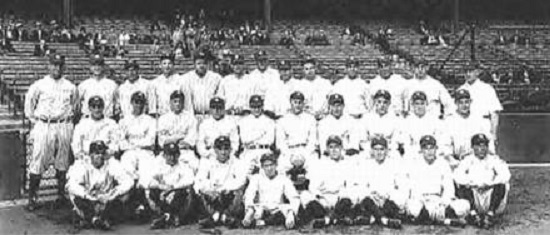
But what about inspirational stories and anecdotes that aren’t true? Does the end justify the means? Brian Childers’ story about Tommy Lasorda reminded me of another Lasorda story. Managing in the minors before becoming the third-longest tenured manager with a single team in baseball history, the ever-ebullient leader of the Spokane AAA team was faced with a dispirited squad that has lost nine straight games. Tommy bucked them up by reminding the players that the 1927 Yankees of “Murderer’s Row” fame, then and now the consensus choice as the greatest baseball team of all-time, also lost nine games straight. His team was cheered, and not only broke out of their slump, but went on a winning streak.

Asked later if it was true that the team of the Babe, the “Iron Horse” and the rest ever lost nine in a row, Lasorda answered, “Hell, I don’t know. But it turned my team around when they thought so!!”

Continue reading →

Bizarro World Ethics: A Vicious Young Jerk’s Unethical Act Is Celebrated And His Victim Vilified In A Cautionary Tale Of What Happens When Society Allows Its Values To Be Turned Inside Out. Part II: The Times And Its Readers

Mimi

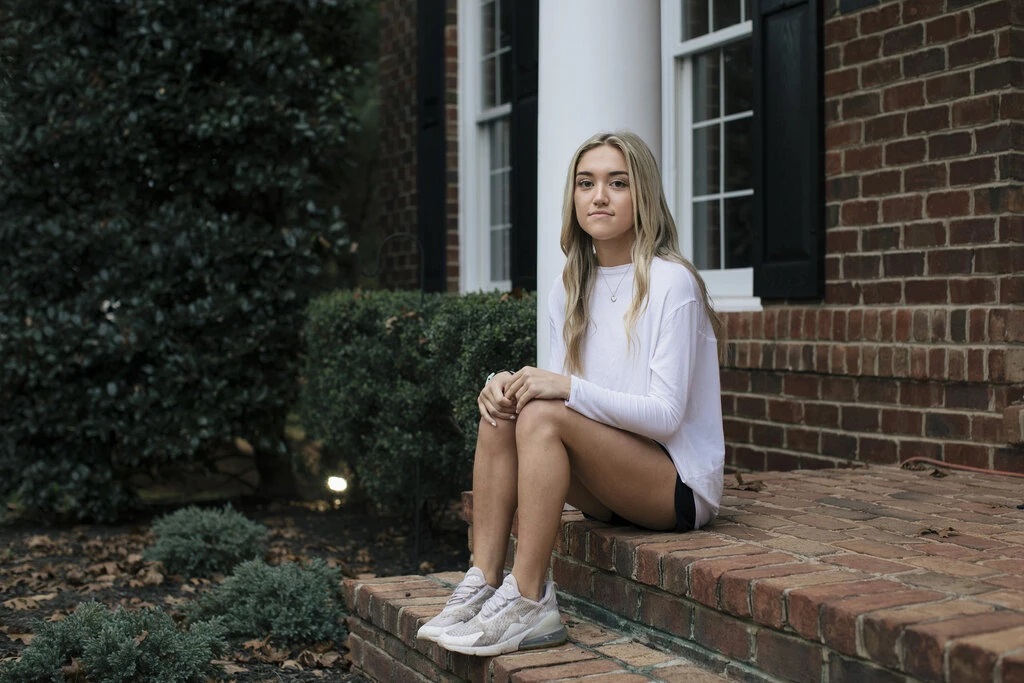
In Part I, describing the horrific personal destruction of 18-year-old Mimi Groves (above)–the antiseptic term “unethical” does not adequately convey the pure viciousness and wrongfulness of the act—I attempted to clarify what the entire scenario represents, a near complete distortion of values and ethical norms with ominous implications. I mostly left out the enthusiastic participation of the New York Times in this destructive process, first, because it was not directly involved in Jimmy Galligan’s hateful and pernicious conduct, and second, because of space considerations. Thus we have Part II.

The Times signaled its sentiments and objectives in the headline of its feature, written by reporter Dan Levin: “A Racial Slur, a Viral Video, and a Reckoning.” “Reckoning” means, in this context, a settling of accounts, a judgment, or earned punishment. In the view of the Times writer and the editors who allowed it to be published, Mimi Groves was justly punished by her black classmate, who plotted–plotted is a fair description—to derail her education and future prospects, and did so. What was the conduct that earned the “reckoning”? Groves used a word, in a general context, that the social justice establishment has ruled, on its own authority, can never be uttered for any reason, or published in print—unless the individual responsible is black, in which case it may be rude or less than desirable, but otherwise it’s OK.

At the time the word “nigger” was used by Groves in a three second video on social media, and today, popular songs embraced by her age group and peer group used the same word repeatedly, and made millions of dollars as a result. At the time the word “nigger” was used by Groves in a three second video on social media, popular movies showed black characters calling other black characters that same word in jest, or affectionately, or for shock value.The actors playing those characters, notably Samuel L. Jackson, who has earned a bundle as the spokesperson for a major credit card,while using teh word “nigger” more times on screen that any actor in film history, have not faced any “reckoning.” The screenwriters who put those words in his mouth faced no “reckoning”; the directors who permitted the dialogue to be read and the studios that sent the wave of “niggers” into theaters and streaming services faced no “reckoning.”

Just this month, Netflix premiered an adaptation of August Wilson’s play “Ma Rainey’s Black Bottom,” directed by acclaimed social justice warrior director George C. Wolfe, an African American. When a stream of “niggers” was unleashed about ten minutes into the fim, never to stop, I was genuinely confused. How could this be, when I have a file of professors and teachers who faced sanctions, protests, suspensions, and professional destruction, not by referring to any black individual as a nigger, but by using the word in the context of discussing legal, ethical and cultural implications of language.

Yes, I was confused, and I am a lawyer, a writer, an ethicist and a teacher with more than four times as much experience in life as Mimi Groves when, as a child, she mistakenly thought a casual use of the word in a social media message wouldn’t upset anyone, much less put a dedicated life assassin on her trail.The the New York Times holds that Mimi deserved her “reckoning,” and made sure that if anyone inclined to tar her as a racist unfit for human association on this woke culture we are breeding didn’t know that she had to be punished and why, a major feature in the nation’s most read, circulated and quoted newspaper would spread word of her disgrace. The paper’s verdict is clear: Jimmy Galligan struck a blow against “systemic societal racism.” He’s a hero, even though literally nothing he did was ethical, fair, or just:

Continue reading →

Waning 2020 Ethics Warm-Up

hour_glass

A reader reports that he can’t pull up Ethics Alarms on Google Chrome or Microsoft Edge. Is anyone else having this problem?

Wasn’t it nice when we naively assumed that such things were just technical glitches and not part of Big Tech’s increasingly intrusive alliance with the totalitarian-minded forces of the extreme Left?

1. Embrace the narrative. “Louisiana Congressman-elect Luke Letlow dies with COVID-19” is just one of many headlines announcing that the 41-year-old Representative-elect died from the Wuhan virus. So far, every headline I’ve seen is some version of this. Letlow died of a heart attack, in fact, during some un-named procedure related to his treatment for the virus. People die of unexpected heart attacks with some frequency during hospital procedures for other problems, and the cause of death is usually listed as “heart attack.” Maybe the virus caused his death and maybe it didn’t, but the headlines stating this as fact is more pandemic fearmongering, and. yes, fake news.

2. Good. You will recall that Twitter censored The New York Post’s account of the incriminating Hunter Biden laptop being found because it claimed that the business memos, photos of a Hunter using illegal drugs, and other disturbing photos came from a “hacker,” when Twitter’s real objective was, it seems fair to conclude, to keep as many people as possible from learning about matters that might cause them not to vote for Hunter’s father. Now the computer repair company’s owner is  suing Twitter for $500,000,000.00 for libel, defamation, and ruining his business, claiming that the social media giant disparaged him.

3. One more reason to distrust the election results: President Donald Trump topped former President Barack Obama for the title of most admired man in America in Gallup’s 2020 survey. Trump had tied with Obama in 2019 while Obama beat him in 2017 and 2018. President Joe Biden came in third. Obama had been #1 since 2008.

Don’t you find this strange?

Continue reading →

Bizarro World Ethics: A Vicious Young Jerk’s Unethical Act Is Celebrated And His Victim Vilified In A Cautionary Tale Of What Happens When Society Allows Its Values To Be Turned Inside Out. Part I: Jimmy Galligan, Ethics Villain

The New York Times published a long and detailed account of what can and will happen if society allows its values and ethical norms to become distorted. It enters the world of Bizarro Ethics, where, like the fictional and allegedly comic planet of Bizarro World in old Superman comics, everything is backwards and inside out. In such a culture, I have explained here many times, being unethical is ethical, and being ethical is wrong. A black student set out to use an old social media post to destroy the reputation of a white classmate after she had been admitted to the college of her dreams. And he succeeded. The Times story is a cautionary tale of what is happening in our culture, but that’s not its objective. Its objective is to rationalize and justify what the black student did.

In 2016, when she was a freshman and 15-years old, Mimi Groves sent a three second video SnapChat message to some friends that said, “I can drive, nigger!” She has explained that she used the dreaded “N-word” because it was common in the music she and her friends had been listening to. It was not intended to be seen by or to upset anyone; it was just a one-off social media message like millions of others that are sent every day, by an immature child lacking common sense, experience and a fully formed brain. As such, it should have been ignored, especially by her peers, who suffered from the same maladies.

But because of the scourge of social media and a culture which increasingly encourages cruelty, vengeance, personal destruction, and the elevation of doing harm to those who “deserve it” to a societal norm, the message became a ticking time bomb in the hands of those who felt they had a right to destroy her.

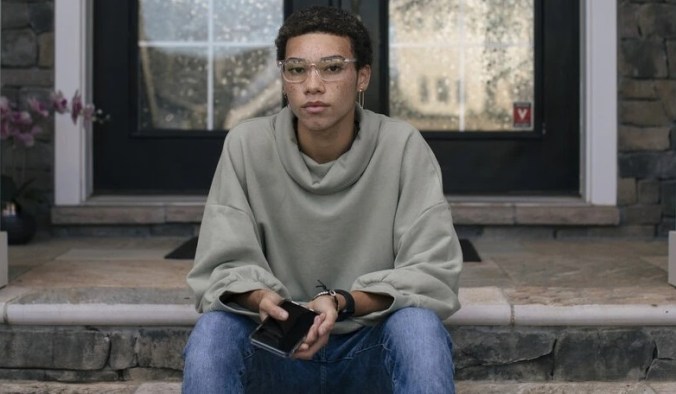
Somebody send a copy of the message to Jimmy Galligan’s phone last school year. Galligan is black, and Mimi was a fellow classmate whom he knew and had spoken with earlier in their high school days.

Ethics Point 1: Whoever saved the message and set out to make sure that someone would see it who would find it upsetting is the first and the catalytic ethics villain in this story. There was no justifiable reason to send the message to Galligan except to upset and trigger him, which someone who knew him obviously believed it would. A fair, rational and ethical person would know that a years-old message on SnapChat is meaningless, and the Golden Rule would have taught him or her that circulating such a message is something he or she would never want anyone to do with an ill-considered video of their creation.

Here the Times attempts to prejudice the reader in Jimmy’s favor with a trail of irrelevancies:

Continue reading →

Morning Ethics Warm-Up, 12/29/2020: Another Dark Date For Ethics

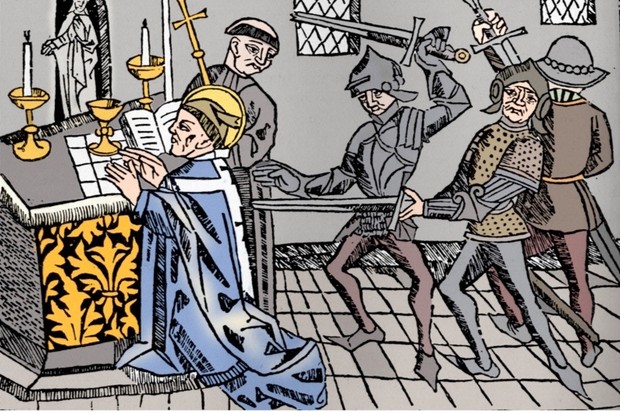
Becket-murder-2

December 29 is one of the bad days in ethics history, beginning with the 1170 murder of England’s Archbishop Thomas Becket as he knelt prayer in Canterbury Cathedral by four knights of King Henry II. The knights were not explicitly ordered to kill Becket, the King’s friend who had become a problem when he took his role as Archbishop of Canterbury to be a calling to defend the Church against royal efforts to constrain its power. Instead, Henry made his wishes known by making the public plea to his court,

“What a parcel of fools and dastards have I nourished in my house, and not one of them will avenge me of this one upstart clerk.”

This is often quoted as “Will no one rid me of this troublesome priest?” Either way, the idea of such an oblique request is to relieve a leader of responsibility for the actions of subordinates, giving the leader plausible deniability. It didn’t work for Henry, but it may have worked for, for example, President Obama, whose Internal Revenue Service illegally sabotaged Tea Party groups in advance of the 2012 election, greatly assisting Obama’s efforts to defeat challenger Mitt Romney. In truth, when a powerful superior makes his or her desires known, it may as well be an order. An order is more ethical however, because it does not require the subordinate to take the responsibility upon himself.

1. But The worst example of a U.S. ethical breach on this date is the Massacre at Wounded Knee in 1890, when the U.S. Cavalry killed at least 146 Sioux at the Pine Ridge reservation in South Dakota. It is definitely the most people killed because of a dance: the government was worried about a growing Sioux cult performing the “Ghost Dance,” which symbolized opposition to peaceful relations with whites, and was seen as inciting violence. On December 29, the U.S. Army’s 7th cavalry surrounded a band of Ghost Dancers under the Sioux Chief Big Foot near Wounded Knee Creek and demanded they surrender their weapons. A fight broke out between an Indian and a U.S. soldier, a shot was fired, and an unrestrained massacre followed. Of the estimated almost 150 Native Americans were killed (some historians put this number at double that number), nearly half of them women and children. The cavalry lost only 25 men. Many believe that the tragedy was deliberately staged as revenge for Custer’s Last Stand 14 years earlier, which seems like a stretch to me.

Continue reading →

From A School Superintendent, Authentic Frontier Gibberish And More Evidence Of Why Our Children Are In Trouble.

A nice, smart, passionate, and painfully progressive Facebook friend posted this letter with approval on his page. It was originally written and posted by a superintendent in Voorheesville in upstate New York, and has been circulating on social media for all the wrong reasons. The letter was directed to “All teachers and parents.”

I’ll have some observations at the end, if I can control my gag reflex.

Dear Friends and Colleagues: I am writing today about the children of this pandemic. After a lifetime of working among the young, I feel compelled to address the concerns that are being expressed by so many of my peers about the deficits the children will demonstrate when they finally return to school. My goodness, what a disconcerting thing to be concerned about in the face of a pandemic which is affecting millions of people around the country and the world. It speaks to one of my biggest fears for the children when they return. In our determination to “catch them up,” I fear that we will lose who they are and what they have learned during this unprecedented era. What on earth are we trying to catch them up on? The models no longer apply, the benchmarks are no longer valid, the trend analyses have been interrupted. We must not forget that those arbitrary measures were established by people, not ordained by God. We can make those invalid measures as obsolete as a crank up telephone! They simply do not apply. When the children return to school, they will have returned with a new history that we will need to help them identify and make sense of. When the children return to school, we will need to listen to them. Let their stories be told. They have endured a year that has no parallel in modern times. There is no assessment that applies to who they are or what they have learned. Remember, their brains did not go into hibernation during this year. Their brains may not have been focused on traditional school material, but they did not stop either. Their brains may have been focused on where their next meal is coming from, or how to care for a younger sibling, or how to deal with missing grandma, or how it feels to have to surrender a beloved pet, or how to deal with death. Our job is to welcome them back and help them write that history. I sincerely plead with my colleagues, to surrender the artificial constructs that measure achievement and greet the children where they are, not where we think they “should be.” Greet them with art supplies and writing materials, and music and dance and so many other avenues to help them express what has happened to them in their lives during this horrific year. Greet them with stories and books that will help them make sense of an upside-down world. They missed you. They did not miss the test prep. They did not miss the worksheets. They did not miss the reading groups. They did not miss the homework. They missed you. Resist the pressure from whatever ‘powers that be’ who are in a hurry to “fix” kids and make up for the “lost” time. The time was not lost, it was invested in surviving an historic period of time in their lives—in our lives. The children do not need to be fixed. They are not broken. They need to be heard. They need be given as many tools as we can provide to nurture resilience and help them adjust to a post pandemic world. Being a teacher is an essential connection between what is and what can be. Please, let what can be demonstrate that our children have so much to share about the world they live in and in helping them make sense of what, for all of us has been unimaginable. This will help them– and us– achieve a lot more than can be measured by any assessment tool ever devised. Peace to all who work with the children!Being a teacher is an essential connection between what is and what can be. Please, let what can be demonstrate that our children have so much to share about the world they live in and in helping them make sense of what, for all of us has been unimaginable. This will help them– and us– achieve a lot more than can be measured by any assessment tool ever devised. Peace to all who work with the children!

Observations:

Continue reading →