Let’s Get The Week Off To A Positive Start With Encouraging Ethics Stories! Like…Oh. Never Mind…(Part 2)

Part I is here.

Still trying to empty my “annoying ethics notes” in-box. Bear with me…

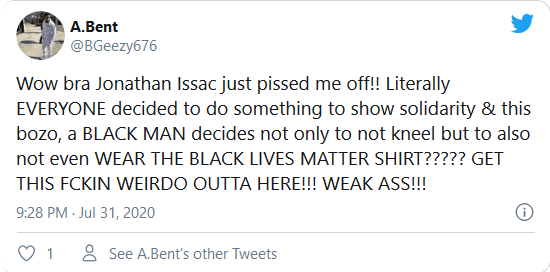
4. It’s called “not caving to peer pressure.” Remember when that was a good thing? In the 75% black NBA—that means black supremacy, right?—any white player who doesn’t grovel before that Black Lives Matter idol, which has its name emblazoned on the NBA courts—is asking to have his home firebombed. Thus the only player with the guts and integrity to stand for the National Anthem—not standing is the position of the Democratic Party, remember—is black. Orlando Magic forward, Jonathan Issac,  became the first NBA player to demonstrate proper respect for the symbol of the nation that my father risked his life for, as the NBA resumed its season after a 20-week hiatus. All the other players and coaches from both teams, as well as referees, “took a knee” during the playing of the Star Spangled Banner, as the 22-year-old not only stood, but was not wearing a “Black Lives Matter” shirt.

Here was a typical reaction on social media:

Got that? Not caving to the mob is weak, and Oceania had always been at war with Eastasia.

5. And while we’re on the topic of the National Anthem, I refuse to believe a majority of Americans will vote for the side that encourages this insanity. Last month, The USSSA Pride and Scrap Yard Fast Pitch, two independent professional softball teams that feature some of the top players in the world, began a seven-game series in Melbourne, Fla., facing little competition from other live sports. However, after the organization’s  general manager tweeted  to President Trump during the game that the teams were standing during the national anthem, all the players quit, vowing never to play for the organization again.

6. In case you wondered, the New York Times is still romanticizing and sentimentalizing illegal immigration.  So is Netflix. In its new documentary “Immigration Nation”—that gets an immediate ding from me, because it’s about illegal immigration, a crime, not immigration, an honorable, essential process—

Part of that effect comes from seeing agents push the boundaries of legality — most strikingly, how they routinely enter apartments when “invited” by cowed, uncomprehending immigrants, in a way that’s surprisingly similar to what you’d see in a TV cop drama. (Maybe that’s where they learned it.) Once inside the home of the target, probably an immigrant accused of a crime, they frequently find “collaterals,” additional people who can be rounded up simply because they’re undocumented.

That last clause is a classic. It’s not “simply because they are undocumented,” it is entirely because they are in the country illegally, violating our borders and laws, and if they left on their own, the wouldn’t have to be “rounded up.” Here’s another quote from the review,

But the real impact of the show’s early episodes isn’t the outrage you may feel over the thuggish tactics. It’s the wearying, demoralizing depiction of a self-perpetuating bureaucracy, one that churns through the lives of people it takes little notice of — as if your trip to the D.M.V. meant not just standing in an endless line, but then being shackled and put on a plane to Central America.

The lives of illegal immigrants are not the concern of ICE—they are the responsibility of their own countries. “Self-perpetuating bureaucracy” is meaningless pejorative rhetoric: what perpetuates  ICE is the continued breaching of our borders, encouraged and enabled by people like Hale. and, incidentally, the late John Lewis.

7. Here’s a revealing article that will blow your mindThese Girls Are Leading Black Lives Matter Protests.

The Times interviews several self-involved, self-righteous, passionate and completely ignorant young women who demonstrate that they are motivated entirely by free-flowing emotion without any concern for reality. Of course, the Times reporter feeds their narcissism, never challenging their certitude. If you wonder why so much of the George Floyd Freakout looks like it was organized by children, here is your answer: it is. Continue reading

Comment Of The Day: “Observations On A Tender, Obnoxious, Unethical Screed”

Bill Weir’s nauseating open letter to his newborn son River—GACK! ICK! BLECHHH! —- was so unethical in so many ways that I almost needed a ventilator to finish reading it. When I had finished posting on the monstrosity, I was awash with regret that I hadn’t the space nor the time to write the letter Weir should write, and was hopeful that one of the many acid-penned bards among the talented  commentariate here would take up the challenge. I was not disappointed.

Here is Steve-O-In-NJ’s Comment of the Day, one of his finest, on the post, “Observations On A Tender, Obnoxious, Unethical Screed”:

The article is utter garbage, written by someone untrained in science, but trained in making up stories. One day when River is grown up, assuming he makes it there and isn’t driven off the deep end by constant teasing, I hope he reads this article and asks him, just like Greta, “how dare you?” How dare you use my birth to push your own agenda and your employers’ agenda? How dare you plaster pictures of me as a newborn infant all over the internet where anyone can see them? How dare you reveal the circumstances of my conception to the world? I’m an individual. I am not an accessory to flash around like a new pair of sustainable dockers. I am not a prop for your causes. I am not an illustration to make a point next to pictures you cherry-picked to tell the story you wanted.

I’m not a half bad storyteller myself, and I’d tell quite a different story if a son were born to me. I always said if I had a son I’d name him Charles James, after my grandfather and father (ironically also now after two heroes of my own writing). So, if he were born, I’d say this: Continue reading

Observations On A Tender, Obnoxious, Unethical Screed

My original impulse was to post  this as an ethics quiz, with a heading like, “Is Bill Weir’s essay as bad as I think it is?”

Bill Weir is CNN’s climate correspondent. His wife just gave birth to a son, for which Ethics Alarms gives him a hardy congratulations and will wait for its metaphorical cigar. However, Weir chose to use this life event for an astoundingly long, self-indulgent, and in several ways unethical post on CNN’s site headlined, “To my son, born in the time of coronavirus and climate change.”

Read the thing, if you can stand it. Commenter Other Bill sent it to me with the query, “Is it ethical for this guy to have a child?” He was engaging in hyperbole, but the thrust of the question is valid. Here’s how the essay begins:

Against all odds you were conceived in a lighthouse, born during a pandemic and will taste just enough of Life as We Knew It to resent us when it’s gone. I’m sorry. I’m sorry we broke your sea and your sky and shortened the wings of the nightingale. I’m sorry that the Great Barrier Reef is no longer great, that we value Amazon more than the Amazon and that the waterfront neighborhood where you burble in my arms could be condemned by rising seas before you’re old enough for a mortgage.
The scent of your downy crown makes my heart explode. The curl in your Tic Tac toes fills me with enough love to power New York City.

Gack! I’m sorry, I have to take a break. Continue reading

Ethics Dunces: The U.S. Congress. Again

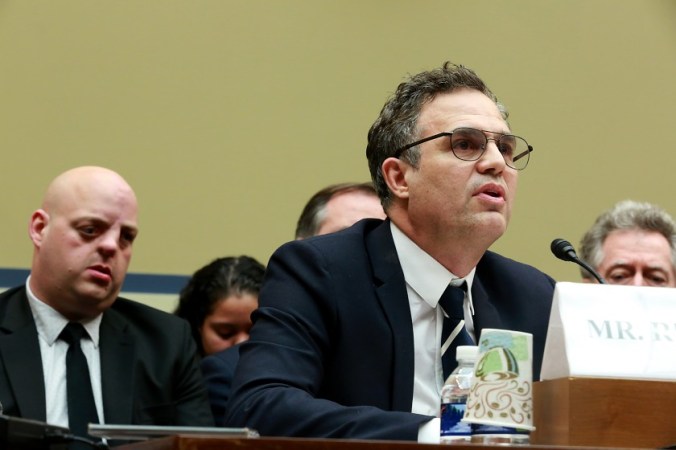
Actor Mark Ruffalo (he plays the Hulk in The Avengers  movies, but it wasn’t because of that role) was invited to testify before Congress last year on public policy involving  public health, chemistry, toxicology, and epidemiology. He has no expertise in these areas at all. The reason was that he starred in “Dark Waters,” which I wrote about here.

Ruffalo is a 9/11 truther, believing  that the U.S. government helped destroy the World Trade Center. That would be enough for me to ding him as an authority on anything, but he has embraced other conspiracy theories as well, like this one.

Never mind: he was presented to the public as an authority on pollution whose opinions on environmental matters have weight. The don’t, and they shouldn’t.

This is a repeat offense. Members of Congress are addicted to the unprofessional and insulting stunt of inviting actors and performers to testify as substantive witnesses on topics that they acted about in movies. As a professional director, I can state with absolute certainty that if an actor is really an expert in something their character was supposed to experience or know something about, 1) that actor is very unusual, and 2) there will still be thousands of real authorities who know a lot more.

Nevertheless, Congress keeps doing this, apparently believing that the public is so naive and gullible that they really believe that because a performer credibly pretends to know what a script-writer prepares to make them sound like the know, they really are experts. Sadly, a lot of the public does believe that. (More sadly, a lot of actors do too) Continue reading

“Dark Waters”

“Dark Waters” is another ethics movie, and a very good one. Like all ethics movies involving real events, it is also educational—disturbingly so.

The film, which was released late last year, dramatizes the story of attorney Robert Bilott and his nearly two decades of battling DuPont over its deliberate (okay, “negligent”) poisoning of citizens and the entire nation with the chemicals used to manufacture Teflon. Yes, “the entire nation”: that’s not hyperbole. It is believed that the unregulated and toxic chemical called PFOA is in the system of everyone living in the U.S. as a result of DuPont’s conduct.

The movie has not been a prominent success, perhaps because is treads along the well-worn path of earlier movies about similar corporate scandals and class action law suits, like  Julia Roberts’ “Erin Brockovich” ( Pacific Gas and Electric Company ) and  John Travolta’s “A Civil Action” (Beatrice Foods and W. R. Grace and Company). The star (and producer) of “Dark Water,” Mark Ruffalo, isn’t quite in the same star category as Travolta and Roberts, but an A-list cast was assembled to back him, including Anne Hathaway, Tim Robbins,  Victor Garber, Mare Winningham, and Bill Pullman.

“Dark Waters,” horrifying to say, is mostly accurate. It was also one of those films where I was left wondering, “How did I miss this? Was it me, or was the story under-reported? If it was the latter, why was it under-reported?” The film was based on the 2016 New York Times Magazine article “The Lawyer Who Became DuPont’s Worst Nightmare” as well as that lawyer’s memoir. Exposure,” giving  Bilott’s perspective on his 20-year legal battle against DuPont. In the end, the company paid over $600 million  in a settlement, which was far less than they should have paid; I’m sure the company regards this as a victory. (Its stock went up after the announcement.)

Imagine: Continue reading

Comment Of The Day: “Ick Or Ethics? The Nauseating Social Media Meme”

Not for the first time, a commenter has done a more thorough job fisking a problematical statement that I have. Actually, I didn’t even try to dissect the memed screed below…

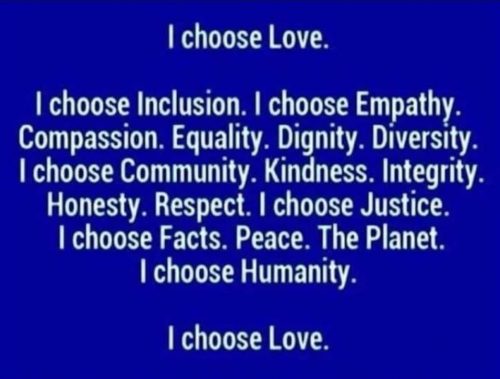
…I  asked whether it was truly unethical, or just signature significance for an arrogant political correctness junkie.  Ryan Harkins took on the greater challenge, and as usual, did a superb job.

Here is Ryan’s Comment of the Day on the post, Ick Or Ethics? The Nauseating Social Media Meme…

Today I am wearing a shirt that reads:

Inconceivable. Adj.
1. Not capable of being imagined or grasped.
2. Not what you think it means.

The problem with memes like the above is that it is disingenuous. What do you mean by love? Do you mean philia? Eros? Caritas? Squishy feel-goodness, for which I don’t know a Latin equivalent? In general, especially given what I’ve observed of the people who post such memes, I don’t think “love” means what they think it means. I certainly don’t think they see love as selflessly willing the good of the other, but maybe that’s because I’m cynical and see this meme as not willing the good of someone else, but trying to proclaim one’s own virtue.

What is meant by inclusion? Is there nothing someone could ever do to warrant exclusion? Or is there a little asterisk pointing one to the fine print, where we don’t include the scum of the earth, like religious white men, sex offenders, and Trump supporters?

I don’t have much to say about empathy or compassion. Equality always begs the question: “Equal how?” Because again, people keep using that word, and I do not think it means what they think it means. Equal before the law? Equal in dignity? Equal in socioeconomic status? Equal in success? Or how about created equally, and endowed by their creator with certain unalienable rights, including (but not limited to) life, liberty, and the pursuit of happiness?

I have no problem with dignity, but what about diversity and community? There is unavoidable tension in the community when there is diversity. We might not like that fact, but it is there. As soon as you have two people of different opinions in the room, there is tension, and by and large what we’ve seen is that people are less and less tolerant of tension. I wouldn’t say they are less tolerant of differences of opinion, as long as those opinions keep to themselves and don’t bother other people. It is the tension that people are finding unbearable. Maybe it is because we are no longer equipped to have our opinions or viewpoints challenged. But I also have a hard time believing anyone believes in community, when so many are nose down I electronics (as I am as I write this) and all my friends belong to the same echo chamber as myself. Continue reading

Morning Ethics Warm-Up, 3/4/2020: Marching To Georgia Edition

Hello, I must be going…

Desperately trying to get this post out before the walls close in. I’m doing a program for an always receptive BigLaw firm in Atlanta, and its a program I know well, and I’m still anxious about it. It doesn’t help that I have some kind of cold, but the show must go on…

1. Super Tuesday musings…

  • Last night, I stumbled on  a Fox News panel discussing the Julie Principle at length regarding Joe Biden’s brain farts and Trump’s Tweets! They didn’t use that term, of course, but it would have helped explicate what they were trying to say, which was that once you’ve decided to accept the flaws of a candidate, more evidence of those flaws won’t change your support.
  • Speaking of… Joe Biden got his sister and his wife mixed up during his victory speech. If there was ever a question of how much the country doesn’t want socialism, the fact that so many Democrats preferred to vote for this sad husk than capitulate to Bernie should answer it.
  • How proud I am of my home state, which told the world that even voters who know  best, and presumably support to some extent, Elizabeth Warren don’t think she should be President. Thus they validated Abe Lincoln’s rule: you can’t fool all of the people all of the time. Warren was the 2020 field’s worst demagogue and biggest hypocrite, as well as one of the most shameless liars. As I write this, she hasn’t dropped out yet, perhaps because she doesn’t want to help Sanders, whom she still resents for saying that a women couldn’t be elected President. Well, he was right as far as she is concerned. Good.

Warren was easily my least favorite of the Democratic contenders from an ethics standpoint. After I posted on Facebook about one of her many deceptions, a friend, apparently seriously, commented that I seemed to have a real bias against her. It reminded me of one of Martin Short’s brilliant improvs as idiot celebrity interviewer “Jiminy Glick,” when he cracked up Mel Brooks by asking, “Now what is it that you have against Hitler?”

2. Wait, he did WHAT??? Cedric Sunray, a college recruiter from Oklahoma Christian University,  visited Harding Charter Preparatory High School in Oklahoma City last month and met with 110 juniors and four teachers in the gymnasium to talk about opportunities at the college. He then asked the students to line up from darkest to lightest skin complexion, and then line up from “nappiest” to straightest hair.  As the students lined up, some of the teachers left to report the request to school administrators, who intervened. Sunray was quickly fired.

Sunray later wrote that the exercise was meant to be an “icebreaker” and that he has made the same presentation dozens of times at other institutions. Really? And nobody complained?

The president of Oklahoma Christian University, John deSteiguer, visited the prep school to apologize to students and staff members. Too late, I’d say. Any school that would let someone like Sunray represent it is too inept to be trusted. Continue reading

Monday Morning Warm-Up, 3/2/2020: Idling, Stigmatizing, Lying

Good Monday!

1. Totalitarianism watch.  Idling one’s car for longer than three minutes, or more than one minute while adjacent to a school, is illegal in New York City. There have been anti-idling laws since 1972, but they were previously examples of the law being used to encourage conduct rather than enforce it. Now, with socialist Bill de Blasio at the city’s helm, the laws are being enforced with a vengeance.

The city is offering bounties to  citizens who report their neighbors, for example. “If you witness a vehicle idling illegally, you can potentially receive a reward for your enforcement efforts through our Citizens Air Complaint Program” says a city website.

Nice.

The theory is that forcing people into not idling their car will mitigate climate change, just like forcing people to ride bicycles and to stop having children when the Left gains sufficient power and the Green New Deal is within reach. Cars idling for no reason is a pet peeve of mine, particularly when they idle in a parking space with cars waiting while the driver checks his or her messages on a cell phone. There are, however, good reasons for idling. I have idled while recharging a dead battery for example. I have idled in sub-freezing weather to keep the car warm while my wife, who had a cold, ran into a 7-11 to buy some cough medicine. The blunt boot of the law does not belong in this matter, like many matters that today’s progressives and socialists want to turn into government edicts.

Oh—the PR geniuses in de Blasio-land decided that the ideal spokesperson for the anti-idling campaign is washed up rocker Billy Idol. Continue reading

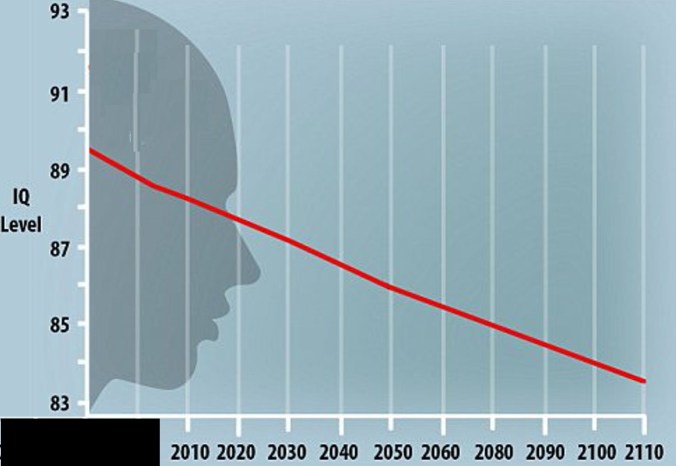
More Evidence That Arthur Herzog’s Novel “IQ 83” Is Coming True—Beside The Fact That Bernie Sanders Is Leading The Race For The Democratic Nomination, That Is

It’s not exactly “Is We Getting Dummer?” the New York Times headline in the prescient science fiction novel, “IQ 83,” by Science fiction author Arthur Herzog in which a man-made virus begins reducing the intelligence of Americans to idiot levels, but its close enough to cause concern. The NBC News headline is “Cities weigh free public transit amid rising costs.” Wait. what? Public transit is getting too hard to pay for, so the solution being considered is to make it free?

I assumed that this was just another example of incompetent headline writing, but no: if anything, the headline makes more sense than the rest of the article, in which we learn that:

  • Michelle Wu, a Democratic City Council member in Boston,  says that because  use of the  crumbling public transportation infrastructure of the Massachusetts Bay Transportation Authority is dropping and rush-hour traffic is increasing,  and the solution is to let everyone ride buses and subways for free.

The article doesn’t say Wu is a Democrat, and I didn’t bother to check. Trust me: she’s a Democrat.

  • Desperately in need of money for repairs,  local transit shouldn’t raise fates, but eliminate them, Wu and other progressives argue, because public transportation “is a human right, like health care and education.”

In “IQ 83,” Patient Zero is the brilliant scientist who goofed while trying to invent a cure for mental retardation. In the real ife case of Wu and others, Patient Zero is obviously Bernie Sanders.

  • We are told, that “some experts warn that free rides wouldn’t solve the issues besetting many public transit systems, including crumbling infrastructure, infrequent and unreliable service, and routes that take workers nowhere near their jobs.”

Really? “Some” experts warn that? Boy, what spoil-sports. Debbie Downers, I’d call them. Continue reading

Saturday Ethics Warm-Up, 2/15/20: Dresden, Bloomberg, Snopes, Climate Change, And “The Chalkening”

Good Morning…

1. Dresden bombing ethics. February 13-15, 1945 witnessed the Allied firebombing of Dresden, Germany, with the resulting deaths of between 22,000 and 135,000 civilians. depending on whose propaganda you choose to believe. Regardless of the number, the destruction of the German cultural center and questionable military target so late in the war—after its loss in the Battle of the Bulge, Germany’s defeat was just a matter of time—was instantly controversial, and is still intensely debated today.

The attack, which dropped more than 3,900 tons of high-explosive bombs and incendiary devices on the city, destroyed more than 1,600 acres. By all accounts, the human toll was horrific. Lothar Metzger, a survivor, wrote,

We saw terrible things: cremated adults shrunk to the size of small children, pieces of arms and legs, dead people, whole families burnt to death, burning people ran to and fro, burnt coaches filled with civilian refugees, dead rescuers and soldiers, many were calling and looking for their children and families, and fire everywhere, everywhere fire, and all the time the hot wind of the firestorm threw people back into the burning houses they were trying to escape from.

Was the firebombing of Dresden a war crime?  If the Allies had lost the war, it would have become a war crime. As we have discussed here before, the concept of war crimes is confounding and hypocritical at best. If the attacks were deemed essential to ending the war as soon as possible, then they were ethically defensible.

Much of the debate over the years has focused on whether the bombing was terrorism. Of course it was, as were the atom bombs dropped on Hiroshima and Nagasaki, and General Sherman’s March to the Sea. Terror is a legitimate weapon in warfare, when the objective is to destroy the enemy’s will to fight. Attacks on civilians for revenge and to inflict gratuitous death and pain for no legitimate strategic purpose are unethical . The distinction is usually in the eye of the beholder.

Wikipedia has an unusually thorough article on the Dresden attack, and I found this paper interesting as well. Continue reading