[Special thanks to my friend (and the inventor of The Three Circles) lawyer/legal ethicist John May for alerting Ethics Alarms to this one.]
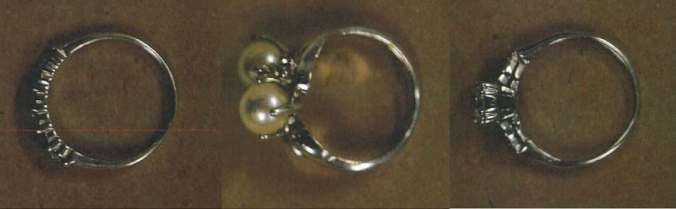
Sandra Mendez Ortega, a 19-year-old maid, stole three rings worth at least $5,000 from a house she was cleaning in Fairfax City, Virginia. Lisa Copeland, the client of the cleaning service, discovered her engagement and wedding rings were missing from the container where they were usually kept. The two rings were appraised at $5,000 in 1996, and a third less valuable ring was taken along with them. Fairfax City police interviewed the three women who had cleaned the home, and they all denied seeing the rings, much less stealing them. Ortega, however, subsequently had second thoughts, and confessed to the theft. She told her boss that she had the rings and turned them over to him. He contacted the police, Mendez Ortega confessed to them as well, saying she returned the rings after learning they were valuable. (Thus she only took them because she thought they weren’t valuable. Okaayyyy…) The police told her to write an apology letter to Copeland, in Spanish, in which she said in part, “Sorry for grabbing the rings. I don’t know what happened. I want you to forgive me.”
(I’m sorry, but I have to break in periodically so my head won’t explode. ” I don’t know what happened?” She knows what happened! She stole the rings because she thought she could get away with it.)
Copeland says she has never seen that letter, and that Mendez Ortega has never apologized to her in person. The maid was charged with felony grand larceny. At the trial, the jury found her guilty. (If she had confessed and was remorseful, why did she plead not guilty?)
But we are told that they felt sympathy for the defendant, who was pregnant with her second child, during the sentencing phase. “The general sentiment was she was a victim, too,” the jury foreman, Jeffery Memmott, told the Washington Post. “Two of the [female jurors] were crying because of how bad they felt.” Although the jurors convicted the maid of the felony, they agreed among themselves that it was just a “dumb, youthful mistake.” So they decided that her punishment would be only be her fee for cleaning the house the day of the theft, $60. Then they took up a collection and raised the money to pay the fine, plus and extra $20.
(Yes, she made money on the transaction. Crime pays.) Continue reading





 Ethics Alarms
This comment by Humble Talent, one of several COTD entries he has made lately, has to get up today before the ick that was the Alabama Senate Race subsides, and the comment feels moot—though it would not be.
But first, my epiphany about investigative reporting…
Humble’s comment made me realize something that was right in front of my eyes, and has been for a long time, and yet I never before connected the dots. This is especially galling because it involves distrust of the news media, and as you know, I think about this a lot.
What I only now realize, thanks to Humble Talent, is that investigative reporting is virtually always partisan or agenda-driven one way or the other. It isn’t the highest form of journalism, as we of the post-Watergate era have been taught to believe. It may be the most sinister.
Journalists can’t investigate everything. They have to choose what to investigate, and when, and those choices are inevitably determined by biases and political agendas. If choices are made, and they have to be—what do we investigate, about who? When do we know we have something worth printing? When do we run it? What will happen if we do?—the choices will reflect biases, unless coins are flipped and lots are drawn.
I never thought about whether the timing of the Roy Moore teen dates stories the Post ran were timed to come out when they did. But Humble makes me think: did the Post bother to look for dirt on Jones? I doubt it. I think an editor said, “This guy Moore is horrible. I bet there’s some scandal out there that can take him down, maybe a sex scandal. Let’s dig.” The Post sees that as a public service—Moore is objectively horrible—but the “investigative reporting” is essentially opposition research to benefit the Democratic candidate. Then the damning results of the investigation were published when they were deemed to be able to cause the most chaos in the campaign.
Why didn’t this occur to me when I was watching “Spotlight”? We see, in that film about the Boston Globe’s investigation into child abuse in the Boston Catholic Diocese, how the story was held up for months as a mater of tactics and politics. The story almost wasn’t run at all. Now, why did I just assume that it was random chance that…
I’m an idiot. Was I the only one this gullible? I knew that the press could have ended JFK’s Presidency almost at will, but was intimidated out of doing so and wasn’t that unhappy about it. I knew the press intentionally kept the Clinton rape allegation from the public, for fear it would affect the impeachment outcome. I knew that CBS and Dan Rather’s investigative reporting about President Bush’s National Guard conduct was devised and timed (and falsified) to give Kerry the election.
Investigative reporting regarding politics is always politically driven. It has to be.
Duh.
I am completely dedicated to the Bill of Rights’ guarantee of a free and unencumbered press. A democracy without a free press is doomed. I am also convinced that a free press that abuses its power and influence is as great a threat to democracy as no free press at all.
Here is Humble Talent’s Comment of the Day on the post, “The Popeye,” From The Ethics Alarms Ethics Estoppel Files: I Can Say The Republican Party Is Rotting, Democrats, But You Can’t: Continue reading →