Ethics Self-Warm-Up, 4/8/2018: An Ethics Alarms Experiment

My gallant crew, Good Morning!

The combination of the 45th Anniversary of the Gilbert & Sullivan performing organization I founded as 1L student at Georgetown and some unusually complex ethics problems tosses to me by some law firm clients have conspired to put me out of action until this afternoon.

I’m opening this post up to commentary on any ethics issue you please. Stay on topic, please, and be civil.

Morning Ethics Warm-Up, 4/3/2018: Hypocrisy, Exploitation, Fake Definitions And Fake News

Good Morning…

…and believe me, it takes a super-human effort for me to say that right now…

1.  Good. Rep. Esty is not running for re-election. We discussed her hypocrisy in a post two days ago. Now she says, “Too many women have been harmed by harassment in the workplace. In the terrible situation in my office, I could have and should have done better.” This would have been a meaningful and productive statement if she hadn’t previously insisted that she handled the matter correctly and refused to be accountable. She did, however, and mouthing platitudes now should not alter the verdict that she was a cynical and grandstanding #MeToo performer who, when time came to act according to the standards she was demanding of others, failed miserably.

2. Anybody know of an ethical computer protection service? I now have two ghost services torturing me with pop-up ads, slowing down my computer, and generally behaving like a virus because I cancelled them. When I cancel a service I allowed onto my computer, I expect them to say good-bye and leave. I do not recall agreeing in my original contracts that “the undersigned hereby agrees that if for any reason he chooses to end his relationship with ____________, the service will continue to hound him with warnings, special offers, unrequested scans and other harassment until he dies or throws his computer out the window.”

The two companies at issue are AVG and McAfee. I will chew off my foot before I engage either of them again.

3. Big Brother’s way of winning a debate: change the meaning of the terms so you can’t lose.  After the repeated misuses of the term “assault rifle” as a disinformation and fear-mongering tactic by the anti-gun mob were flagged by Second Amendment supporters to the embarrassment of the zealots, Mirriam-Webster rode to the rescue,  changing its online dictionary entry for the term so its ignorant ideological allies could now cite authority:

On March 31, 2018, the following definition was published:

noun: any of various intermediate-range, magazine-fed military rifles (such as the AK-47) that can be set for automatic or semiautomatic fire; also : a rifle that resembles a military assault rifle but is designed to allow only semiautomatic fire

Translation: “This is what the term really means, but it also means what ignorant politicians, journalists and activist refer to erroneously as the same thing even though it’s not, because we support them and this will make it easier for them to mislead other without looking dishonest and foolish.”

[UPDATE: There is some question of whether that definition was added before or after Parkland. Reader Steve Langton reports that he read the current version a couple of days after the shooting.]

Continue reading →

Morning Ethics Warm-Up, 4/2/2018: The Unreliable Authorities Edition

Good morning!

1.  Another baseball ethics dispute! This is an exciting time of changes in the traditional wisdom of how to play Major League Baseball, all sparked by that new ethics bugaboo, Big Data. Now that so many aspects of the game can be measured and analyzed, tradition and assumptions rarely challenged are now under fire. One massive shift is, ironically, in the matter of shifts, radical defensive alignments in which players are not fielding their normal positions, but rather are places where computer spray charts for each batter suggest that the likelihood of fielding a ball is highest.  This can mean anything from one lonely fielder on the left side of the infield, or four outfielders.

Shifts are not new, but they used to be used on a handful of super-sluggers with dead-pull propensities, notably Ted Williams, who famously refused to bunt for easy hits to the unoccupied side of the field, and instead usually tried to hit through or over the shift. It has been estimated that the Williams Shift, combined with the player’s infamous stubbornness, cost him many points off of his lifetime batting average, especially since Williams defeating the shift by bunting might have discouraged its use.

But he was Ted Williams, the second greatest hitter of all time.  The question of whether lesser batters should bunt against shifts, for now many teams shift against everyone, has an easy answer: Of course they should.

In yesterday’s Twins-Orioles game, Twins starter Jose Berrios had  a one-hit shutout in the ninth inning. leading with one out and no runners on base. O’s rookie catcher Chance Sisco came to the plate—he has my favorite baseball name this season–and the Twins put on a shift like the one Ted Williams despised:

So, knowing he wasn’t Ted Williams and also knowing that in baseball even seven run leads aren’t a sure thing, Chance dropped down a bunt to the left side for a single. Berrios then walked two batter Davis and Manny Machado to load the bases, but finished his shutout by getting the next two outs without further disruptions.

After the game, the Twins players questioned the ethics of Sisco’s hit. Berrios said, “I just know it’s not good for baseball [to bunt] in that situation. That’s it.” Twins outfielder Eddie Rosario said, “Nobody liked that. No, no, no. That’s not a good play.” Second baseman Brian Dozier added, “Obviously, we’re not a fan of it. He’s a young kid. I could’ve said something at second base but they have tremendous veteran leadership over there. I’m sure they’ll address that. It’s all about learning. You learn up here.”

When do you “learn” not to try to win the game and get on base? For Sisco, a rookie, sending the message that shifting against him is a bad risk also is a wise career move. There is a long-standing, and stupid, unwritten rule in baseball that it is “bush league” to try to break up a no-hitter with a bunt, but extending that dubious logic to a mere shutout breaks the Stupid Meter.

2. Coffee is good for you, but be worried when you drink it. Continuing its rapid devolution into Bizarro World, just as increasing scientific evidence suggest that coffee is good for you, California is demanding that it carry a tobacco-like warning label. Last week a judge ruled that Starbucks and  other coffee companies in California must carry a cancer warning label because of a chemical produced while beans roast has been shown to cause cancer in high doses. California’s Safe Drinking Water and Toxic Enforcement Act  requires companies with more than 10 employees to warn their customers about the presence of carcinogenic and toxic chemicals in their products, even in tiny amounts. Acrylamide, a chemical compound that is produced naturally during the roasting of coffee beans, is on the state’s list of chemicals known to cause cancer or reproductive toxicity. The judge ruled that the coffee company had the burden of proof  to show that acrylamide posed no significant health risk to coffee drinkers, even though there is no evidence that coffee does pose a risk. Continue reading →

An Ethics Alarms Challenge: Defend Criticism Of The Brooklyn Museum’s Hiring Of Two White Curators Of Its African Art Collections Without Endorsing Racism

The Ethics Alarms verdict is that such a defense is impossible. Asks the Huffington Post in its “Black Voices” section, “People Want To Know Why Brooklyn Museum’s New African Art Curator Is White.” Why are they asking this? The answer is obvious and backed by the curriculum vitae of the two (not one) scholars hired, Drew Sawyer and Kristen Windmuller-Luna. They are eminently qualified for their new jobs, and the color of job applicants is not, and never should be considered “a credential.”

From the museum’s release:

Windmuller-Luna will rethink the Brooklyn Museum’s extensive collection of African art, which is comprised of more than 6,000 objects, and organize a freshly conceived temporary installation showcasing the depth of the collection. Her focus will be to create a dialogue between the African art collection and other works within the museum’s holdings while also helping to develop educational programming.

As a curator and historian of African arts and architecture, with a specialization in the early modern period and Christian Ethiopia, her work counters myths about African civilizations and artistic production by focusing on cultural specificity, artistic diversity and global historical context. Windmuller-Luna received her Ph.D. and M.A. in Art and Archaeology from Princeton University and her B.A. in the History of Art from Yale University.

Drew Sawyer will reimagine the role of photography collection within the museum and explore ways to integrate it with other collection galleries and exhibitions.

Sawyer is currently Head of Exhibitions and the William J. and Sarah Ross Soter Associate Curator of Photography at the Columbus Museum of Art in Ohio. He is also a co-organizer of the upcoming historical survey Art after Stonewall, 1969 to 1989 which will tour during the 50th anniversary of the Stonewall Riots in 2019. Sawyer holds a Ph.D. in Art History and Archaeology from Columbia University, specializing in North American art and visual culture of the nineteenth and twentieth centuries.

“Kristen’s vision for a new permanent collection installation that transforms how viewers relate to the arts of Africa is tremendously exciting for us as we near the 100th anniversary of the Brooklyn Museum’s pioneering exhibition of African art in 1923, ”said Deputy Director and Chief Curator Jennifer Chi. “Drew’s deep expertise in social and experimental documentary practices during the twentieth and twenty-first centuries will significantly augment our strong collection and will contribute to our history of championing contemporary artists who continue in this vein.”

Continue reading →

Morning Ethics Warm-Up, 4/1/2018: The Easter-April Fools Edition [UPDATED]

Happy Easter, or April Fools Day,

…whichever you chose, or both.

[My family celebrated Greek Easter (next Sunday, this year), or not, depending on how Greek my mother was feeling. The whole thing left me thoroughly confused. And why no Greek April Fool’s?]

1 Hey, it’s only the Pope carelessly allowing centuries of Catholic teachings to be declared, if informally, null and void. What’s everyone so upset about? Recipe for a fiasco:

  • The Pope inexplicably has a meeting with a 93-year-old atheist reporter, Eugenio Scalfari, who has reported on the alleged contents of their private meetings before.
  • Scalfari has admitted “on more than one occasion” that he doesn’t take notes or record his conversations with the Pope.
  • The Pope either opines, or doesn’t, or sort of does depending on your interpretation, and if you are an atheist confirmation bias comes into play, opine that Hell doesn’t exist, saying, according to his pal, “Hell does not exist…The disappearance of sinful souls exists.”
  • Scalfari, presumably without permission or consent, but he’s a journalist, so he’s going to report the news, and the Pope saying that all that stuff in the Bible about Satan is a lot of hooey is, you have to admit, news (although who knows if Matt Pearce would report it as news; I guess it would depend on whether he wanted the public to know there was no Hell, right?), naturally lets the world know that the Pope doesn’t believe what his predecessors and follower have been using to scare the Hell out of sinners all this time.
  • The Vatican issued a statement saying:

“What is reported by the author in today’s article is the fruit of his reconstruction, in which the precise words uttered by the Pope are not cited. No quotations in the aforementioned article, then, should be considered as a faithful transcription of the words of the Holy Father.”

That’s called “spin.” Why do we trust these people?

2. Why is NPR taxpayer-funded again? This “correction” actually appeared in the NPR story about the Pope’s Hell problems:

Correction March 30, 2018: An earlier version of this post incorrectly described Easter as “the day celebrating the idea that Jesus did not die and go to hell or purgatory or anywhere at all, but rather arose into heaven.”

Competence? Editors? Basic education? Respect for people’s faith? Knowing something about the predominant religion ins the nation you are reporting on? Hello? Continue reading →

Ethics Observations On The Astounding Yet Predictable Hypocrisy Of Connecticut Congresswoman Elizabeth Esty

The abuser and his enabler, who is also a devoted champion of protecting women in the workplace for male predators unless the particular predator is useful to her.

Rep. Elizabeth Esty (D-Conn) was quick to demand the Rep. John Conyers resign when the facts surfaced of his habitual sexual harassment of staff and other women. She backed the shaming and eviction of Minnesota Senator Al Franken, another Democrat, based on allegations of sexual misconduct. She has been a vocal  champion of the #MeToo movement on Capitol Hill.

But it has all been posturing, for Esty doesn’t embrace the actual principles of It’s Time or #MeToo. Like so many other employers, businesses and cultures, like NBC, CBS, Hollywood, the Weinstein Company, the Metropolitan Opera, the Trump White House, and, of course, the Catholic Church, Esty believes  that sexual harassment and sexual abuse are unacceptable and a reason to point fingers and level accusations when someone else does it, enables it or ignores it, but when the abusive employee is your own and is a “high performer,” as in “a star,” it’s different somehow.

When she learned that her own valuable Congressional aide, chief of staff Tony Baker, had engaged in harassment and abuse of Esty’s own female staff members, Esty moved to protect Baker rather than the women. He was not dismissed from his position until three full months after his wrongful and illegal conduct was known to her, continuing to work with the same women he had threatened.  Then she signed a non-disclosure agreement and paid him $5000, while also writing a glowing recommendation so he could be free to harass women someplace else. Baker got himself employed  by Sandy Hook Promise, a gun control group, which dismissed him after the full story of the reasons behind his leaving Esty’s staff came out last week.

“You better fucking reply to me or I will fucking kill you,” Baker had said  in a voice mail message to Estes aide Anna Kain. Kain was granted a restraining order against Baker after she signed a sworn affidavit that the Esty chief of staff punched and threatened to kill her. This and more was still not enough for Rep. Esty to see her way to firing him. Woke is apparently not the same as “awake.” Or sincere. Continue reading →

Morning Ethics Warm-Up, 3/30/18: Classless


1. Of unethical, and useless, unpaid internships. There is about as a good a summary of what is wrong with unpaid internships at the UConn website as you will find. My only complaint is that the piece, by Henry Zehner, ignores my long-time objection to these positions based on my experiences with various employers who forced me to use out-of-class students in ill-defined roles. (Yes, one of them was the current Secretary of Education.) Zehner mentions that the law requires interns to do substantive work rather than low level office tasks. He doesn’t mention that only the rare intern is able to do tasks “not requiring specialized training.” My experience was that interns usually had negative effects on my time, management and productivity, as I not only had to instruct them, but also often had to re-do whatever work they completed. (Julie and LeeAnn, wherever you are, I don’t mean you.) But as for the young man who was assigned to assemble  my foundation’s annual meeting board books and explained that it took him so long because the “little slips to label the dividers kept falling into the typewriter,” the less said the better.

2. More on the art vs the artist. Last week we discussed the folly of judging art according to the character of the artist, in my post [#3 in a Warm-Up] on the op-ed. “We’ve been too forgiving of unethical artists.”

Here is an example of an artist of disgusting art being found to be disgusting: John Kricfalusi, the creator of the animated “The Ren & Stimpy Show” has been accused by a 37-year old woman of sexually abusing her 20+ years ago, apparently with her consent, but since she was under 18 at the time, such consent is legally meaningless.  So, really, is her late hit, except to gain #MeToo creds. It’s too late to prosecute the cartoonist, and he was remarkably candid about his relationships with teens while he was having them. Kricfalusi had always admitted to his disturbing taste for under-age teenage girls.

Does this old/new information mean that parents should treat “The Ren & Stimpy Show” as taboo, and that channels that feature cartoons should refuse to show it, thus robbing the show’s creator of residuals and income?

No. Kricfalusi’s art has value, if it has value, independent of his own private misconduct. “Lohengrin” is no worse or better because Wagner was a racist and an anti-Semite. The “Alice” books are wonderful, and our culture shouldn’t be robbed of them because Lewis Carroll was creepily obsessed with little girls.

Kricfalusi, for me, is an easy case. I always thought his work was sick and disturbing, and that no parent should allow any child under the age of 13 to watch it. I would feel the same if Kricfalusi was a certified saint. Continue reading →

The Brutal Ethics Truth About “7 Brutal Truths That Will Make Your Life Better If You Accept Them”

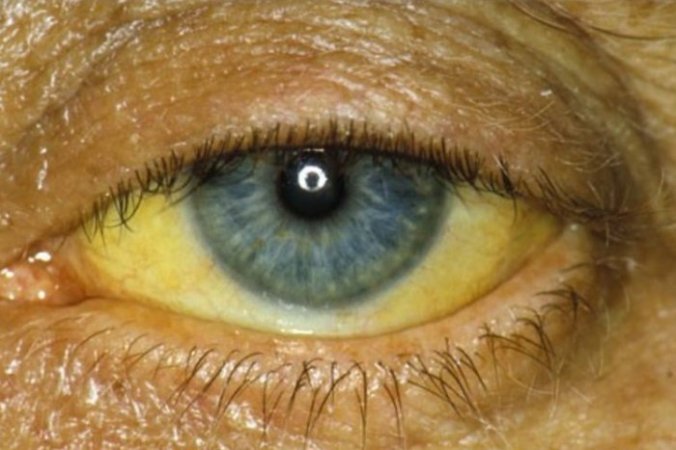
All looks yellow to the jaundiced eye.

Conservative writer John Hawkins published a post called “7 Brutal Truths That Will Make Your Life Better If You Accept Them.”

If I were as cynical as he is, I might say that a better title would be “How to Rationalize Being a Jerk,” but I’m not.

However, his post does demand some ethical perspective. Most, though not all, of his truths are really constructs to justify unethical conduct. Let’s examine them:

1. The average person cares more about what he eats for lunch than whether you live or die.

Maybe, and so what? That doesn’t mean that you should emulate them.  To begin with, there is no “average person.” There are individual people, good, bad and in-between. Hawkins writes,

“You tell the average person that doesn’t know you very well that you have a fatal disease and he’ll say, “I’m so sorry to hear that.” Then he’ll forget about it in five minutes while he debates with his friends whether they’re going to Chili’s or the Mexican restaurant down the street. What that means is that everything you want out of life, you better prepare to earn without getting a lot of favors on the way. If you fall, you have to be the one to pick yourself up off the ground, brush yourself off and get your life back on track. You care. They don’t. So it’s up to you.”

But the a stranger doesn’t always react that way. Sometimes he gives you his kidney. Hawkins is supplying an excuse to be callous based on a Golden Rule Distortion: “Do Unto Others As They Would Do Unto You.” Don’t listen to him.  Care about other people, and don’t hesitate to ask for help. People are better than you think: they will surprise you. In the meantime, it is your job to be as good as you would like them to be.

2. Life is not and will never be fair

I’ve written about this recently: fairness is a vague and broad concept in ethics. Life isn’t “fair” because life is often random, and nobody is tending the fairness meter. Systems either are fair or are not depending on your point of view. The mainstream conservative view about fairness is that one should play the cards one is dealt and stop complaining about it. It’s facile, though not without some truth: it is better to spend time trying to overcome obstacles than to bitch about them. On the other hand, each of us has an obligation to make the world better for those who follow us. Genuine unfairness, in systems, institutions, the culture and society, should be exposed, attacked, and fixed if possible. Hawkins’ approach would have left the U.S. with slavery, second class citizenship for women, Jim Crow, straight-only marriages, age discrimination, brutal monopolies and unchecked consumer fraud. His #2 is a license to be callous.

3. Most people are shallow

What an elitist and ignorant thing to say. If one has spent any time talking to and getting to know a wide range of people, it becomes clear that the opposite is the case. Again, assuming that most people are shallow provides Hawkins with an excuse to ignore them, or treat them with contempt. Most people will tend to behave as if they are shallow because they are rushed, stressed, distracted and focused on short-term exigencies. Give them time to think, a reason to consider a topic carefully, and the respect they deserve, and frequently unexpected depths will reveal themselves. “Most people are shallow” is a crippling bias for anyone to adopt. Expect the best of people: you will often be disappointed, perhaps, but you will also allow validations of your faith in humanity to bloom.

Writes Hawkins:

“So, use the shallowness of other people to your advantage. Learn to dress like a successful person. Pay attention to how you look. Find ways to give off the appearance that you are doing well. Don’t be a phony—be you, but also take advantage of the fact that a superficial appearance will be the reality to most people.”

Let’s see: pretend to be a successful person, but don’t be a phony; be you, but try to fool people by not revealing who you are. What?

People don’t assume that people who dress well,  speak well,  have manners and behave in a civilized fashion are successful because they are shallow. They assume that because they have learned from experience that certain traits both aid success and result from it.  Hawkins is the one revealing shallowness. Continue reading →

Big Data Ethics: The Facebook-Cambridge Analytica Affair

This is supposedly the big ethics story of the past ten days. There are ethics elements involved, but the main ethics stories are how the facts are being spun to try to make this yet another example of sinister doings by the Trump campaign, and how incredibly incompetent and naive social media users are.

In 2016, the Trump presidential campaign paid about $6 million to a firm called Cambridge Analytica to put together a voter database with profiles to allow targeted messaging. Global Science Research was hired by the firm, and reportedly paid Facebook to post a personality quiz and an app that 270,000 Facebook users ultimately consented to. The app allowed the firm to harvest personal likes, attitudes and preferences from 50 million Americans through access to the consenting users Facebook friends. Originally we were told that Cambridge Analytica had used all of that data to target voters during the 2016 presidential election, but that claim seems increasingly dubious. The Trump campaign ended its relationship with the firm well before the election.

Facebook claims it was lied to, and has now banned the firm, which could be fairly classified as misdirection. Facebook, as it has done before on its own, permitted its platform to be used to gather psychological profiles on its users without full disclosure regarding what the data would be used for.  Now Facebook stock is plunging in the U.S., Facebook advertisers are leaving, some users are leaving too, and Congress wants hearings.

What’s going on here?

  • If, in fact, Facebook was deceived into allowing the quiz, that was unethical. Gathering data through such means is not illegal, however, and the ethics of Big Data gathering and analytics are murky at best. The legal profession, for example, has no clear regulation of it or guidance from bar associations.

Facebook did not inform users whose data had been harvested, and that could violate laws in Britain and some  states.

  • The tenor of much of the news reporting and punditry, however, has been  pure fear-mongering and hyperbole. That Cambridge Analytica was evil is presumed, I gather, from the fact that Steve Bannon was one of the founders. The New York Times in various articles described the data gathering as an invasion of “private information,” which is an inflammatory and misleading description, and described “misuse” of the information, as if such use isn’t routine in 21st Century commercial marketing. Here’s the Times, for example,

“The researcher hired by Cambridge Analytica, Alexandr Kogan, told Facebook and his app’s users that he was collecting information for academic purposes, not for a political data firm owned by a wealthy conservative. Facebook did nothing to verify how the information was being used.”

Ah…if it’s for a firm owned by a wealthy conservative, that makes the data gathering sinister, I guess.

  • It is unethical not to let people know why their preferences are being requested, and how they might be used, except that a strong argument could be raised that anyone who didn’t know they were creating a Big Data-base for Facebook is too naive to be allowed on the web without a leash.  Facebook isn’t free: providing data is one of the ways users pay for it. There has certainly been plenty of publicity about this, and it’s not just Facebook. Google, Amazon, Twitter: this is what these companies do.

If it were possible to feel sorry for Mark Zuckerberg (it isn’t) one could conclude that the massive backlash he is receiving is contrived and unfair.

  • The episode is also being called a “breach,” as if there was hacking, or information was stolen.

There was no “breach.” Continue reading →

Morning Ethics Warm-Up, 3/21/18: Ethics Observations As The Snowflakes Fall

Good Morning!

1 Moral luck.  In Great Mills, Maryland, a student with a handgun entered a high school and began shooting. He was brought down by a lone, armed and trained officer before anyone was killed. In the Parkland shooting, the equivalent officer chose to avoid a confrontation. There were other material differences: yesterday’s student shooter seems to have had a specific target in mind (his ex-girl friend) whereas the Parkland shooter was juts out to kill as many kids as possible. One student carried a hand-gun (which is very difficult for anyone to acquire legally in Maryland, which has among the toughest gun laws in the country), while the Florida shooter had a semi-automatic rifle. However, the primary difference was moral luck: if a competent and courageous officer had entered Marjory Stoneman Douglas High and shot Nikolas Cruz before he could inflict carnage, and Deputy Blaine Gaskill, instead of almost immediately entering the school and shooting 17-year-pld Austin Wyatt Rollins dead, had done a Scot Peterson impression and remained outside, the results in Parkland and Great Mills might have been reversed. In any case, the results would not have been changed by different gun laws or demonizing the NRA and lawful gun owners, only by different responses by human beings, and the vicissitudes of moral luck.

I think Marjory Stoneman Douglas High has serious cultural and management problems that played a larger role in the massacre than gun policies. Today’s news certainly suggest that…

2. This is how puppies end up dead in airplane luggage bins…The headline that caught my eye was “Pit bull goes on rampage in elementary school.” What actually happened was that a pit bull -mix puppy got out of the yard and ran onto a nearby elementary school playground where small children were playing, they started screaming and running because their parents had either taught them to be terrified of dogs or never instructed them how to interact with them, the puppy chased the kids into the school, and began jumping and nipping, as puppies tend to do. I was taught not to run from dogs at about the age of four. The consensus later was that the dog was not aggressive, but was just stimulated by all the commotion and playing. A teacher calmed the dog. You know, dogs are a feature of our neighborhoods and communities, and failing to teach children basic dog-interaction skills is as irresponsible as not teaching them how to cross the street. Anti-pit bull hysteria doesn’t help either. “Rampage.”

Then, this morning, I watched an episode of “My Cat From Hell” on the Animal Planet cable channel. In the first segment, one of a family’s two cats was behaving aggressively, biting and scratching in response to any human contact. The reason became apparent to the cat therapist quickly: the family’s two little girls were abusing both cats, treating the more passive of the pets like a stuffed animal as the  parents laughed and took photos. The second segment was even worse. A couple had bought a Munchkin cat—which is an ethics issue itself, since these are deformed cats bred to have such short legs that they can’t climb or jump—

and apparently thought of the creature as a cute animated decoration. They had no toys or comforts for the cat, just a bare room and a litter box. “Have you ever played with your cat?” the therapist asked. “Play? Well, no, we’re both really busy,” came the response.  And the couple wanted to know why was the cat was behaving so neurotically… Continue reading →