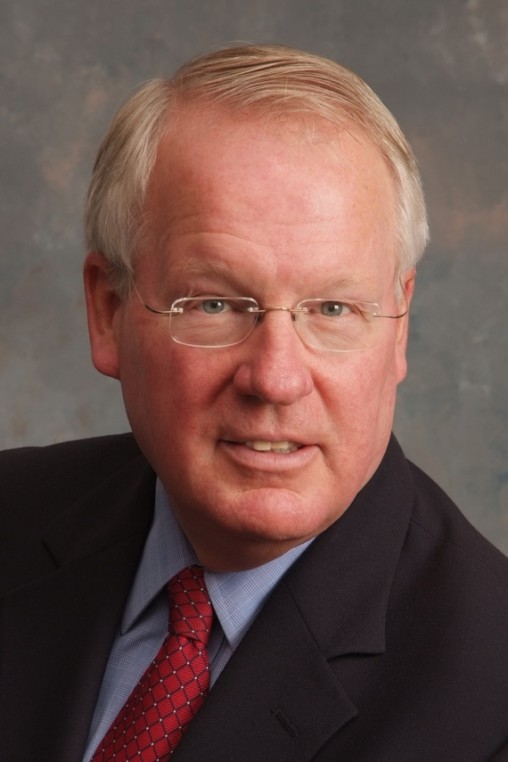
Ethics Hero Emeritus: Rushworth Kidder (1944-2012)

Not everyone named Rush is an uncivil blow-hard. This Rush, Rushworth Kidder, was a dedicated ethicist, teacher, author and philanthropist who was one of the pioneers in the field of professional ethics. His trademark phrase was “moral courage,” but it was more than a motto: Rush thought about it, taught it, and lived it.

He founded his Institute for Global Ethics in 1990, just as the idea was beginning to take hold that organizational ethics was something that needed to be formalized and made part of the culture in companies and professional communities, and unlike many who were to enter the field as it grew, Kidder never sold out. He wasn’t in the field of ethics to make a buck. He believed. Continue reading

Ethics Hero: —Wait For It—Rush Limbaugh!

No, not for that!

For this:

Odd...one would think that a bed company would be familiar with this expression. Well, NOW it is!

After Rush Limbaugh’s personal attack on Sandra Fluke for her testimony before some House Democrats generated furious backlash and activist threats of boycotts of his sponsors, Sleep Train, which calls itself  “the No. 1 Bedding Specialist on the West Coast, and most recognized mattress retailer in the region,” announced that it was ceasing its advertising on Limbaugh’s daily radio show. It had been a national sponsor for 25 years. “As a diverse company, Sleep Train does not condone such negative comments directed toward any person,” the company said in a statement. “We have currently pulled our ads with Rush Limbaugh.”

Sleep Train is, to use the vernacular, a corporate worm. It began advertising with Limbaugh when it was a small company, and he has treated it well. At a moment when the talk show host was under attack by political opponents who want to get him off the air and be free of influential political commentary that often spears their cherished objectives, the company not only abandoned Limbaugh but kicked him when he was down. It was also deceitful about it: while it’s announcement sounded unequivocal, in fact it had only suspended its ads rather than withdrawn as a sponsor. Continue reading

Your Weekend Ethics Update

Sure, it's touching..but is it sincere?

Here’s what you may have missed if your attention was focused on non-ethical considerations over the weekend:

  • A Washington, D.C. Charter school has been using scenarios out of horror movies to teach math—to third graders.
  • Saturday Night Live gave fallen child star Lindsay Lohan a chance to be something other than an addict and scofflaw again. Was it exploitation or was it kindness? Kind exploitation, perhaps?
  • Rush Limbaugh became a victim of his own mouth, attacking a Georgetown Law student’s advocacy of insurance-covered contraceptives not by questioning her logic—which is questionable—but her character, and in crude and degrading terms. Indefensible.
  • At least two NFL team, it was revealed, put bounties on the heads of opposing teams’ stars, offering thousands to players for knocking them off the field and into hospital beds. Unethical, a violation of league rules, cheating, and criminal…and the reaction of players is, “What’s the big deal?” A culture problem perhaps?
  • While conservatives were rending their garments in grief over the sudden death of conservative web warrior Andrew Breitbart (and too many liberals were disgracing themselves by applauding an early demise that left his young children fatherless), a far more influential and infinitely more ethical conservative voice left us: scholar, author, social scientist, philosopher, historian…and Ethics Hero Emeritus… James Q. Wilson.
  • Rush apologized after his sponsors began to flee. With great power comes great responsibility, and Limbaugh has more power than he can possibly be responsible for. He still is accountable.
  • Finally…Is a forced apology a “real” apology? It depends.

Ethics Hero Emeritus: James Q. Wilson (1931-2012)

“Denmark or Luxembourg can afford to exhibit domestic anguish and uncertainty over military policy; the United States cannot. A divided America encourages our enemies, disheartens our allies, and saps our resolve—potentially to fatal effect. What General Giap of North Vietnam once said of us is even truer today: America cannot be defeated on the battlefield, but it can be defeated at home. Polarization is a force that can defeat us.”

James Q. Wilson wrote that, in an essay on America’s polarization. The scholar, author, philosopher and social scientist who died yesterday at the age of 80 was a passionate conservative who believed in winning arguments, influencing policy and changing conduct with the power of ideas, facts, studies and analysis. That the media, especially the conservative media, treated the death of Andrew Breitbart as a thunderclap and the death of Wilson as a footnote tells us as much as we need to know about our culture, values and intellect. I watched GOP presidential candidate Rick Santorum respond to the news of Breitbart’s death as if the culture warrior was the equivalent of Martin Luther King. Breitbart died too young, at 43; he had a family, and reputedly was a nice guy. But his contribution to the American scene was to use his various websites to increase the intensity of partisan warfare, and to help banish fairness, compromise, civility and mutual trust from public discourse. One of the last videos of Brietbart showed him screaming insults at Occupy protesters.

I had stopped using Breitbart’s sites for source material: I couldn’t trust them. The editing of James O’Keefe’s ACORN sting was one strike; the misleadingly truncated Shirley Sherrod speech was another. I wasn’t going to wait for a third. It tells me something alarming about conservatives in this country that such an unethical new media figure could be so lionized upon his death, when his methods were so frequently aimed at destruction rather than elightenment.

Wilson, in contrast, got substantive and wide-ranging results.His 1981 essay “Broken Windows” argued that community policing, rather than mere law enforcement, was the secret to changing urban culture. He wrote (with co-author George Kelling): Continue reading

Ethics Hero: Journalist Harris Meyer

Harris Meyer is an Ethics Hero because he won’t let a bad lesson go unchallenged.

Meyer is an award-winning  freelance journalist and a former editor at the Yakima (Wash.) Herald Republic. That was the paper that first broke the story of Gaby Rodriguez last year, which I wrote about here. With the encouragement of her high school principal, Rodriguez, a senior, embarked on some amateur social science research that involved deceiving everyone in her life except her mother, one (of seven) siblings, her boyfriend, and the principal. She pretended that she was pregnant, suing padding. She faked the pregnancy for months, finally announcing the sham in a student assembly. This extended hoax was supposedly designed to expose how pregnant teenagers are treated by their peers and others. It was, by any rational standard, a despicable thing to do—a betrayal and exploitation of her friends,  her boyfriend’s family, her siblings and teachers. Deception on such a scale must be justified, if at all, by both need and necessity. Were there other, less destructive ways to investigate the treatment of pregnant teens? Sure there were; interviews come to mind. Collecting published journals and other accounts. But Gaby’s unethical stunt was in spiritual synchronicity with a reality show-obsessed culture, where fake is entertaining and collateral damage is of no concern.  I wrote: Continue reading

Ethics Hero: Richard Dawkins

The headlines shout out: “World’s Most Famous Atheist Admits: I Can’t Be Sure God Doesn’t Exist!”

Wow, what a confession. Stop the presses.

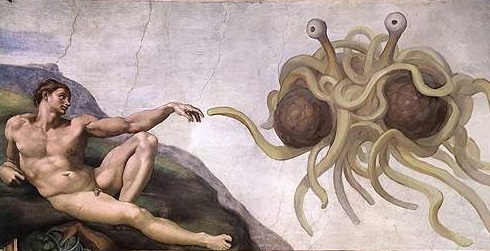
Can anyone be 100% sure this doesn't belong in the Sistine Chapel?

To his great credit, and knowing how the 50% (that is, those of below median intelligence, a sad number of whom reside in the profession of journalism) would react, Prof. Richard Dawkins, the British evolutionary biologist who is point man for the atheist assault on religion, told a student audience at Oxford during a “discussion” ( translation: informal debate) with the Archbishop of Canterbury that he thinks “the probability of a supernatural creator existing is very very low,” but he can’t be 100% certain.

Well, of course not. While this will be taken as a sign of weakness by the faithful who, of course, are 100% certain of the Supreme Being’s existence, no honest, intelligent, fair individual suffering from less than clinical levels of egomania and omniscience could possibly claim to know with certainly where the universe came from. Bravo to Dawkins for his honesty and integrity.

Ethics Hero: Pastor Thomas Keinath

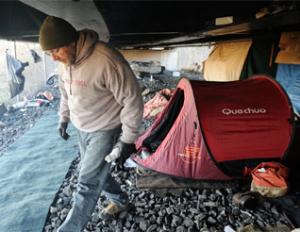
Rev. Keinath on holiday, under the overpass

Thomas Keinath is the pastor at Calvary Temple in Wayne, New Jersey, a so-called mega-church with a 2,000-plus seat sanctuary in an affluent community. It was time for him to take some vacation time, so he did. And what did he do?

Keinath spent his week off living with the homeless in the very un-affluent community of nearby Paterson, New Jersey. During the day, he wandered through the streets along with desperate, sick and destitute. At night, he stayed with them as they built fires to keep warm in freezing cold,  and slept with them, under a bridge, surrounded by discarded hypodermic needles.  He wrote down the life stories of the people he met, so he could learn from their life stories.

“I needed to understand what they were experiencing, and I needed to feel their pain.  How could I bring help or healing to the streets if I did not know what their needs are?” the pastor told reporters. Continue reading

Tim Wakefield, the Knuckleball, and Character

My favorite baseball player retired a few days ago. Tim Wakefield, a knuckleball specialist who had pitched the last 17 years with my home town Boston Red Sox, finally decided to hang up his spikes at the age of 45. There were several remarkable aspects to his long and successful career (he won 200 games, something the vast majority of major league pitchers never do), not the least of which was throwing the knuckleball almost exclusively, an infamous and rare pitch that is almost as difficult to throw as it is to hit or catch. (Former catcher Bob Uecker famously quipped that the best way to catch a knuckleball was to wait until it stopped rolling, and pick it up.) The most remarkable, however, was the way Wakefield always exhibited exemplary character, on the field and off of it. Continue reading

Ethics Hero Emeritus: Roger Boisjoly (1938-2012)

Roger Boisjoly’s death was originally just reported locally when he died in Utah last month at the age of 73. Only now is the media reminding the public of Boisjoly’s life, his tragic role in a national tragedy, and how he tried and failed to avert it.

In 1986, Boisjoly was a booster rocket engineer at Morton Thiokol, the NASA contractor that, infamously, manufactured the faulty O-ring that was installed in the Space Shuttle Challenger, and that caused it to explode. Six months before the Challenger disaster, he wrote a memo to his bosses at Thiokol predicting”a catastrophe of the highest order” involving “loss of human life.” He had identified a flaw in the elastic seals at the joints of the multi-stage booster rockets: they tended to stiffen and unseal in cold weather.  NASA’s shuttle launch schedule included winter lift-offs, and Boisjoly  warned his company that send the Shuttle into space at low temperatures was too risky. On January 27, 1986, the day before the scheduled launch of the Challenger, Boisjoly and his colleague Allan J. McDonald argued for hours with NASA officials to persuade NASA to delay the launch, only to be over-ruled, first by NASA, then by Thiokol, which deferred to its client.

And the next day, on a clear and beautiful morning, the Shuttle’s rocket exploded after take-off, killing the crew of seven and mortally wounding the space program. Continue reading

Ethics Hero, “Even A Stopped Ethics Alarm Clock Will Be Right Twice A Day” Division: Bill Maher

Whenever shameless ideologues of any stripe graciously or grudgingly take positions against his or her camp’s official cant, they should be applauded or otherwise encouraged in the faint hope that they will prompt honesty and fairness from others of similar rigidity. Thus it is that I am forced to award the relentlessly uncivil, unfair and unethical comic Bill Maher, host of a rigged public affairs/ satire panel show on HBO, this Ethics Hero award.

Maher joined the small but growing group of pundits and politicians willing to admit that the Occupy movement they had  foolishly hailed as a legitimate exercise of the vox populi is an embarrassment, saying on his latest show  (in his trademarked gross fashion),

“…And as I watch them on the news now I find myself almost agreeing with Newt Gingrich. Like, you know what – get a job. Only because, you know, the people who originally started, I think they went home and now it’s just these anarchist stragglers. And this is the problem when you, you know, when your movement involves sleeping over in the park. You wind up attracting the people who were sleeping over in the park anyway. And I think that’s where we are now with the Occupy movement. They did a great job bringing the issue of income and equality to the fore, but now it’s just a bunch of douchebags who think throwing a chair through the Starbucks window is going to bring on the revolution.” Continue reading