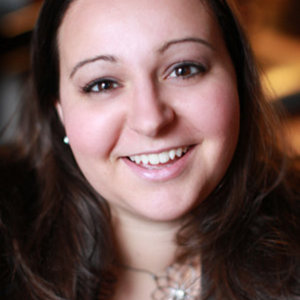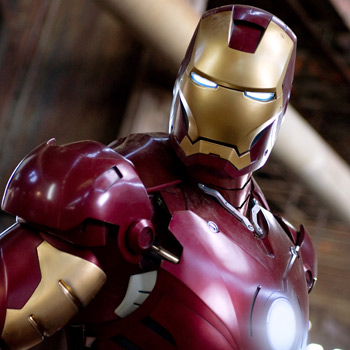
Ethics Hero: Robert Downey, Jr.

Superhero on the outside, Ethics Hero on the inside.

Show business Ethics Heroes are about as rare as credible presidential candidates; after all, Hollywood is one of two environments where the ethical culture is even more warped and cynical than Washington, D.C. (The other: the Columbia drug cartels.) Yet a genuine Ethics Hero emerged at the 25th annual American Cinematheque Award gala, when honoree Robert Downey, Jr., now a major star and industry power player, threw his prestige and influence behind a genuine industry pariah, Mel Gibson, in an act of kindness, gratitude, and reciprocity.

After Downey accepted his award before a cheering crowd of important performers and artists, he unexpectedly devoted his moment in the spotlight to recall how Mel Gibson, when Downey’s career had been devastated by habitual substance abuse and Gibson was a megastar, constantly supported him, encouraged him and refused to give up on him, though the Hollywood community had. The “Iron Man” star explained how Gibson, in 2003, gave Downey a starring role in “The Singing Detective,”  which had been developed for Gibson himself, because nobody else would give the troubled actor another chance.  Gibson even paid the insurance premiums for Downey, because the studio would not accept the risk of hiring him, given his history of drug addiction and legal problems. All  Mel asked in return, Downey recalled, was that Downey resolve to help out the next actor who had hit bottom and had no friends in the Town Without Pity. Continue reading

Stacy Crim, Ethics Hero…and the Hardest Choice

Last week in Oklahoma, Ray Phillips fulfilled a promise to his sister Stacy, taking home from the hospital 5-pound Dottie Phillips, born prematurely in September, to become the newest member of his family.  Stacy died last month of brain cancer, just three days after holding her infant daughter for the first and only time. Dottie was able to come into the world only because Stacy, 41, had made the choice to reject chemotherapy for her rapidly spreading cancer that was diagnosed after she learned that she was pregnant.

When life places one of us in a “Sophie’s Choice” dilemma like Stacy’s, no one has standing to question or challenge whether the ultimate choice is “right.” There is no right choice. Stacy was faced with deciding whether to sacrifice the unborn child she had never met, a child whom many in America choose to regard as a neither a life or a being with any individual rights, but rather only as an ephemeral potentiality made of cells, similar to a pay-off at the races or a stock dividend. Even those who take the opposite view, that Dottie was a human life even at the earliest stages of her development in the womb, would never assert that a mother would be wrong to choose life-saving cancer treatments for herself at the risk of the unborn child. In such a case the right to choose is nearly unanimously accepted, and it is the hardest choice of all. Continue reading

Ethics Hero: David Letterman

No Free Speech weenie he. Yale, take note.

I stopped watching David Letterman years ago, when I learned that he was an unapologetic serial sexual harasser.  I don’t like to patronize the work of professionals, however talented, who should have been fired and would have, if their employers had any integrity. As a result, I missed Letterman’s ascent into ethics hero territory. It pains me to admit this, since I neither like nor generally respect him, but that is where David Letterman belongs.

On the June 5, 2011 edition of “The Late Show with David Letterman,” the host smilingly pulled his finger across his throat to note the U.S. military’s reported killing of Ilyas Kashmiri, an Islamist terrorist who was one of the organizers of a deadly attack in India that killed and wounded hundreds of innocent civilians. On a roll, Letterman made a joke about Osama bin Laden’s death as well.A group of radical Islamists took offense, and in a posting on the Islamist web forum Shumukh al-Islam, called for Letterman’s murder, urging the eventual assassin to cut out Letterman’s tongue.

Continue reading

Ethics Hero: Yankees Manager Joe Girardi

I don't believe I'm posting this.

It has come down to the final day of the season, with the (or as they are known in these parts, MY) Boston Red Sox tied with the Tampa Bay Rays for the final spot in the American League playoffs. The Yankees have been dominated by the Red Sox, their long-time rivals, most of the season, while the Rays have been easier pickings. Lo and behold, it is the Yankees playing the Rays, in a game that could determine who will be the Yankees’ opponents in the League Championship series.

The game is otherwise meaningless to New York, which has already clinched a play-off berth. At this point, a play-off bound manager’s job is to decide which marginal players will be on the post-season roster, to line up his pitching, and to steer clear of injury. Asked if he was bothered that Yankee manager Joe Girardi was surely not going to oppose the Rays with his best team, Boston Manager Terry Francona shrugged. He had earned the right to use the game to prepare for the play-offs, Francona answered.

Yet here was Girardi, starting a team made up of most of his regulars, replacing his pitchers as soon as they were in peril, and generally managing the game against the Rays as if it were the final game of the World Series. Continue reading

When Ethics Hero Meets Ethics Dunce: Alan Ehrlich and the Spirit of Citizenship vs. South Pasadena Police Chief Joe Payne and Official Arrogance

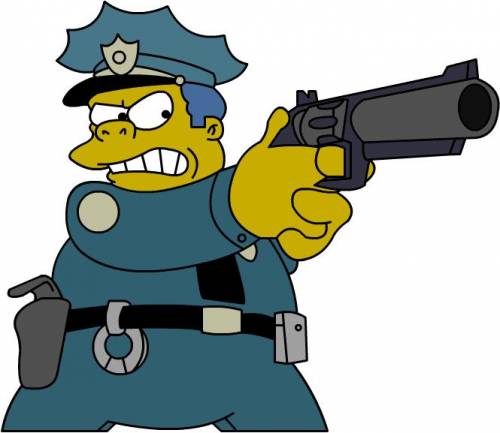
"Step away from the intersection, sir! You are not permitted to make my officers look bad by doing the essential jobs they cannot."

When a traffic light in South Pasadena went out during the morning rush hour, citizen Alan Ehrlich stepped into the breach and began directing traffic at the major intersection.

“I grabbed a bright orange shirt that I have and a couple of orange safety flags. I took it upon myself to help get motorists through that intersection faster,” said Ehrlich. Before he took action, traffic was backed up for more than a mile, as vehicles took more than a half hour to maneuver through the intersection.

“It was just kind of chaos of cars . . . there were stop signs up. But people were challenging each other to get through the intersection,” said a witness  who works at an office nearby. He reported that Ehrlich’s stint as volunteer traffic cop had traffic flowing within ten minutes.

South Pasadena police then responded to the scene, ordered Ehrlich to stop, and issued him a ticket, but refused to direct traffic at the intersection themselves. South Pasadena Police Chief Joe Payne explained that he did not have the man power needed to staff officers when lights fail, and that Ehrlich should have just allowed traffic to back up. Continue reading

Ethics Hero: ABC News White House Correspondent Jake Tapper

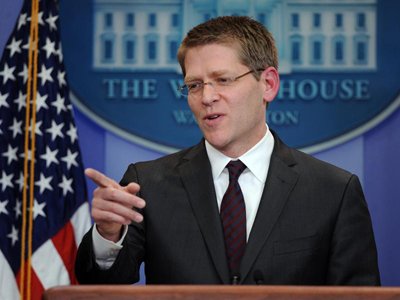
Neat trick by Jay Carney: Speaking for the President, AND doing an uncanny impression of a weasel!

It shows the degree to which we now take bias and favoritism by the news media for granted that a reporter doing what once was regarded as his duty now appears heroic.  Sadly, that is where we are.

That is also why Jake Tapper warrants an Ethics Hero designation for pressing White House press secretary Jay Carney on the obvious disconnect between President Obama’s lecture on civility in January in the wake of the Giffords shooting, and his happy acceptance of the call by  Teamsters leader Jimmy Hoffa, Jr. to “take these sons of bitches out” at a rally over the weekend. The exchange: Continue reading

Ethics Hero Emeritus: Stetson Kennedy (1916-2011)

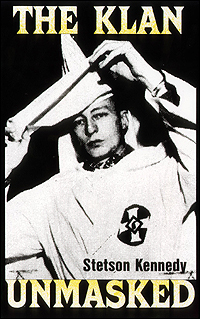
And he gave his book to Superman...

Author and folklorist Stetson Kennedy, who died this week,  is another important and courageous American that most of us never heard of. Let’s try to catch up.

After a back injury kept him out of World War II, Kennedy began a lifetime career of crusading against bigotry and what he called “homegrown racial terrorists.” He served as director of fact-finding for the southeastern office of the Anti-Defamation League and as director of the Anti-Nazi League of New York.

In his 1954 book “I Rode With the Ku Klux Klan,” Kennedy wrote that he gained entrance to the Klan by posing as an encyclopedia salesman and using the name of an uncle who was a Klan member. While posing as a member, he learned many Klan secrets that he put to use undermining the organization’s reputation and support. With evidence he snatched from the Grand Dragon’s wastebasket, he gave the Internal Revenue Service what it needed to collect an outstanding $685,000 tax lien from the Klan in 1944, and he helped draft the brief used by the state of Georgia to revoke the Klan’s national corporate charter in 1947. He also testified in other Klan-related cases. Continue reading

Ethics Hero Emeritus: Baltimore Orioles Pitching Great Mike Flanagan,1951-2011

Mike Flanagan, for more than three decades an ace pitcher, coach, executive and broadcaster with the Baltimore Orioles, died of a self-inflicted shotgun blast this week. It is obvious from listening to his devastated colleagues, former teammates and friends that he was genuinely loved and respected, and one reason was his overwhelming decency and strong ethical compass. Many members of the Orioles family recalled how Flanagan was known for taking young players aside and schooling them on how to represent the team with dignity, honor, fair play, hard work, and integrity.

In his lovely column today remembering Flanagan and his values, Washington Post sportswriter Tom Boswell recounts how the ex-pitcher once explained why he wouldn’t cheat. Many sportswriters and former player have offered the argument, during the continuing ethical debate over the culpability of players using steroids, that it is only natural that an athlete, any athlete, would cheat to prolong his career. Flanagan showed why they are wrong, and why we should never excuse unethical conduct on the grounds that “anybody would do it.”

Boswell: Continue reading

Ethics Hero: Actor Ryan Gosling

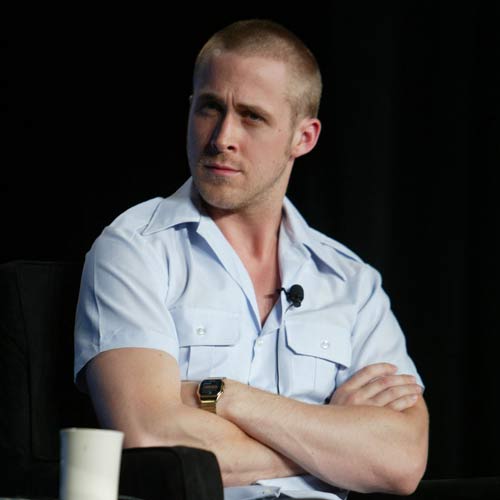
Ryan Gosling....ready for action!

Caught on video: Hollywood hunk Ryan Gosling (“The Notebook”) saw a fight developing on the streets of NYC, dropped his bag of groceries and used his personal-trainer toned bod to break it up.

Stopping violence in public can be dangerous, and I wouldn’t recommend it for everyone. Gosling obviously knew what he was doing, however, and what he was doing was fulfilling the citizen’s duty to fix a problem when he or she can. Proactive participation in society, including discouraging misconduct whenever possible, is profoundly ethical, and too rare. The actor not only stopped a brawl, he also established himself as a member of that endangered species, the celebrity who deserves to be a role model.

Gosling doesn’t just play heroes in the movies—-he knows how to be the real thing.

Ethics Hero: Jennifer McKendrick

My hero.

Jennifer McKendrick is my favorite Ethics Hero of 2011.

An Indiana County freelance photographer of sensitivity, courage and principle, McKendrick engaged in classic ethical behavior—seeing wrongful conduct that harms others, and taking affirmative action to address it. Her conduct is a template for all of us, and not merely regarding the specific problem she decided to confront: online bullying.

McKendrick had been hired to shoot the senior photos of several high school girls, then discovered that they had viciously denigrated other students on Facebook. She sent the girls’ parents this letter:
Continue reading