Ethics Hero: Google

Yesterday, Google demoted its own Google Chrome homepage in pagerank for at least 60 days following the revelation that the browser’s online advertising campaign violated Google’s policy banning the use of paid links. Google had contracted with an outside firm to handle Chrome’s the campaign, and it mutated into a scheme where bloggers were paid to link to a video that extolled the virtues of Chrome to small businesses.

Thus Google was violating its own policies, the stated punishment for which is demotion in search results. Google says that it didn’t know that its sub-contractor was doing this, but nonetheless issued this statement:

“We’ve investigated and are taking manual action to demote http://www.google.com/chrome and lower the site’s PageRank for a period of at least 60 days. We strive to enforce Google’s webmaster guidelines consistently in order to provide better search results for users. While Google did not authorize this campaign, and we can find no remaining violations of our webmaster guidelines, we believe Google should be held to a higher standard, so we have taken stricter action than we would against a typical site.”

Today, if you do a Google search for “browser,” Chrome doesn’t appear on the first page of results.

Living by your own rules is the mark of integrity. This time, Google delivered.

Ethics Hero Emeritus: Christopher Hitchens (1949-2011)

Too many excellent writers are writing about Christopher Hitchens in the wake of his premature death from cancer for me to add much of value. I disagreed with Hitchens frequently, but then, so did everyone. What I appreciated was his integrity, which was unshakable. What I admired, and will always try to emulate, was his refusal to be seduced by convention, ideology, political agendas and partisan bias. Hitchens looked at the world with clear and piercing eyes, and dissected what he observed with a mind that was curious, rigorous, and forever open. Thus he was never a comfortable ally for liberal or conservative, Republican or Democrat, because he would never hesitate to arrive at conclusions that shocked his friends and cheered his friend’s enemies. He was fearless and principled.

Most of all, however, Christopher Hitchens wrote like an angel, a simile the committed atheist would have hated. It is a measure of the depths to which popular taste and intellect have fallen that the Mark Train Prize was awarded in recent years to the pedestrian likes of Will Farrell and Tina Fey when Hitchens routinely churned out prose wittier than their best efforts on the most inspired days of their creative lives. He was truly the spiritual and literary descendant of Mark Twain, as well as Swift, Ambrose Bierce, H.L. Mencken, George Bernard Shaw, W.S. Gilbert, Dorothy Parker, Gore Vidal and the rest of the select crew of social critics blessed with the ability to infuriate, illuminate and amuse simultaneously. When he focused all of his passion, intellect and rhetorical skills on a topic he cared about, Hitchens was as close to an irresistible force as a writer can be. Yet his mission was always noble. His constant goals were truth, justice, fairness, and wisdom. Of him it could be fairly stated, as of few others, that while Christopher Hitchens was around, bullshit was never safe.

I’ll close with four links about Hitchens: the New York Times obituary, the Washington Post obituary, a collection of comments and other links about Hitchens, a collection of his essays, an appreciation from a friend, and a collection of some of his best quotes.

If you can only read one, choose the last. The list is heavily tilted toward Hitchens’ attacks on religion, and he wrote about so many other things, but it is representative of his skill and style. One quote on the list  in particular I remember well, and it makes me laugh every time I read it:

“If you gave [Jerry] Falwell an enema he could be buried in a matchbox.”

Ah, we’ll miss you, Hitch!

Ethics Hero: Steven Spielberg

The dwarf in the cloth monkey suit is just fine, thanks.

In a long, entertaining interview in the current issue of Entertainment (naturally!), director Steven Spielberg expresses regret over his decision to change his 1982 classic “E.T.” for its 2002 re-release, and vows never to do such a thing again. Here he splits off from the philosophy of his pal George Lucas, who continues to fiddle with his past films as technological upgrades become possible. Spielberg:

“My philosophy is now that every single movie is a signpost of its time, and it should stand for that. We shouldn’t go back and change the parting of the Red Sea in Cecil B. DeMille’s “The Ten Commandments” just because with the digital tools we have now we can make it even more spectacular than it was.” Continue reading →

Ethics Hero: Martin Scorsese

One of the most respectful and compassionate acts a human being can perform is to rescue the memory and achievements of a great man or woman from obscurity. Not only does this confer deserved longevity on the legacy of someone who has contributed something good and lasting to civilization and culture; it also is a gift to the rest of us, enriching our knowledge and perhaps providing us with inspiration as well.

This is what Martin Scorsese does for the early French film pioneer Georges Méliès in his new movie, “Hugo.”  The film is a fictionalized account of how Méliès, a producer, director, actor and special effects innovator, was rediscovered by film-lovers and his countrymen after years of discouragement and depression. In a nice piece of irony and symmetry, Scorsese’s film duplicates the phenomenon his movie describes. Forgotten after World War I, Méliès and his work were celebrated late in the 20’s, and he received long overdue acclaim and recognition, including France’s Legion of Honor. After his death in 1938, his contributions to the art and craft of cinema faded from public awareness a second time. Once again, thanks to “Hugo,” the public is learning Méliès’s name and being delighted and inspired by his creations. Continue reading →

William Aramony and the Fallen Hero Dilemma

As he usually did, the extraterrestrial, mutant, collective or whatever he was William Shakespeare (no human could be that wise) had it exactly right, and a long time ago: “The evil that men do lives after them; The good is oft interred with their bones.” In a dispirited column on the CNN website, obviously inspired by the Paterno debacle, ESPN writer L.Z. Granderson writes that he has become afraid to watch the news, fearing that another of his heroes will be shown to be a fraud:

“And when we find out our gods are not perfect, we’re confused. We don’t know what to do with a storyline where the perceived protagonist is complex. Heroes aren’t supposed to do bad things. That’s what villains are for. So either the good supersedes the bad, or the bad makes it impossible to remember the good. We don’t like it when such duality exists in one person. We don’t want to know our heroes are human.” Continue reading →

Ethics Hero: Judge Laurence Silberman

Here President Bush attempts to strangle Judge Silberman for being insifficiently loyal to conservative causes.

Judge Laurence H. Silberman, a senior judge on the federal appeals court, cast the deciding vote as the U.S. Court of Appeals for the D.C. Circuit  upheld, 2-1, the constitutionality of the controversial individual mandate. The mandate, which is almost certain to be reviewed by the U.S. Supreme Court, is the linchpin of President Obama’s health-care insurance law that requires most individuals to purchase insurance coverage or be fined.

You can hardly have more impeccable conservative or Republican credentials than Silberman. He served in the Nixon administration, was appointed by President Reagan to the court and is a Federalist Society stalwart as well as a favorite judicial scholar of the political right. An appeals judge shouldn’t be praised for doing his job, which is deciding cases based on the law and the Constitution rather than political loyalties or ideological bias. Unfortunately, political loyalties and ideology is how the press, partisan groups, elected officials and, it must be said, too many judges, do think cases are decided, and that belief  grievously harms faith in the justice system and trust in the rule of law. Continue reading →

Penn State Primer: 15 Ethics Alarms on the Duty to Rescue and the Bystander Problem

Tiring of the smug and remarkably vicious Paterno defenders who have designated Mike McQueary for infamy because he failed to stop the Penn State child rapist in action, and who have accused me of supporting such inaction in rescue situations when my position, record, writings, belief and life experience proves the opposite, I offer these previous Ethics Alarms posts on the topics of rescue and bystander inaction. It is a useful, if sometimes disturbing review of various aspects in a complex issue. I don’t really expect the commenters previously referenced to allow rational thought to interfere with their certitude and vendetta, but most visitors here are not so wired.

A new post, focusing especially on McQueary, will be along soon, but today is Veterans Day, and I have my own duty to attend to: honoring Maj. Jack Marshall, Sr., 1920-2009, WWII veteran, Silver Star, Bronze Star and Purple Heart veteran, a true hero his entire life, in every way imaginable.

I am quite confident that he would not only have stopped Jerry Sandusky from molesting the boy, he might well have shot him.

Here are the 15 selected essays: Continue reading →

Ethics Hero: Robert Downey, Jr.

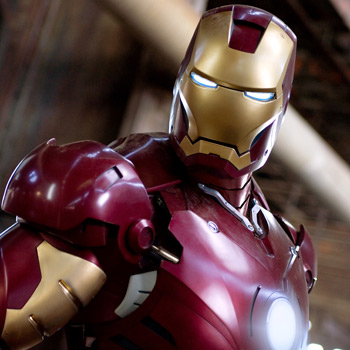
Superhero on the outside, Ethics Hero on the inside.

Show business Ethics Heroes are about as rare as credible presidential candidates; after all, Hollywood is one of two environments where the ethical culture is even more warped and cynical than Washington, D.C. (The other: the Columbia drug cartels.) Yet a genuine Ethics Hero emerged at the 25th annual American Cinematheque Award gala, when honoree Robert Downey, Jr., now a major star and industry power player, threw his prestige and influence behind a genuine industry pariah, Mel Gibson, in an act of kindness, gratitude, and reciprocity.

After Downey accepted his award before a cheering crowd of important performers and artists, he unexpectedly devoted his moment in the spotlight to recall how Mel Gibson, when Downey’s career had been devastated by habitual substance abuse and Gibson was a megastar, constantly supported him, encouraged him and refused to give up on him, though the Hollywood community had. The “Iron Man” star explained how Gibson, in 2003, gave Downey a starring role in “The Singing Detective,”  which had been developed for Gibson himself, because nobody else would give the troubled actor another chance.  Gibson even paid the insurance premiums for Downey, because the studio would not accept the risk of hiring him, given his history of drug addiction and legal problems. All  Mel asked in return, Downey recalled, was that Downey resolve to help out the next actor who had hit bottom and had no friends in the Town Without Pity. Continue reading →

Stacy Crim, Ethics Hero…and the Hardest Choice

Last week in Oklahoma, Ray Phillips fulfilled a promise to his sister Stacy, taking home from the hospital 5-pound Dottie Phillips, born prematurely in September, to become the newest member of his family.  Stacy died last month of brain cancer, just three days after holding her infant daughter for the first and only time. Dottie was able to come into the world only because Stacy, 41, had made the choice to reject chemotherapy for her rapidly spreading cancer that was diagnosed after she learned that she was pregnant.

When life places one of us in a “Sophie’s Choice” dilemma like Stacy’s, no one has standing to question or challenge whether the ultimate choice is “right.” There is no right choice. Stacy was faced with deciding whether to sacrifice the unborn child she had never met, a child whom many in America choose to regard as a neither a life or a being with any individual rights, but rather only as an ephemeral potentiality made of cells, similar to a pay-off at the races or a stock dividend. Even those who take the opposite view, that Dottie was a human life even at the earliest stages of her development in the womb, would never assert that a mother would be wrong to choose life-saving cancer treatments for herself at the risk of the unborn child. In such a case the right to choose is nearly unanimously accepted, and it is the hardest choice of all. Continue reading →

Ethics Hero: David Letterman

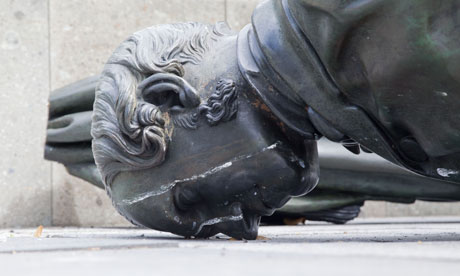
No Free Speech weenie he. Yale, take note.

I stopped watching David Letterman years ago, when I learned that he was an unapologetic serial sexual harasser.  I don’t like to patronize the work of professionals, however talented, who should have been fired and would have, if their employers had any integrity. As a result, I missed Letterman’s ascent into ethics hero territory. It pains me to admit this, since I neither like nor generally respect him, but that is where David Letterman belongs.

On the June 5, 2011 edition of “The Late Show with David Letterman,” the host smilingly pulled his finger across his throat to note the U.S. military’s reported killing of Ilyas Kashmiri, an Islamist terrorist who was one of the organizers of a deadly attack in India that killed and wounded hundreds of innocent civilians. On a roll, Letterman made a joke about Osama bin Laden’s death as well.A group of radical Islamists took offense, and in a posting on the Islamist web forum Shumukh al-Islam, called for Letterman’s murder, urging the eventual assassin to cut out Letterman’s tongue.

Continue reading →