Unethical Quote of the Month: Patriots Quarterback Tom Brady

Disappointed kid

“This isn’t ISIS. No one’s dying.”

–New England Quarterback Tom Brady, in the course of denying culpability in the latest New England Patriots cheating scandal.

Tom Brady now joins the Ethics Alarms Rationalization Spouter’s Hall of Fame, which I just started. You just can’t embody Rationalization #22, Comparative Virtue, or “It’s not the worst thing” any better than this obnoxious attempt to minimize the significance of Deflategate.

That’s the way to teach the kids to be fair competitors and good citizens, Tom! And does a star athlete whose attitude regarding cheating in his profession amounts to this fill you with trust in his integrity, honesty, and sportsmanship?

Not me.

Ethics Quote of the Week: Senator Joe Manchin (D-WV)

President Obama's leadership education progress: no change. Sorry.

President Obama’s leadership education progress: no change. Sorry.

“Now, that’s just not the way you do legislation. It’s not the way a democracy works. And it’s not the way the … three branches of government should work.”

—- Senator Joe Manchin, a Democrat who supports the stalled Keystone Pipeline, referring to President Obama’s preemptive announcement that he would veto the bill before he knew exactly what the final bill would be.

President’s Obama’s supporters should pay attention to this episode: even if the President has a flat learning curve, perhaps they are more teachable. Manchin is right. Anyone with a passing familiarity of how Presidential leadership has worked in the past, is supposed to work, and is well understood by both scholars and practitioners to work, recognizes that this is a sparkling example of the obtuse refusal of Barack Obama not merely to master the skills of his job, but even to acknowledge them.

I really don’t care a fig about the pipeline. I think the President’s opposition is foolish—this is a bone thrown to the most extreme climate change activists, for there is no reliable research that shows that the pipeline will “accelerate global warming”—but my understanding of all the  factors involved is an inch deep. I really don’t care about it. I do care that the President doesn’t know how to do his job, and would prefer to make sure that Democrats can keep saying that he would have accomplished so much if Republicans hadn’t blocked his every brilliant plan.

A veto is a bargaining tool. Only Obama, of all of our Chief Executives, has failed to grasp that. The opposoition wants something. This means that you, as President, have an opportunity to get something you want. You negotiate. You horse trade. You bluff. Maybe you can’t come to an agreement. Maybe you can’t trade the pipeline, with some further limitations, for, say, your extravagant plan to make community college free for all, which otherwise has no chance whatsoever of ever happening. But you try. it’s called “being President.” It’s called “leadership.” It’s called “competence.”

And yes, it’s also called Democracy and the three branch system.

Unethical Quote of the Week: Ampersand on “Alas! A Blog”

Into the Woods

There is no reason in the world, other than Hollywood’s endless racism and lack of imagination, for this movie (or the original play, alas) to have an all-white cast. Why do movies feel like they’d rather die than show us a diverse cast? (And please don’t say “they cast the best people for the roles.” I thought the whole cast was good, but Streep was the only one who turned in a performance so unique that you couldn’t imagine anyone else doing the role.)

—–Ampersand, a.k.a. Barry Deutsch, opining on the assets and deficits of Rob Marshall’s film adaptation of “Into the Woods” on his blog

I hate to pick on Barry—OK, that’s not true, I enjoy it immensely—but this statement could stand as the distillation of knee-jerk liberal thinking on race, and it is wrong in so many ways that I hesitate to start counting. The sentiment, however, poses a nice counterpoint to the discussion here about the black James Bond controversy, so I can’t resist taking aim at it.

1. So casting a mega-million dollar film—-in a dicey genre (Have you heard? Big budget Hollywood musicals died in the Sixties…) and a limited audience—with actors who comport with that audience’s expectations of the musical the film is based on is racist, eh? More unfair words and inexcusable race-baiting were seldom uttered in word or written in ink. If a director had a vision that supported casting African American actors in traditional Grimms’ fairy tale roles and could make it work, I would salute him, but Rob Marshall had other priorities. He knew that every cut would be scrutinized and attacked by the Sondheim fanatics (which, by the way, are as white as a dove convention in a blizzard); he knew that the show itself was seriously flawed; he knew that every single adaptation of a Sondheim musical (“West Side Story” doesn’t count) has been a critical and box office bomb. He had every reason to keep his casting choices as close to the traditional images of the characters and the way they were portrayed on Broadway, and none of those reasons were racism.

2. It’s impressive how casually a race-obsessed progressive will accuse a professional of racism as a first response. Irresponsible, unfair, disrespectful, and in this case, ignorant of both commerce and art. Continue reading

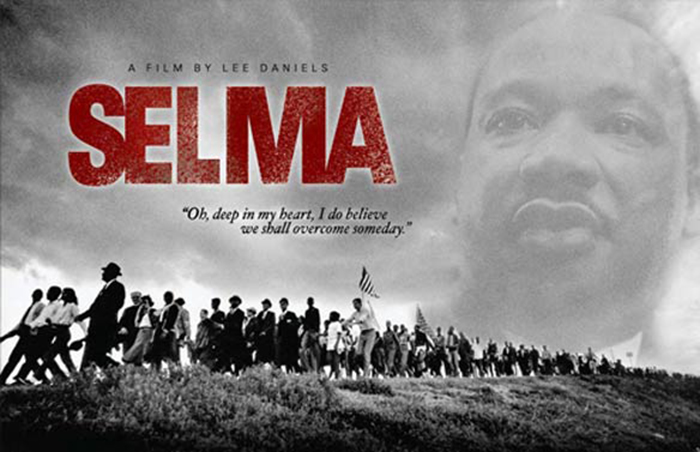
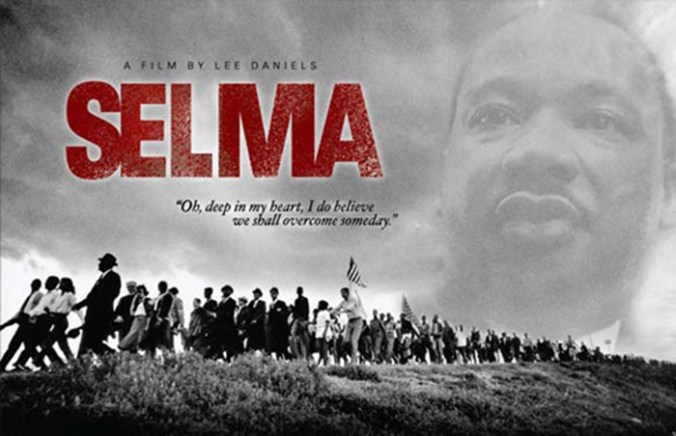
Ethics Quote Of The Month: Washington Post Film Critic Ann Hornaday on “Selma”

selma-movie

“How to reconcile facts and feelings, art and fealty to the truth? When filmmakers recall with pride about the deep reporting and research they’ve done for their projects, then they deserve to be held accountable for their projects. For fact-based films, accuracy becomes a formal element, along with acting, design and cinematography. It’s up to each viewer to identify the threshold where artistic license compromises the integrity of the entire endeavor. Cinema has more responsibility in this regard precisely because of its heightened realism, its ability to burrow into our collective consciousness and memory, where the myth has a tendency to overpower settled fact. But viewers have responsibilities, too. If accuracy has become a formal element of historical dramas, then the ensuing fact-checks have become just as integral a part of how we view them. That means it’s incumbent on audiences to engage in a mode of spectatorship that, rather than decide who’s right, can listen to and respect expert critiques, and still open themselves up to a piece of filmed entertainment that speaks to less literal, more universal truths.”

—–Ann Hornaday, Washington Post film critic, on the controversy regarding the counter-factual treatment of President Lydon Johnson in the new film, “Selma.”

The question of whether film makers have an ethical obligation to fairly represent history, and particularly individual historical figures, in their movies has been a topic visited frequently at Ethics Alarms, and I’m not going to re-hash conclusions that have been thoroughly discussed before, such as

…here, regarding the casting of “The Impossible” with a gleamingly light-skinned central family and the changing of the real life heroine from Spanish to British

…here,  discussing complaints that a fictional event was not portrayed accurately in “Noah”

…here, exploring the many falsehoods, some quite despicable, in James Cameron’s “Titanic”

…here, regarding unfair criticism of “Argo”

and here, discussing “Lincoln” screenwriter, playwright Tony Kushner’s inexcusable choice to represent a real life former Congressman voting against the Thirteenth Amendment abolishing slavery when in fact he voted for it.

The conclusion of that last one sums up the lessons of the rest, I think. Kushner’s defense against criticism of the collateral damage his invented facts wreaked was to argue that they were legitimate tactics in the pursuit of drama and “greater truths.” He then compared smearing the reputation of a Congressman, to the detriment of his descendants, to misrepresenting the kinds of socks Lincoln wore. (Kushner can be a brilliant writer, but his ideological utilitarianism is repellant.) I wrote:
Continue reading

Unethical Quote Of The Month: Sen. Claire McCaskill (D-Mo)

“Frankly, it is irritating that anybody would be distracted by which statistics are accurate.”

Sen. Claire McCaskill (D-Mo), in response to Justice Department statistics that show that the “1 in 5 women will be raped on campus” statistics cited by her and other elected officials and women’s rights advocates were not just inflated, but ridiculously so.

"1 in 5! That's outrage..what? It's NOT 1 in 5? It's   more like 1 in 200? OK, now let's not get hung up on statistics..."

“1 in 5! That’s an outrage..what? It’s NOT 1 in 5? It’s more like…1 in 200? OK, now let’s not get hung up on statistics…”

Yes, Senator, isn’t it irritating when stubborn facts interfere with ideological narratives?

Yet it is not half as irritating as knowing that we have so many elected leaders who think like McCaskill. That 20% statistic has been used by the Obama Administration to bully colleges into removing due process and fairness from campus sexual assault allegations, and to push the false impression on the public that there is a rape epidemic, when in fact the incidence of rape, on campus and elsewhere, has fallen precipitously.

In September, when President Obama announced his “It’s On Us” initiative to address college sexual assault, he said that “an estimated 1 in 5 women has been sexually assaulted in her college years—one in 5.” Like the infamous “women make only 77% of what men are paid for the same job” fake statistic that Democrats and women’s rights advocates still repeat despite definitive debunking, it is a number designed to fool the gullible and satisfy those infected by confirmation bias, but it is much, much worse. The recently Justice Department statistics on rape and sexual assault on college age females showed that the chances of a women being raped on campus was 6.1 per thousand, juuust a bit less, at .61 %, than the 20% figure touted by Obama and McCaskill. Continue reading

Ethics Quote Of The Day (Christmas Confusion File): Jonathan Turley

“Best wishes to everyone celebrating Christmas.”

—- Law Professor and blogger Jonathan Turley, wishing at least some of his readers a merry Christmas.

Get ready to duck, Fred!

Get ready to duck, Fred!

Prof. Turley is a lawyer, of course, and trained to express himself with precision. Thus I have to ask: what the heck is he trying to say here?

Is he wishing good tidings only those who, like his family, are celebrating Christmas, and rotten times to the rest? Is he editing the humanist message of Christmas to “Peace on Earth, and good will to those who are putting up Christmas trees and giving gifts, other wise you’re on your own”?

Or, as I fear greatly, given the fact that he is part of the U.S. education establishment and thus prone to have a spine of cream cheese, just observing the trendy political correctness that infects our times, and bowing to those who contrive to take offense when anyone smiles at them and offers a greeting that only says, at minimum, “We’re all in this together, so let’s try to be as good to each other as we can, OK?” Continue reading

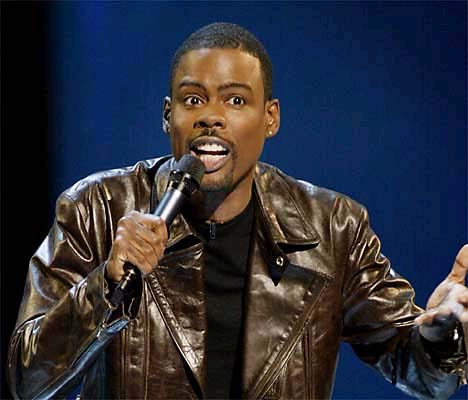
Unethical Quote of the Week; Chris Rock

Shut up, Chris.

Shut up, Chris.

“You say the wrong thing — you see what happened to [Donald Sterling],” Rock said. “I’m not defending what Sterling said at all, but if that’s not the First Amendment then what the [bleep] is? And what did he say, ‘I don’t want my girlfriend hanging out with black basketball players’? Me neither!”

—Black comic and “truth-teller” Chris Rock, discussing the fear in Hollywood as a result of the Sony hacks.

Gee, Chris, that’s courageous, fair, perceptive and true.

What a shame you didn’t have the integrity or guts to condemn what happened to Sterling while every other black pundit, columnist, athlete, and celebrity was comparing him to Satan. You just allowed everyone to pile on the old, rich white guy, take away his team and make him the face of racism for telling his slutty black  girlfriend—in his own bedroom!—not to flaunt the fact she was only hanging with him for the money by showing up at his teams’ games with her real boyfriends. You Hollywood types are hilarious–as in disgusting— in your selective belief in rights, privacy and fair play. First Aaron Sorkin, who didn’t object to the media feeding frenzy over Sterling’s private remarks, suddenly argues that his friends and business associates’ equally damning comments shouldn’t be reported because they aren’t about crime and corruption, and thus aren’t news. Then you suddenly decide to defend Donald Sterling’s rights of privacy and free speech now, when there is no cost to you at all, and the damage is done and irreparable.

Here’s what’s unethical about your statement, Chris: it’s too damn late.


Unethical Quote of the Week: Dick Cheney

Hello, I'll be your torturer today. Now, if you are innocent, please understand, on balance this works.

Hello, my name is Skug, and I’ll be your torturer today. Now, if you are innocent, please understand, on balance this works.

“I’m more concerned with bad guys who got out and released than I am with a few that, in fact, were innocent.”

—Former V.P. Dick Cheney, giving his reactions on “Meet the Press” regarding the Senate’s critique of the Bush Administration and the CIA’s interrogation methods.

I try to be fair to Dick Cheney, whose character has been distorted beyond all recognition by his partisan foes. Sunday, however, he was apparently attempting to validate all the most terrible things anyone has said about him, as well as providing future students of ethics real life examples of ethical fallacies.

The one quoted above is the pip: so much for the jurisprudential principle that It is better that ten guilty persons escape, than that one innocent suffer.”   Chuck Todd reminded Cheney that 25% of those detained were apparently innocent. The Cheney variation: “It is OK if some innocent persons are unjustly punished as long as the bad guys get what they deserve.”

It is hard to pick the most unethical assertion, however; there are so many horrible statements to choose from. Such as: Continue reading

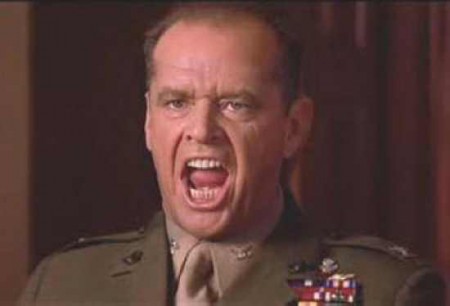
Ethics Quote Of The Month: Aaron Sorkin

“You want the truth? Well, you can’t have the truth because I’ve decided that it isn’t newsworthy!”

“I understand that news outlets routinely use stolen information. That’s how we got the Pentagon Papers, to use an oft-used argument. But there is nothing in these documents remotely rising to the level of public interest of the information found in the Pentagon Papers. Do the emails contain any information about Sony breaking the law? No. Misleading the public? No. Acting in direct harm to customers, the way the tobacco companies or Enron did? No. Is there even one sentence in one private email that was stolen that even hints at wrongdoing of any kind? Anything that can help, inform or protect anyone? The co-editor in chief of Variety tells us he decided that the leaks were — to use his word — “newsworthy.” I’m dying to ask him what part of the studio’s post-production notes on Cameron Crowe’s new project is newsworthy. So newsworthy that it’s worth carrying out the wishes of people who’ve said they’re going to murder families and who have so far done everything they’ve threatened to do. Newsworthy. As the character Inigo Montoya said in “The Princess Bride,” I do not think it means what you think it means.”

—-Acclaimed screenwriter, playwright and Hollywood liberal Aaron Sorkin, reprimanding the news media  for publishing material from the Sony computer hacks in an Op-Ed in the New York Times.

There are many other titles for this post I considered, like “Jaw-dropping Hypocrisy of the Month,” “Self-serving Delusion of the Month,” and “This Is The Tragedy of Partisan Delusion: Won’t You Give Generously To Help Aaron”?

I’ve got to give the man credit: it takes world class gall for to write something like this self-serving for international consumption. Self-righteous, Freedom of the Press-promoting (Sorkin is the creator and writer of “The Newsroom” series on cable) Hollywood liberals applauded and screamed for blood when a near-senile billionaire’s private comments made in his own bedroom were surreptitiously recorded by his paid female mistress and plastered all over the media, because the private, private, private words suggested that he held racist attitudes, and no matter what he actually did (which was sufficient to be named an NAACP “man of the Year,” a distinction Aaron Sorkin has never earned),  that meant that he had to be publicly humiliated, fined millions and stripped of his business. We didn’t hear Sorkin protesting that this wasn’t newsworthy. Nor did the Sorkins of an earlier generation protest when the very same newspaper carrying his essay published criminally stolen Defense Department documents that, whatever was contained in them, were part of a sincere effort to win a war. Continue reading

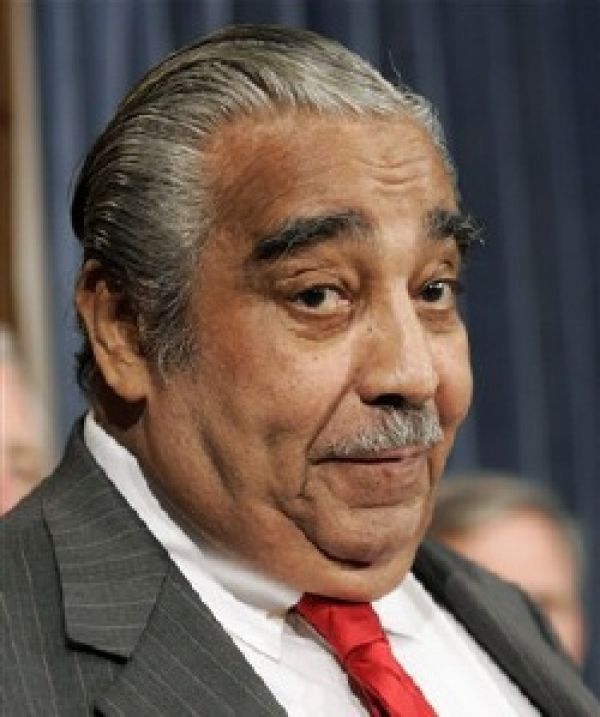
Incomprehensible Ethics Quote Of The Month: Rep. Charles Rangel (D-NY)

Rangel

“I always try to find something good that comes out of conflicts like this, and perhaps people realize that this is not a Ferguson problem at all; it’s a problem around the country. And as long as people feel awkward and embarrassed in talking about the racism that exists, we can never, never, never attack it…The indifference of the patrol officer’s an indication that good people ought to say that you should be sorry when you take anybody’s life. It’s not just the question of what you thought of whether you were afraid…. his total indifference just polarized that community, and I only wish that — that they had not vented themselves in a violent way and taken advantage of people coming together, white and black, and saying that you should at least be able to say you made a hell of a big mistake at least.”

—–Rep. Charles Rangel (D-NY), wandering confused in the ethics wilderness while discussing the Ferguson mess on MSNBC.

I supposed we should expect Rep. Rangel to be completely muddled when it comes to ethics, given his own history. Still, seldom have I seen such a dog’s breakfast of responsible sentiments and ethics ignorance in the same set of comments:

  • Congratulations are due to Rangel for admitting that this Ethics Train Wreck unfairly settled in Ferguson, which is being made to suffer disproportionately for the conduct of many communities and elected officials across the country, as well as the political opportunism of civil rights activists.
  • However, public officials have an obligation to be clear. What “racism that exists,” exactly? Anywhere in the U.S.? Absolutely: let’s talk about it. In the shooting of Brown? No racism is in evidence at all: if that’s what Rangel is referring to, and many will assume its is, the statement is irresponsible. Was he talking about the grand jury decision, which was the context of the interview? Prove it, Charlie. Otherwise, stop planting distrust with a population that is paranoid already.
  • Michael Brown’s actions, from Wilson’s point of view, forced him into a situation that has resulted in his career being ruined and life being permanently marred….and Rangel thinks Wilson should apologize? This is completely backward. Wilson owes no apologies to Brown, and certainly none to Brown’s parents, who have been carrying on a vendetta against him, calling him a murderer while expressing no acknowledgment that the son they raised had any responsibility for the confrontation that took his life. If anyone owes anybody an apology, it the parents who owe Wilson. Rangel thinks Wilson should apologize for trying to do his job, for not letting Brown take his gun, for not letting him resist arrest, for not letting himself be attacked, and that is ridiculous.

Continue reading