Unethical Quote Of The Month: Hillary Clinton (And By The Way, KABOOM!)

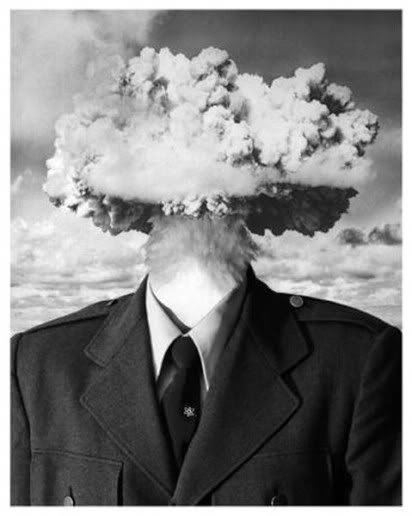
head exploding

“I was surprised that he used personal email account if he is at State.”

Hillary Clinton, responding to a 2011 e-mail sent by senior aides  about a dispatch from John Godfrey, a State Department employee.

This wasn’t the most explosive of the Clinton e-mails revealed today by the court-ordered State Department release, but it’s the one that made my head explode. How long did Hillary claim that her using a private e-mail sever for official communications was “permitted,” that she did nothing wrong, that no State Department procedures or policies dictated otherwise, four years after she expressed surprise at the irregularity of Godfrey’s conduct? Hillary wasn’t just careless or clueless—she knew all along that using a personal e-mail account was wrong and risky. Why else would she be “surprised”? Who is surprised at employees doing what is allowed and appropriate? Continue reading

Here’s What Was REALLY Wrong With Bill Cosby’s Sweater…

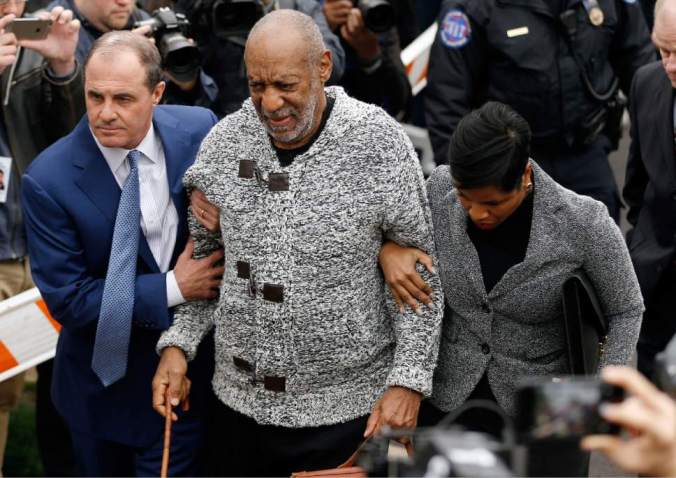
Cosby sweater

Washington Post fashion editor Robin Givhan set off a lively controversy by alleging that the “grandpa” sweater Bill Cosby wore to court was a calculated and manipulative ploy to gain public sympathy. “Bill Cosby’s perp walk was striking for its overwhelming lack of grace and power. It was an exploitation of our assumptions of fragile old age,” she wrote.  “It was the explicit manipulation of a studiously unattractive sweater.”

Was it? Lawyers often micro-manage a clients’ appearance in court; when it amounts to deception, I have written that it is unethical. Cosby’s attire seems hardly deceptive; after all, he is famous for his sweaters. There is even a pop song called Cosby’s Sweater. Ann Althouse agrees with Givhan that it was “a con,” but suggests that it’s an ethical con because “everybody does it.”

I don’t understand either Givhan’s logic or Althouse’s, and if Cosby’s lawyers talked him into this costume, they did him no favors. Cosby’s best armor against the verdict of public opinion is that Cliff Huxtable would never do the horrible things he’s being accused of.  There is no better, more benign, more appealing image of Bill Cosby than “TV Bill Cosby” as we fondly remember him. In court, he looked like a dirty old man, which is what he apparently is. Cliff Huxtable wouldn’t be caught dead wearing a sweater like that to court. (Bill would have also been well-advised to shave.) Continue reading

Comment Of The Day (2): “The Strange Case Of The Unwanted Triplet”

infant

Beth’s  thoughtful Comment of the Day is only tangentially a comment on the Ethics Alarms post about the surrogate mother who balked at aborting one third of the triplets she was carrying. It was really a comment on a comment made to the author of the previous Comment of the Day on the same post, as J. Jonah Jameson described his own experience as a father who employed a surrogate. JJJ was asked why he chose the expensive and risky surrogate route rather than adoption. That question inspired Beth’s Comment of the Day.

Here it is; I’ll be back at the end.

“Why didn’t you adopt a child that needed a family?”

As a woman who battled infertility in the past, and have many friends who did the same, along with others who intentionally became single parents, used surrogates, or have or are trying to adopt a baby, let me say that this is the absolute worst question you can ever ask somebody going through this process. As you pointed out, you are not trying to be judgmental, but you should never ask this.

Continue reading

Now THIS Is Sportsmanship! Bravo, Tennis Pro Jack Sock, Ethics Hero

Even for tennis, this was exemplary sportsmanship.

Kansas City’s Jack Sock was playing hard-serving Lleyton Hewitt in the Hopman Cup in Perth, Australia. Hewitt, trailing 4-5 in the first set, smashed a serve past Sock that the linesman  called out.  Sock shocked Hewett and everyone else when he said to his opponent, “That was in, if you want to challenge.”  The crowd laughed; the umpire looked bemused, and Hewitt paused for a few seconds, then indeed challenged the call. Sure enough, the computer and camera showed that the serve was good, giving Hewett the point. He went on  from there to win that set and eventually the match.

I’m sure that Sock will consider his Ethics Alarms honor more than sufficient compensation. He seems like that kind of guy.

_________________________

Pointer: tgt

The Seventh Annual Ethics Alarms Awards: The Best of Ethics 2015, Part I

Sweet Briar montage

Welcome to the Seventh Annual Ethics Alarms Awards, our blog’s retrospective of the best and worst in ethics over the past year, 2015.

It was a rotten year in ethics again, it’s fair to say, and Ethics Alarms, which by its nature and mission must concentrate on episodes that have lessons to convey and cautionary tales to consider probably made it seem even more rotten that it was. Even with that admission, I didn’t come close to covering the field. My scouts, who I will honor anon, sent me many more wonderfully disturbing news stories than I could post on, and there were many more beyond them. I did not write about the drug company CEO, for example, who suddenly raised the price of an anti-AIDS drug to obscene levels, in part, it seems, to keep an investment fraud scheme afloat. (He’ll get his prize anyway.)

What was really best about 2o15 on Ethics Alarms was the commentary. I always envisioned the site as a cyber-symposium where interested, articulate and analytical readers could discuss current events and issues in an ethics context. Every year since the blog was launched has brought us closer to that goal. Commenters come and go, unfortunately (I take it personally when they go, which is silly), but the quality of commentary continues to be outstanding. It is also gratifying to check posts from 2010 and see such stalwarts who check in still, like Tim Levier, Neil Dorr, Julian Hung, Michael R, and King Kool.  There are a few blogs that have as consistently substantive, passionate and informative commenters as Ethics Alarms, but not many. Very frequently the comments materially enhance and expand on the original post. That was my hope and objective. Thank you.

The Best of Ethics 2015 is going to be a bit more self-congratulatory this year, beginning with the very first category. Among other virtues, this approach has the advantage of closing the gap in volume between the Best and the Worst, which last year was depressing. I’m also going to post the awards in more installments, to help me get them out faster. With that said….

Here are the 2015 Ethics Alarms Awards

For the Best in Ethics:

Most Encouraging Sign That Enough People Pay Attention For Ethics Alarms To Occasionally Have Some Impact…

The Sweet Briar College Rescue. In March, I read the shocking story of how Sweet Briar College, a remarkable and storied all-women’s college in Virginia, had been closed by a craven and duplicitous board that never informed alums or students that such action was imminent. I responded with a tough post titled “The Sweet Briar Betrayal,” and some passionate alumnae determined to fight for the school’s survival used it to inform others about the issues involved and to build support. Through the ensuing months before the school’s ultimate reversal of the closing and the triumph of its supporters, I was honored to exchange many e-mails with Sweet Briar grads, and gratified by their insistence that Ethics Alarms played a significant role in turning the tide. You can follow the saga in my posts, here.

Ethics Heroes Of The Year

Dog Train

Eugene and Corky Bostick, Dog Train Proprietors. OK, maybe this is just my favorite Ethics Hero story of the year, about two retired seniors who decided to adopt old  dogs abandoned on their property to die, and came up with the wacky idea of giving them regular rides on a ‘dog train” of their own design.

Ethical Mayor Of The Year

Thomas F. Williams. When the Ferguson-driven attacks on police as racist killers was at its peak (though it’s not far from that peak now) the mayor of Norwood, Ohio, Thomas F. Williams, did exactly the opposite of New York Mayor Bill de Blasio in response to activist attacks on the integrity of his police department. He released a letter supporting his police department without qualification. At the time, I criticized him for his simultaneously attacking activists as “race-baiters.” In the perspective of the year past, I hereby withdraw that criticism.

Most Ethical Celebrity

Actor Tom Selleck. In a terrible year for this category, Selleck wins for bravely pushing his TV show “Blue Bloods” into politically incorrect territory, examining issues like racial profiling and police shootings with surprising even-handedness. The show also has maintained its openly Catholic, pro-religion perspective. Yes, this is a redundant award, as “Blue Bloods” is also a winner, but the alternative in this horrific year when an unethical celebrity is threatening to be a major party’s nominee for the presidency is not to give the award at all.

Most Ethical Talk Show Host

Stephen Colbert, who, while maintaining most of his progressive bias from his previous Comedy Central show as the successor to David Letterman, set a high standard of fairness and civility, notably when he admonished his knee-jerk liberal audience for booing  Senator Ted Cruz

Sportsman of the Year

CC Sabathia

New York Yankee pitcher C.C. Sabathia, who courageously checked himself into rehab for alcohol abuse just as baseball’s play-offs were beginning, saying in part,

“Being an adult means being accountable. Being a baseball player means that others look up to you. I want my kids — and others who may have become fans of mine over the years — to know that I am not too big of a man to ask for help. I want to hold my head up high, have a full heart and be the type of person again that I can be proud of. And that’s exactly what I am going to do.”

Runner-up: MLB Commissioner Rob Manfred, who dismissed the ethically-addled arguments of Pete Rose fans to reject his appeal to be have his lifetime ban for gambling lifted.  For those who wonder why football never seems to figure in this category: You’ve got to be kidding.

Ethics Movie of the Year

SpotlightTIFF2015

“Spotlight”

Runner-up: “Concussion”

Most Ethical Corporation

Tesla Motors, the anti-GM, which recalled all of its models with a particular seatbelt because one belt had failed and they couldn’t determine why. Continue reading

Pssst! CNN! Don Lemon Was Drunk On The Job On New Years Eve, And It Matters

Drunk Lemon

The news media and social media apparently thinks its funny that CNN’s Don Lemon, one of the network’s hosts of the New Year’s dawning, an unexpected event about as newsworthy as the sun coming up, was not only drunk as a skunk most of the night but didn’t seem to care who knew it.

I think the yearly breathless coverage of the Times Square festivities is boring, dumb and stupid (People keep saying they are so excited. What are they excited about? If a big ugly ball doing exactly what you knew it would do at midnight really excites you, your life has run off the road into a muddy ditch, and I pity you), so I only cruised by the CNN coverage around 10 PM. Lemon co-hosted the network’s New Year’s Eve special with correspondent Brooke Baldwin at Tipitina’s bar in New Orleans., and had that look in his eyes and that tone in his voice that I know too well. This surprised me, but I didn’t feel like beginning 2016 with a train wreck, so I decided to watch “Rain Man” with my wife, who had never seen it. (We haven’t been invited to a New Years Eve party since 1982.)

By all accounts, Lemon was indeed smashed, and left his judgment, manners and good sense in those cups of champagne, beer and heaven knows what else he was guzzling all night. Some of the evidence, other than how he looked and sounded, which was plenty… Continue reading

Ethics Observations On The Washington Post’s “Ted Cruz’s Kids Are Monkeys” Cartoon Uproar

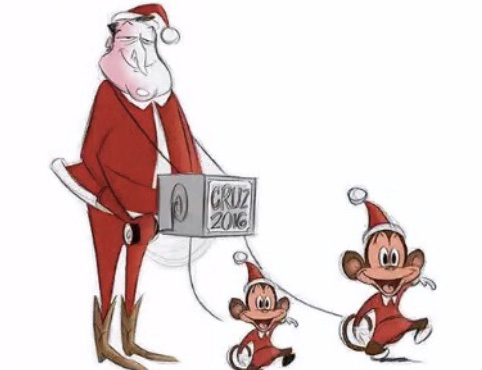
ted-cruz-monkey-cartoon

Here’s what you need to know: Ted Cruz launched a political ad  that features the Texas Republican reading parody Christmas fare to his two young daughters, Caroline and Catherine, stuff like “The Grinch Who Lost Her Emails.”  Washington Post political cartoonist Ann Telnaes reacted with the drawing above, titled “Ted Cruz uses his kids as political props.” The children are portrayed as monkeys. Telnaes clearly knew she was on thin ice, and accompanied the cartoon with a justification (now pulled: if anyone has the whole text, I’d like to see it) saying in part,

“But when a politician uses his children as political props, as Ted Cruz recently did in his Christmas parody video in which his eldest daughter read (with her father’s dramatic flourish) a passage of an edited Christmas classic, then I figure they are fair game.”

Note: the daughters are 7 and 4.

Cruz cried foul in a tweet, and the news media and internet was beginning to tilt hard against the Post, when editor Fred Hiatt pulled the cartoon, writing,

“It’s generally been the policy of our editorial section to leave children out of it. I failed to look at this cartoon before it was published. I understand why Ann thought an exception to the policy was warranted in this case, but I do not agree.”

And here we are.

Observations: Continue reading

Sign Language Interpreter Ethics Epilogue: “A Christmas Carol”

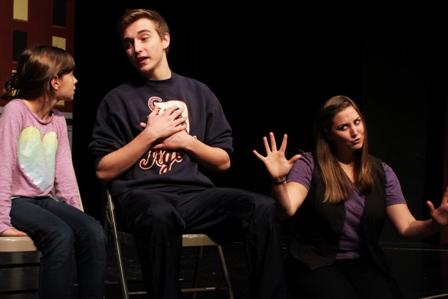
Gavin Alvedy rehearses a scene from the Downriver Youth Performing Arts Center's "Miracle on 34th Street" as DYPAC alum Emily Zaleski signs alongside him. Zaleski, who grew up performing on DYPAC’s stage, now is a certified American Sign Language interpreter with Synergy on Stage and will interpret during the Dec. 8 performance.

Sign language interpreters and their advocates descended on Ethics Alarms in indignation aftert  my March post about “showboating sign language interpreters for deaf audience members.” It took until December for my commentary to reach this passionate interest group, but when it did, I was called many names, including “ablist,” and had to put up with comments like this one from the ironically named “Danny Who Knows About Stuff”:

I would take this “ethics” person seriously if he/she seemed to know anything about the ethics that guide sign language interpreting. And, I suppose it would be helpful if the person understood anything about linguistics, sign language, Deaf culture, or audience response theory. This article is more about the individual than than the issue. In short, this person is no more an ethicist that is Donald Trump.

How I love the quote around “ethics.”

Danny was pretty typical. See, I don’t need to know about any of Danny’s “stuff” as a director of a play or musical. All I need to know is whether a feature of the performance detracts from it by foiling the focus that the staging was designed to facilitate. Every competent director knows that. The needs of the signer and the signer’s much, much smaller audience cannot be permitted to wag the dog, or make the dog trip on its tongue.  or perish of neglect.

“Danny Who Knows About Stuff” became “Danny Who Is Banned From Ethics Alarms,” in case you didn’t guess.

If I had already experienced what I experienced yesterday with a “professional” signer, that March post would have been much tougher. I directed an staged reading of “A Christmas Carol” with a cast of 30 terrific actors for a single free performance for D.C.’s Martin Luther King Library, and was told that the library would be sending a signer. Now, a signer for your usual staged reading is like having a signer for an oil painting. It makes no sense. In readings, the actors mostly read. Presumably the deaf can read “A Christmas Carol” themselves. You could say they would want to see the performers, but  in readings the performers’ acting mostly consists of vocal expression, which the deaf audience can’t hear, and facial expressions, which they won’t see if they are watching the signer. As it happens, I don’t do staged readings like that; there is a lot of movement and staging, so a signer makes some sense.

But they didn’t know how I would stage it.

By the time we got to the final rehearsal, I had forgotten about the alleged signer, who was supposed to at least attend one rehearsal so I could fit her onto the stage where she would be seen and not get in the way. She arrived, for the first time, 15 minutes before the performance, and immediately announced that she didn’t know whether she would be signing or not.  That’s helpful. She also complained that the script was very well adapted for signing (Why, thank-you!) and that the show, at 90 minutes, was impossibly long for a single signer to do: she was waiting to see if a second signer was coming, as she had assumed. Now, nobody warned me that I had to make room for two signers in the small performing space, neither of whom would deign to attend a rehearsal. ( Her complaint about length was also nonsense. I have had single signers for many shows longer than 90 minutes, and they didn’t collapse from exhaustion or finger cramps.) Continue reading

Now THAT’S An Unethical Lawyer!

Don't keep them waiting, Doug...

Don’t keep them waiting, Doug…

You know, I don’t comprehend  professional ethics alarm malfunctions like this one. I mean, if a lawyer thinks, “Hey, I think I’ll threaten opposing counsel with pepper spray and a stun gun to keep him in line,” and no faint ringing in his head suggests, “Wait—that might be unethical—maybe I sould check the rules,” what would make his ethics alarms sound? How can a lawyer ever think such conduct is justifiable or permissible, never mind that he could get away with it?

Nevertheless, California Douglas Crawford  held a can of pepper spray a yard from the face of the opposing lawyer, Walter Traver, during an April 2014 deposition  (with a stenographer there!). Crawford then told Traver, “I will pepper-spray you if you get out of hand.” Then the lawyer pointed a stun gun at Traver’s head and said, “If that doesn’t quell you, this is a flashlight that turns into a stun gun.” To show he wasn’t kidding, Crawford discharged the stun gun near Traver’s face. Continue reading

Remembering The President Whose Dedication To Ethics Made The U.S. Possible

george_washington_death

We no longer honor George Washington on his birthday to the extent his importance to our nation warrants. George Washington died on this date, in his Mount Vernon Home, at the age of 67. Let’s think about him now, specifically his character.

Washington is still something of a mysterious man, but there is no question that he was one who was possessed of natural and remarkable leadership abilities, unusual instincts of common sense and justice, astounding courage, striking charisma and most of all, the rare ability, especially in one so celebrated and successful, to change his attitudes and beliefs over time. He was chosen, among the most outstanding collection of leaders this nation ever had at a single point in history, to lead them  all, and the primary reason was that while few of our Founding Fathers trusted each other, they all trusted him. George Will calls him “the indispensable man,” and the assessment is apt.

One formative experience that created that indispensable man was his lifetime dedication to civility, respect, conscience, kindness and ethics as they were taught to him by his father. The elder Washington made young George copy a list 110 rules of civility and deportment into his school notebook when the President-to-be was about sixteen-years old. Scholars have determined that the list originated in the late sixteenth century in France, and had been in use there and in England before the elder Washington ever imbued his son with them. Biographers of George have been struck by the extent to which these maxims accurately describe his behavior, habits and ethical conduct throughout his life. He was quick to quote them;  it has been said that if you awoke George from his slumber prior to breathing his last on that December 14, and asked him, “What’s Rule #7?,” he would have recited it on the spot. (“Put not off your clothes in the presence of others, nor go out of your chamber half dressed.”) The Library of Congress owns the original manuscript for the Rules of Civility.

Washington’s 110 Rules have been on the Ethics Alarms home page in the left margin under “Rule Book” almost from the beginning of the blog, and I posted them back in 2009. It’s time to look at them again, as we remember, and are properly grateful for, this special man. Many are funny, in retrospect, in their dated reflection on earlier times, but the ethics principles sounded still resonate, especially the last:

110. Labor to keep alive in your breast that little spark of celestial fire called conscience.

That one alone is worth a lifetime.

George Washington’s 110 Rules

The Rules of Civility & Decent Behavior in Company and Conversation
(As memorized by George Washington as a youth. Authorship unknown)

Continue reading