End Of The Day Ethics, 4/24/2020: A Curse, A Whorehouse, And The Grim Reaper

Yay.

Another weekend…

1. Nah, there’s no news media narrative coordination! Twitchy has pointed out the remarkable conformity of language regarding the Joe Biden sexual assault accusation. Last week, CNN reported that Democrats are “grappling with questions” about Tara Reade’s allegations. This week:

Politico: “The movement is facing a new challenge: how to grapple with the allegations against Joe Biden without tearing itself apart.”

Jake Tapper on Twitter: “Democrats grapple with questions about Tara Reade’s sexual assault allegation against Joe Biden…”

Jeremy Scahill at the Intercept: “My aim in writing this piece was to put into words what many principled people are grappling with right now, not to tell anyone what to do. Recognizing and understanding the problem helps us all decide what we believe is right…”

Mother Jones: “Sexual Assault Advocates Are Grappling With the Allegations Against Joe Biden”

All independent, objective journalists, of course…talking points? What talking points?

2. This “sharing a life” concept seems to be beyond you…over at Social Q’s a woman who is living with her boyfriend to ride out the pandemic complains, “He eats significantly more than I do, including some foods I don’t touch. Still, we split the grocery bill, and I am paying significantly more for food than usual. How should I handle this?” Columnist Phillip Gallanes’ advice is impeccably ethical:

Try stepping back and looking at the bigger picture…Sure, he eats more than you, but are you twice as messy (while sharing cleaning duties equally)? Do you watch three times as much Netflix (but split the bill in half)? And I haven’t even touched on emotional labor yet. ..if you want your partnership to survive even after we’re set free again, consider all the contributions each of you makes.

Nice try, Phil, but I’m guessing that question is signature significance, and the relationship is doomed. Continue reading →

Rationalizations From The Victim Of A Tragedy

A week ago, I briefly discussed the report on the 2017 death of major league pitcher Roy Halladay who crashed his plane into the Gulf of Mexico  on Nov. 7, 2017. The 13-page report said Halladay had 10 times the recommended level of amphetamine in his system, plus an antidepressant, a muscle relaxant, a sleep aid and morphine.  He was also attempting aerial acrobatics and stunt flying.

Now his widow, Brandy Halladay, has issued a statement through the now Hall of Fame pitcher’s last team, the Philadelphia Phillies. She wrote,

“Yesterday’s NTSB report on Roy’s accident was painful for our family, as it has caused us to relive the worst day of our lives. It has reinforced what I have previously stated, that no one is perfect. Most families struggle in some capacity and ours was no exception. We respectfully ask that you not make assumptions or pass judgment. Rather, we encourage you to hug your loved ones and appreciate having them in your lives.”

From one perspective, it seems unkind to be critical of the lament of a grieving family member in the wake of such a tragedy. From another—mine—I can’t let public endorsements of multiple rationalizations like that one pass. I just can’t, and I have an obligation as an ethicist not to. It’s a dirty job but someone has to do it: the reason so people make terrible decisions by defaulting to rationalizations rather than ethics is that the culture marinates them, day after day, in these excuses for bad conduct. After a lifetime of hearing the contrived arguments , most people accept such self-deceptions as true. In turn, they engage in conduct, or excuse conduct in others, that causes extensive harm. Continue reading →

The Man Who Coarsened America

He didn’t set out to, of course. Like most figures in cultural history who leave the culture a little (or a lot) worse than they found it, Craig Gilbert, who died this week, just wanted to try something new he thought might work, and, of course, to make a buck. He was successful on both counts, but unfortunately, the law of unanticipated consequences took over.

What he wanted to try was the reality TV show, though he didn’t call it that. In the early 1970’s, Gilbert was an established documentary-maker of note and  a producer at WNET, the New York PBS station. He had the inspiration of  having a camera crew follow a real, ostensibly typical American family as it went about living for months, to let the public see what happens behind the closed doors of their neighbor’s homes.

WNET agreed to spend $1.2 million to finance the project), and Gilbert set about seeking an appropriate family for the venture.

Gilbert searched for a family that was ostentatiously middle class with a lot of kids spanning different age groups. He settled on the the Loud family, Bill and Pat, with  their five children, Lance, Kevin, Grant, Delilah and Michele. The Louds didn’t know what they were getting into, because it was something no family had ever gotten into before. Over 300 hours of filming over seven months in 1971, they were recorded in increasingly intrusive ways, creating scenes that made the Louds into national soap opera stars, except that it was their real life being watched and talked about. “An American Family” was broadcast two years later as a 12-part series, and gradually took over the lives of the family members. Continue reading →

Easter Sunday Ethics Warm-Up, 4/12/2020: Missing The Easter Bunny

Happy Easter!

That’s my favorite Arthur Sullivan Easter hymn…

Our family always celebrated Easter twice, at least when Greek Easter fell on a different date, which is usually the case.On traditional Easter, until my sister and I were well into high school, my parents hid two dozen colored eggs that we had decorated the day before all over the house for us to hunt for Easter morning. If there had been a pandemic then, my mother would have still hidden the eggs, because she knew even she, with her incredible talent for making BS credible, would not have been able to convince us that the Easter Bunny was “social distancing.”

How my parents loved family celebrations of holidays! I miss them so much, and days like this just makes not having them in our lives harder.

1. Can’t do this. I had been recommending the usually reliable website Ars Technica to my friends for updates on the virus so that they wouldn’t be battered hither and yon like skiffs made of paper on the ocean of hype and disinformation. I also relied on it myself. The site promised daily updates at 3 pm every day, along with a useful set of information, also updated as needed. Then, on April 6, the updates just stopped; no explanation, and nothing since. Unethical. If you promise a service for those in need of it, you can’t just stop it without warning or explanation. It doesn’t matter what the reason is. You have created reliance and  dependency. If you can’t be sure that you will carry through on your commitment, then don’t make it.

I headed a small professional theater for 20 years at great personal sacrifice on that principle.

2. Welcome to my world...Since so many were forthcoming in their reactions to my quarrel with one ex-commenter, here’s another one. Unsolicited, I received a book about two weeks ago from an Ethics Alarms follower. It was by L.Ron Hubbard, the science fiction writer and founder of Scientology, and the topic was ethics. I was and am grateful, for all ideas about ethics are interesting to me, and most come in handy eventually. A few days ago, I received a long, handwritten letter from the same source, who told me that he was no longer following the blog. He then excoriated my for insulting him by posting, so soon after receiving the book, this post, which in item #3 I  made some uncomplimentary comments about Ron’s “church” (it’s a cult and probably a criminal enterprise), its current leader, and his whacked-out message to the flock about the pandemic, which he called “planetary bullbait.”

My critic thought it was mean and rude of me to respond to his kind gift by deriding his faith and his friend, the Church’s  Chairman of the Board, David Miscavige.

I immediately wrote back in part, Continue reading →

Comment Of The Day: “Exactly How Much Are We ‘All In This Together’? The Golden Rule Vs. ‘Look Out For #1’”

The above image is for “Fallout Shelter-The Board Game”

Last night’s pre-dawn post inspired this one (it’s just after 5 am here) , another thoughtful reflection on the ethics process from enigmatic commenter Extradimensional Cephalopod.

Here’s his (it’s?) Comment of the Day on the post, “Exactly How Much Are We ‘All In This Together’? The Golden Rule Vs. ‘Look Out For #1’”:

Whenever we encounter an ethical conflict, we need to take a look at the bigger picture, figure out what the most ethically effective way to deal with the relevant liabilities is, and then scale that principle back down to the current situation.

If we ever encounter a situation where people really do need to seek shelter, each family should ask itself, who do I most want to offer shelter if they need it? Those people get first choice. If they pass, then the family reaches out to the next group they care about. And so on. People can’t just wait for situations to happen to them; they need to ask themselves the hard questions about who they prioritize and why.

Having done that, everyone should prepare themselves to help in other ways, to offset the help they can’t offer through the space of their home. These ethical situations don’t take place in a vacuum. There are plenty of options for people to help in various ways and coordinate to make sure people get what they need even if it’s from someone they didn’t know. Benefactors can go shopping, donate money or food, organize, offer listening ears, et cetera. It’s amazing what people can do for each other when they put their minds to it. Continue reading →

Exactly How Much Are We “All In This Together”? The Golden Rule Vs. “Look Out For #1”

Well it’s 4:30 am again, and once more an issue encountered right before bedtime has pushed me into insomnia.

I wish I could blame Philip Galanes, as it was a question in his advice column Social Q’s that got my ethics alarms ringing, but I should have been thinking about this one as soon as the pandemic response entered the social isolation phase. It’s not only a difficult ethics issue but an important and a classic one.

In “The Diary of Anne Frank,” we learned that the four member Frank family hid from the Nazis in a two floor secret annex in  Otto Frank’s office building. Soon after going into hiding, the group almost doubled with the addition of three members of the van Pels family, and still later, a dentist, Fritz Pfeffer, called Albert Dussel in the diary, was admitted to the group. Pfeffer was a stranger to the Franks, but the family dentist of Otto Frank’s employee Miep Gies (the heroic caretaker of the Franks and their secret ally)  and the van Pels. Adding Pfeffer strained the food supply and the living arrangements as well as increasing the risk to all, but nonetheless, the group accepted him.

An inquirer asked Galanes,

A couple of weeks ago, before Covid-19 exploded in New York, a close friend asked if she and her husband could leave Manhattan and stay with us at our home in Bergen County, N.J. It was a tough question to have asked of me, but I decided it was the right thing to do. I told my friend they could come. For other reasons, they didn’t. Now, she’s asked again. They’re really scared! I’m not sure what to do. My husband has asthma, they would have to share a bathroom with my cranky 19-year-old son, and I am helping my elderly mother who lives nearby (contact-free). Any advice?

His advice was to keep her out, and to expect the friends to be hurt by the decision.

There are missing details here, like the size of the house, which could make a huge difference in assessing risk. Some might ask other questions, like “Exactly how good a friend is this?” That would lead inexorably to other questions: “Would the answer be the same if it was a relative? An ex- lover? How about someone to whom the questioner owed a debt of gratitude? What if she offered to pay a lot of money? Would the same answer be as justified if the couple want to send  only their child? Two children? Continue reading →

“Rarrit!” Joe Biden Produces An Epic Example Of Authentic Frontier Gibberish, And It’s Not Funny

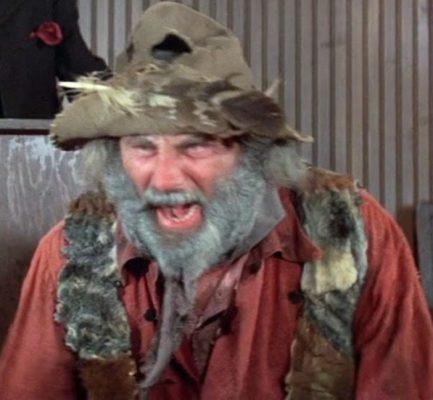
Two days ago, Joe Biden did an interview on ABC’s “This Week…”  that produced an  indecipherable utterance that makes “Blazing Saddles'” Gabby Johnson seem like Winston Churchill.  Tanned and rested, which no travel during the week to exhaust him and having not appeared on TV for several days, Joe offered America this bit of wisdom:

“We cannot let this, we’ve never allowed any crisis from the Civil War straight through to the pandemic of 17, all the way around, 16, we have never, never let our democracy sakes second fiddle, way they, we can both have a democracy and … correct the public health.”

You know, his words reminded me of an episode when I was the editorial page editor of my high school’s weekly newspaper. The submissions from my “staff” were particularly terrible one week, and no amount of re-writing by me could produce enough quality opinion to fill the page. I decided to take one particularly incomprehensible screed, cut out each line of text, pull them randomly out of a hat, paste them in their new sequence, then punctuate the mess and capitalize letters so it appeared to be an article. I published the result under the headline, “Discrimination in Portugal” without a byline.

Nobody noticed. One student told me that she found the editorial “Thought-provoking.” This has bothered me ever since. Continue reading →

From Australia, A Cancel Culture Chapter That I Don’t Understand At All

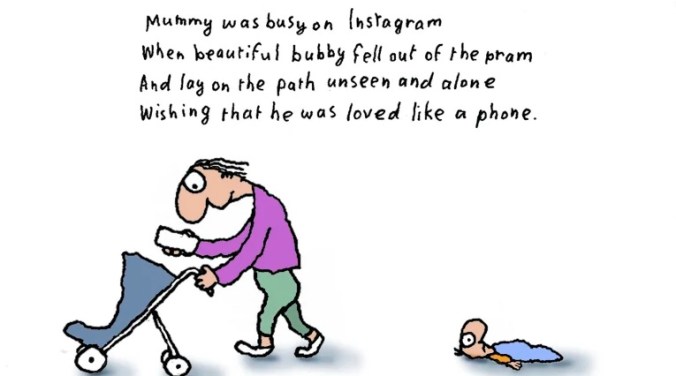
The above cartoon is the work of Michael Leunig, an Australian cartoonist of some note. Apparently the drawing got him into serious trouble with the social media and political correctness mobs Down Under. Color me completely bewildered, mate.

I have always regarded Australia as a having an admirably  rough, honest, brutally independent and common sense-based culture. Apparently I’m missing something; maybe one of Ethics Alarms’ Australian readers can explain what. (There have been about 24,000 views of the blog there so far this year; Australia is the second largest source of Ethics Alarms readers outside the U.S., after Canada.)

Because of the cartoon, Leunig, who has been creating cartoons professionally to express political and social commentary for half a century, is being threatened with cultural “cancellation.” He writes in part that the drawing has “brought so much hostile public reaction that I began to lie awake at night wondering why I had followed such a troubled, painful and precarious career path….

…[To]be so hated, insulted, slandered in the public domain for this – as I was – is indeed a dismal fate for the lone cartoonist. It speaks volumes about the current condition of civil society and tolerance. This is bigotry. The malice has been astounding and so extreme that it has plunged me into a deep contemplation about the nature of angry hatred. Indeed, I am coming to the view that there is an emerging new form of hatred in society which might be more of a mental illness than a passing emotion. Perhaps I would call it “free-floating, obsessive compulsive hatred”.

His son wrote of the effect on the cartoonist’s family: Continue reading →

Movies To Keep You Happy, Inspired And Optimistic , Part I

This is a very subjective and personal list. The main requirement was that they all must be, in the final analysis, upbeat. I also have seen all of them more than once.

I left out some obvious choices that I have already devoted full posts to on Ethics Alarms, like “It’s a Wonderful Life” and “White Christmas.” Some of the films on my ethics movies list appear here, but not for the same reasons. Obviously, I encourage you to see those movies too.

Below is approximately the first half of the list. The rest will be along eventually.

Rocky (1976)

It still holds up as one of the most exhilarating sports movies of all time.

The Natural (1984)

Great score and a happy ending, unlike the novelette it was based on.

True Grit (1969)

This is the John Wayne version, with two of the go-to scenes I’ll play when I want to feel better.

E.T. (1982)

Other than the unforgivable rainbow at the end, a near perfect feel-good film.

Stand By Me (1986)

One of two Stephen King movies on the list. Does anyone not love this film?

The Shawshank Redemption (1994)

And the other King movie. has any suicide in a film been quite this satisfying?

Erin Brockavich (2000)

More or less a true story, which makes it especially inspiring.

Singin’ in the Rain (1952)

If Donald O’Connor walking up walls doesn’t get your heart pumping and your mouth smiling, nothing will. Continue reading →

No, There’s Nothing Unethical About Performing Holograms Of Dead Singers…

…as long as they don’t materially misrepresent the performer or the performance. They may be icky, but they aren’t unethical. This is in ethical contrast with the Ethics Alarms position on zombie performers in films, as examined here several times, most recently upon the unveiling of zombie James Dean.

The issue has arisen because a holograph of Whitney Houston, mercifully in a form before her physical and vocal decline due to drug abuse, is touring the country. Here’s a review of one of the performances; Zombie Whitney will make her debut in the US soon. Big plus: she doesn’t have to worry about the Wuhan virus, just holograms of the Wuhan virus. Fans have been less than ecstatic, as much because of the quality of the image as the ickiness of the concept. Here’s part of one review: Continue reading →