The Worst Aunt Ever

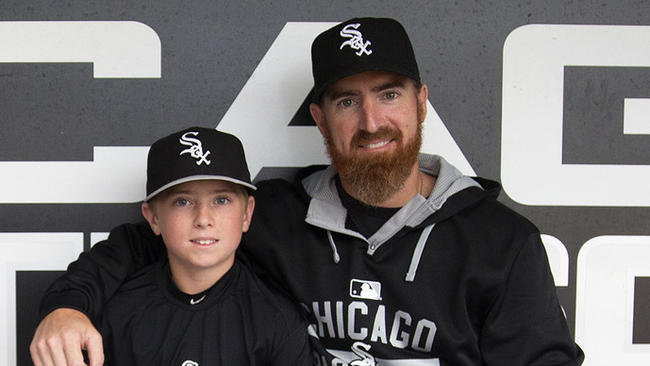
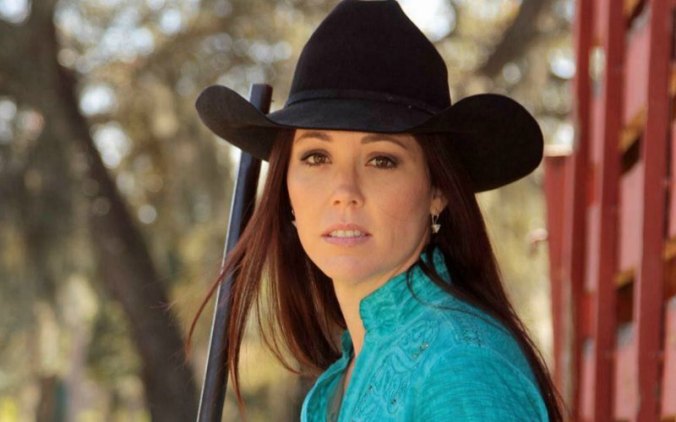
(L) Auntie Jenn in her "Loving Aunt" disguise, and (R), my best guess at what she looks like without it...

(L) Auntie Jenn in her “Loving Aunt” disguise, and (R), my best guess at what she looks like without it…

[ WARNING: This story may make your head explode. I’m not sure why mine didn’t; it may because there’s nothing left to blow.]

Jennifer Connell, a 54-year-old human resources manager in Manhattan, is suing her 12-year old nephew, Sean Tarala, in Connecticut for $127,000 in damages for an accident that occurred at his 8th birthday party.

On March 18, 2011, Connell arrived at the Tarala home  to attend Sean’s birthday party. She was greeted with the sight of the excited kid riding his major gift, a red bicycle, around the the yard.  When he spotted Aunt Jennifer, he jumped off his new bike and ran toward her, shouting, “Auntie Jen! Auntie Jen!”

Connell testified that “all of a sudden he was there in the air, I had to catch him and we tumbled onto the ground. I remember him shouting, ‘Auntie Jen I love you,’ and there he was flying at me.” Connell said she her wrist was hurt, but she didn’t mention it because “It was his birthday party and I didn’t want to upset him.” Now, however, though he has always been “very loving, sensitive,” toward her, Connell believes he should be held accountable for her injury. Continue reading

Why Don’t People Understand What’s Unethical About Nepotism?

Bing and family

I suppose it is part of the larger problem that people don’t understand what’s wrong with conflicts of interest, and thus fall into them too easily. At its core, nepotism always, always, creates a conflict of interest for the supervisor, boss or manager, or leaves a strong suspicion of one, which is just as bad, the epitome of “the appearance of impropriety.” Nepotism simultaneously destroys the organization’s members’ trust in leadership—Was he or she objective? Was love and loyalty to a child rather than merit and the best interests of the organization behind the decision? Were there objectively better candidates? Will this bias harm me? —and the hired, no matter how good or qualified the son or daughter may be. If the organization declines and heads have to roll, the suspicion will always be that favoritism protects the offspring. If the organization is successful, there will still be a widespread belief that Sonny Boy or Darling Daughter is whispering in the parents’ ear, a mole, on the side of the parent rather than subordinates. Nepotism almost always destroys any organization’s morale, trust, and cohesion.

Why is this so difficult? It is spectacularly obvious, and the only defenses that are ever offered are… Continue reading

A Bobby Jindal Critic Asks, “Would I Be Uncivil If I Were To Suggest That Somebody Punch This Man Right In His Dick?” Why Yes, I Believe You Would…

By all means, this should be our model for political discourse...

By all means, this should be our model for political discourse…

Gov. Bobby Jindal, desperately trying to stay relevant in the Republican race to be the party nominee in 2016, weighed in on the Oregon community college shooting with an extensive blog post that shows, if nothing else, that the Fifties live. It’s pretty awful, designating as “root causes” of the violence such Oldies but Stupidees as “glorifying violence” in popular culture (Actually, this one is closer  to 1650), movies, TV shows, music (Run, Tipper! This is your chance!) the decline of religion ( “…we flaunt the laws of God and common decency”—I think you mean “flout” there, Bobby), the decline of the family…you know the list. The problem with Jindal’s rant—other than its exaggerations, poor writing and hysterical tone— is that taking any single event and attributing it to generic causes is demagoguery, and as intellectually dishonest as  blaming the NRA every time someone is murdered with a gun.

The Huffington Post, mocking Jindal’s eminently mockable screed, asked “What about gun violence?” as if Jindal left out the one obvious “root cause.” Is it really necessary to point out that gun violence is responsible for gun violence? But that’s anti-gun code for guns, you see. Guns are responsible for the shootings. Take the evil guns away, and nobody dies! That this facile and deceitful dead end reasoning is so accepted among progressives and liberals that it is considered an obvious truth is depressing, but I digress.

Jindal is also depressing, since the only remedy for violent movies, TV shows and video games is censorship of one kind or another, and you know what the Right will do if it gets that started: TV couples will again be sleeping in twin beds like Rob and Laura Petrie by edict. His lack of logic is depressing too—how does someone like this get elected a governor?—when he attributes alleged conditions like “the family is a mess” to a rampage by someone who might have been raised like Opie Taylor but whose mind just snapped, as they have a tendency to do. Again, a single incident has specific causes. Jindal’s main argument is exactly as exploitative and dishonest as using the Oregon shooting to lobby for gun regulations that wouldn’t have stopped the shooting. Continue reading

1. The NY Times Has A New Author Of “The Ethicist” And 2., Boy, Did He Ever Botch The Dilemma Of The Closeted College Student

"NEXT!!!"

“NEXT!!!”

The New York Times Magazine column “The Ethicist,” long authored competently by non-ethicist Randy Cohen, had lost me due to the biased and often unethical answers to his reader’s queries by his most recent successor, Chuck Klosterman. So repellent was Klosterman’s version of the column that I didn’t even notice when the Times sacked Klosterman late last year after one bizarre response too many.

[The final straw:  An inquirer  went to a Starbuck’s  wanting to buy a regular over-priced cup of coffee, but when the woman in front of the customer  ordered a pumpkin-spice latte  and received a coupon for a free drink because the shop was out of it, “NAME WITHHELD” ordered a pumpkin- spice latte to get the free coupon. Was this ethical, he/she/it asked?” Klosterman’s answer: “No. You’re a liar and a low-rent con artist. And you live in a community where pumpkin-flavored beverages are way too popular.”  Now, “No” is correct, but it’s a great question, and deserving of a serious analysis rather than whatever that was from the ex-Ethicist. The coupon was a nice gesture to someone who had come to the Starbuck’s wanting a specific beverage and was disappointed—a store should not be tantalizing customers with products they don’t have to sell, essentially setting up a bait and switch. The coupon was an ethical “We’re sorry,” but also made the employee vulnerable to anyone who decided to misrepresent his real intent in order to get a free drink later. Yes, taking advantage of this opportunity to the detriment of the store is unethical, because the inquirer took an appropriate gesture clearly intended for a specific situation and exploited it. It was not illegal, however, and was  not a con. I would compare it to the scenario where a computer glitch has resulted in an airline selling tickets online for absurdly small amounts, and travelers rush to take advantage, rationalizing that mistake or not, the opportunity is there and they can legally grab it.]

Now the Times has a new author of “The Ethicist,” after experimenting with a new format in which a podcast including him and some other commentators hashed over ethics hypotheticals and then the podcast was transcribed and published in the Sunday Times magazine. He is Kwame Anthony Appiah, who teaches philosophy at N.Y.U.  This week Appiah’s  first solo, so I would normally say that it’s too early for any fair assessment, but boy, did he ever botch the September 2 podcast. He botched it so badly that I can’t see myself paying much attention to anything else he writes. It was an ethics disaster.

A college student asked if he could ethically lie to his anti-gay father about his sexual orientation so Dad would keep paying the student’s tuition. The father is suspicious based on some clues during his son’s high school days, and has made it very clear to his son that if he is gay, he would not only withdraw all financial support but also reject him entirely. “Questions about my sexuality are inevitable whenever I come home,” the inquirer wrote. “My father has demanded I produce archives of all emails and text messages for him to review, although I have successfully refused these requests on the grounds that he has no claim to my adult communications.”

He asks, Is it ethical for me to continue accepting financial support for my education and my career that will come from it? Could I continue to lie to accept the support and one day disclose my sexuality and pay him back to absolve myself of any ethical wrongdoing?”

The correct answer is “Of course not,” and it amazes me that anyone would think otherwise. The second part of the question is an especially easy ethics lay-up: the steal now, pay back later scheme, also known as “the involuntary loan,” or “I meant to pay it back!”, is pure rationalization, and its existence proves that the writer knows damn well that what he’s doing is wrong, and just wants someone to tell him that it’s OK.

Astoundingly, Appiah and his podcast buddies (Amy Bloom, a novelist and psychotherapist, and  Kenji Yoshino, an  N.Y.U. law professor) tell the inquirer that it is OK, because, it is clear, they are advocates for gay rights and don’t appreciate anti-gay bigots. Thus they amass nothing but rationalizations  and outright unethical arguments to justify the student’s ongoing deception. As a philosopher who knows better, Appiah should have been correcting his colleagues. Instead, he enables them, because gay advocacy trumps honesty and ethics. Continue reading

Audience Ethics And Ethics Dunce Kelvin Moon Loh

"I hear child screaming in audience, so audience cannot hear King. Is a puzzlement! But brave..."

“I hear child screaming in audience, so audience cannot hear King. Is a puzzlement! But brave…”

I don’t want to be harsh, because Mr. Loh is obviously a sensitive and compassionate young man who means well. However, he is also receiving plaudits on Facebook and in the media for taking a position that is not ethical, and is in fact just more political correctness guilt-mongering and double standard-peddling. It is also likely to provoke disrespectful and arrogant parents to believe that they have a right to impose their problems on unsuspecting theater audiences.

At  Broadway’s Vivian Beaumont Theater, a screaming child disrupted a matinee performance of “The King and I.”  Some members of the audience agitated for the child to be removed, and the woman with the child indeed left.

One of the understudies in the production, Kelvin Moon Loh, defended the woman who brought the child to the performance in a post on his Facebook page, in which he assumed the kid was autistic and used the incident to argue for compassion and “inclusiveness” in the theater, and compassion.  Loh actually praised the woman as “brave.” Brave she may be; she also was selfish, irresponsible, disrespectful and absolutely wrong.

This is not an issue of tolerance. This is not an issue of compassion. The ethical issue is whether one person has a right, and can be right, to ruin a theatrical performance for the rest of the audience, or to unreasonably risk doing so. It’s an easy call: noNever. It is no more “brave” to take a child who cannot behave properly to a Broadway show (or any show) than it is to take a cranky infant to a movie. This is not like the airplane situation, where the mother has no choice, and the child’s noise doesn’t interfere with the flight’s main purpose, which is to get to the destination. The mother doesn’t have to see “The King and I,” nor does she have to bring her child to potentially disrupt it. Doing so is inconsiderate; defending her conduct, as Loh does, stands for a kind of etiquette affirmative action, in which being the mother of an autistic child relieves one of any obligation to care about anyone else. Continue reading

Ethics Quiz: The Conundrum Of The Wrong Color Baby

mixed race child

[ I wrote about this case last fall, before the decision in the case. This Ethics Quiz is a follow up. No fair cheating by going back and reading the older post until you have your answer]

Jennifer Cramblett, one half of a white same-sex couple that wanted a child, went to Midwest Sperm Bank and chose adeposit from donor No. 380. The sperm bank made that ol’ “8 looks like 3” mistake, so instead of the white donor the couple wanted, they were given sperm from donor No. 330, a black man. Cramblett filed suit against the sperm bank in 2014 for damages because she gave birth to a mixed-race daughter, and that was not what she paid for.

The sperm bank apologized but refunded only part of the cost to Cramblett and her partner Amanda Zinkon, and denied that damages were warranted.  Cramblett’s suit alleged that the mistake caused her and her family stress, pain, suffering and medical expenses, and that she feared that her daughter, Payton, now 3, would grow up feeling like an “outcast.” Attorneys for the sperm bank argued that “wrongful birth” suits should only apply to cases where a child is born with a birth defect that was predictable. In this case, the girl, Payton, is normal and healthy. Being black, of course, is not a defect.

The judge threw out the case, but headlines have been misleading. The original suit—why, I don’t know—failed to allege negligence, which I would think would be a slam dunk. The suit can and presumably will be refiled with a negligence claim, and that’s res ipsa loquitur.  (If a black child is born to a white couple, someone goofed somewhere.) There will be damages, but the question is how much and on what basis.

Your Ethics Alarms Ethics Quiz of the Day is this:

Would it be ethical for a court to hold that having a child that is the “wrong” color is a hardship, injury, or misfortune worthy of damages?

Continue reading

Ethics Hero: Advice Columnist Carolyn Hax

But it worked for Scarlet!

But it worked for Scarlett!

I’ve made Hax, the Washington Post’s relationship advice columnist, an Ethics Hero before. This time it’s for something more than her usual spot-on instincts about right and wrong, and more about her method of expressing them. You know I am not fond of weasel words, equivocation and gentle rhetoric when emphatic prose is called for, and Hax, though she is more prudent than I, laps her competition when it comes to firing off both barrels when it is called for.

In this response, she was responding to a man whose brother stopped speaking to him after he gently suggested to him that his niece had a huge honker for her face and it might be time to visit the local plastic surgeon. The advice-seeker lives  “in a community where a lot of teenage girls have cosmetic surgery at 16,” he explained, and both his wife and daughter had their noses made button-like. “Was I over the line in making this suggestion in a private setting?” he asked Hax.

Her unrestrained, wise and glorious response: Continue reading

Ethics Quiz: The Duchess of York’s Website And The Duke of Plazatoro

The category is Celebrity Ethics, Royal Ethics or Marketing Ethics, depending on your point of view. Unfortunately for ethical clarity, how you answer today’s Ethics Alarms Ethics Quiz may depend on which category you choose.

Sarah Ferguson, Duchess of York, is embarrassing the Royal Family again, only this time it isn’t by throwing snowballs at photographers or by not being as demure and lovely as the late Princess Diana. This time, the self-exiled and divorced Fergie is trading on her title to make a living as an internet huckster. She has a website that peddles a juicer for weight loss and “The Perfecter Ultra”:

The Perfecter Ultra Heated Styling Brush combines innovative ionic technology with pure black tourmaline heating plates for ultimate convenience in achieving salon quality hairstyles at home. Create silky straight styles or beautiful bouncing curls, reduce frizzies or add volume to thinning hair, the Perfecter Ultra is the remarkable styling tool that does it all.

The Duchess has also been appearing on QVC, the cable shopping network where shopping addicts, lonely recluses and easy marks hang out. Among the Royals, with whom she is already on the outs, this is considered…unseemly. Concludes Tom Sykes at the Daily Beast:

“Her website majors in its attempts to cast her shill as public service, saying, “One of my missions in life now is to help people fight their weight challenges so they can live longer, healthier and happier lives. Take it from me: you can do it!”  But the truth is, Fergie is selling her title, and getting paid a no-doubt healthy fee for her promotional activities.”

There’s little doubt that “selling her title” is a fair description.

Your Ethics Alarms Ethics Quiz of the Day is…

As Duchess of York, does Sarah Ferguson have an ethical obligation to behave like the symbol of the British Commonwealth that she and the rest of the Royal Family is, or can she ethically use her title as she chooses, including to sell junk on the internet?

Continue reading

Law vs. Ethics: A Snatched Bar Mitzvah Gift, A Leaky AG, An Embarrassing Scoreboard, and”OINK”

Oink

I try to keep my legal ethics seminars up-to-the-minute, so while preparing for yesterday’s session with the Appellate Section of the Indiana Bar, I came across a bunch of entertaining stories in which the ethics were a lot clearer than the law, or vice-versa. All of them could and perhaps should sustain separate posts; indeed, I could probably devote the blog entirely to such cases.

Here are my four favorites from the past week’s legal news, involving a mother-son lawsuit, a brazenly unethical attorney general, a college scoreboard named after a crook, and police officer’s sense of humor: Continue reading

Comment of the Day #2: Advice From A Father To His Hypothetical College Freshman Son, In Reaction To “Ethics Observations On The Old Dominion University Signa Nu Fraternity Freakout”

Judge Hardy would have approved.

Judge Hardy would have approved.

As with the first Comment of the Day posted today, Steve-O-in-NJ  takes an Ethics Alarms essay in a new direction, as he uses my post about Old Dominion University’s treating an ill-considered episode of frat boy sexual innuendo as the equivalent of threatened rape and sexual violence. His Comment of the Day is his advice to a college-entering hypothetical son, in light of the dangers inherent in the modern campus culture.

It also begins with an assertion that is vital but that none of the Presidential candidates—or the President— discussing the issues of student loans and the cost of college ever seem to make, which is that the purpose of college is to learn to think, become educated, broaden intellectual horizons and be socialized as a blossoming adult and productive citizen. Instead, we, and they, are told that a degree is essential to get a job and make as much money as possible, regardless of whether or not that piece of paper stands for any increased knowledge and skill. Often it doesn’t. Usually it doesn’t. It was over this issue—promoting education as a work credential rather than as a life enhancement and necessity—that I resigned as president of an education promoting non-profit many years ago. The situation has only gotten worse since. This warping of purpose also warps student ethics: if the piece of paper is without substance, why not cheat to obtain it?

Here is the Comment of the Day by Steve-O-in-NJ on the post Ethics Observations On The Old Dominion University Signa Nu Fraternity Freakout: Continue reading