First, do no harm. Second, don’t be a gratuitously cruel asshole.
Jami and Krista Contreras waited in the exam room for their newborn child’s first checkup. Then they were informed that the doctor they had asked to see had decided, after “much prayer,” that she could not treat the babybecause its parents are lesbians.
Presumably the doctor,Vesna Roi, does not habitually require her patients’ parents to fill out a questionnaire to prove the are sufficiently morally worthy to have their infant receive medical care. Nonetheless, so vile does she consider this couple that she feels it is the Lord’s will that she withhold her services from the innocent child they have undertaken to love and raise.
I probably do not need to tell you, and I certainly should not have to remind “Dr”–and I use the title advisedly–Roi that this cruel and hateful conduct is a flaming breach of medical ethics, though no rules should be necessary to persuade a medical professional to have a heart and a soul. Continue reading →
All of the Presidents (except FDR) in this last section were alive and kicking while I was, and so to me they are both more real and less fascinating to some extent. Familiarity breeds, if not contempt, a tendency not to idealize. These leaders are no more flawed than their predecessors, they just seem that way thanks to mass media.
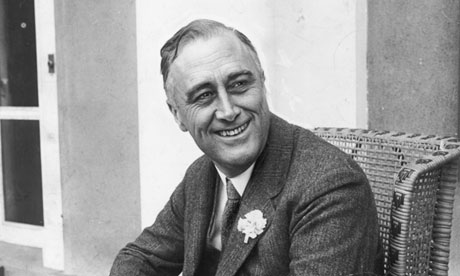
Franklin D. Roosevelt
Three terms plus, a World War, a Depression, a transformative Presidency and an epic life spent in public service: FDR is another President who can’t be summed up in an anecdote, one book, or a hundred. He accomplished enough great things to be a deserving icon; he committed enough wrongs to be judged a villain. (He was pretty clearly a sociopath, but a lot of great leaders are, including a fair proportion of ours, including some of the best.) The only completely unfair verdict on this Roosevelt is not to acknowledge the importance and complexity of his life. Here are some of my favorite items about him:
FDR wrote down a plan when he was still in school outlining the best way for him to become President. The plan was essentially to follow his distant cousin Theodore’s career steps: Harvard, Assistant Secretary of the Navy, Governor of New York, Vice-Presidential candidate, and President. (He skipped “Rough Rider.”) Amazingly, he followed it, and it worked.
Conventional wisdom holds that FDR’s polio transformed his character, and that without that crisis and challenge he would have been content to be a rich dilettante. I doubt it, but there is no question that he fits the Presidential survivor template, and that his ordeal made him stronger, more formidable and more determined.
Many Presidents had strong mothers, especially, for some reason, many of our Chief Executives from Roosevelt to Obama. Franklin’s mom, however, wins the prize. It’s amazing Eleanor didn’t murder her. But Mrs. Roosevelt is why Eleanor was there in the first place: all of our Presidents raised by strong mothers married very strong wives.
If a computer program were designed to create the perfect American leader, it would give us FDR. He was the complete package; his charisma, charm and power radiate from recordings and films that are 90 years old. That smile! That chin! That head! That voice! He is one of the very few Presidents who would be just as popular and effective today as the era in which he lived.
And just as dangerous. FDR is also a template for an American dictator, which, I believe, he would have been perfectly willing to be. It’s no coincidence that Franklin was the only President to break Washington’s wise tradition of leaving office after two terms.
Political and philosophical arguments aside, at least four of Roosevelt actions as President were horrific, and would sink the reputation of most leaders: 1) Imprisoning Japanese-Americans (and German-Americans, too); 2) Ignoring the plight of European Jews as long as he did, when it should have been clear what was going on; 3) Handing over Eastern Europe to Stalin, and 4) Knowing how sick he was, giving little thought or care to who his running mate was in 1944.
Balancing all that, indeed outweighing it, is the fact that the United States of America and quite possibly the free world might not exist today if this unique and gifted leader were not on the scene. Three times in our history, the nation’s existence depended on not just good leadership, but extraordinary leadership, and all three times, the leader we needed emerged: Washington, Lincoln, and Franklin. I wouldn’t count on us being that lucky again.
I left the bulk of reflection about the character and leadership style of Theodore Roosevelt to one of Teddy’s own speeches to embody, and I’ll do the same for his protege.
On September 23, 1932, New York Governor Franklin D. Roosevelt gave a speech at Manhattan’s Commonwealth Club. (Everyone, conservative, liberal or moderate, should read it….here.) It was a defining statement of progressive principles and modern liberalism, redefining core American values according to the perceived needs of a changing nation and culture. It is a radical speech, and would be regarded as radical by many today, even after much of what Roosevelt argued was reflected in the policies of the New Deal.
After sketching the origins and progress of the nation to the present, he flatly stated that the Founders’ assumptions no longer applied:
A glance at the situation today only too clearly indicates that equality of opportunity as we have know it no longer exists. Our industrial plant is built; the problem just now is whether under existing conditions it is not overbuilt. Our last frontier has long since been reached, and there is practically no more free land. More than half of our people do not live on the farms or on lands and cannot derive a living by cultivating their own property. There is no safety valve in the form of a Western prairie to which those thrown out of work by the Eastern economic machines can go for a new start. We are not able to invite the immigration from Europe to share our endless plenty. We are now providing a drab living for our own people….
Just as freedom to farm has ceased, so also the opportunity in business has narrowed. It still is true that men can start small enterprises, trusting to native shrewdness and ability to keep abreast of competitors; but area after area has been preempted altogether by the great corporations, and even in the fields which still have no great concerns, the small man starts with a handicap. The unfeeling statistics of the past three decades show that the independent business man is running a losing race. Perhaps he is forced to the wall; perhaps he cannot command credit; perhaps he is “squeezed out,” in Mr. Wilson’s words, by highly organized corporate competitors, as your corner grocery man can tell you.
Recently a careful study was made of the concentration of business in the United States. It showed that our economic life was dominated by some six hundred odd corporations who controlled two-thirds of American industry. Ten million small business men divided the other third. More striking still, it appeared that if the process of concentration goes on at the same rate, at the end of another century we shall have all American industry controlled by a dozen corporations, and run by perhaps a hundred men. Put plainly, we are steering a steady course toward economic oligarchy, if we are not there already.
Clearly, all this calls for a re-appraisal of values.
Now I’m wondering whether I’m a “bad liberal” to call him out. That means aligning myself with conservatives who love crying “double standard” on issues like this, not because they actually care about feminism, but to push their liberal media bias agenda.
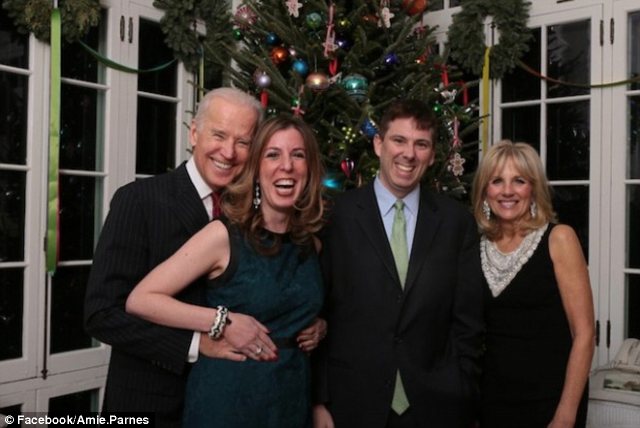
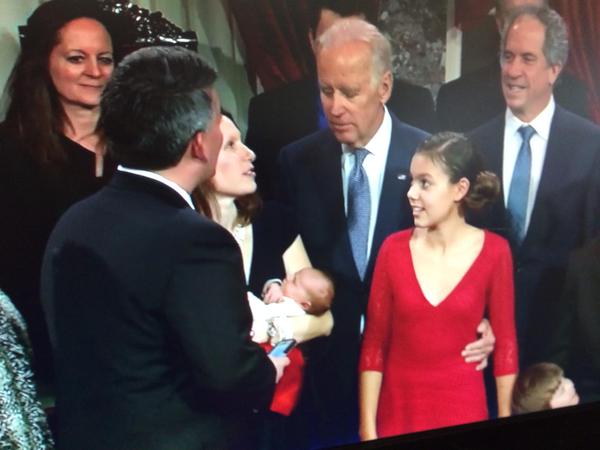
—–Alana Levinsonwriting at Talking Points Memo about Joe Biden’s blatant “creepy uncle” sexual harassment at public events, and the news media’s failure to condemn it.
Wait, what?
Is this some kind of weird mutation of logic that only liberals and journalists understand, like the unique language identical twins make up for themselves?
Alana makes a strong case–it’s not hard to make, however—that Vice-President Biden routinely, publicly and shamelessly engages in the exact same conduct that gets employees and executives warned, sued and fired all over America as feminists cheer (as well as non-feminists with a brain, because the employees and executives should be warned, sued and fired). It’s called “abusing power and position to cop a feel.” Then she writes the quote above, which I don’t understand at all:
Sexual harassment is unethical, disrespectful of women, and illegal.
Liberals have been at the forefront, to their credit, of making this recognition a cultural sea change.
The Vice President of the United States regularly undermines this signature liberal and feminist achievement by flaunting his cluelessness and archaic sexism at public events, either because he’s not paying attention to his own party’s rhetoric (scary) or because he knows he can get away with it (disgusting).
So she’s being a bad liberal if she points out that this is wrong and needs to stop forthwith, and a good liberal to allow it continue, allow the Vice President to act as if women (and, ick, little girls)…
…are his personal fondle-toys while they silently endure public humiliation and silent discomfort? Continue reading →
Rich (in CT) adds a superb and learned enhancement to the day’s post about President Obama’s dubious rape claims during the Grammy Awards. It raises a question I hadn’t considered before: is part of the problem that researchers are as clumsy in their understanding of language as liberal arts types are in their use of statistics and numbers? The word “rape” has meaning; this is no place for Humpty Dumpty’s habit of using words to mean whatever one pleases. [“When I use a word,’ Humpty Dumpty said in rather a scornful tone, ‘it means just what I choose it to mean — neither more nor less.’ ’The question is,’ said Alice, ‘whether you can make words mean so many different things.’’The question is,’ said Humpty Dumpty, ‘which is to be master — that’s all.”—― Lewis Carroll, “Through the Looking Glass” ] Rich writes, “This data is important, as mental health and sexual disease propagation is affected by such contact, even if the traditional criteria imaged for “rape” is not met. ” I’ll concede that the data is important, but shouldn’t important data be clearly and accurately described? The data isn’t about rape! It’s about a variety of conduct linked by the researchers that they chose to call “rape,” knowing, presumably, that people who never read the data will take the misleading “rape” description and use it to confuse, persuade, deceive, and engage in scaremongering for political gain.
Rich writes that “not enough evidence is given to suggest that either study is unethical in and of itself.” Isn’t using vague, overly broad and misleading terminology for a study that is going to be made public intrinsically unethical—irresponsible, incompetent, untrustworthy?
In a video that aired during the Grammy Awards on Feb. 8, President Obama stated, as President of the United States and a certifiable hero to the kind of citizens who watch the Grammy Awards, this:
“Right now, nearly one in five women in America has been a victim of rape or attempted rape.”
Let’s begin with the fact that this is false, or at least, there is no reason to believe it is true, or even close to true. (More about this in a minute.) Was the President’s statement a lie? We can’t tell. If the President believes that rape is so common that 20% of all women are raped, then what he said is not a lie (a false statement knowingly made by the speaker in order to deceive), which leads to some uncomplimentary conclusions:
a. He has a remarkably low opinion of his own nation and culture…but then we knew that, didn’t we?
b. He believes what he is told without challenging it or examining an assertions’ origin, methodology and assumptions. Really? This guy is supposed to be brilliant. I would think such a jaw-dropping and frightening statistic would mandate some examination, but see a.
c. Why hasn’t this been a major focus of his administration? Isn’t the President alarmed about this? Why is the Attorney General running around the country holding the hands of parents of dead kids who attack police officers and fighting attempts to make voters prove who they are at the polls if women are being raped like The U.S. is the Congo? Why is the Presidentusing his time to make faces on videos to sell Obamacare? Isn’t this clearly a reason to make one of his “I will not rest” speeches, in this case not resting until the rape frequency in the Land of the Free is lower than that of a Columbia ghetto? He believes 20% of the women in the country under his stewardship being raped in their lifetimes doesn’t rate mentioning in his “if wishes were horses” State of the Union, and relegates this horrendous health and crime emergency to…the Grammys?
If Obama doesn’t know if the stat is true, but said it anyway, then he was irresponsible. He’s President of the United States; people believe him, even after the shattered pledge of transparency and “If you like your health care plan…” and the “red line” and all the rest. He can not fairly, honestly, ethically state that something is true when he doesn’t know whether it is true or not. That is a lie, then: not the statistic itself, but the implication that he believes it.
Or he knows the statement is false, and made it to deceive, because the ends justifies the means.
In the discussion following last week’s post about the persistence of the false narrative that Bush’s 2000 electoral vote victory was “stolen,” I briefly referenced the now mostly abandoned fake “1 in five” statistic on campus rape, the one that prompted the 2014 Unethical Quote of the Year from Senator Claire McCaskill when it was debunked. This prompted blog warrior Liberal Dan to re-state the President’s proposition, since he is one of those people who continue to believe the President despite all evidence to the contrary. “One in 5 women are raped,” he wrote, unequivocally, linking to a 2011 New York Times study.
I wish I had the time and space to muse about what it says about an intelligent American when a stat like that one, whether it is used by the Times, the President, or Lena Dunham, doesn’t set off his or her ethics alarms, Fake-Stat-O-Meter and bullshit buzzer. This is what happens, though, when the President makes a factual assertion. I knew the stat was crap; I just don’t have the time to prove it’s crap to people who want to believe it. I assumed someone would pretty quickly, and sure enough, the Washington Post’s hard-working, liberal-biased but diligently trying to compensate Fact-checker Glenn Kessler came through.
“Here’s the problem: I run a business. People want to work for less money, I’ll pay them less money. I don’t call them up and say, ‘Can I give you some more?’ Because that’s not what you do when you run a business. The truth is, what women have to do is not work for less money. They have to walk away. People shouldn’t be so grateful for jobs. … People should know what they’re worth.”
—Recently fired—because of those hacked e-mails—Sony Pictures chief Amy Pascal, in an interview with journalist Tina Brown at the Women in the World conference in San Francisco. She was addressing her e-mails revealing that actress Jennifer Lawrence was paid less than her male co-stars in “American Hustle.”
My least favorite deceitful statistic took it on the chin with Pascal’s candid and accurate statement, and she ranks Ethics Hero status not just for saying it, but saying it in front of an audience full of women who have supported the lie while cheering and voting for politicians who repeat it.
A large chunk of the disparity between the salaries of men and women for the same jobs is not the product of bias or discrimination, but the natural consequences of females being raised to be less assertive, with lower self-esteem, and their resulting poor negotiating skills. Pascal is placing responsibility squarely where it belongs. This has been one more example of a traditionally mistreated group relying on victim-mongering rather than focusing on personal responsibility, accountability and honesty to address what is well within their power to fix.
Brava, Amy Pascal!
If Sony had any sense or principals, it would give you your job back.
Cheer up, Junie! Remember the sage words of the great Satchel Paige: “How old would you be, if you didn’t know how old you was?”
In October of 2011, Ethics Alarms offered an Ethics Quiz that asked, “Did the Internet Movie Data Base do anything unethical by publishing the actress’s real age without her permission?” The occasion was a lawsuit asking for over a million dollars in damages by an anonymous film actress who claimed that Amazon’s Internet Movie Data Base harmed her career by researching and publishing her real age without her permission. My conclusion at the time was that Actress X was
“shooting at the wrong villain. If there is age discrimination in Hollywood, confront it: a number shouldn’t disqualify her from any roles at all. I am not saying that fighting such a long-standing tradition in the show business culture isn’t a daunting task, but that’s the real problem, not a web service that conveys information about movies and movie stars by publishing facts.”
I cannot imagine being so bereft of wisdom, friends and mentors that I would ever be moved to ask a stranger to advise me regarding an important decision based solely on a letter describing my problem. Nevertheless, a lot of poor souls apparently do, and because they do, many of them probably act on the advice they get from Beth, Abby, The Ethicist and the rest. This means that anyone with the ego and chutzpah to hold themselves out as qualified to give such advice is ethically obligated to be able to do a competent job at it, and at very least to “do no harm.” Yes, unlike the law, advice columnist is one of the professions where the traditional ethical mission of medicine is not just appropriate, but essential.
Most advice columnists in the media are not competent, and some are dangerously reckless. The worst thing an advice columnist can do is to use the trusting and needy stranger as a potential recruit to steer toward the columnist’s ideologically-driven goals. The question being asked by desperate advice seekers, after all, is not “What would you do?” but rather “What should I do?” If the columnist answers the question presuming that the advice-seeker does or should see the world as the advice columnist does, then doing harm is the likely result.
“Effective Spring 2015, the (graduate center’s) policy is to eliminate the use of gendered salutations and references in correspondence to students, prospective students, and third parties,” Louise Lennihan, interim provost, states to employees in a recent memo. “Accordingly, Mr. and Ms. should be omitted from salutations.” Lennihan instructs staffers to interpret the new policy “as broadly as possible,” that it applies to “all types of correspondence, such as: all parts of any letter including address and salutation, mailing labels, bills or invoices, and any other forms or reports,” states the memo, a copy of which was provided to The College Fix by school spokeswoman Tanya Domi. Rather than using “Mr.” or “Ms.,” staff are instructed to refer to students by his or her full name. The policy will “ensure a respectful, welcoming, and gender-inclusive learning environment … [and] accommodate properly the diverse population of current and prospective students,” Lennihan states in the memo.
Now, I almost never use these salutations any more. “Mr.” has always seemed pompous to me, and now it reminds me of the New York Times with its tradition of calling the President “Mr. Obama.” (Over the weekend, the Times garnered guffaws for calling Wisconsin Governor Scott Walker “Mr. Scott” throughout an op-ed. Nice editing there). “Miss” seems condescending, “Mrs.” is a minefield, and “Ms.” sounds ugly while being both dated and unwelcome from some women. (Once I called a women “Ms.” and she barked at me, “Do I look like a dyke to you???”) And I hate being called Mister myself. All of the is irrelevant, It is not any university’s business to enact speech codes, banned words, or other undemocratic and ideologically driven attempts at censorship and speech control. Speech control is thought control, and thought control is indoctrination. Continue reading →
To go into the “Gallery of Republicans Who Say Offensive Things About Rape Making The Whole Party Look Stupid.” The sad part is, the gallery is filling up…
I just wrote the quote in the title a couple hours ago, and now this.
Rep. Brian Kurcaba of the West Virginia House of Delegates was involved in the body’s debate over a proposed bill to ban abortions after 20 weeks of pregnancy, and that does not allow an exception in cases of rape. He said:
“For somebody to take advantage of somebody else in such a horrible and terrifying and brutal way is absolutely disgusting. But what is beautiful is the child that could come as a production of this.”
I’m sorry to be uncivil and blunt, but he’s an idiot, the comment is signature significance of a near-clinical deficit of compassion and common sense, and any man this dull should not be allowed within 50 yards of a legislature. Continue reading →