
I confess, I was completely unaware of this issue, or the fact that we even have a so-called “sub-minimum wage.” Section 14(c) of the Fair Labor Standards Act allows individuals with Down Syndrome or other intellectual or developmental disabilities to take certain specially regulated jobs at less than the minimum wage. The usual “raise the minimum wage” crowd wants the exception eliminated, and many states are preparing to do so. Advocates for the disabled and Down Syndrome individuals argue that it is important to keep the sub-minimum wage.
I don’t understand this controversy at all.
Opponents of eliminating the sub-minimum wage argue that it will cause many Down Syndrome individuals to lose their jobs. Of course it will, but how is this different from the fate of all the minimally skilled workers without technical disabilities who lose their jobs when the regular minimum wage is raised? Why is their plight less urgent than that of the disabled? If it is acknowledged that a sub-minimum wage keeps those who cannot perform at a level worth the minimum wage in the work force, why limit that rationale to the genetically disadvantaged?
But the opponents of killing the sub-minimum wage rely on the worst possible arguments to support keeping it. Here’s the “Dissenting Statement and Rebuttal of Commissioner Gail L. Heriot in Report of the U.S. Commission on Civil Rights: Subminimum Wages: Impact on the Civil Rights of People with Disabilities. (September 17, 2020).” Heriot, one of the few conservatives on the Commission, writes,
Section 14(c) was adopted in 1938 at the same time as the first federal
minimum wage. Back then it was believed—no doubt correctly—that a federal minimum wage would cause many disabled persons to become unemployable. An exception was thus created.
(There is also a time-limited exception for youth employment.)
Why wasn’t it also believed that the same principle would apply to every other individual, handicapped or not, who was unable to perform a job worth the minimum wage? Isn’t the assumption that Down Syndrome sufferers are less employable than than the ordinary lazy, poorly educated, unmotivated and none-too-bright American low-skilled worker simple bigotry? My experience with Down Syndrome workers is that they are often better at their jobs than their non-Down peers—harder working, more polite, more reliable. If a sub-minimum wage makes sense, then a minimum wage makes no sense. Continue reading →

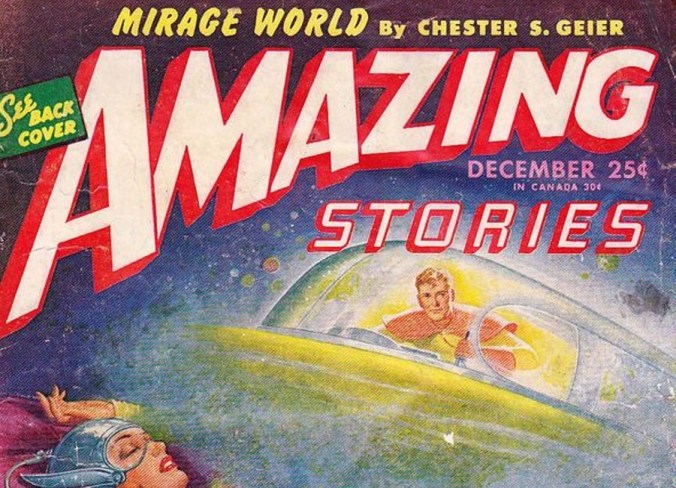
 No, I’m not kidding, and this is not a hoax.
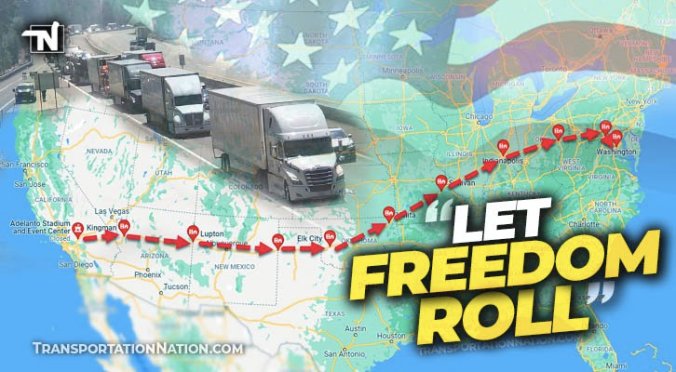

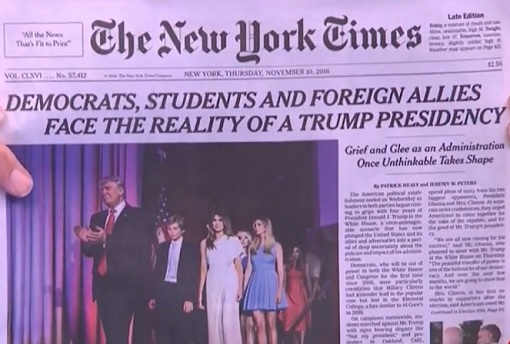



“The First Amendment, and whatever the Canadian equivalent is (however weakly codified) does not protect actions that interfere with lawful commerce or disturb the peace to the point of mischief.”
Well I’m glad you asked!
Canada also has a constitution, although ours wasn’t predicated on the same base narrative as America’s. As an outsider looking in, America’s constitution is almost paranoid in nature, usually you don’t draft the founding documents to a nation’s governments under the auspices of governments being tyrannical and specifically with an emphasis on protection from that tyranny. I make no negative values judgement there…they work, in a stiffly rugged way. To highlight the differences between Canadian and American constitutional theory: Where the founders wrote “life, liberty and pursuit of happiness” in America’s declaration of independence, Canada’s founders instead wrote in “peace, order, and good governance”.
Our Canadian constitution is more malleable, and over the years, it’s been broadly re-imagined. Instead of enumerated amendments to the constitution, in 1982, Canada codified our rights in a portion of our constitution called “The Charter of Rights and Freedoms”.
Continue reading →