Comment Of The Day, Rebuttal #2: “Morning Ethics Warm-Up, 4/4/2018:…A Presidential High Crime…”

This is the second rebuttal to my criticism of the President’s effort to use his influence and power to harm Amazon. I’m very impressed with it, but I have to give a rationalizations alert, for there are several evoked here, including, a few versions of #1, Everybody does it,” #2 A. Sicilian Ethics, or “They had it coming,” #3. Consequentialism, or  “It Worked Out for the Best” #39. The Pioneer’s Lament, or “Why should [He] be the first?,” #45. The Unethical Precedent, or “It’s Not The First Time,” and probably others.

Here is Greg’s Comment of the Day on the #2 in “Morning Ethics Warm-Up, 4/4/2018: Baseball Lies, A Presidential High Crime, And A Judge Makes A Panty Raid”:

There is nothing wrong, much less anything impeachable, about the President making valid, policy-based attacks that target specific companies, even though the attacks may “suppress the companies’ stock values.” Attacks on Standard Oil were justified, even though stockholders in Standard Oil may have suffered. Trump’s comments about Amazon are fair. In any case, there is no reason to think that his remarks were intended to drive down Amazon’s stock price and very little reason to think that they will cause any particular harm to Amazon or its stock.

Trump’s recent tweets have made three points about Amazon, all of which he has made many times before: (1) Amazon benefits from a sales tax loophole that unfairly costs states money and disadvantages brick-and-mortar retailers, (2) Jeff Bezos uses the Washington Post to lobby for the continuation of this advantage and (3) the US Postal Service undercharges Amazon and should negotiate higher rates.

Trump has been making the first two points since at least 2015. He made them repeatedly during his campaign in tweets, in interviews and in speeches. Here’s the earliest reference that I found: https://www.washingtonpost.com/news/the-fix/wp/2015/12/07/donald-trump-called-out-jeff-bezos-on-twitter-then-bezos-called-his-bluff/?utm_term=.8573b4279b6d.

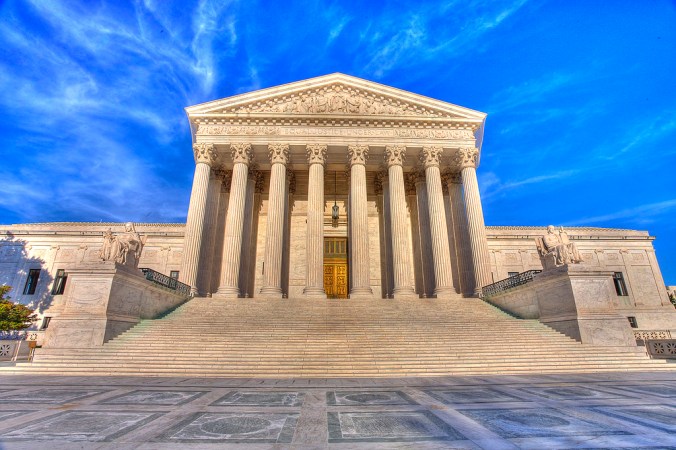
Trump has continued to make both points since he became president. Here’s just one example: https://www.bloomberg.com/news/articles/2017-08-17/trump-s-bruising-tweet-highlights-amazon-s-lingering-tax-fight. His Treasury Department has been studying the sales tax issue for over a year, http://thehill.com/policy/finance/343972-mnuchin-trump-administration-is-examining-online-sales-tax-issue, and his Justice Department last month filed an amicus brief in South Dakota v. Wayfair, a case currently before the Supreme Court, arguing that the Court should close the sales tax loophole that benefits Amazon and other online retailers.

Trump has been making the third point (about USPS rates) since at least December last year. http://fortune.com/2017/12/29/trump-amazon-post-office.

None of those previous statements and actions by Trump and his administration caused Amazon’s stock price to fall. Trump could not have expected that thisweek’s tweets, repeating exactly the same points that he has made many times before, would have any effect on Amazon’s stock price.

Moreover, Trump’s tweets haven’t made any threats against Amazon and he doesn’t seem to have any intention of taking any unilateral action to hurt Amazon. To the extent that his tweets may have affected Amazon’s stock price, they most likely did that by drawing investors’ attention belatedly to genuine issues regarding Amazon’s business model, in particular the possibilities that the Supreme Court might actually close Amazon’s sales tax loophole and that the USPS might actually negotiate a better deal with Amazon. If his tweets have pointed out concerns that investors previously hadn’t given proper weight, then he has done a valuable service for the markets. If these concerns turn out to be unjustified, then Amazon’s stock price will soon recover and Trump’s tweets will have done no harm. Continue reading

Comment Of The Day, Rebuttal #1: “Morning Ethics Warm-Up, 4/4/2018:…A Presidential High Crime…”

Is Teddy looking down from Rough Rider Heaven and smiling at Trump’s Big Tweet?

Of course, I knew suggesting that President Trump’s deliberate attacks on Amazon via Twitter was an impeachable offense would set heads a-blowing. The resulting debate has been fascinating, with interesting historical parallels being proposed. This comment, by Chris Marschner, is the first of two erudite and well argued rebuttals.

Not to hold you in unnecessary suspense, I am not convinced or dissuaded. I do not see Teddy Roosevelt’s  policy-oriented attacks on the era’s monopolies, correctly leading a movement to reform an area of widespread capitalist abuses that eventually were agreed to be criminal, with Trump’s tweeting crudely phrased animus to the public. Nor do I find Obama’s general criticism of big money lobbying efforts by energy interests in general and the Kochs in particular at the same level of abuse of power as Trump taking aim at the owner of the Washington Post,

I am a lifetime fan of Teddy, but he crossed many lines, and could have been legitimately impeached himself. As I have stated before in multiple posts, the power of the Presidency is too great to be abused with casual wielding against individuals and named businesses. As always, there are exceptions.  I’ll concede that taking on the robber barons and the monopolists in the early 20th Century can be fairly designated as one.  Chris seems to feel that there is a close parallel in Amazon’s growing power, but that’s not the case the President chose to make, instead focusing on a deal Amazon forged with the Postal Service, as much to keep the latter in business as to benefit Amazon.

Basic lessons in POTUS leadership: if you are going to cross lines of appropriate uses of  power, 1) You better be right and 2) Be Presidential about it.

Other examples, like Obama designating Massey Energy as responsible for the Upper Big Branch mining disaster before the investigation was complete, can not be so easily excused, but can be fairly labelled a mistake. (Obama made many, too many, such mistakes.) Trump’s attack on Amazon is neither as limited as Obama’s mistake, not as carefully considered and justifiable as Roosevelt’s trust-busting. I would like to see future Presidents restrained from abusing power in this way, even if it takes a trail before the Senate to do it. If we don’t restrain it, we will be sorry.

But the other side has some good arguments: by all means, read them.

Here is Chris Marschner’s Comment of the Day on the #2 in “Morning Ethics Warm-Up, 4/4/2018: Baseball Lies, A Presidential High Crime, And A Judge Makes A Panty Raid”:

I would like to point you to this in 2015:

https://www.usatoday.com/story/news/politics/2015/08/26/war-words-obama-v-koch-brothers/32423959/

“When you start seeing massive lobbying efforts backed by fossil fuel interests, or conservative think tanks, or the Koch brothers pushing for new laws to roll back renewable energy standards or prevent new clean energy businesses from succeeding, that’s a problem,” Obama said at the summit. “That’s not the American way.”

“Josh Earnest said the exchange illustrates the kind of president Obama set out to be.”

“This is exactly why the president ran for office, it’s why he ran for this office, is that for too long, we saw the oil and gas industry exert significant pressure on politicians in Washington, D.C.,” he said. And when Obama fights that influence, “the special interests, including the millionaires and billionaires that have benefited from that paralysis, start to squeal. And I guess in this case, at least one billionaire special interest benefactor chose to squeal to a Politico reporter.”

This type of rhetoric does not include Obama officials publicly stating (incorrectly and improperly) that one of the Koch brothers paid no income taxes. (http://freebeacon.com/politics/hazy-memories/)

Is it only an abuse of power when referencing specific individuals? Does it matter if you say the 1% don’t pay their fair share or is it an abuse of power only if you identify them by name?

I will concur with the Koch brothers that it is beneath the dignity of the president to go after a specific individual, but to suggest that it amounts to even a misdemeanor abuse of power is a stretch. If calling out a specific firm is an impeachable offense then why was there no call to impeach Obama when he routinely criticized and mocked Koch Industries, Fox News and others that did not line up with full throated support of his agenda.

But , Obama was not the first to chastise “punch down” on a business person. Who can forget the trust buster himself Teddy Roosevelt. JP Morgan was singled out for bad behavior. Continue reading

Comment Of The Day: “No Wonder We Can’t Communicate With Each Other Or Have Coherent Debates: We’re Culturally Illiterate”

[I’m using this morning to post some important, backlogged Comments of the Day. Today’s Warm-Up will be after noon, if all does according to plan.]

Keith Walker registered a fascinating reflection on his experiences as a teacher in response to the post regarding the decline of cultural literacy. I do take umbrage at his categorization of my commentary about public school’s ongoing failure as “ranting” and his implication that I have designated teachers as “useless.” If I have criticized teachers and administrators, it has always been based on specific conduct. In Alexandria, VA., I had to pull my son out of one public school, a Catholic school and two private ones upon observing exactly the kind of incompetence, bias and abuse I have written about over the past eight years.  Indoctrination, child abuse, incompetence and sexual predation in the schools are real, and teaching is still a “profession” without codified ethics standards. Dedicated, smart, competent teachers are heroic, but their existence does not make my criticism and analysis less valid or less urgent.

Here is Keith’s Comment of the Day on the post, “No Wonder We Can’t Communicate With Each Other Or Have Coherent Debates: We’re Culturally Illiterate”

As one of those useless public school teachers so often ranted about in this space, I want to rise to the occasion here and, if not defend our profession, at least offer my take on things over my 31 years in the business.

I was a fairly new teacher when Hirsch’s book came out. I thought then that it was a silly tome, written from the perspective of a grumpy old man. I still don’t hold much respect for it, though I have become a grumpy old man myself. Who gets to decide what’s important cultural literacy? (Yes, I am about to say something like “it’s always been old white guys…”) I wonder if someone else had written that book if it would have contained different things?

But since 1988 several things have happened to make teaching these important things virtually impossible, the internet and standardized testing being two major ones. Yes, I know that standardized testing has been around for many decades; I remember taking the MEAP (Michigan’s state test) when I was a small boy in the 70s. But in the 70s test scores were not blasted across the front pages of newspapers everywhere, and politicians were not decrying our “failing public schools” and telling everyone that privatization and profits would be a much better plan for education.

The pressure on schools, teachers, and students to “succeed” on these tests is ridiculous, and it has gotten to the point that if it can’t be measured, we don’t have time to teach it. And everything is measured. As a music teacher I am happy to have a job any more; much of my curriculum isn’t “measurable” to a certain extent, and it certainly isn’t required for success in life. But I digress… Believe me, if Cromwell was going to be on the ACT, SAT, or AP History exams, you can bet he’d be talked about in schools. It’s all about competition, and everyone is fearing for jobs, funding, and students as we move to a market-based system of educating our next generations, and the members of that generation all want to get a 7.0 GPA and get into Harvard (starting as freshmen with 75 credits due to all of their AP test scores), and the way to do it is to excel on those tests. It’s fairly terrifying. Continue reading

No Wonder We Can’t Communicate With Each Other Or Have Coherent Debates: We’re Culturally Illiterate

“Who?”

Ugh.

 I was watching the MLB channel this morning, and the hosts were discussing the Milwaukee Brewers and their general manager’s statement that the team would “keep its powder dry” until the mid-season trading deadline. All three hosts professed to have no idea whatsoever what the phrase about keeping powder dry meant. In his 1988 book “Cultural Literacy,” E.D.Hirsch, Jr., argued that children in the United States are not learning the basic knowledge that they need to function competently in society. the background information about world, Western and U.S. culture that literate writers and speakers assume their audience already has. The three MLB hosts were all schooled since 1988, and clearly, the problem has only gotten worse.

The phrase at issue is a useful and formerly famous one. It comes from a reported quote from Oliver Cromwell—Teddy Roosevelt wrote a biography of Oliver Cromwell. I bet fewer than one out of a thousand Americans could tell you who he was—during the Battle of Edgehill in 1642. Cromwell supposedly told his Roundhead troops in that opening fight of the English Civil War, ”Put your trust in God, my boys, but mind to keep your powder dry.” The last part of the quote is usually evoked to mean “keep cool,” but the entire quote is more profound. As the late language maven William Safire wrote in the New York Times, it means ”stay calm” but carries an implicit, most ominous threat: ”and be prepared to blow the enemy’s head off at the propitious moment.” Prayer is great, but the Lord helps those who help themselves. Or, as a World War II slogan had it, “Praise the Lord and pass the ammunition!” This was made into a popular wartime song by Frank Loesser, who wrote “Guys and Dolls.” I know: what’s “Guys and Dolls”? What’s “World War II?”

This morning’s depression reminded me of an essay by Patrick Deneen from 2016, titled “How a Generation Lost Its Common Culture.” He wrote in part, Continue reading

Morning Ethics Warm-Up, 4/4/2018: Baseball Lies, A Presidential High Crime, And A Judge Makes A Panty Raid


Wake Up!

1 Fake history, baseball style. Broadcasts of Red Sox games from Fenway Park in Boston refer to “the Pesky Pole,” the official name of the tall, yellow foul pole in right field. It is named in honer of the late Johnny Pesky, who also is honored in a statue outside the park—it featured him and his team mates and longtime friends, Ted Williams, Dom DiMaggio, and Bobby Doerr. Pesky, with a couple of brief interruptions,was a Red Sox lifer, beginning with his 1942 rookie season, and ending with his death several years ago as an honorary coach. In between, he was Sox minor league manager, the big team’s manager, a hitting coach and a broadcaster.

The Pesky Pole got its name because the notoriously power-free shortstop reputedly hit several of the few he managed to slug in his career by knocking a pitch  around the marker, which arose from  what is now the shortest foul line in baseball. The  low Fenway right field fence veers sharply out from there to over 400 feet, so such homers are considered, and indeed are, lucky flukes. During his brief and undistinguished tenure as a Red Sox radio color man, former Red Sox pitching ace Mel Parnell repeatedly told the story about how Johnny won a game for Mel in 1948 with a pole-shot. This tale led directly to the team officially naming the pole on September 27, 2006, on Pesky’s 87th birthday, with a commemorative plaque placed at its base and everything.

Afterwards, and not before, someone actually checked the game records. Pesky never hit the home run  described by Parnell. He only hit six home runs in Fenway at all, and nobody knows how many hit the pole, looped around the pole, or even went to right field. (Pop-ups hit by Punch-and-Judy hitting shortstops sometimes landed in the screen over the left field wall for home runs, as the cursed Bucky Dent can attest.) Nevertheless, the fake history is in place: the Pesky Pole is named that because Johnny Pesky hit a famous home run off of it, or was famous for looping cheap homers around it, or something.

Baseball excels at creating fake history, the most notable being represented by the locale of its Hall of Fame, in Cooperstown, New York. When the museum was envisioned, the accepted story about the game’s origin was the Union general Abner Doubleday invented the sport in 1839 and organized the first game in Cooperstown. After the construction was underway,  research suggested that everything about the Doubleday tale was rumor and myth, but baseball and the museum’s management, in one of the all-time classic examples of adopting the philosophy of the newspaper editor in “The Man Who Shot Liberty Valence,” went to great lengths to keep the original story before the public. Eventually some hard evidence surfaced suggesting that the game was invented by Alexander Cartwright, who was eventually inducted into the Hall as the game’s creator, while Doubleday is not. Nonetheless, the myth survives. Major League Baseball Commissioner Bud Selig, for example,  said in 2010 that “I really believe that Abner Doubleday is the ‘Father of Baseball.'” This is the equivalent of saying that one believes in the Easter Bunny.

Selig was later inducted into the Hall of Fame.

2.Believe it or Not! I would support impeaching  President Trump for his tweeting attacks against Amazon. This is such an abuse of Presidential power that it demands at least a Congressional reprimand or sanction. Amazon lost $53 billion in market value in the wake of the tweets, meaning that investors, retirees, and ordinary Americans lost wealth as well. It is unconscionable for a President of the United States to deliberately target a company, just as it is wrong for a President to punch down at a private citizen, but the consequences of doing what Trump has done to Amazon is far, far worse. The Wall Street Journal suggested in an editorial that if the attack on Amazon was politically motivated because Amazon mogul Jeff Bezos owns the Washington Post, impeachment would be justified. Yes, that would be even worse, but it is not an essential element of this “high crime.” The President of the United States must not abuse his power by intentionally harming lawful businesses.

The foolish resistance is so focused on trying to impeach Trump based on exotic laws and imaginary conspiracies that it doesn’t see the real thing when it’s right in front of its face, and the anti-Trump media has so destroyed its credibility by embracing ridiculous impeachment theories that a valid one will just look like more of the same. Continue reading

Ethics Hero: Andrew Sullivan

Once again, Ethics Alarms is honoring Andrew Sullivan for unusual courage in the field of punditry. In this case, the honor is less for what he has written than the fact that he wrote it at all.

His general topic is genetic research, taking off from a recent op-ed appeared in the New York Times by Professor David Reich, a  Harvard geneticist, which broached the virtually taboo topic genetic variations between subpopulations of humans, that is to say, races. On the way through Sullivan’s essay, called “Denying Genetics Isn’t Shutting Down Racism, It’s Fueling It,” Sullivan makes many perceptive observations, like…

“This argument should not be so controversial — every species is subject to these variations — and yet it is. For many on the academic and journalistic left, genetics are deemed largely irrelevant when it comes to humans. Our large brains and the societies we have constructed with them, many argue, swamp almost all genetic influences.

Humans, in this view, are the only species on Earth largely unaffected by recent (or ancient) evolution, the only species where, for example, the natural division of labor between male and female has no salience at all, the only species, in fact, where natural variations are almost entirely social constructions, subject to reinvention. We are, in this worldview, alone on the planet, born as blank slates, to be written on solely by culture. All differences between men and women are a function of this social effect; as are all differences between the races. If, in the aggregate, any differences in outcome between groups emerge, it is entirely because of oppression, patriarchy, white supremacy, etc. And it is a matter of great urgency that we use whatever power we have to combat these inequalities.”

Agreed, and stipulated: the progressive position on this aspect of science is, as in so many other areas, a deliberate refusal to deal with reality in order that ideological goals may proceed.

More from Sullivan later in his piece… Continue reading

Morning Ethics Warm-Up, 4/3/2018: Hypocrisy, Exploitation, Fake Definitions And Fake News

Good Morning…

…and believe me, it takes a super-human effort for me to say that right now…

1.  Good. Rep. Esty is not running for re-election. We discussed her hypocrisy in a post two days ago. Now she says, “Too many women have been harmed by harassment in the workplace. In the terrible situation in my office, I could have and should have done better.” This would have been a meaningful and productive statement if she hadn’t previously insisted that she handled the matter correctly and refused to be accountable. She did, however, and mouthing platitudes now should not alter the verdict that she was a cynical and grandstanding #MeToo performer who, when time came to act according to the standards she was demanding of others, failed miserably.

2. Anybody know of an ethical computer protection service? I now have two ghost services torturing me with pop-up ads, slowing down my computer, and generally behaving like a virus because I cancelled them. When I cancel a service I allowed onto my computer, I expect them to say good-bye and leave. I do not recall agreeing in my original contracts that “the undersigned hereby agrees that if for any reason he chooses to end his relationship with ____________, the service will continue to hound him with warnings, special offers, unrequested scans and other harassment until he dies or throws his computer out the window.”

The two companies at issue are AVG and McAfee. I will chew off my foot before I engage either of them again.

3. Big Brother’s way of winning a debate: change the meaning of the terms so you can’t lose.  After the repeated misuses of the term “assault rifle” as a disinformation and fear-mongering tactic by the anti-gun mob were flagged by Second Amendment supporters to the embarrassment of the zealots, Mirriam-Webster rode to the rescue,  changing its online dictionary entry for the term so its ignorant ideological allies could now cite authority:

On March 31, 2018, the following definition was published:

noun: any of various intermediate-range, magazine-fed military rifles (such as the AK-47) that can be set for automatic or semiautomatic fire; also a rifle that resembles a military assault rifle but is designed to allow only semiautomatic fire

Translation: “This is what the term really means, but it also means what ignorant politicians, journalists and activist refer to erroneously as the same thing even though it’s not, because we support them and this will make it easier for them to mislead other without looking dishonest and foolish.”

[UPDATE: There is some question of whether that definition was added before or after Parkland. Reader Steve Langton reports that he read the current version a couple of days after the shooting.]

Continue reading

Morning Ethics Warm-Up, 4/2/2018: The Unreliable Authorities Edition

Good morning!

1.  Another baseball ethics dispute! This is an exciting time of changes in the traditional wisdom of how to play Major League Baseball, all sparked by that new ethics bugaboo, Big Data. Now that so many aspects of the game can be measured and analyzed, tradition and assumptions rarely challenged are now under fire. One massive shift is, ironically, in the matter of shifts, radical defensive alignments in which players are not fielding their normal positions, but rather are places where computer spray charts for each batter suggest that the likelihood of fielding a ball is highest.  This can mean anything from one lonely fielder on the left side of the infield, or four outfielders.

Shifts are not new, but they used to be used on a handful of super-sluggers with dead-pull propensities, notably Ted Williams, who famously refused to bunt for easy hits to the unoccupied side of the field, and instead usually tried to hit through or over the shift. It has been estimated that the Williams Shift, combined with the player’s infamous stubbornness, cost him many points off of his lifetime batting average, especially since Williams defeating the shift by bunting might have discouraged its use.

But he was Ted Williams, the second greatest hitter of all time.  The question of whether lesser batters should bunt against shifts, for now many teams shift against everyone, has an easy answer: Of course they should.

In yesterday’s Twins-Orioles game, Twins starter Jose Berrios had  a one-hit shutout in the ninth inning. leading with one out and no runners on base. O’s rookie catcher Chance Sisco came to the plate—he has my favorite baseball name this season–and the Twins put on a shift like the one Ted Williams despised:

So, knowing he wasn’t Ted Williams and also knowing that in baseball even seven run leads aren’t a sure thing, Chance dropped down a bunt to the left side for a single. Berrios then walked two batter Davis and Manny Machado to load the bases, but finished his shutout by getting the next two outs without further disruptions.

After the game, the Twins players questioned the ethics of Sisco’s hit. Berrios said, “I just know it’s not good for baseball [to bunt] in that situation. That’s it.” Twins outfielder Eddie Rosario said, “Nobody liked that. No, no, no. That’s not a good play.” Second baseman Brian Dozier added, “Obviously, we’re not a fan of it. He’s a young kid. I could’ve said something at second base but they have tremendous veteran leadership over there. I’m sure they’ll address that. It’s all about learning. You learn up here.”

When do you “learn” not to try to win the game and get on base? For Sisco, a rookie, sending the message that shifting against him is a bad risk also is a wise career move. There is a long-standing, and stupid, unwritten rule in baseball that it is “bush league” to try to break up a no-hitter with a bunt, but extending that dubious logic to a mere shutout breaks the Stupid Meter.

2. Coffee is good for you, but be worried when you drink it. Continuing its rapid devolution into Bizarro World, just as increasing scientific evidence suggest that coffee is good for you, California is demanding that it carry a tobacco-like warning label. Last week a judge ruled that Starbucks and  other coffee companies in California must carry a cancer warning label because of a chemical produced while beans roast has been shown to cause cancer in high doses. California’s Safe Drinking Water and Toxic Enforcement Act  requires companies with more than 10 employees to warn their customers about the presence of carcinogenic and toxic chemicals in their products, even in tiny amounts. Acrylamide, a chemical compound that is produced naturally during the roasting of coffee beans, is on the state’s list of chemicals known to cause cancer or reproductive toxicity. The judge ruled that the coffee company had the burden of proof  to show that acrylamide posed no significant health risk to coffee drinkers, even though there is no evidence that coffee does pose a risk. Continue reading

Facebook’s “Ugly Memo” Is Completely Ethical.

Facebook employees were horrified last week by over a leaked 2016 memo from  Facebook VP Andrew “Boz” Bosworth defending the social network’s aggressive expansion plans. Naturally, since the news media is in a Hate Facebook mode, ever since it was discovered that the social networking giants didn’t just let Barack Obama and Hillary Clinton acquire personal, data from its users: Republicans got some of the “big data” too, the Bosworth memo, nicknamed “The Ugly,” was more fodder to declare Mark Zuckerberg’s baby evil.

It may be evil, but not on the basis of the memo. Here’s what Bosworth wrote:

The Ugly

We talk about the good and the bad of our work often. I want to talk about the ugly.

We connect people.

That can be good if they make it positive. Maybe someone finds love. Maybe it even saves the life of someone on the brink of suicide.

So we connect more people

That can be bad if they make it negative. Maybe it costs a life by exposing someone to bullies. Maybe someone dies in a terrorist attack coordinated on our tools.

And still we connect people.

The ugly truth is that we believe in connecting people so deeply that anything that allows us to connect more people more often is *de facto* good. It is perhaps the only area where the metrics do tell the true story as far as we are concerned. That isn’t something we are doing for ourselves. Or for our stock price (ha!). It is literally just what we do. We connect people. Period.

That’s why all the work we do in growth is justified. All the questionable contact importing practices. All the subtle language that helps people stay searchable by friends. All of the work we do to bring more communication in. The work we will likely have to do in China some day. All of it.

The natural state of the world is not connected. It is not unified. It is fragmented by borders, languages, and increasingly by different products. The best products don’t win. The ones everyone use win.

I know a lot of people don’t want to hear this. Most of us have the luxury of working in the warm glow of building products consumers love. But make no mistake, growth tactics are how we got here. If you joined the company because it is doing great work, that’s why we get to do that great work. We do have great products but we still wouldn’t be half our size without pushing the envelope on growth. Nothing makes Facebook as valuable as having your friends on it, and no product decisions have gotten as many friends on as the ones made in growth. Not photo tagging. Not news feed. Not messenger. Nothing.

In almost all of our work, we have to answer hard questions about what we believe. We have to justify the metrics and make sure they aren’t losing out on a bigger picture. But connecting people. That’s our imperative. Because that’s what we do. We connect people.

Anyone who thinks this is a horrible or unethical sentiment doesn’t understand the fallacy of consequentialism, doesn’t comprehend moral luck, and doesn’t understand ethics or the concept of liberty. The section in the memo that has the Left’s new moralists suffering from the vapours is this one:

“So we connect more people. That can be bad if they make it negative. Maybe it costs a life by exposing someone to bullies. Maybe someone dies in a terrorist attack coordinated on our tools.”

That’s not “ugly.” That is a statement of reality, though admittedly one that certain political groups can’t understand, or choose not to accept. The value of tools that expand human power and experience is not diminished because they can be, and predictably will be, misused by some people, sometimes tragically. The nation was built on a basic understanding and embrace of that concept. Recently, a powerful movement has arisen challenging the assertion that personal; liberty is a universal good, on the grounds that liberty can be abused..  Here are some of the parallel and equivalent statements that this group currently challenges, often in  angry and demonizing terms: Continue reading

Morning Ethics Warm-Up, 4/1/2018: The Easter-April Fools Edition [UPDATED]

Happy Easter, or April Fools Day,

…whichever you chose, or both.

[My family celebrated Greek Easter (next Sunday, this year), or not, depending on how Greek my mother was feeling. The whole thing left me thoroughly confused. And why no Greek April Fool’s?]

1 Hey, it’s only the Pope carelessly allowing centuries of Catholic teachings to be declared, if informally, null and void. What’s everyone so upset about? Recipe for a fiasco:

  • The Pope inexplicably has a meeting with a 93-year-old atheist reporter, Eugenio Scalfari, who has reported on the alleged contents of their private meetings before.
  • Scalfari has admitted “on more than one occasion” that he doesn’t take notes or record his conversations with the Pope.
  • The Pope either opines, or doesn’t, or sort of does depending on your interpretation, and if you are an atheist confirmation bias comes into play, opine that Hell doesn’t exist, saying, according to his pal, “Hell does not exist…The disappearance of sinful souls exists.”
  • Scalfari, presumably without permission or consent, but he’s a journalist, so he’s going to report the news, and the Pope saying that all that stuff in the Bible about Satan is a lot of hooey is, you have to admit, news (although who knows if Matt Pearce would report it as news; I guess it would depend on whether he wanted the public to know there was no Hell, right?), naturally lets the world know that the Pope doesn’t believe what his predecessors and follower have been using to scare the Hell out of sinners all this time.
  • The Vatican issued a statement saying:

“What is reported by the author in today’s article is the fruit of his reconstruction, in which the precise words uttered by the Pope are not cited. No quotations in the aforementioned article, then, should be considered as a faithful transcription of the words of the Holy Father.”

That’s called “spin.” Why do we trust these people?

2. Why is NPR taxpayer-funded again? This “correction” actually appeared in the NPR story about the Pope’s Hell problems:

Correction March 30, 2018: An earlier version of this post incorrectly described Easter as “the day celebrating the idea that Jesus did not die and go to hell or purgatory or anywhere at all, but rather arose into heaven.”

Competence? Editors? Basic education? Respect for people’s faith? Knowing something about the predominant religion ins the nation you are reporting on? Hello? Continue reading