The Real Legal Ethics Conundrums In “Bridge of Spies”

bridge-of-spies

Quite a few readers have written that they would enjoy some of the problems I present in my seminars on legal ethics. I try to please, so here are some difficult legal ethics issues that arose in the screenplay of last year’s Oscar-nominated film “Bridge of Spies.”

I wrote about the film earlier this year, here.

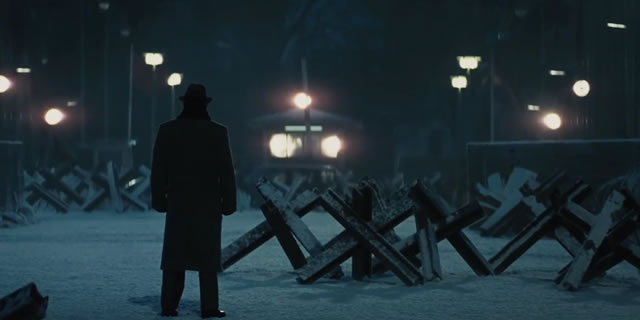
The film tells the true story of Jim Donovan, an insurance lawyer who is recruited, in 1957, by his New York bar association to take on the representation of the accused Soviet spy Rudolf Abel, a job that we see Donovan not only do bravely and competently, but one that he takes all the way to the Supreme Court. He loses, and Abel goes to prison.

Legal ethics points:

  • That ends the representation, and Abel is no longer Donovan’s client, but a former client.
  • Lawyers still have duties to former clients: they must keep all of the confidences learned during the representation and after, and not use these against the interests of the ex-client, or reveal them ever, even after the ex-client is dead and buried, except under rare circumstances.
  • A lawyer is also not allowed to become adverse to the interests of a former client in a substantially related matter to the one he (or she) handled for the client.

Because when representing Abel, Donovan had argued against executing the spy on the grounds that he might a useful  bargaining chip if an American was captured by the Russians—an argument he made to save Abel’s life, not to provide unsolicited advice to the government—the capture of U2 pilot Gary Powers after he was shot down in a spy plane makes the lawyer a candidate to make his own scenario come true. An East German official sends Donovan a letter claiming to be able to broker an exchange of Powers for Abel. When the CIA learns about the letter, they ask Donovan to go to East German and negotiate the deal. Continue reading →
The First Thing We Do, Let’s Slime All The Lawyers…

the-blob-88

In election years I tell all my legal ethics seminar classes to start teaching their non-lawyer neighbors and relatives ABA Model Rule 1.2 b, which reads,

(b) A lawyer’s representation of a client, including representation by appointment, does not constitute an endorsement of the client’s political, economic, social or moral views or activities.

This, combined with the principle of zealous representation of one’s client, as expressed, for example, in D.C. Rule of Professional Conduct Rule 1.3…

(a) A lawyer shall represent a client zealously and diligently within the bounds of the law.
(b) A lawyer shall not intentionally:

(1) Fail to seek the lawful objectives of a client through reasonably available means permitted by law and the disciplinary rules; or
(2) Prejudice or damage a client during the course of the professional relationship….

…means that lawyers represent clients, and are bound to seek those clients’ objectives when those objectives are legal whether the lawyer likes or agrees with those objectives or not.

It means that it is ignorant, wrong and dangerous to the rule of law as well as the right of citizens to be the beneficiaries of laws in a democracy and not the servants of them, for unscrupulous political opponents to attack lawyers for the positions, objectives and needs of the clients they represented. It means that it is disgusting for maleducated journalists to misinform the already disturbingly confused public by using a matter that a lawyer-turned-candidate’s client needed legal advocacy for as an excuse to impugn the candidate’s character.

Lawyers do not have to agree with or like their clients’ positions, objectives or character, is that clear? Everybody? Lawyers are not to be held accountable for their client’s motives, conduct or legal objectives. Bill Cosby’s lawyers do not approve of rapists. Johnnie Cochran did not support the hobby of ex-wife knifing.

Yet this happens every election cycle, without fail: cheap shots directed at candidates who are lawyers based on one or more of their unsavory clients.  There are two lawyers left in the current primary competition, and guess what?

You guessed it.

Hillary’s ancient defense of a rapist was used to slime her all the way back in 2014. The unfair attack raised its misshapen and empty head last week on CNN, when a Trump supporter brought it up. What we know about Clinton is that she defended a child rapist she was appointed to represent pro bono in 1975, and did an excellent job. She used all the tactics that she was allowed to use. She attacked the credibility of the twelve-year-old victim, and threw sufficient doubt on the the chain of evidence that Clinton got an advantageous  plea bargain for her client, who served just ten months in prison. Sure, he was guilty, and Hillary knew it.  It was her job to make the prosecution prove its case with sufficient evidence, and they failed. The victim, we are told, has had a hard life because of the experience. That is not in any way Clinton’s fault or responsibility.

Now it’s on to Ted Cruz. Here is Slate’s click-bait, misleading, deceitful headline to further the “Ted Cruz is a some kind of sexually repressed weirdo” trope the left-biased media is peddling: Continue reading →

George Stephanopoulos Grills Hillary

"Hi, Hillary! Gosh, it's good to see you!"

“Hi, Hillary! Gosh, it’s good to see you!”

On ABC’s Sunday morning talking heads show, Hillary Clinton is being interviewed right now “one on one” by former Clinton machine insider George Stephanopoulos. This is, as I have pointed out before without rebuttal because there is no rebuttal, a grotesque example of unethical journalism, a screamingly obvious conflict of interest, and an insult to ABC’s viewers.

I resolved not to watch this inevitable loogie in the eye of respectable and fair campaign coverage, because until viewers refuse to be treated with such contempt, news departments will continue to be contemptuous. Some strange impulse forced me to light on ABC for exactly 23 seconds, and I got to hear Hillary go through the same focus group-tested talking points, rationalizations and lies she has been using to defend her e-mail machinations for a year—“Colin Powell did it too,” “national security wasn’t endangered,” “it wasn’t the best choice,” etc.—and to thank the President for compromising the integrity of the investigation while he was saying that he wouldn’t compromise the integrity of the investigation. There was enough ammunition in that single snippet to give any competent and objective interviewer an opening to expose her deceit for all to see. George’s response, delivered with a benevolent smile and the dreamy gaze of a true blue admirer…

“So, are you confident about this Tuesday?”

Res ipsa loquitur.


“What Responsibility Does Facebook Have To Help Prevent President Trump in 2017?”

Facebook qThis was one of the questions asked of Facebook employees in advance of a Mark Zuckerberg Q and A session in March; every week, the employees vote in an internal poll on what they want  Facebook CEO Zuckerberg to talk about. This week,  Zuckerberg openly criticized many of  Donald Trump’s various blatherings  during the keynote speech of the company’s annual F8 developer conference:

“I hear fearful voices calling for building walls and distancing people they label as ‘others.” I hear them calling for blocking free expression, for slowing immigration, for reducing trade, and in some cases, even for cutting access to the internet.”

This is his right, as much as any pundit, rock singer or blogger. Zuckerberg’s political positions on anything shouldn’t have any more influence than those of the guy next to you at the sports bar, because nothing about Zuckerberg indicates that he has any more expertise about national policy than Donald Trump.

Ethically,  every American has an individual ethical responsibility to prevent Donald Trump from becoming President, which means that everybody has a responsibility to keep him from being nominated. Do ponder that when you hear some of the worst of the Democrats and progressive biased journalists claiming that Trump cannot be fairly and democratically be denied the Republican nomination. They are either fools who assume that Hillary Clinton, who has proven herself capable of beating herself in any race, will waltz to the White House over Trump no matter what occurs in the chaotic future to come, or despicable Machiavellians who would knowingly roll the dice with the future of the country and the culture just to raise the odds of a Clinton presidency, itself a horrible prospect.

Facebook, however, is a communications medium that facilitates conversation, organization and the distribution of information among users. It does so under the illusion that users are in control of the process, but of course it is Facebook puling the strings. Facebook could definitely manipulate its service to undermine Trump. Gizmodo notes… Continue reading →

Pop Ethics Quiz: Is This Hypocrisy?

"Do as I said, not how I wished they would have done before I said it, and definitely not to me now. Got that?"

“Do as I said, not how I wished they would have done before I said it, and definitely not to me now. Got that?”

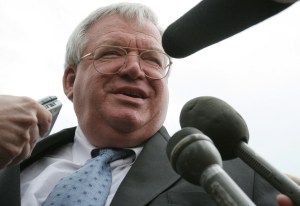
In 2003, Dennis Hastert, then Speaker of the House and as yet unmasked as a child molester in his days as a High School wrestling coach,  said

“But it is equally important to stop those predators before they strike, to put repeat child molesters into jail for the rest of their lives and to help law enforcement with the tools they need to get the job done.”

The news media has labeled this statement hypocrisy. Is it?

It is not.

Hypocrisy is a statement of moral or ethical standards that an individual proves by his own actions that he does not believe. The actions that supposedly mark Hastert as a hypocrite had already taken place when he made that statement in 2003. There is no reason to assume that he did not believe that sexual predators should be stopped and prevented from doing harm to others, even though he had been one, and indeed even if he was still inclined to molest young men in 2003.

This is another version of the flawed argument that a parent who smoked pot as a youth cannot credibly demand that his or her own child not do the same. What makes a hypocritical statement is insincerity and pretense at the time it is made, demonstrated by conduct in close temporal proximity to that statement. Continue reading →

Update: This Is The Student’s Controversial Essay Emulating The Satire Of Swift’s “A Modest Proposal”

Now THIS, arguably, is taking satire too far...

Now THIS, arguably, is taking satire too far…

Here, thanks to some links provided to Ethics Alarms by students at North County High School, is the essay that was written in response to a teacher’s directive to write a satirical solution to a current societal problem in the style and spirit of  Jonathan Swift’s famous essay advocating the conversion of excess Irish children to foodstuffs.

Student’s name: Connor Poole

Verdict: Pure satire, bold and for a writer so young, brilliantly executed.

Grade: A+

Here is the paper that  prompted administrators to try to turn Connor into a pariah, so precisely delivering what was assigned that it has exposed mass incompetence and cowardice at North County High School:

Modest proposal

Wow. Continue reading →

A Brief But Pointed Comment On Last Night’s Democratic Presidential Candidate’s Debate

Gee, am I imagining things, or didn’t Bernie and Hillary repeatedly mock their Republican counterparts for being uncivil, mean and unruly in their debates, while superciliously noting how the Good Candidates—you know: them—were always respectful, measured in tone, polite and professional? I’m certain I heard that, more than once.

I definitely heard Democrats and progressives in the pundit class, which is to say, 95% of the mainstream media, say that, because I wrote this more than a month ago:

1. The smug comments from Democratic pundits and operatives about how “substantive” the Democratic debates have been and how “ugly” and “childish” the GOP debates have been is really nauseating, and the news media should flag it as such. When one candidate is ugly and childish, as well as shameless about being so, the other candidates have little choice but to get down in the mud. That’s the situation in the Republican debates, and that is entirely due to Donald Trump. When, meanwhile, one candidate is notable for lack of trustworthiness and dishonesty, and her only opposition refuses to reference the major reason the public (accurately) believes her to be so,  the resulting debate will be muted. Sanders, in short, isn’t doing his job. That’s nothing for Democrats to be smug about.

Continue reading →

Ethics Quote Of The Week: Secretary of State John Kerry

Kerry Hiroshima

“It is a stunning display. It is a gut-wrenching display. It is a reminder of the depth of the obligation every one of us in public life carries … to create and pursue a world free from nuclear weapons.”

—-Secretary of State John Kerry in Japan, as he toured the Hiroshima Peace Memorial and Museum this week before meeting foreign ministers at the G-7 Summit.

I couldn’t quite bring myself to call this an unethical quote, though it is an infuriating one. It is certainly a stupid quote, but we all know John Kerry’s verbal and intellectual deficiencies, and he was indeed in a tough spot. What would have been an appropriate statement to make in this setting, that would not risk insulting his hosts and setting off yet another debate about Hiroshima that would be a distraction from the G-7 Summit’s objectives?

While I agree philosophically with the editors of the Federalist that it would have been more satisfying if Kerry had said that the display was “a reminder of the depth of the obligation every one of us in public life carries to stop extremist regimes like Iran from obtaining nuclear weapons” or perhaps that it was “a reminder of the depth of the obligation every one of us in public life carries to ensure that we are well prepared for the next force that threatens peace,” each carried its own diplomatic and political risks. So would “Sorry you made us do this, but we didn’t bomb ourselves at Pearl Harbor,” which is what I would have been tempted to say. I’m no diplomat, however, as you may have noticed. Continue reading →

A Conflict of Interest Lesson: The New York Observer’s Donald Trump Endorsement

Trumps

Stipulated: Jared Kushner, who is married to Donald Trump’s daughter Ivanka Trump, and who owns the The New York Observer, which he purchased in 2006, was in a difficult situation regarding the New York Republican primary. (That’s Jared on the right in the photo above.)

He had a clear and unresolvable  conflict of interest. If his paper endorsed Trump, the endorsement would appear to be dictated by family loyalty rather than objective analysis, and would harm whatever credibility the paper has left (it has been falling in influence and quality for a long time). If The Observer endorsed anyone else, in addition to whatever problems it would cause Kushner behind closed doors (and they would undoubtedly be considerable), a rejection by a paper with such a strong Trump family connection would be interpreted as having special significance, and would be handing a potent weapon to Trump’s adversaries.

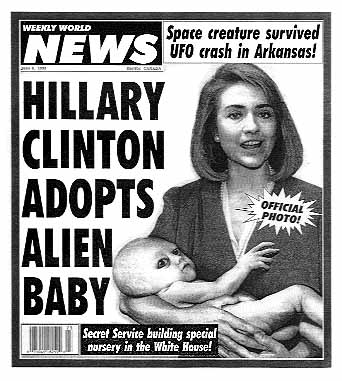
Kushner’s dilemma was made worse by the fact that for any newspaper to endorse Donald Trump for President without a conflict of interest that at least would explain such an idiotic position would be tantamount to an admission of collective insanity, instantly turning such a  paper into the successor of the late, lamented Weekly World News, which was prone to breaking scoops like this one:

Weekly_World_News_-_Cover_Art_4800

Faced with these two mutually unacceptable alternatives, there was only one ethical, rational, responsible course that would acknowledge the conflict of interest without falling prey to it: endorse nobody, and explain why.

Nah! Continue reading →

Observations On The Hillary/de Blasio “CPT” Skit Uproar

beaver-crushed-by-his-own-treeOut of trivial occurrences  enlightenment may flow.

In a skit last weekend in the Inner Circle show, annual charity event put on by the New York press corps to roast the Mayor, Hillary Clinton joined de Blasio as a surprise guest and chided him for delaying his endorsement of her presidential campaign.

“Thanks for the endorsement. Took you long enough,” Clinton said

“Sorry, Hillary. I was running on C.P. Time,” de Blasio replied. Little gasps were heard in the audience, for C.P. Time, more correctly “CPT”—you know, like EST?—means “Colored People Time,” referring to the alleged proclivity of African American and Hispanics to have a casual regard for punctuality.

Black “Hamilton” star Leslie Odom Jr., who plays Aaron Burr in the hit musical, was on stage as part of the skit, and admonished the  mayor, saying, “I don’t like jokes like that, Bill.”

Hillary then intervened and said, “Cautious Politician Time. I’ve been there.”

I’ll let you compose yourself after the that hilarious joke before continuing.

OK, now? Good. Continue reading →