The Ethics Alarms List of Debate Cheats and Fallacies

fallacy

I realized it was time to post the definitive Ethics Alarms List of Debate Cheats and Fallacies after once again having to point out to an indignant commenter that calling  him a jerk based on a jerkish comment was not an ad hominem attack, and that saying idiotic things on-line carry that risk. Here, at last, is the current list, adapted from multiple sources. As with the Rationalizations List, with which this occasionally overlaps, I invite additions. Participants here should feel free to refer to the various fallacious arguments by number, and to apply critically them to my posts as well as the comments of others. Am I immune from occasionally falling into one or more of these bad debate techniques and rhetorical habits? No. The other reason I wanted to get the list up was to reinforce my own efforts to be persuasive without being manipulative.

1. Ad Hominem Attack

An ad hominem attack means that one is substituting the character or quality of an adversary’s thought for the argument the adversary is presenting. This is unfair, as well as misleading. “Your argument is invalid because you are a crook, a fool, an idiot” is an ad hominem attack. It is not an ad hominem attack to prove an argument idiotic, and conclude, on the basis of signature significance, (which requires that an  argument be so idiotic that no non-idiot would conceive such a thing and dare express it),that the one making the argument is an idiot, since only an idiot would make such an argument. Confusing the true ad hominem attack with the latter is a useful deflection by poor advocates of the fair consequence of their advocacy. Idiots can still hold valid positions, and disproving the position has nothing to do with proving they are idiots.

1 a. The Toxic Introduction.

A more subtle application of the ad hominem attack is The Toxic Introduction, where the argument of another is introduced by noting a negative quality about the individual. The effect is to undermine the argument before it has even been heard, by its association with a less than impressive advocate.

2. Butch’s Stratagem (The Straw Man)

Continue reading →

My Hypocrisy Detector Just Blew Up!

sarcasm

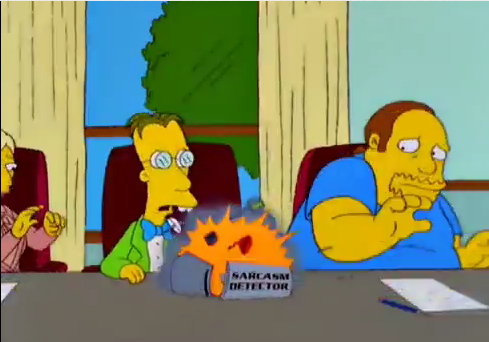
In a favorite episode of “The Simpsons,” the Springfield equivilent of Mensa is having a contentious debate. Prof. Frink, the local mad scientis, complains that the tone has set the readings of his newly-invented “sarcasm detector” dangerously high. “Comic Book Guy,” another brainy member of the club, snarks, “A sarcasm detector? That’s a real useful invention!” Whereupon the sarcasm detector blows up.

Well, my hypocrisy detector just blew up. The readings started going off the charts when I came across this item:

NEW YORK (AP) — Hillary Rodham Clinton said Thursday night that excessive partisanship flowing through the nation’s political system is causing the U.S. to march “backwards instead of forward”…Clinton cited the need to “get back to evidence-based decision-making.”

Oh, you mean like telling America that the allegations that your husband had lied under oath about his sexual affairs in a sexual harassment lawsuit and was using the power of his office to obstruct justice and cover it up was the creation of “a vast right wing conspiracy,” Hillary?  When you knew that the allegations were true? That kind of “evidence-based decision-making”?

I swear, if this awful, dishonest, cynical and untrustworthy woman runs for President, everything here will be exploding—my sarcasm detector, lie detector, hypocrisy detector, head…you name it.

This was just a warm-up, though. Then I read a Washington Post puff piece on Anita Hill, who is peddling a new documentary that casts her as a hero, which is ridiculous on its face. Anita Hill is the walking, talking embodiment of feminist hypocrisy, especially when paired with Hillary’s target, Paula Jones. I remember back when I worked for a large trial attorney lobby and Monicagate was in full force. The female president of the association was going on about her support of Clinton and how this was all, well, Hillary provided the talking point, and I had the cheek to remind her that during Clarence Thomas’s confirmation hearings she wore a button that said “I believe Anita Hill.”

Continue reading →

Ethics Dunce: Belmont Law School

Gonzalez

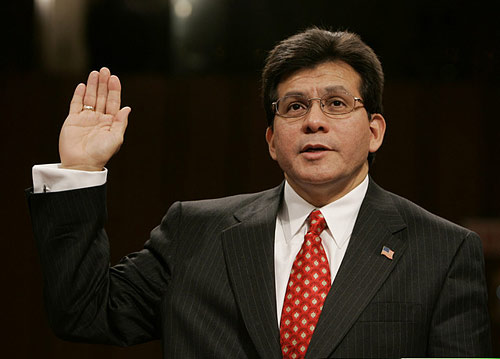
Belmont Law School, in Tennessee, has appointed former Bush Attorney General Alberto Gonzalez as its new dean.

Unbelievable.

Here is law professor/blogger Jonathan Turley’s reaction, in part. I concur completely, and cannot improve on it:

“Gonzales is widely blamed for politicizing the Justice Department, destroying its credibility, appointing substandard officials, and turning a blind eye to egregious violations like the torture and surveillance programs. …For many, this appointment looks like a provisional law school accepting an equally provisional lawyer as dean. Gonzales will not help the law school’s reputation. The school defines itself as “Belmont University is a student-centered Christian community providing an academically challenging education that empowers men and women of diverse backgrounds to engage and transform the world with disciplined intelligence, compassion, courage and faith.” Gonzales has declared that he is committed “to make Belmont the greatest law school that it can be.” Given the fact that Gonzales took a department with a stellar reputation and devastated both its professionalism and reputation, that statement is rather chilling.”

If that weren’t enough, the appointment also means that there is now a precedent for appointing Eric Holder as a law school dean some day.


Further Thoughts On “The Vampire Candidate”

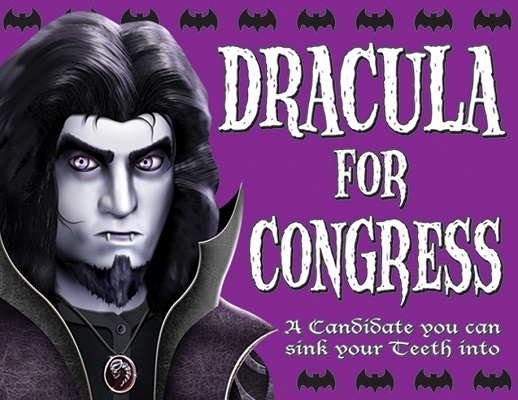
dracula for congress

I don’t want to make this Vampire Day, but after reading the comments so far on today’s Ethics Quiz involving Florida Congressional candidate/ fantasy vampire role-play enthusiast Jake Rush, I realize that the original post omitted some important points and queries. Here, in no particular order, are my further thoughts:

  • The Ick Factor? Both conservative and liberal commentators are ridiculing Rush, essentially concluding that his hobby disqualifies him as a serious candidate. The most quoted source referred to the images embraced by Rush’s role-playing group as “disturbing,” “bizarre,” and “unsettling.” Do these reactions signal a rejection of Rush’s values, or is this a clear-cut example of the “Ick Factor,” which is often mistaken for unethical conduct? Strange does not mean wrong or unethical.
  • Trust. When we elect leaders, we must trust them. “Strange” by definition suggests unpredictability; if we don’t understand why people do what they do, it is hard for us to know how they will behave, and if we don’t know how they will behave, we can’t rationally trust them.
  • Integrity. I should have raised the issue of integrity, for it is critical to the problem. Integrity is essential to trust, and a candidate like Rush raises the question: “Who, or what, is this guy?” Is he a “straight-shooting” conservative who likes to play vampire in his spare time, just like some politicians like to play poker or watch synchronized swimming (now that’s what I call weird), or is he a wannabe creature of the night who is just playing a conservative Republican in the daytime to conform to the expectations of conventional society? If there is doubt about that, then his integrity is in question.

Continue reading →

Ethics Quiz: Trust and the Vampire Candidate

jake-rushConservative Republican candidate Jacob A. Rush, a 35-year-old attorney, has begun a campaign in Florida’s 3rd Congressional District to win the primary against incumbent U.S. Rep. Ted Yoho, a Tea Party stalwart seeking a second term. Rush’s campaign website portrays  him  as a “conservative straight shooter,”and he may indeed be that. A Florida blog uncovered the fact that Rush is also, however, a long-time member of the Mind’s Eye Society,  “a nationwide community of gothic-punk role-players who take on the personas of vampires and other supernatural beings” for fantasy battles “against their own bestial natures, hunters, and each other.”

It’s all fun and games with improvisational theater tossed in, though with a decidedly adult set of themes. Rush liked ( likes?) to play a character named “van de Winst”, a lusty vampire, and photos of the lawyer were found on the web showing him and/or members of his club, playing vampire,  burning books, aiming shotguns at dogs, pretending to be demons, displaying Satanic symbols, being chained and gagged…you know, that kind of thing. Fun stuff.

After this all came out—how could he think it would not?—Rush explained in a press release:

“All my life, I’ve been blessed with a vivid imagination from playing George Washington in elementary school to dressing up as a super hero last Halloween for trick or treaters. Any cursory review of the Internet will show that I have played heroes and villains…. I have never hid nor shied away from disclosing my hobby activities. When I was hired at the Sheriff’s office, I fully disclosed my gaming and theatre background on the application, and these hobbies posed absolutely no problem or raised any flags. In fact, when applying for undercover work, these hobbies were considered an advantage, so much so my shift lieutenant nicknamed me ‘Shakespeare.'”

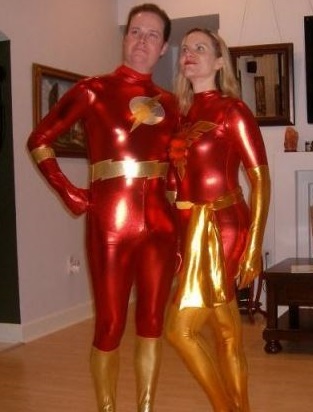
And he included this photo of him and his wife…

Rush and wife

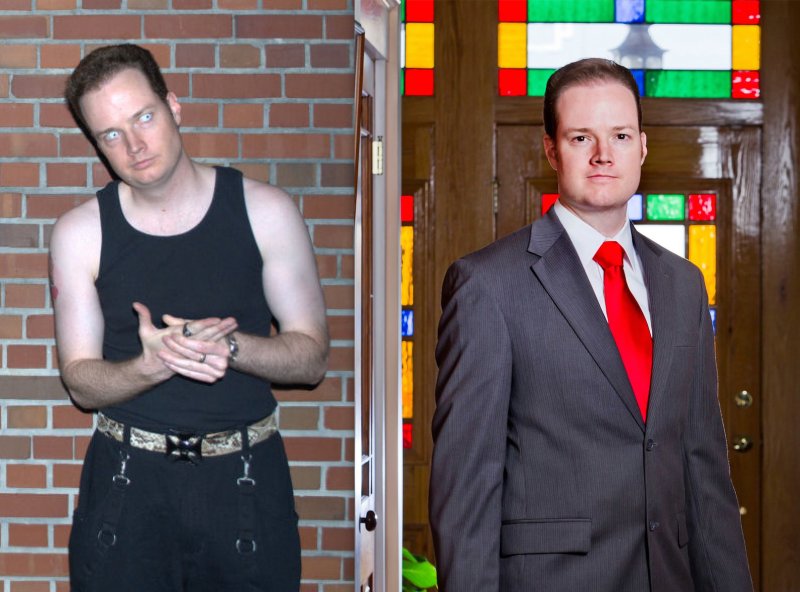
…wisely choosing not to send this one:

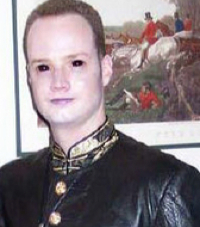
Rush vanpire

WOW.

And thus your Ethics Alarms Ethics Quiz for today is….

Is it  Jacob Rush’s unusual personal hobby relevant to his ability to serve in Congress?

Continue reading →

Correction: Incompetent Elected Official Of The Month, Maricopa, Arizona Vice-Mayor Ed Farrell, Is A DEMOCRAT, Not A Republican. Why Didn’t I know That?

So THIS would be a Democrat,  then. Right?

So THIS would be a Democrat, then. Right?

A helpful reader writes:

“I am a proud Arizonan who has enjoyed seeing all of the coverage on Mr. Farrell. However you as well as most of the publications that have highlighted his gaff have mistakenly called him Republican.  Mr. Farrell as well as his entire farming and school administrating family are long time Dems. Fact checking on that tidbit went unnoticed by several. Funny how the idiots are always Republican through a liberal eye. Eager to see your correction.”
And here it is. I plead guilty to stereotyping, although Mr. Farrell’s central malady, being bewildered by homosexuality, is certainly far more common on the Republican side of the aisle than the Democratic. His other malady—he appears to be an idiot–is not the exclusive characteristic of members of either party.  Since I don’t have a “liberal eye,” that is not what led me to misidentify him. I swear, I looked. The news reports I found didn’t give his party, and being reluctant to spend too much time on a vice-mayor,  I finally concluded that the odds overwhelmingly favored him being on the Red Team.
I should have looked a little harder and better, obviously, but I am now officially annoyed.

Continue reading →

Hope Lives! D.C. Votes For Ethics

Time for a new fish head in the District of Columbia.

Time for a new fish head in the District of Columbia.

A continuing battle on Ethics Alarms, one that bursts into flame when elections loom, is whether it is responsible to vote for an unethical candidate for office because he or she supports policies the voter favors. I resolutely vote “no” on that proposition, believing that in the long run, government and society are better served by plodding but trustworthy public servants than wily and corrupt ones. The ideal, of course, is to find candidates who are competent, trustworthy, dedicated and who pursue effective policies. Good luck.

Few cities have embraced the opposite of the Ethics Alarms approach more consistently than the District of Columbia. The nation’s most liberal region has traditionally chosen to ignore corrupt city officials, and has paid a high price. A culture of corruption has been festering in the District for decades, spear-headed by the smug, machine-politics reign of Marion Barry, elected both before and after a prison sentence for possessing crack (in the midst of an anti-drug campaign for schoolchildren, naturally). Barry still pollutes D.C. government as a city councilman, but his legacy is complete: the whole government is an ethics sewer.

In 2013, more than thirty D.C. employees were arrested, indicted, pleaded guilty or were sent to jail from  such diverse cesspools as the D.C. Department of Employment Services, the Department of Human Services, the Children and Youth Investment Trust Corp., a city-owned hospital, the Office of Campaign Finance, D.C. Medicaid, the Corrections Department, a charter school and Medicare. The tally of money embezzled, accepted in bribes, defrauded or spent on illegal political campaign contributions was about $19 million. Former D.C. Council member Harry Thomas Jr. pleaded guilty to stealing $350,000 in taxpayer money meant to benefit children. Former council chairman Kwame Brown pleaded guilty to a felony bank fraud charge; and former council member Michael A. Brown confessed to an illegal bribery scheme. Colbert King, the Washington Post’s city beat columnist who tirelessly urges the city to clean up its act cataloged the extent of D.C.’s corruption last year. He pointed out:

Continue reading →

Unethical Quote of the Month: OkCupid

Not OK...

Not OK…

“Hello there, Mozilla Firefox user. Pardon this interruption of your OkCupid experience. Mozilla’s new CEO, Brendan Eich, is an opponent of equal rights for gay couples. We would therefore prefer that our users not use Mozilla software to access OkCupid. Politics is normally not the business of a website, and we all know there’s a lot more wrong with the world than misguided CEOs. So you might wonder why we’re asserting ourselves today. This is why: we’ve devoted the last ten years to bringing people—all people—together. If individuals like Mr. Eich had their way, then roughly 8% of the relationships we’ve worked so hard to bring about would be illegal. Equality for gay relationships is personally important to many of us here at OkCupid. But it’s professionally important to the entire company. OkCupid is for creating love. Those who seek to deny love and instead enforce misery, shame, and frustration are our enemies, and we wish them nothing but failure.”

–—Dating website OkCupid, calling for a boycott of Mozilla, including Firefox, its webserving software, because of the past political/social/religious views of Mozilla CEO Brendan Eich

Full disclosure: 1) I use Firefox. 2) I detest boycotts,and 3) I am biased against them by nature, because they are almost always coercive, extortive, and unfair.

This statement, however, has more wrong with it than just its advocacy of a boycott.

Continue reading →

Comment of the Day: “Ethics Rant: Here Is The Smoking Gun Proof That The Government Doesn’t Care How Much Money…”

Whatever anyone might think of Ethics Alarms, it can’t be accused of not being eclectic. Today’s Comment of the Day illustrates the point, with an impressive  and informative debut by new commenter Dave on the cost savings to be had based on choice of  printing fonts, and more. The original post used a sixth-graders science project conclusion that our federal and state governments could save hundreds of millions of dollars by simply conserving ink as a departure point for a general critique of government diligence, responsibility, and competence.

Here is his exposition, inspired by the post, Ethics Rant: Here Is The Smoking Gun Proof That The Government Doesn’t Care How Much Money It Wastes, Or, In The Alternative, That It Isn’t Run By Sufficiently Competent People To Be Trusted To Spend What It Does:

The most important aspect of the 14 year old’s study is valid. You can save money with a better font. How you get there is not important. So I support the hypothesis of the study. Of course, as in almost all studies, it requires more study. Adding paper to the mix makes it more hopeful.

I like his study for three reasons:

1. It puts ink and paper into the public discussion
2. It illustrates that really large numbers times really small numbers equals a big number.
3. It moves us ahead in our quest to the use of something other than Times New Roman. It’s a newspaper font!

First off, names are useless in discussing typefaces as they were trashed by the patent/copyright office many years ago. Garamond is one of dozens of great type families. Each has it’s unique features but most do not perform optimally in all applications. The criticism of using Garamond in the testing misses the point entirely. Successfully curtailing the weight of an optimized font, versus a newspaper font, to image on bond paper is likely. Let’s move on from nitpicking Garamond. 

Ink is measured in dimes with inkjet, nickels with toner and pennies with printer’s ink. Breaking down the imaging techniques of all government documents is a massive effort, census like. But, for now, let’s address word processed documents. This is probably the largest population of original documents. (We’re not going to make much headway in savings attacking the professional typeset material that is printed in the millions.)

Given we tune a font for ink/toner use, one of the last considerations influencing legibility and readability of a word processed document is typeface. Because MS Word is used exhaustively for this application, I would order the priorities leading to better legibility and readability as follows:

1. Word Spacing. You can see in the example used to trash the study (3rd line of Garamond) It’s like talking to someone who says “uh” every other word.

2. Serifs v. Sans Serif. This choice is more of a readability thing than a legibility thing.  I choose sans-serif for heads (eliminating the need for bold italic serif fonts) and serif for text  when I create a typical Word doc. Generally, type really doesn’t have to be serif if the document is short but the longer it gets….

3. Line Measure. This goes together with word spacing, the longer the measure the worse word spacing becomes with MS Word. And personally I have attention issues so I need a break more often.

4. Body leading. Otherwise known as line spacing in the world of glorified type writers; it’s like word spacing only in the vertical direction.

5. Letter-spacing. This is font design dependent but not typeface dependent. They can screw this up no matter how the the letters look. It’s one of MS Times New Roman most nasty offenses. It’s not only looks awful, it wastes paper.

6. Hyphenation and Justification (H&J). Justified type is lined up on both sides of the page. Word Processors are not good at this, MS is particularly bad at both H&J.  It’s an old requirement with setting type, but it helps readability with long documents. It generally saves paper to boot but it’s not worth botching up word spacing to get these advantages. (It’s not as critical with 1-2 page documents so that’s why it’s 6th on the list.)

7. Type Style. If we excel at all of the above, like professional design software, then the particular type design is a factor. Because we are focused on text, the theory is if we significantly adjust the design for 12 point and with word processing in mind we can do well here in ink savings.

8. Paper color. Office paper is very good here.

9. Type color. Anything other than black type can’t be discussed here but it is realistic to discuss grey. I exclusively  use draft mode on my inkjet printer and nobody notices.

10 . Room light. Using serifs or not and setting an appropriate type size is about wearing out your eyes with too little or too much light. Serifs on text cut back on light, while size impacts detail helping legibility. Sans serif type in headlines are not an issue because they are short and it provides contrast with the text.

So, the student’s focus on the smaller, most used type is appropriate. The focus on weight relative to ink usage is also appropriate. A focus on more sophisticated typography than MS offers today would significantly impact paper usage, even without using two sided features we have today.

TrueType, GX stuff, et al were all awesome in 1996, a big accomplishment. They are still relevant for designers, but here we are stuck with MS Word; Opentype features are wasted. Moving to a maybe more primitive technology but optimized for both savings and readability would be a good start towards the $400 million goal.

We are in a transition period, so it may be awhile. Saving money along the way to fully electronic isn’t a bad thing. These no valid reason to make trade offs during the transition. It will be complicated but in step with the transition. All ideas are worthwhile, there is no reason not to implement all of them.
Continue reading →

I Repeat: April Fools Day Is Not For Ethical Professionals

april-fools-day-banner

In a much attacked post here way back in 2010, I offered some ethical guidelines for April Fool’s Day, which was just beginning to get out of hand. I was right, my critics were wrong, and maybe some of the mockers who are now trying to figure out when their favorite news organization is lying to them today for fun, as opposed to the rest of the year when it lies to them out of bias or incompetence, are beginning to appreciate my position.

I just watched three different morning news shows that contained fake news or commentary that the reporters and anchors, at least, seemed to think was hilarious. In one case, on Fox, conservative talk-show host Laura Ingraham dead-panned a remarkably even-handed and fair explanation for HHS Secretary Sibelius’s much-maligned TV silence when asked about the Affordable Care Act’s unpopularity.  April Fool! Laura wasn’t being fair or objective, she was just tricking Fox’s audience into being angry at her for being fair and objective, or, in my case, admiring her integrity for pointing out that the incident had more than one plausible interpretation. Got me, Laura. I just heard an NPR host plead with the audience not to regard the upcoming segment as a hoax because of the date, an especially difficult plea since NPR springs virtual hoaxes on its audience all year.

The first and most important of my April Fools guidelines was this:

1. April Fools’ Day tricks are not for professionals to play on those who depend on them, trust them, or otherwise rely on them for information or services, unless there is a special relationship as well. The risks of harm and abuse are too great.

The succeeding four years have validated my position. Journalism, government and politics are the prime examples. CNN played a video that showed Jay Carney crowing yesterday about the Affordable Care Act’s success even as the Healthcare.gov website had crashed. Wait..is this a joke? Did the Obama White House film this for fun and games? They wouldn’t do this, you say? Government officials don’t use their high office for jokes and hoaxes? Really?

Sen. Ted Cruz, also on Fox, showed his new tattoo, apparently an April Fools’ joke, but also said he was certain that the Affordable Care Act would be repealed. Which is more likely, that the AFA will be repealed, or that wacky Ted Cruz would get a tattoo? Slate has a post up by someone called Rehan Salan, which is, clearly, a clever anagram for “En Anal Rash” or something, arguing that adults without children should be forced to pay extra taxes to support parents. Hah! Good one, Slate! That should turn the “pro choice” crowd on its head: lets; punish the choice not to have children via a penalty—I’m sorry, Chief Justice Roberts, a tax, wink-wink. Wait…that isn’t a joke? Ok, well, I’m sure about this, then: that fake video showing famous tough guy Don Baylor, a record holder for being hit by pitches when he played and now a coach for the Los Angeles Angels, “breaking his leg” catching the ceremonial first pitch of the baseball season. April Fools, right ESPN? No????

Continue reading →