The Benghazi Express: It’s Hard To Hide An Ethics Train Wreck

Did you hear the gross and inappropriate remark Joe Biden made to the father of one of the soldiers killed in the Benghazi attack? Of course not! Because it makes the Vice President appear to be a clueless and insensitive fool…we can’t have THAT…not before an election!

It’s pretty simple, really. The American people have a right to know what really happened in Benghazi, and as new questions keep arising, the appearance of a cover-up on the part of the Obama Administration keeps getting more difficult to deny.

  • On 9/11 of 2012, an armed attack on the American embassy in Libya left four dead, including the Ambassador. After the attack, the only official U.S. comment was on the website of the Cairo embassy, which had experienced a violent protest, disavowing an anti-Islam film trailer that had been posted on YouTube, essentially suggesting that the violence had been provoked by offensive American speech.
  • Many days afterward, that remained the official position of the Obama Administration, to such an extent that ten days after the raid the U.S. Ambassador to the U.N. visited all the Sunday talk shows to describe the attack as spontaneous, not planned terrorist actions, and sparked by indignation over the video. President Obama went before the U.N., and again disavowed and blamed the video. Continue reading →

Innocence Abuse, 2012

Stop it.

In the view of many (including me), the exact moment Jimmy Carter lost the 1980 Presidential election was when he used the closing minutes of the only Presidential debate to spin the tale, dubious at best, about his solemn conversation with his daughter Amy. Carter claimed that he asked her about her assessment of the most important issue facing the nation, and that  “the control of nuclear arms” was his thirteen-year-old advisor’s sage response. The story seemed insincere and manipulative, all the worse for Carter’s placing his answer in his daughter’s mouth for tactical purposes. Carter used Amy as a prop and a ventriloquist’s dummy. Even if the story was true, the tactic was offensive.

Here in Virginia, a closely contested “purple” state, the tactic of using children to carry political messages in full bloom. An ad for Republican Senate candidate George Allen, attacking opponent Tim Kaine and President Obama for their pro-abortion stance shows a series of cute “potential” children, facing the camera and telling us what they would have been in their lives—a mother, a fireman, a soldier (no homeless, serial killers or drug dealers, oddly enough)—if their existence hadn’t been snuffed out in the womb. Meanwhile, President Obama recently descended to the rock bottom level of the rest of his campaign by calling Mitt Romney “a bullshitter” by placing the epithet in the mouth on an anonymous 6-year-old girl.

With that kind of leadership model to follow, I suppose it shouldn’t be too shocking that far worse was on the way. A pro-Obama group called “The Future Children Project” has released an ad that represents a new low in the use of children as programmed messengers. Created by advertising agency Goodby, Silverstein & Partners, the spot shows a chorus of dead-eyed, sad children, shot in black and white, singing from a dystopian future about what America became because it didn’t re-elect Barack Obama. The lyrics: Continue reading →

Ethics Hero Emeritus, Sort of: Russell Means (1940-2012)

“Fly swift, like an arrow.”

Clarence Darrow, the greatest of all American criminal defense lawyers, admired more than one criminal. One he especially admired was John Brown, the radical, violent and possibly insane abolitionist whose deadly 1859 raid on Harper’s Ferry, Maryland was a terrorist act by any definition. Brown was hung for it, but he became a martyr for the anti-slavery movement, and his raid a rallying point for its cause. Darrow believed that some societal wrongs were so resistant to law and democracy that their grip could only be loosened by violence, and so he extolled men like Brown, whom he regularly eulogized in public with a fiery speech that concluded,

“The earth needs and will always need its Browns; these poor, sensitive, prophetic souls, feeling the suffering of the world, and taking its sorrows on their burdened backs.  It sorely needs the prophets who look far out into the dark, and through the long and painful vigils of the night, wait for the coming day.  They wait and watch, while slow and cold and halting, the morning dawns, the sun rises and waxes to the noon, and wanes to the twilight and another night comes on.  The radical of today is the conservative of tomorrow, and other martyrs take up the work through other nights, and the dumb and stupid world plants its weary feet upon the slippery sand, soaked by their blood, and the world moves on.”

I immediately thought of Darrow’s words about Brown* when I learned that Russell Means had died this week at the age of 72. Clarence Darrow would have loved Russell Means. Continue reading →

Undercutting the “Nerd Defense”

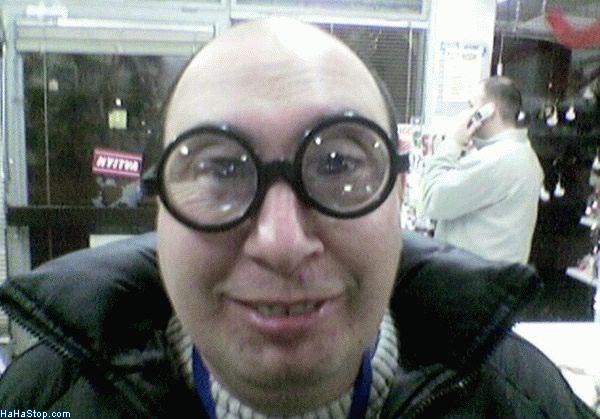
“A killer? Him? Come on, look at him. He couldn’t hurt a fly!”

More than a year ago, Ethics Alarms discussed the ethics of a current criminal defense tactic employed by lawyers with clients accused of violent crimes, putting them in nerdy glasses:

“It’s not a guarantee, but  the Daily News report says that criminal defense lawyers “swear by the gimmick, believing the right spectacles can make a sinister-looking murder suspect seem like a perfect gentleman.” “Glasses soften their appearance so that they don’t look capable of committing a violent crime,” veteran lawyer Harvey Slovis told the paper.”I’ve tried cases where there’s been a tremendous amount of evidence, but my client wore glasses, dressed well and got acquitted.” Cordero, who was represented by Slovis, wore bifocals throughout his trial, but threw them away the moment he was free.”

I’ve quizzed lawyers about the ethics of this tactic in my CLE classes, and they nearly unanimously agree that the tactic crosses no ethical lines that can be drawn with appropriate precision. I’m not so sure. I think it goes beyond merely giving your axe-murderer a shave and a haircut so he doesn’t look like an axe murderer, and edges into the realm of intentional deception. Apparently some courts may agree. Continue reading →

Incompetent Elected Official of the Week: U.S. Rep Rubén Hinojosa, D-Texas

The mind of a Congressman.

Nine term U.S. Democratic Rep Rubén Hinojosa was asked about the Second Amendment at a political debate this week with his opponent, Republican businessman Dale Brueggemann. His response:

“There are so many people in Washington who come and talk to us about the Constitution and the rights that they want kept sacred and that not do anything about them. That we not change them. That we not amend them. And I can tell you that — I’m drawing a blank on the Second Amendment, but I think it’s the weapons, isn’t it? The NRA?”

He thinks it’s “the weapons”?

Yikes! Continue reading →

Election Publicity Hound Ethics Quiz: Whose “October Surprise” Was Dirtier?

That’s Gloria on the left, Donald on the right.

What could be more challenging than trying to choose between Gloria Allred and Donald Trump in the field of inappropriate and shameless headline grabbing?

Both Trump and Allred this week decided to distract voters from the solemn and difficult job of deciding which Presidential candidate’s misrepresentations to forgive by trumpeting an upcoming “October Surprise” that would propel their respective champions to victory. In addition, both are shameless using the election to get their names in the papers for pure personal publicity purposes, to attack Obama or Romney using innuendo, and to attempt to skew a close election by using old matters far past their pull date. The tactic worked for both publicity hounds, because an October surprise in 2000, held for months and leaked by a Gore operative, probably cost George W. Bush the popular vote: his covered up DWI arrest of more than a decade earlier.

Your test: whose attempted late hit was more unethical? We will stipulate that both are revolting. The candidates: Continue reading →

Cognitive Dissonance, Corruption, and Patrick Moran

This video creates a major cognitive dissonance problem for me.

James O’Keefe, of ACORN take-down infamy, who engages in unethical journalistic practices to catch conservative foes in incriminating or otherwise damning statements, once again succeeded in exposing serious corruption, this time in the Virginia Democratic Party and more specifically on the staff of Northern Virginia Congressman Jim Moran. O’Keefe and his “Project Veritas” are the epitome of “the ends justify the means” philosophy of political warfare, and they are neither trustworthy nor admirable. Nonetheless, the video his dishonest methods produced provides important information to the public, and its message should not be ignored or minimized because it is the product of lies and a hidden camera.

Jim Moran is my Congressman, and has been for decades. There is no question that Moran is untrustworthy; there is substantial evidence that he is corrupt and has the values of a thug. We can add to this evidence that fact that his son Patrick, as the O’Keefe video shows, was happy to volunteer information to a starnger he thought was an aspiring voter fraud conspirator just how to cast Democratic votes for a hundred or so Virginians who weren’t going to visit the voting booth. Patrick Moran was the Congressman’s campaign field director at the time; he is also the nephew of Jim’s brother, who heads the Virginia Democratic Party. Patrick has since resigned, saying, naturally, that he made “a mistake.” In his exit statement to the media, Moran said:

“In reference to the ‘O’Keefe’ video, at no point have I, or will I ever endorse any sort of illegal or unethical behavior. At no point did I take this person seriously. He struck me as being unstable and joking, and for only that reason did I humor him. In hindsight, I should have immediately walked away, making it clear that there is no place in the electoral process for even the suggestion of illegal behavior: joking or not. In regards to my position on the campaign, I have stepped down because I do not want to be a distraction during this year’s critical election.”

Watching the video, his characterization of the incident is risible, but you can decide for yourself. In my view, Moran endorses illegal and unethical behavior by having the conversation, and not immediately responding to the initial inquiry by saying, “Neither this campaign, nor this party, tolerates what you are suggesting, which is an illegal attempt to subvert the Democratic process. What’s your name? I’m calling the police right now.” Continue reading →

Unethical Quote of the Month: Indiana GOP U.S. Senate candidate Richard Mourdock

“The only exception I have to have an abortion is in the case of the life of the mother. I struggled with it myself for a long time, but I came to realize life is that gift from God. I think that even when life begins in that horrible situation of rape, that it is something that God intended to happen.”

—–Indiana GOP U.S. Senate candidate Richard Mourdock in Tuesday’s televised debate, in response to a question regarding the candidates’ position on abortion.

“If found, please contact Indiana GOP Senate candidate Richard Mourdock, who will answer the phone by saying, “URUHHHHGHHAR???”

Ah, so few words, so many options for Ethics Alarms!  Should we make Richard Mourdock an Ethics Dunce? The Incompetent Elected Official of the Week, perhaps? Since it is his quote that opened up this cornucopia of possibilities, I decided that it should be the quote that gets nod.

How is Mourdock’s quote unethical? Let me count the ways:

1. It needlessly confuses right and wrong. If God intends that a pregnancy should result from a rape, then one can argue that the rapist is just doing God’s will. I know that people like Mourdock answer that the Lord works in mysterious ways, but this argument does nothing but undermine the victims of rape (“If God wanted this, is it wrong for me to complain? To reject the pregnancy?”) and hands a rationalization to rapists.

Continue reading →

If You Liked “Enhanced Interrogation,” You’ll Love The “Disposition Matrix”

Is THIS the Administration’s secret weapon against terrorists?

The Washington Post launched a three-part series today about the U.S. drone strike program, in which terrorists abroad are targeted and assassinated from the sky. I’m not prepared to attempt an ethical analysis of this deadly tool against international terrorism, although I will acknowledge that my initial, gut level assessment is that the unique nature of terrorism requires adjustments in the ethics of national security and warfare, and drone killings seem to be a fair and reasonable adjustment.

Yet it is still killing. It is also controversial, with many human rights activists, international law specialists and ethicists vehemently condemning the tactic, especially when used against turn-coat Americans abroad without due process of law. Consequently, the Post’s revelation that the Administration’s “kill list” is called something else rings the ethics alarms.

The Post:

“Over the past two years, the Obama administration has been secretly developing a new blueprint for pursuing terrorists, a next-generation targeting list called the “disposition matrix.” The matrix contains the names of terrorism suspects arrayed against an accounting of the resources being marshaled to track them down, including sealed indictments and clandestine operations. U.S. officials said the database is designed to go beyond existing kill lists, mapping plans for the “disposition” of suspects beyond the reach of American drones.” Continue reading →

Ethics Quote of the Week: Ann Althouse

“The silent sadness of the CBS newswoman’s face at 0:29… hilarious. So funny that these newsfolk don’t activate actorly skills to project the appearance of professionalism and neutrality.”

—Attorney/blogger Ann Althouse, commenting on the doleful expression on CBS newswoman Norah O’Donnell’s face after the report that the network’s focus group of undecided voters scored last night’s debate a victory for Mitt Romney.

The video:

Althouse’s observation is perceptive, as hers often are. Although many studies have found that the facial expressions, body language and vocal inflections of broadcast news journalists influence audience perceptions and opinions, and carry at least as much potential for bias and slanted reporting as the news content itself, few of O’Donnell’s colleagues, if any, make any effort to ensure that these non-verbal communications are objective as a matter of professionalism and fairness. This is because broadcast journalism has largely abandoned fairness, objectivity and professionalism as priorities or industry standards. Continue reading →