Ethics Quiz: Holder’s “Brainwash” Comment

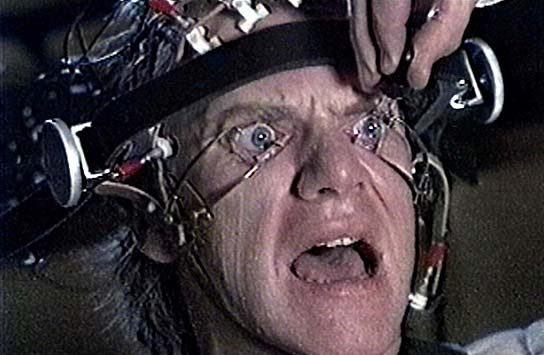
"You WILL feel differently about guns!"

The death of founder Andrew Breitbart hasn’t slowed down his website’s ability to dig up provocative and embarrassing videos one bit. Its latest is a bit of off-putting rhetoric from Eric Holder, when he was the Clinton Administration U.S. attorney for Washington, D.C., telling a D.C. audience that the long-term solution to gun control is to “brainwash” the  public into opposing firearms. Holder said…

“What we need to do is change the way in which people think about guns, especially young people, and make it something that’s not cool, that it’s not acceptable, it’s not hip to carry a gun anymore, in the way in which we’ve changed our attitudes about cigarettes.”

He went on to outline steps that could be taken to “really brainwash people into thinking about guns in a vastly different way.”

Seeing this as a major “gotcha” for the embattled Attorney General, who is already facing growing criticism both for his oversight (or lack of it) of the Fast and Furious gun-smuggling fiasco and his evasive testimony about it before Congress, conservative critics are jumping on the 1995 statement to bolster calls for Holder’s resignation.

Your Ethics Quiz today: Is it fair to criticize a U.S. Attorney General’s statement that he wants to “brainwash” the  public into rejecting a core Constitutional right, when the statement is more than 15 years old, and was made while he was in a different job? Continue reading →
Here’s a Proposal: Republicans Stop Saying That Obama’s a Muslim, and Democrats Stop Saying that The Supreme Court “Stole” The Presidency For Bush

Law professor/blogger Ann Althouse properly chastises The National Review’s Jonathan Cohn for designating “Bush v. Gore” as the most earth-shattering case of the 21st Century, and not just because the case, decided in December of 2000, occurred in the 20th Century.

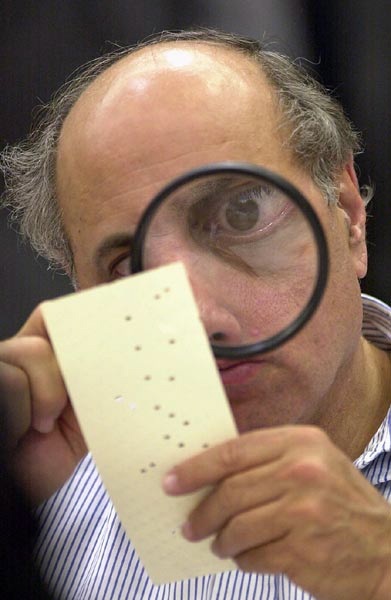
“Ridiculous! I can’t believe Cohn doesn’t know that if the case had gone the other way Gore would still have lost in the end!”, Althouse writes, reminding her readers of the results of the objective, meticulous and multiple recounts performed by journalists in 2001, which showed—much to the surprise of the counters, who were dying to be able to report that Gore had been robbed—that “George W. Bush would have won a hand count of Florida’s disputed ballots if the standard advocated by Al Gore had been used.”

I can believe Cohn wrote what he wrote, because the claim that Bush’s presidency was “stolen” has been a cornerstone of Democratic political warfare and unscrupulous hard Left activists since the chad-counting stopped. It stoked the base, misled the public, increased partisan anger, divided the country and undermined Bush’s presidency, all good things from a partisan perspective (and the truth be damned), just as Republicans have been happy to allow the unjustified doubts about President Obama’s loyalty and citizenship linger among its most fanatic partisans. Continue reading →

No, Center For Public Integrity, New Jersey Obviously Is NOT the “Least Corruptible State, ” and Stop Confusing Compliance and Ethics

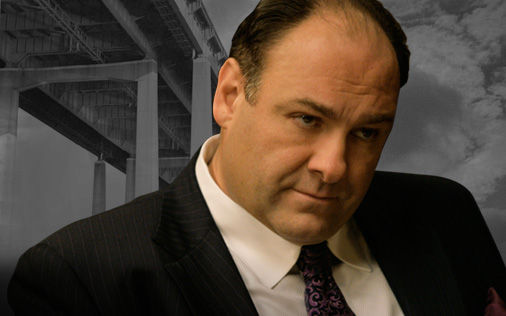
Sorry, Tony! Overnight, New Jersey became uncorruptible. Time to move to Washington, D.C.

The Center for Public Integrity got what it wanted yesterday, which was headlines about its extensive new study of public ethics laws in the U.S. In order to get its cherished publicity, the Center added to the public’s confusion about what corruption is, what ethics is, and how one discourages one while iencouraging the other in our various governments. They released results that graded the 50 states according to “corruptibility”, and found that New Jersey was the least corruptible of all.  I hope the Center’s officials and scholars are happy with their PR, but if they have a shred of integrity and common sense, they should be ashamed of themselves. Continue reading →

Mike Daisey Follow-up: Behold! The Classic Response of the Self-Righteous and Unethical!

Mike Daisey in China. Or, standing in front of a big poster. What difference does it make which, really?

Soon after I posted my article about Mike Daisey’s representation of fabricated events and facts as truth in his January feature on NPR, the actor/activist posted this dismissive explanation on his own blog.  It is Dan Rather’s Memogate excuse taken to the next level, the epitome of self-justification of the unapologetic zealot who believes that all is fair in the battle against (what he regards as) evil, employing a full battery of rationalizations for unethical conduct:

1) Daisey’s lies don’t matter, because they were used to expose a real problem (a.k.a “the ends justify the means”); Continue reading →

Unethical Quote of the Month: Mike Daisey

“Well, I don’t know that I would say in a theatrical context that it isn’t true. I believe that when I perform it in a theatrical context in the theater that when people hear the story in those terms that we have different languages for what the truth means.”

—Actor, writer, activist Mike Daisey, in an interview with NPR’s Ira Glass, exploring how Daisey was able to justify fabricating facts and accounts for the earlier aired—and just retracted—“American Life” installment called “Mr. Daisy  Goes To The Apple Factory.” NPR checked the particulars of Daisey’s first hand account of the human rights and labor violations he claimed to witness at Apple’s factory in China, and found that the writer had embellished, exaggerated,  and misrepresented much of what he reported. What NPR had broadcast as journalistic reporting was an excerpt from Daisey’s acclaimed touring one-man stage show, “The Agony and Ecstasy of Steve Jobs.”

Mike Daisey, lying to us for our own enlightenment

Daisey’s quote, which is both illuminating and chilling, argues that using made-up stories and personal accounts in a theatrical context qualifies as truth, even if the same misrepresentations in a journalistic context are inappropriately false. The problem with his argument, and the flawed ethical theory behind it, is that both the NPR audience and his theater audience believe that Daisey is telling the truth. Daisey’s solution to the problem is simple: his one-man show does tell the truth…it just uses lies to do it. Continue reading →

Ethics Dunce: Glenn Kessler, Washington Post “Fact Checker”

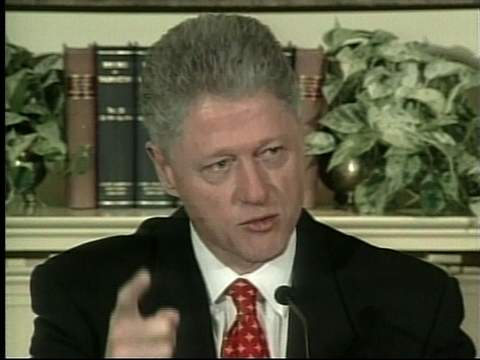
President Clinton, in a famous "true but false" moment. No Pinocchios, Glenn?

It pains me, it really does, to make Glenn Kessler, the Washington Post’s “Fact Checker,” an Ethics Dunce. He is one of the best of an often incompetent breed that, as exhaustively and repeatedly shown by Wall Street Journal blogger James Taranto, frequently defines “fact” as “the way we see it.” Kessler is notable for at least trying to keep his political biases out of the equation, and generally does an outstanding job.

His most recent column, however, took on President Obama’s repeated use of the statistic that the U.S. uses 20% of the world’s energy but only has 2% of the world’s oil reserves. Kessler correctly points out that the statement is confounding:

“…But measuring the U.S. consumption against its proven oil reserves makes little sense. Europe, with the exception of Russia, Kazakhstan and Norway, has virtually no oil reserves. Japan, a major consumer, has zero. China’s oil reserves are about half the size of the United States. In fact, in the relative scheme of things, the United States is relatively blessed with proven oil reserves — and, given the U.S. technological advantage, also with potentially large resources of oil yet to be tapped.

 “That’s why we said the president is using “non sequitur facts.” It would make much more sense to note that the United States has just 4.5 percent of the world’s population and yet we consume 20 percent of the oil, which is a finite resource, in order to urge Americans that we need to have greater energy efficiency. But in the context of higher gas prices — which is how the president often uses these figures now — it just is not logical to compare consumption to “proven oil reserves.” This is a lowball figure that does not begin to describe the oil known to be within the U.S. borders.” Continue reading →

Dear President Obama: Show Some Respect. President Hayes Earned It.

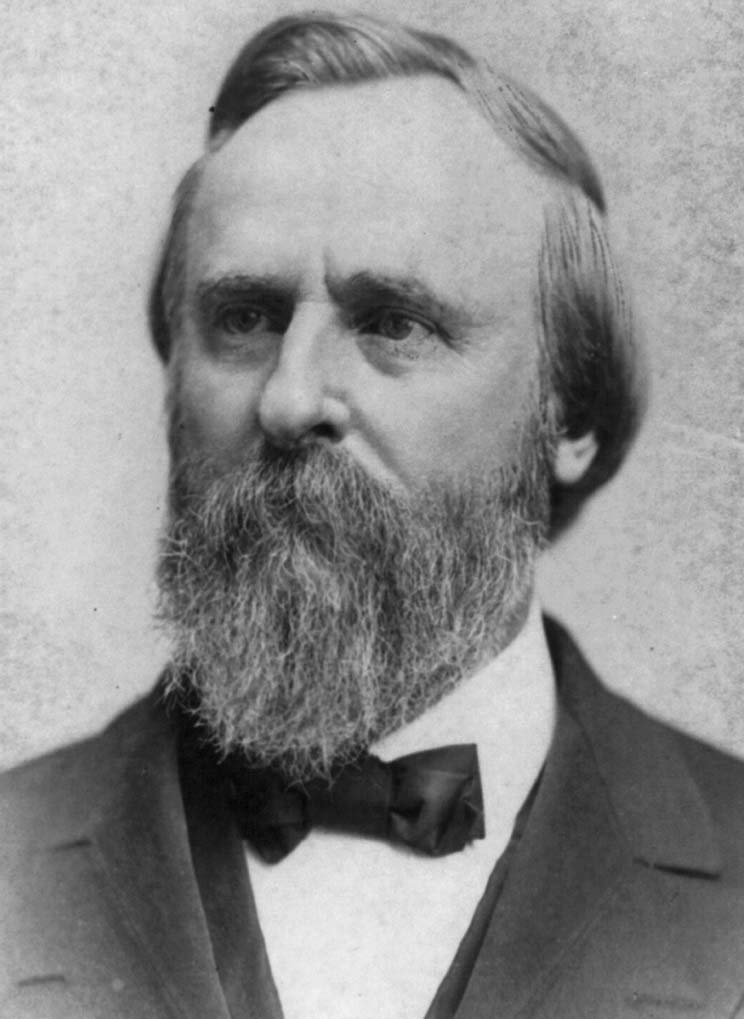
We're sorry, President Hayes. He doesn't know what he's talking about.

One of the many deplorable tendencies of the previous Democratic President was to use the memories, reputations and good names of his predecessors as props to deflect criticism for his own slimy and irresponsible conduct and lies. A standard feature of Bill Clinton’s “everybody does it” defense during his Monica travails was to have his surrogates, like the shameless Lanny Davis, mouth that Bill was no different from other Presidents who used the power of their office to cheat on their wives and exploit other women. Since it wasn’t too ennobling for this tactic to rely on the two most indisputable examples of Presidential sexual excess–Jack Kennedy being a (false) Democratic icon and a misogynist, and Warren G. Harding being the U.S.’s worst or next to worst President ever (depending upon your opinion of James Buchanan, President Clinton allowed his lapdogs to accuse FDR (who as a paraplegic was almost certainly incapable of anything but an illicit affair of the heart), and Dwight Eisenhower, whose supposedly adulterous relationship with his female driver in World War II is 1) unconfirmed rumor only and 2) has nothing to do with his conduct as President. The last time I respected Chis Matthews was when he reprimanded a Clinton surrogate for raising the Ike story, calling it—correctly—an outrageous slur on a great American patriot  to try to excuse Clinton’s inexcusable conduct.

It is disheartening to see President Obama displaying a similar lack of respect and deference for his White House predecessors. Every one of the men who served in the office of President performed a great service at significant personal sacrifice in a job both impossible and dangerous. If anyone is obligated to give these men appropriate respect, it should be the current President, whoever it is. But just as President Obama has set new records for blaming his immediate predecessor for problems deep into his own term, he has shown a Clintonian willingness to trash a past President  for his own purposes.

This would be despicable if the denigration had a basis in fact. Obama’s slur on the 19th President, Rutherford B. Hayes, however, has none. Continue reading →

Comment of the Day: Time To Retire Editorial Cartoons—With Gratitude

Cartoonist and frequent combatant on Ethics Alarms Barry Deutsch did not disappoint—I was counting on a strong reply from him—in commenting on my post about political cartoonists. And I think he has me convinced. I think what I should have suggested, rather than advocating sending newspaper political cartoonists to the trash bin of history (soon to be followed by newspapers themselves), is that editors exercise some discretion over when an editorial cartoon, even by a respected cartoonist, just doesn’t meet editorial standards.

Here is Barry’s persuasive and educational Comment of the Day on the post Time To Retire Editorial Cartoons—With Gratitude:

“Oh, how could I possibly resist this thread?

“1) At his best, Tom Toles is a wonderful cartoonist, elegant and with an incredibly distinctive style. But he hasn’t been at his best for years. The particular cartoon you’re talking about — which can be seen here, if anyone’s curious — is an embarrassment.

“The problem with that Toles cartoon isn’t that it takes a side, or that it paints with a broad brush; many good cartoons do both those things. The problem is, it’s painfully stupid.

“2) There are good political cartoonists doing interesting work, but they’re mostly not found in mainstream newspapers.

“3) Even the best political cartoonists tend to produce more mediocre than great cartoons.

“4) It’s a very, very rare reader who can recognize the artistic merit of a political cartoon that they strongly disagree with politically.

“5) The economic base has fallen out from under political cartooning; every year, fewer and fewer newspapers support a staff cartoonist, and those that remain are seeing their incomes and outlets shrinking. And no one’s yet found a business model for political cartooning to thrive on the web.

“As a result, the most talented new cartoonists usually aren’t going into political cartooning, because they want to be able to eat and pay rent.

“6) Some of the most interesting political cartoonists have gone so far away from traditional political cartooning that no one even recognizes what they’re doing as political cartooning. See, for instance, Joe Sacco, who does journalism in comics form; his second book on Palestine, “Footnotes In Gaza,” is one of the best books about life in Gaza anyone’s done, in prose or comics.

Anti-Bullying Mis-steps: The Perils of Changing Cultural Norms (Part I)

It's a simple rule, really: if they call you a jerk, thy're bullies; if you call them jerks, you're a hero.

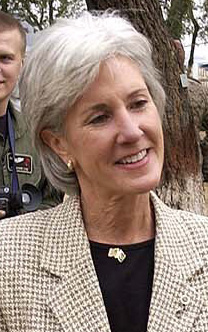
The efforts to reduce bullying in schools has already shown the dangers inherent in using the heavy hand and and often empty skull of government authority to adjust social norms. The laudable goal has already led schools to impose their wills where it emphatically does not belong: in the private interactions and communications among student over the internet. This week, HHS Secretary Kathleen Sebelius provided another example of the perils of the government trying to impose a social taboo where it didn’t exist before.

Sebelius was a guest of the Stuart-Hobson Middle School in Washington, D.C., whose students were shown  a new anti-bullying video from the Cartoon Network that among its messages urged children not to call people names like “stupid,” “fat,” and “jerk.”  Immediately after the screening,  CNN’s Don Lemon moderated a panel discussion of the issues raised by “Stop Bullying: Speak Up.”

“What do you think is the best advice for people who are going into watching this film and anyone who is watching?” Lemon asked.

Sebelius answered, in part: “I think, very important, is for kids to understand how powerful you really are. You might feel like you’re not big enough, not strong enough, not–don’t have enough tools. But just saying, ‘Stop it! You know, you’re being a jerk!’–walk away, get away from this person can make a huge amount of difference.” Continue reading →

Time To Retire Editorial Cartoons, With Gratitude

The nuanced subtlety of Pulitzer Prize winning Herb Block. Translation: "Nixon's a crook." Brilliant!!!

All right, hear me out. I love cartoons. I used to aspire to being a cartoonist. I have good friends who are cartoonists, and I know there are cartoonists who are strong contributors to Ethics Alarms. But for many years it has appeared to me that editorial cartoons have become an increasingly archaic form of commentary, one that misinforms the public and contributes to the venom and lack of nuance in public discourse.

Cartoons, by their very nature, deal in caricature, exaggeration and extremes for metaphorical and humorous effect. The practical effect of this, however, is that the opinions expressed through cartoons are also “supported” in a manner that would be outrageous in a written opinion piece. I know: you can’t hold a cartoon to the same standard as an op-ed. Fine—then don’t put it on the editorial pages. Continue reading →