(Pssst! GOP? Awful Human Beings Are Not Qualified To Be President!)

Coincidentally, this newt is also a miserable human being...

I suppose that it was inevitable that the “Anyone but Mitt” bloc of Republican voters would eventually give Newt Gingrich a second look. After all, he can put a complete sentence together and stays current on world events. He doesn’t take pride in being inarticulate (like Rick Perry) or think it’s cute not to know a thing about foreign countries (like Herman Cain).  Unlike Michele Bachmann, he could pass a junior high exam in American History; unlike Ron Paul, he doesn’t live in a parallel universe. Newt isn’t bland and weightless, like Rick Santorum, and he doesn’t appear to be a holograph, like Jon Huntsman. He’s obviously smart.

This is all true, and yet Newt is a wretched choice. Not because he has virtually no executive experience (and we should be learning what that means.) Not because in his only extended attempt at filling an important and challenging leadership position when he was Speaker of the House, he squandered a position of strength with ethical misconduct and unrestrained hubris worthy of the House of Atreus.  Newt is unqualified to be president because he is demonstrably an awful human being. Continue reading →

Chelsea’s New Job: A Rant on Suck-up Ethics

Now THIS is what the newscasts call "talent"...

I’m trying to locate some of the critics of “Dancing With The Stars,” many of them professional Palin-haters from the media’s left, who screamed of the injustice when Bristol Palin was chosen as a competitor on the popular has-been, D-list, fat-celebrity-looking-for- a-Jenny Craig-gig TV dance show. Remember that? I want to ask them why, if it bothered them so much for the talentless, dance-challenged Bristol to be elevated over the likes of Eve Plumb (“Jan Brady”) or Phyllis Diller or Joey Heatherton (Oh, go look her up!) for pop trash exposure for a few weeks because she has a famous mother, how they feel now about NBC hiring Chelsea Clinton as a full-time news correspondent.

I’ll tell you how I feel: it’s offensive, unfair, and an insult to just about everyone, but NBC’s own profession most of all. Continue reading →

Unethical Quote of the Week: Herman Cain

Stick to pizza, Herman.

“Here’s what I would have – I would have done a better job of determining who the opposition is and I’m sure that our intelligence people have some of that information. Based upon who made up that opposition, OK, based upon who made up that opposition, might have caused me to make some different decisions about how we participated. Secondly, no, I did not agree with Qadhafi killing his citizens. Absolutely not. So something would have had to been – I would have supported many of the things they did in order to help stop that. It’s not a simple yes-no, because there are different pieces and I would have gone about assessing the situation differently, which might have caused us to end up in the same place. But where I think more could have been done was, what’s the nature of the opposition?”

—–Republican Presidential hopeful Herman Cain, responding to a reporter’s question asking for his opinion of President Obama’s handling of Libya. The comment followed an eleven second pause and one false start, as Cain appeared confused and unprepared for the question.

The ethical problem with Cain’s answer was not that he fumbled it, but that like his stated position on abortion, it is unethical and intellectually lazy. Continue reading →

Slaves, Whales, Humphrey the Hippo, and Captive Animal Ethics

The beginning of the end for this barbaric practice began with the publication of "Uncle Shamu's Cabin"...

Whether or not it is excessively cruel to killer whales to keep them at Sea World and train them to do tricks is an interesting ethical issue that turns on utilitarian principles: are whales as a species better served by the public learning to appreciate them through close contact in zoos than by having them be accessible only in the wild, and does this result justify keeping some whales in captivity, performing like seals? Good question. What isn’t a good question is posed by People for the Ethical Treatment of Animal’s lawsuit against Sea World, suggesting that it violates the Thirteenth Amendment to keep performing whales, because the practice constitutes slavery.

It’s a stupid question. It’s a silly question. It’s an offensive question, equating aquatic mammals with African-Americans. Continue reading →

William Aramony and the Fallen Hero Dilemma

As he usually did, the extraterrestrial, mutant, collective or whatever he was William Shakespeare (no human could be that wise) had it exactly right, and a long time ago: “The evil that men do lives after them; The good is oft interred with their bones.” In a dispirited column on the CNN website, obviously inspired by the Paterno debacle, ESPN writer L.Z. Granderson writes that he has become afraid to watch the news, fearing that another of his heroes will be shown to be a fraud:

“And when we find out our gods are not perfect, we’re confused. We don’t know what to do with a storyline where the perceived protagonist is complex. Heroes aren’t supposed to do bad things. That’s what villains are for. So either the good supersedes the bad, or the bad makes it impossible to remember the good. We don’t like it when such duality exists in one person. We don’t want to know our heroes are human.” Continue reading →

Incompetent Elected Official of the Month: Rep. Gabrielle Giffords (But At Least She Has An Excuse.)

Be sure not to miss this very special episode of "Congress: A Study in Courage That Does The Country No Good Whatsoever"

ABC’s Diane Sawyer will soon air her interview with Rep. Gabrielle Giffords, the first since the Arizona Congresswoman was shot in the head during Jarod Loughner’s Tuscon rampage in January. Giffords looks alert and upbeat, if understandably frail, and answers Sawyer’s questions with short, often single word responses. She has clearly made remarkable progress in her rehabilitation. She also obviously has a long way to go, and her prospects of working at a high level again, much less working on the nation’s problems, are speculative at best. Why then is she still filling a seat in the U.S. House of Representatives?

She is doing so because, of course, she is courageous. Because her recovery is inspiring, and it would be heartless and cruel to take her job away because of a madman’s bullet. She is doing so because it would be unfair and mean to rush heroic Gaby, and because Americans care. None of which has any relevance to the tiny, apparently trivial issue of governing America. Continue reading →

My 15 Hollywood Cures For A Paterno-Penn State-Sandusky Hangover, Part 2

Part 1 listed the first seven of my 15 cinematic remedies for Penn State-inspired ethics ennui. Part 2 includes the final eight. Please don’t take the order too seriously; I could have shuffled the whole batch. I also tried to include as many genres as possible. When it comes to ethics, good lists can be compiled using all Westerns, all sports movies, all war movies, courtroom drama or science fiction. Here we go…

8. Spartacus (196o)

The raw history is inspiring enough: an escaped gladiator led an army of slaves to multiple victories over the Roman legions in one of the greatest underdog triumphs ever recorded. Stanley Kubrick’s sword-and-sandal classic has many inspiring sequences, none more so than the moment when Spartacus’s defeated army chooses death rather than to allow him to identify himself to their Roman captors (“I am Spartacus!”)

Ethical issues highlighted: Liberty, slavery, sacrifice, trust, politics, courage, determination, the duty to resist abusive power, revolution, love, loyalty.

Favorite quote: “When a free man dies, he loses the pleasure of life. A slave loses his pain. Death is the only freedom a slave knows. That’s why he’s not afraid of it. That’s why we’ll win.” [Spartacus (Kirk Douglas)] Continue reading →

Paterno, Hoover, and Jones’s First Law

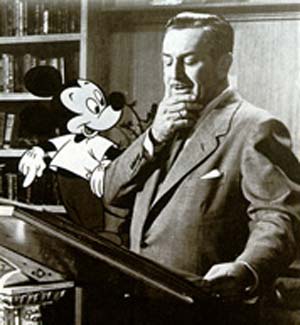
Would Uncle Walt have resisted the curse of Jones's First Law?

Jones’ First Law, one of many useful corollaries to Murphy’s Law (“Anything that can go wrong, will.”) is usually stated:

“Anyone who makes a significant contribution to any field of endeavor, and stays in that field long enough, becomes an obstruction to its progress – in direct proportion to the importance of his original contribution.”

This week was a good one for Jones (whoever he was; I can’t seem to find out) if not for the rest of us, because two classic examples of his principle were on display:  Penn State coach Joe Paterno, who managed to stay coach long enough to unravel his legacy and help lay the groundwork for an ethical, moral, legal, public relations, and financial catastrophe for the institution he had dedicated his life to, and J. Edgar Hoover, the subject of a newly-released Clint Eastwood directed film that shows how he too stayed long enough as the key figure of an institution he built—the FBI—to become an embarrassment to it. Continue reading →

My 15 Hollywood Cures For A Paterno-Penn State-Sandusky Hangover, Part 1

For this hangover, movies work better.

The past week, as much as any week within memory, has caused me to despair about the culture, the state of ethical values in America, and my own futile efforts to try to bring some light to the darkness. My mood was not only ravaged by the Penn State scandal (and Penn State’s students’ scandalous reaction to it), but also the continued drift and incompetence in our government and the lack of any apparent leadership or courage to address the problems of our economic system, other than to complain about them.

In such times—there have been others, though happily not many—my spirit urgently needs an infusion of inspiration and hope, and fast: as Al Pacino reminds us in “Scent of a Woman,” there is no prosthesis for an amputated spirit. This is when I turn to the movies that speak to me of courage, redemption, and ethical virtues validated. They are my lifeline; I can’t write or think about ethics from the bottom of a pit. I’ve got only a few days before Thanksgiving, after all. This is no time to be cynical and dubious about the course of humanity and the United States of America, a nation I love and admire.

Thus I am going to take a brief detour from the usual format of Ethics Alarms, with your leave and forgiveness, and share with you the fifteen movies that I will turn to as I try to recharge my enthusiasm, inspiration, and hope. Here are 1 though 7; the rest will be along shortly:

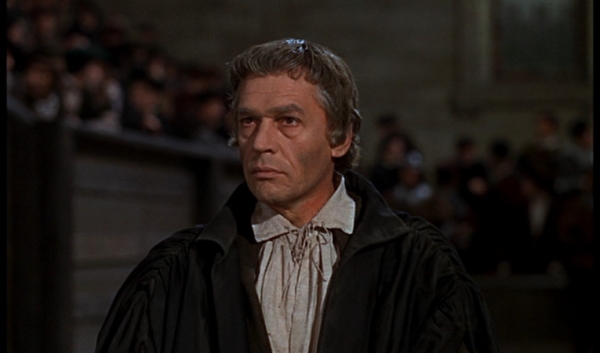
1. A Man For All Seasons (1966)

Hardly the most upbeat film to start the list, but probably the greatest ethics movie ever made.

Ethical issues highlighted: Integrity, honesty, courage, leadership, corruption, abuse of power.

Favorite quote: “Why Richard, it profits a man nothing to give his soul for the whole world… but for Wales?” [Sir Thomas More (Paul Scofield)] Continue reading →

I Wonder…What Would It Take To Get Fired From the SEC?

Keep up the way you’re going, guys. You’ll drive me to “Occupy D.C.” yet.

Do you think The Donald would be willing to run the SEC? At least he knows how to fire someone.

Eight Security and Exchange Commission employees were demoted, docked pay, suspended or otherwise disciplined for their role in the agency’s rank incompetence that allowed Bernard Madoff to steal billions of dollars and destroy lives and charities despite the timely warning of a persistent whistleblower, and more red flags than a bullfight. Yet despite mismanagement of epic and disgraceful proportions, the SEC couldn’t bring itself to fire anyone.

This is the state of accountability in today’s America. Run a corporation into the ground, lose the jobs of thousands, and take a mega-million dollar parting gift. Accept a bribe while you are serving as a State Senator, and not only keep your job, but get acquitted by a jury on the theory that you are too stupid to understand that what you were doing was a crime. Now the SEC’s response to an almost unimaginable breach of diligence in investment oversight by its staff doesn’t involve getting rid of a single one of the individuals responsible—even the individual deemed the most culpable, whose termination was recommended by the agency’s lawyers.

Why, you ask? Continue reading →