Health and Medicine
Comment Of The Day: “The Pandemic Creates A Classic And Difficult Ethics Conflict, But The Resolution Is Clear, Part I: Stipulations”
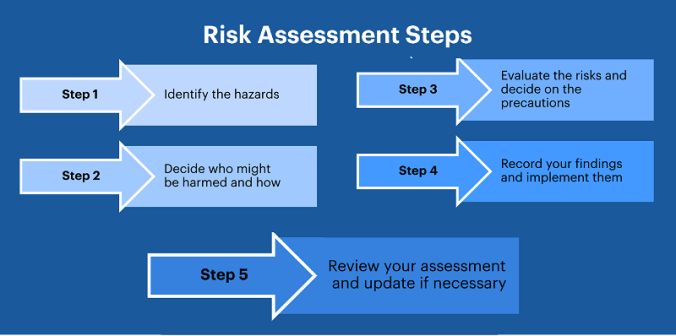
Matthew B fulfilled my fervent wish (as did Michael R, whose comment will be going up later today) by dealing with the risk assessment issue authoritatively and clearly so I wouldn’t have to.
Here is his Comment of the Day on the post, “The Pandemic Creates A Classic And Difficult Ethics Conflict, But The Resolution Is Clear, Part I: Stipulations”:
We’re seeing the problem with the vast majority of people’s inability to grasp statistics, and in particular the statistics of risk. That’s the problem here – with the Wuhan flu, we’re talking about something that – at most – could kill 1 in 100 people. We’re seeing higher numbers for death rates in many places, but they’re talking about case fatality rate. 1% in the US means 3 million people die, and we’re at 70K dead as of this morning in the US, 3.2 million short in 1% of American’s dying. Yes, I get many haven’t been infected and many more will die, but we’re absolutely on a trajectory far short of a 1% fatality rate.
As soon as you’re talking about numbers that low, far too many people’s brains stop being logical and emotion takes over. The tell for this is the saying “if it just saves one life.” People say that, but they’re turn a blind eye to so many things that kill people an no one addresses. Because there is no critical thought being applied, they remain illogical and darn near impossible to considering any position other than those formed by emotion.
We take risks every day that we don’t think about and we ignore things that people die from because of normalization of that risk. If you’re under 45, your odds of suicide, homicide and accidents killing you outweighs your risk of dying of health complications. If you’re under 25, that risk is three to one that it’s something other than a health condition that kills you. Even amongst the health conditions, there are many that are swayed by our own conduct and we ignore that.
Through most of the existence of the automobile, it’s ranked as the number one cause of premature death in the United States. Only in the last decade has the rise of the opioid epidemic managed to surpass the death rate of automobile fatalities. The opioid epidemic is a harder one to discuss, so I’ll start with the automobile. Automobile deaths are ignored, few people are afraid to get into a car because it might kill them. There are marginal improvements in automobile safety, but many of the key contributors have had little improvement. Mass use of air travel has had about 1/2 the time of the mass use of the automobile, but air travel has had massive improvements. At first there were many crashes because airplanes broke and directly or indirectly through the distractions they caused resulted in mass fatalities. That got fixed first. Then aviation regulators figured out that a growing fraction of accidents were pilots flying perfectly good airplanes into the ground or each other. They borrowed ideas from the nuclear industry, and instituted many policies that have resulted in a remarkable fall in airline fatalities. Do you realize the last time an passenger aircraft went down in the United States was November, 2001? 19 years. The only other crash was a 777 in San Francisco that stalled on approach, and most of the passengers came out with no or minor injuries. That’s truly remarkable. Continue reading
The Pandemic Creates A Classic And Difficult Ethics Conflict, But The Resolution Is Clear, Part I: Stipulations [CORRECTED]
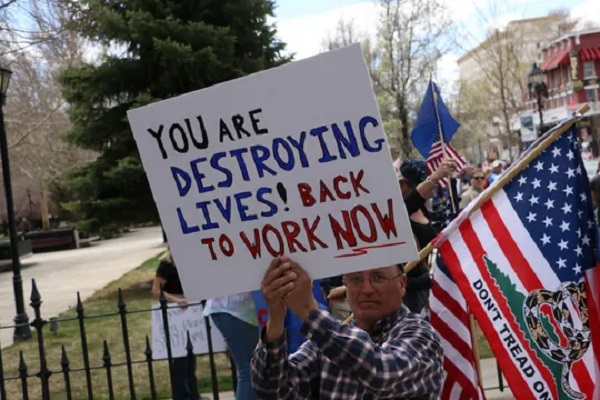
[Warning: I’m sure there are typos below; I’ll be fixing them, but I’m a bit swamped, and I want to get this post up. It’s a utilitarian decision. Update: I think I’ve fixed them all.]
I have been consciously avoiding wading into this issue, first, because its components are beyond my expertise in two fields, second, because to do a proper job would take a book rather than a blog post, and third, because to even do an inadequate job, I will have to quote extensively from the arguments of others, which I try to do as little as possible (believe it or not). I detest appeals to authority, which is basically all I get from my deranged Facebook friends all day long. Nonetheless, I can’t put this post off any longer, because this is an ethics issue encompassing several related ethics issues. I also can’t cover it in a post of reasonable length, so this will be Part I.
The grand ethics issue facing the nation, the public, the President and our future is when to begin re-opening the economy, allowing people to get on with their lives. Let’s begin with ten stipulations:
1. This is an ethics conflict, not an ethics dilemma. There are ethical considerations and values on both sides of the equation.
2. Many, too many, of those involved in the problem are going to approach it as an ethics dilemma, in which ethical values compete with non-ethical considerations. Unfortunately, that group includes almost all, and maybe all, politicians and elected officials, including the President.
3. It is a cruel trick of fate, or a bizarre joke by a sadistic Creator, that this crisis is occurring in an election year, and with a national leader with the personal characteristics, chaotic leadership, management style, and divided constituency of Donald Trump….but that’s the situation. It is particularly unfortunate that he does not have a reserve of public trust, because that, if not essential now, would sure help a lot as he makes some difficult decisions. He is significantly responsible for that trust deficit; the media and “the resistance” are even more responsible. That doesn’t matter right now. It is a different issue, though a related one.
4. We still do not have adequate information to make a fully informed decision, and will not have before a choice is unavoidable. That’s a fact. We still aren’t certain how the virus is transmitted, or the degree of infectiousness by the asymptomatic. We don’t know why some areas of the country are experiencing higher rates of infection than others. We cannot compare the U.S. statistics with other countries, because we can’t be sure of the accuracy of those foreign statistics. We aren’t even sure of the effectiveness of the supposedly essential precautions, like masks and social distancing. For example, I have articles on file from the last 30 days by credentialed medical professionals arguing that wearing masks may increase the likelihood of infection. I don’t care if this is a minority opinion; minority opinions are often right. Meanwhile, I just watched HLN interviewing a researcher who claims that social distancing should be 12 feet or more, after measuring how “droplets” from coughs spread. But a social distance requirement of much more than six feet is impractical, meaning that it’s not worth talking about.
5. Making important decisions without perfect information is what effective leaders have to do. Two recent weak Presidents, Barack Obama and Jimmy Carter, were marked by a habitual reluctance to make difficult and urgent choices without “all the facts,” and this resulted in multiple fiascos. The danger in making a premature decision, as defined by those two intelligent men, is that the decision will be subject to second guessing after the missing facts are known. President Trump has to be courageous and responsible and make any choice, knowing that whatever he does will be attacked whatever happens. He has to place his fate in the hands of moral luck, and the fate of the country as well. That’s a terrible situation to be in, but that’s the job. Continue reading
Ethics May Day, 2020: Biden, Reade, Planned Parenthood, A Renegade Times Pundit, And The Democrats Get Their Way.
It’s May! It’s May!
1. So Joe Biden went on “Morning Joe” and denied that Tara Reade was telling the truth. So what? What does this tell us? Was there any chance whatsoever that he was going to say, “Yup, I finger-fucked her. I don’t know what came over me!”? No. This is like the Kurt Gödel conundrum about the island where there are only truth-tellers and liars, and there are some questions where they will give exactly the same answers. He picked a screamingly partisan journalist, Mika Brzezinski, to ensure soft-ball treatment (she actually was a bit tougher than expected), and, to some eyes, looked as if he had rehearsed his statement. Ann Althouse does an extensive analysis here.
I don’t see the point. It’s a pro forma denial, and Biden was pressured into it.
I do think the Post article used some unfortunate phrasing..
“The presumptive Democratic presidential nominee was rebutting Tara Reade’s accusation that he reached under her skirt to penetrate her with his fingers somewhere in the Capitol in 1993. This denial requires him to thread a thin needle.”
2. Showing it has more integrity than most women’s groups, Planned Parenthood, the Daily Beast reports, was the only one among the major pro-abortion groups in the nation that responded directly to the progressive site’s request for a comment regarding Tara Reade’s allegations. The “Democrat-aligned” groups either “did not respond” or ” replied and did not provide a statement”…except Planned Parenthood.
Its president released a statement saying in part, “We believe survivors—and saying we believe survivors doesn’t mean only when it’s politically convenient…Joe Biden must address this allegation directly.'” Continue reading
Nah, I’m Not Getting Royally Sick Of Writing “Nah, There’s No Mainstream Media Bias!”!

Imagine how much we would benefit as a nation from knowing that news organizations were telling us about real events and conveying objective facts without concern about who or what they might hurt or benefit.
That doesn’t quite fit the music of John Lennon’s fatuous song, but it’s a much more useful hypothetical to consider than “Imagine there’s no countries.”
Yesterday, a thoroughly Trump-Deranged relative who is otherwise reasonable, informed and perceptive, was telling me that one reason he was convinced President Trump had mishandled the current virus threat is that “he doesn’t read his briefings.” This is a press-driven trope, as I tried to explain, and like so much fake news, designed to undermine trust by people who are ignorant. My relative isn’t ignorant. He just wants to believe what he already had decided before the election; it’s confirmation bias.
I pointed out that 1) the briefings smear came from unidentified leaks in the Administration, from those who by definition were attempting to damage the President. 2) The sources have been anonymous, and of the same level of trustworthiness that led to so many false reports and headlines during the Russian collusion investigations. 3) A lot of people, including very successful executives, process information better aurally than visually. I worked for one. Reading was hard for him; he was dyslexic. I would send him a long, detailed memo on an issue, and he would call me into his office, hand the memo back, and say, “Tell me what it says—the important stuff.” He was, by furlongs, the best manager I ever worked under. My relative, a lawyer and a manager himself, gets all of his information from reading (and based on our arguments, isn’t all that hot at processing it aurally.)
He also believes what he’s told by his fellow Deranged, and they told him yesterday that the Washington Post had reported , in a story titled, “President’s intelligence briefing book repeatedly cited virus threat,” that…
U.S. intelligence agencies issued warnings about the novel coronavirus in more than a dozen classified briefings prepared for President Trump in January and February, months during which he continued to play down the threat, according to current and former U.S. officials.The repeated warnings were conveyed in issues of the President’s Daily Brief, a sensitive report that is produced before dawn each day and designed to call the president’s attention to the most significant global developments and security threats.For weeks, the PDB — as the report is known — traced the virus’s spread around the globe, made clear that China was suppressing information about the contagion’s transmissibility and lethal toll, and raised the prospect of dire political and economic consequences.
No sources were given, just “sources”—you know, like those sources during the Mueller investigation. A month ago, the same Post reporters submitted virtually the same basic story, headlined “U.S. intelligence reports from January and February warned about a likely pandemic.” It was also essentially the same story the New York Times had run earlier, “He Could Have Seen What Was Coming: Behind Trump’s Failure on the Virus,” and that ABC ran around the same time, “Intelligence report warned of coronavirus crisis as early as November: Sources.”
You know: “sources.” Those “sources” were immediately debunked by none other than the Director of DIA’s National Center for Medical Intelligence , who sent this out: Continue reading
Ethics Quiz And Poll: The Nurse Practitioner’s Dilemma
Sure.
It is seldom that I strongly disagree with NYU philosophy professor Kwame Anthony Appiah, “The Ethicist” of the New York Times Magazine’s long-running advice column. A month ago I did, and emphatically so.
The question posed to him involved a professional ethics dilemma, and “The Ethicist” was so certain he had the correct answer that he was uncharacteristically terse about it. I’m pretty certain about the answer too, except that my certainty is that he’s wrong. But I have some doubts, based on my ethical positions in related situations.
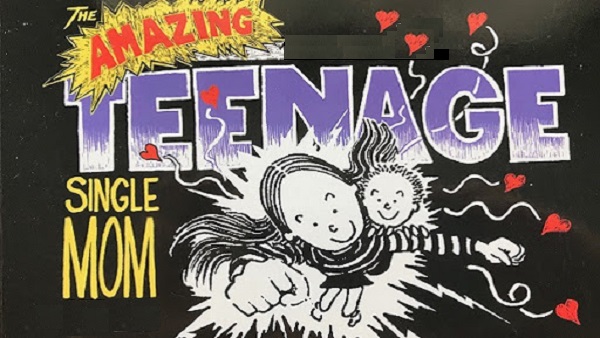
The inquirer was a a nurse practitioner working at a primary care clinic for low-income patients. She said that a 16-year-old patient told her that she had stopped coming by the clinic to have her birth control pills replenished because she and her partner were trying to have a baby together. She had been having unprotected sex for a while, and she was concerned that she might have some physical problem preventing her from conceiving. The nurse practitioner asked, “Would it be ethical for me to steer her away from trying to get pregnant? …Or, as her health care provider, do I have an ethical duty to try to help her conceive?”
Appiah doesn’t see any wiggle room. He says,
“You’re her health care provider. You should certainly tell her about the medical consequences of pregnancy. But the social and economic consequences don’t fall within your professional competence. An intervention about her life choices may seem moralizing and intrusive to her, and it could drive her away; and then she’d be losing your guidance on the things you are trained to help her with.”
Really? Continue reading
Evening Ethics Cool-Down, 4/28/2020: Ethics Clouds In My Coffee

Good evening.
1. Here’s an ethics quote I need to use more often…I was watching the 1941 film “The Devil and Daniel Webster,” about a jury trial to determine whether the Devil will get a farmer’s soul as contracted. It reminded me of a quote by Kurt Vonnegut: “A soul is the part of you that let’s you know when your brain isn’t working properly.”
A better definition of an ethics alarm you could not devise.
2. So where were the souls of the judges who voted for this? Thousands of prisoners have been released from incarceration to protect them from the outbreak of the Wuhan virus inside jails and prisons. The theory is that subjecting prisoners to this special peril is cruel and unusual punishment. The theory’s not wrong, but it’s a bit unbalanced. Their peril is not entirely society’s fault, after all.
There are activists at the extreme end of the progressive spectrum —a division getting larger all the time, it seems—who seem to want to eliminate penal punishment completely. Not letting a crisis go to waste, a group of them , Columbia Legal Services, began pushing for inmates over 50 years old in Washington state to be released as a compassionate act to save them from the virus.
Among the intended beneficiaries: Gary Ridgeway, the Green River Killer, and Isaac Zamora, serving a life sentence for going on a shooting rampage and killing six people. Ridgeway is one of the nation’s most frightening serial killers, eventually confessing to 71 murders. Over the three decades of the 1970s, ’80s and ’90s, Ridgeway captured women and girls, raped them, and strangled them. He loved watching the life go out of their eyes as they died by his hand, though sometimes he used a rope. Then he would pose with the corpses. If he really liked his victim, he’d have post mortem sex with her body. His first victims were found in the Green River, giving him a catchy name.
Ridgeway was sentenced to 500 years in prison with no possibility of parole. The victim’s families were promised that he would never be released. Ah, but poor Gary is 71 now, and thus at risk of succumbing to the pandemic, and presumed to be too feeble to be a threat. That, at least, is what Columbia Legal Services argued. (You know, I’m not much younger than Ridgeway, and I’m pretty certain I could murder someone. In fact, I’m getting ideas…)
Q13 News reported that prosecutors protested that “the Petitioners [Columbia Legal Services] demand that 2/3 of the prison population be released into the community, a number which includes serial killers and capital murderers.” You would think that their argument would be a slam dunk. You would be wrong. Continue reading
Comment Of The Day: “Observations On A Tender, Obnoxious, Unethical Screed”
Bill Weir’s nauseating open letter to his newborn son River—GACK! ICK! BLECHHH! —- was so unethical in so many ways that I almost needed a ventilator to finish reading it. When I had finished posting on the monstrosity, I was awash with regret that I hadn’t the space nor the time to write the letter Weir should write, and was hopeful that one of the many acid-penned bards among the talented commentariate here would take up the challenge. I was not disappointed.
Here is Steve-O-In-NJ’s Comment of the Day, one of his finest, on the post, “Observations On A Tender, Obnoxious, Unethical Screed”:
The article is utter garbage, written by someone untrained in science, but trained in making up stories. One day when River is grown up, assuming he makes it there and isn’t driven off the deep end by constant teasing, I hope he reads this article and asks him, just like Greta, “how dare you?” How dare you use my birth to push your own agenda and your employers’ agenda? How dare you plaster pictures of me as a newborn infant all over the internet where anyone can see them? How dare you reveal the circumstances of my conception to the world? I’m an individual. I am not an accessory to flash around like a new pair of sustainable dockers. I am not a prop for your causes. I am not an illustration to make a point next to pictures you cherry-picked to tell the story you wanted.
I’m not a half bad storyteller myself, and I’d tell quite a different story if a son were born to me. I always said if I had a son I’d name him Charles James, after my grandfather and father (ironically also now after two heroes of my own writing). So, if he were born, I’d say this: Continue reading
Monday Morning Ethics Warm-Up, 4/27/2020: It’s Come To This…
…I have to rely on cute Jack Russell Terrier videos to keep me from heading to the bridge…
1. No, guys, it’s not unethical to retract a bad law. SCOTUS Justices Samuel A. Alito Jr, Thomas and Gorsuch were annoyed that the Supreme Court refused to consider the Constitutionality of a New York anti-gun law after the state not only repealed the law, but passed a law preventing a similar law from being passed again. The Supreme Court today dismissed a major gun rights case that Second Amendment activists had hoped would clarify the right to bear arms. The decision dismissing the case was unsigned, but the dissent was signed, so we also know who made up the majority. “By incorrectly dismissing this case as moot, the court permits our docket to be manipulated in a way that should not be countenanced,” Alito et al. hurrumphed. The law’s removal rendered the case moot and denied the Court an opportunity to explore whether there is a right to carry a gun outside the home.
I’d say that when the prospect of being slammed by the Court makes a state back down from an overreaching law, that’s a win. Stop complaining. Continue reading
Sunday Ethics Warm-Up, 4/26/2020: Face Masks, Face-Saving, Faceplants, And Truths Too Awful To Face
1. Mask ethics:
- Utah’s Mindy Vincent is raising money for charity by selling her personally designed, hand-made masks decorated with penises and scrotums.
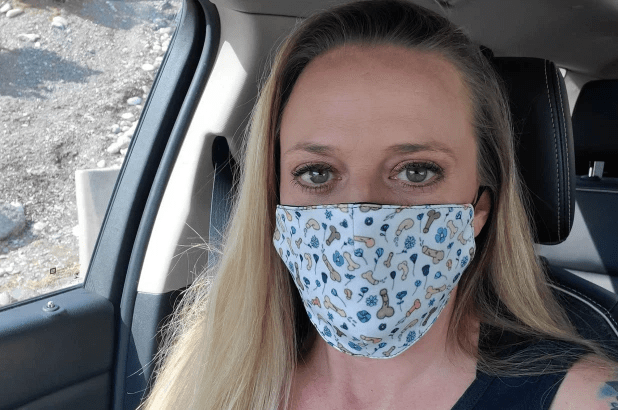
See, when someone complains, she tells them they must be too close to her. Heck, why not decorate a mask with accident photos, abortion pics and fellatio snapshots?
- Michigan State Senator Dale Zorn, a Republican, was photographed wearing a mask with a Confederate flag design. I’d say the First Niggardly Principle applies: people are irrationally emotional about the flag, which is part of our history, still included in a couple of state flags, and a bold design, but there are less inflammatory design options. One has to wonder if someone deliberately displaying the flag is making a political statement, and since many of the possible statements are repulsive and divisive, it seems the ethical move is to choose another design. Like penises.
Zorn, however, not only wore the mask, he denied that it was the Confederate flag, using a Clintonian argument ( it was more similar to the Kentucky or Tennessee flags, he said), then issued this apology:
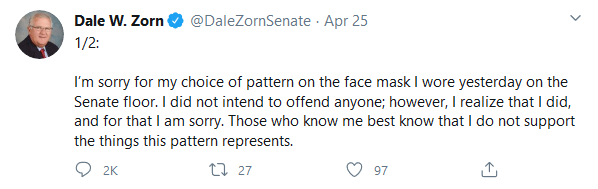 So if he didn’t support what he knows the design represents to many people, why did he display it in a political forum?
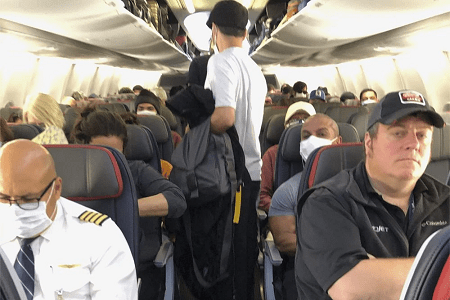
- I don’t know about you, but I’m thoroughly sick of conflicting information about the value of facemasks. This expert, for example, says they may make you sick.
Maybe that explains this confounding photo, from a recent flight into New York’s LaGuardia airport…
2. Trump’s face-saving tactic is a half-truth. In the wake of the latest fiasco, the President is going to limit the daily Wuhan virus press updates, and this is his explanation:
What is the purpose of having White House News Conferences when the Lamestream Media asks nothing but hostile questions, & then refuses to report the truth or facts accurately. They get record ratings, & the American people get nothing but Fake News. Not worth the time & effort!
He’s right about the media, which is why the White House briefings were suspended before the pandemic. But the President is leaving out half the reason: he is over-exposed, not playing on a field he’s qualified to play on, and stumbles like the “Are we exploring using disinfectant as medicine?” followed by “I was just kidding!” are reckless self-inflicted wounds in a Presidential campaign. Trump needs less exposure, not more, and apparently someone persuaded him to cut back. Good.
I will never get used to the President of the United States using juvenile, hackneyed insults like “lamestream media.” Continue reading
 Ethics Alarms
The second Comment of the Day to come out of Part 1 of the pandemic analysis ethics conflict analysis, like the first, does a lot of the work I would otherwise have to do to complete Part 2. A couple more like these, and the issue might be thoroughly covered without any input from me at all!
Here is Michael R’s Comment of the Day on the post, “The Pandemic Creates A Classic And Difficult Ethics Conflict, But The Resolution Is Clear, Part I: Stipulations”: