Bon Appetite!
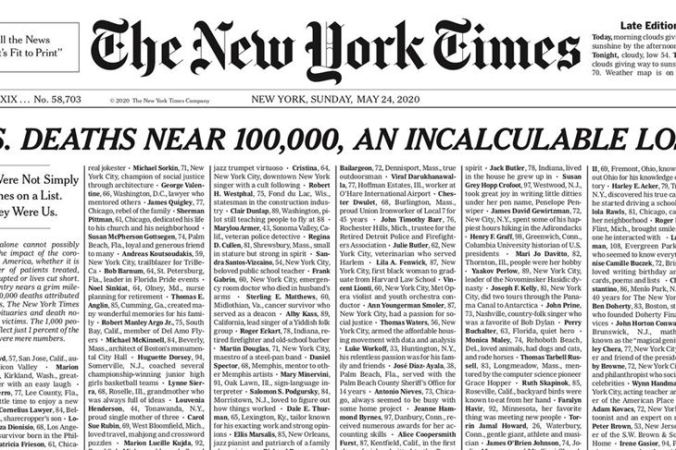
1. Today’s fake news note from the New York Times: “A Trump justice delivers an LGBT ruling that demoralizes the Right.” This completely fabricated observation, a variety of fake news I refer to as “psychic news,”purports to, first, characterize the “Right” as a monolithic, anti-LGBT mob, in the way the Left really is a monolithic, anti-Trump mob, and second, claim an extreme reaction to the decision that just doesn’t exist. The Times front page says the 6-3 decision was one “few expected.” That’s deceit: most analysts I read reached the same conclusion I did, which was that a 5-4 decision supporting the interpretation announced yesterday had at least a 50-50 chance of coming down. I did not expect the vote to be 6-3, but anyone familiar with how these things line up shouldn’t be shocked. Once he realized that the majority was going to hold that discrimination against gays and transgender individuals illegal, Justice Roberts may have joined the majority so that he could assign the opinion to Justice Gorsuch, for example.
President Trump has never indicated any animus towards gays or same sex marriage (Pence is another story); the presumption that the President’s supporters are horrified that discrimination against gays and transsexuals wasn’t upheld is just another version of the “deplorables” slur. Moreover, I believe the decision, and the fact that Justice Gorsuch joined with the Left wing of the court to cement it makes the President look good to all but reflex Trump-haters. His job is to appoint competent, open-minded justices, and he has. Gorsuch was never a conservative ideologue, though the Democrats who opposed him in the Senate falsely represented him as one. The decision also makes the Supreme Court look good by once again proving that it is not the lock-step partisan body Democrats claim, and that Chief Justice Roberts has correctly denied. It would be even better if the Court’s block of four liberals were as open-minded and non-partisan as Roberts, Gorsuch, and in other recent cases, Kavanaugh have shown themselves to be. Continue reading