Morning Ethics Warm-up: 8/17/17

Good Morning!

1. I got back late last night from my pilgrimage to say thanks to the Impossible Dream team, and now I’m on my way out to teach an ethics seminar for D.C. government attorneys. I haven’t caught up with the comments yet; I’m sorry. Things should be back to normal hear by this afternoon. Here are the surviving members of that 1967 Red Sox team that changed my life:

Incredibly, the Red Sox barely promoted the event, and had no memorabilia, not even a T-shirt, available at the souvenir stands. I asked one of the sales people, who said the team had given them nothing, figuring that the typical fan was too young to remember or care.

And people wonder why I object to tearing down statues…

2. …which the unethical Mayor of Baltimore ordered to be done yesterday in the dead of night. From the Times:

It was “in the best interest of my city,” Mayor Catherine Pugh said Wednesday, as she explained why she ordered Confederate monuments removed under the cover of darkness, days after violence broke out during a rally against the removal of a similar monument in neighboring Virginia.

“I said with the climate of this nation,” Ms. Pugh said later, “that I think it’s very important that we move quickly and quietly.”

With no immediate public notice, no fund-raising, and no plan for a permanent location for the monuments once they had been excised — all things city officials once believed they would need — the mayor watched in the wee hours on Wednesday as contractors with cranes protected by a contingent of police officers lifted the monuments from their pedestals and rolled them away on flatbed trucks…

David Goldfield, a professor of history who studies Confederate symbols at the University of North Carolina at Charlotte, said the removal of the monuments in Baltimore was likely to be part of a “rolling cascade” of cities and states ridding themselves of, or at least relocating, similar statues.

”You’re going to see another wave of these removals.” Mr. Goldfield said. “The fact that it’s done fairly expeditiously is not surprising because if you do it quickly the opposition can’t build up, and the confrontations that we’ve had, not only in Charlottesville but elsewhere, will not materialize.”

By all means, move quickly and without notice or due process so lawful protests and expressions of public opinion “can’t build up.” “It was in the best interests” is such a versatile rationalization for unilateral government action.

Democracies don’t undertake controversial actions in the night. Dictatorships do. Pugh and others nascent fascist of the left are as responsible for “the climate of this nation” as much or more than anyone else, and now want to exploit the dangers of that climate to stifle dissent.

Perfect. Continue reading

Comment Of The Day: “Ethics Quiz: ’13 Reasons Why'”

More important than giant chickens, more susceptible to compassionate solutions  than North Korea, and more worthy of our consideration than Debbie Wasserman Schultz because anything is, the teen suicide problem generated excelled responses to a post about it here, and was, as topics are so often, quickly buried by other controversies and events.

Lets’ discuss this a bit longer, shall we? It’s worth it. A good way is to recall one of the best comments the post about the Netflix series dramatizing a fictional teen’s suicide and its effect on her friends.  Here is Rip’s Comment of the Day on the post, Ethics Quiz: “13 Reasons Why”:

OK— this issue is one I have spent years delving into. I spent the better part of a decade doing volunteer work; developing interviewing techniques at Georgetown hospital with student actors to help train pediatric medical students on how to find youth that are engaging in or thinking about behaviors that put themselves at risk.Doctors Abrams and Hawkins have done amazing work on developing tools to reach at risk adolescents

I hope to return to  this at some point, but my volunteer work is currently on hold. Here is what I know.

75% of teen deaths, including suicides, in this country are avoidable if there is intervention in time. Suicide is the second leading cause of youth death, and LGBT youth are 4 to 6 times more likely to commit the act. Thank god for the Trevor Project and It Gets Better campaigns: they help. In the 90s when I tried to create suicide prevention programs through theater, I was told by administrators that we could not do this, as it might give the kids “ideas.”

Ugh. The statistics show they already have the ideas. Continue reading

Unethical Quote Of The Month: An NFL Wife, On The Private Facebook Fearful Spouses Of Future CTE Victims Support Group Page

“It’s scary to think about the future and the ‘what ifs’ … if it’s what he loves, I have to support it.”

What? No, you don’t!

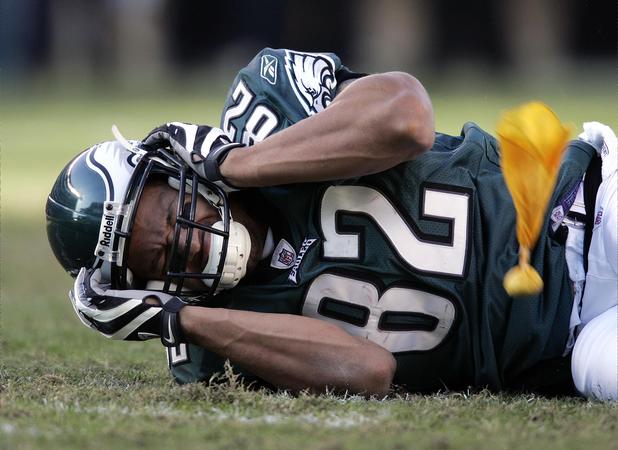
The above anonymous quote from a feature about how 2,000 wives of past and current NFL players share their fears and console each other as the evidence mounts that their husbands are likely to spend their final years as tortured, brain-damaged victims of their sport and burdens on their families illustrates how delusional supporters of the NFL money machine have become.

It also shows, to depressing degree, how people will rationalize and justify conduct that cannot be rationally defended.

If an unmarried NFL player without family responsibilities chooses to shorten his life and cripple himself in exchange for a brief career in the limelight and a lot of money, that’s his stupid choice to make. Then the only other responsible parties are the cynical and corrupt sport that knowingly pays him to make that choice, the amoral and greedy corporations that make such cruelty worth the NFL’s while, and the ethics alarms deficient football fans who get their Sunday thrills watching young men slowly disable themselves. Continue reading

Ethics Quiz: “13 Reasons Why”

“13 Reasons Why” is a Netflix  television series based on the 2007 novel “Thirteen Reasons Why” by Jay Asher. A high school student receives a box containing 13 cassette tapes recorded by his friend Hannah Baker, before she committed  suicide. The show has been a critical and popular success (although the Times didn’t like it much) , and a second season is planned.

But Researcher John Ayers of San Diego State University has studied the results of the show on the culture by monitoring discussions of suicide on the internet following the debut of “13 Reasons Why.” The phrases “how to commit suicide” and “commit suicide”  have experienced a 26% and 18% increase in searches. Ayers sees no other explanation for this other than the show.  Searches for the phrase “suicide hotline number” also jumped, by 21%

Ayers now says, “Our worst fears were confirmed That is, thousands of people, thousands more, are searching online about ways to kill themselves.”

Ayers wants the first season to be re-edited to discourage suicidal behavior, and argues that the second season should be postponed. “Psychiatrists have expressed grave concerns because the show ignores the World Health Organization’s validated media guidelines for preventing suicide. The show’s staff instead continue to prefer their gut instincts,” Ayers says.

Your Ethics Alarms Ethics Quiz of the Day is this head-scratcher…

Is it ethical for Netflix to continue running the series in light of Ayers’ research and recommendations?

Continue reading

Morning Ethics Warm-Up: 7/30/17

Good Morning!

(I’m starting this post just a few minutes before noon, thank to a WiFi outage. I’m sorry.)

1. I finally saw “Passengers,” which most people and critics seemed to hate. I see no obvious inferiority to the over-praised and honored “The Martian” or “Gravity,” especially the latter, which bored me to tears, but never mind: it’s an ethics movie. It is also a moral luck movie, and that drove me crazy. I’ll bet so many viewers (SPOILER ALERT!) saw the film and came out saying, “She had to forgive him, because if he hadn’t awakened her prematurely to keep him company, everyone would have died!”

No, no, no! His (Chris Pratt’s) conduct toward her (that’s Jennifer Lawrence, and anyone who wrongs Jennifer Lawrence deserves the torments of Hell) was just as bad–and it was horriblewhether it turned out well by chance or not. Subsequent discoveries or unpredictable events cannot make an unethical act retroactively ethical.

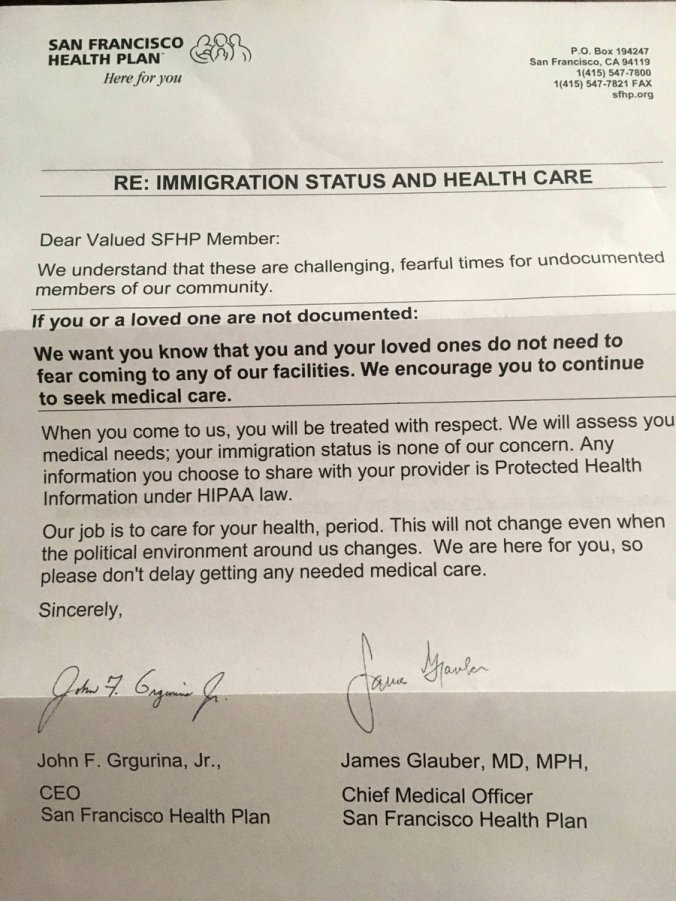
2. San Francisco’s Medicaid program sends illegal immigrants this letter:

When the anti-Trump deranged argue that the President is “crazy,” my stock answer is going to be that nothing he has said or done is as “crazy” as the position that it is right and just to officially encourage foreign citizens to breach our borders, defy our sovereignty and break our laws….and the people trying to use the 25th Amendment to execute a coup are exactly the people who think the letter above is compassionate and right. (Believing that a coup is in anyone’s interest is also demonstrably nutsy-cuckoo, but that’s another issue.)

3. I am really going to be disappointed if NPR and PBS don’t get zero-ed out of the budget. I may be stuck with biased and incompetent journalism, but I shouldn’t have to pay for it.

In a segment of NPR’s “All Things Considered” this week (Yes, I generally think the show is excellent, but that’s not the point) about the “restorative justice” approach to campus sexual assault, reporter Tovia Smith quoted Columbia University graduate Emma Sulkowiczs, aka “Mattress Girl,” as a “survivor” of rape.

She’s not a survivor; she was a harasser, and Columbia just paid a financial settlement to her victim for permitting her to proclaim him as a rapist when the evidence didn’t back the claim. Columbia doesn’t believe Sulkowiczs was raped, and her accusation has been thoroughly discredited. Why in the world would NPR choose this cruel and discredited woman to profile while discussing actual campus sexual assault, and how could it be ethical journalism to still refer to her as a rape survivor?

Smith’s tweeted response to criticism was as damning as the choice of “Mattress Girl” itself:

“Sulkowicz considers herself a survivor & we ID her as such. We’ve clarified that their school found the student she accused ‘not responsible.” Continue reading

Unethical Quote Of The Week: San Diego State University Political Science Professor Jonathan Graubart

I find myself annoyed at the groundswell of good wishes for John McCain after his diagnosis of glioblastoma…McCain is a war criminal and, more to the point. someone who as a politician has championed horrifying actions and been lousy on state commitment to public health…But ultimately what troubles me is the urge to send such well wishes to an utter stranger as it reinforces the notion that some lives are more important than others. There are lots of people with glioblastoma and who have died from it (including my mother twenty years ago)….

San Diego State University Political Science Professor Jonathan Graubart on Facebook, prompting some calls for him to be fired, and others on campus to second his opinion.

Is this an Ethics Quote or an Unethical Quote? I could call it  an Ethics Quote because it raises many ethical issues, and mere statements of opinions, even stupid and vicious ones, are not usually unethical in themselves. This quote strongly suggests that the speaker is unethical in  than one respect; it is also, at very least, irresponsible in its context, which is that he is a teacher, and represents the institution.

Jonathan Turley flagged this episode, as he reliably does any time a professor comes under fire for controversial speech. As always, he supports his fellow academic:

“Graubart’s comments are hurtful and hateful. It is a reflection of the incivility that has taken hold of our social and political dialogue. It is always sad to see a fellow academic rush to the bottom of our national discourse. However, we have free speech and academic freedom to protect unpopular, not popular, speech. Popular speech does not need protection. Graubart is expressing his deep political and social viewpoint on social media. He should be able to do that just as his critics have a right to denounce his views.”

San Diego State University is a government institution, and thus subject to the First Amendment, in addition to the principles of academic freedom. However, even a state institution  has a right to protect itself from harm. This isn’t just political speech; it is bona fide asshole speech, signaling that the speaker is not a trustworthy teacher, and that any school that would have someone this intolerant, doctrinaire, vile and contemptuous of kindness and compassion educating, aka indoctrinating students isn’t trustworthy either. Universities, public or not, should be able to insist on a minimal level of professionalism from faculty in their public behavior and pronouncements so the institution isn’t permanently discredited, embarrassed, and harmed.

Here is Graubart’s whole Facebook rant: Continue reading

Integrity Check For Senator McCain

Arizona Senator John McCain, a long-time leader of the Republican Party and a bona fide old lion of the U.S. Senate, has been diagnosed with an aggressive and malignant form of brain cancer. Surgeons removed the tumor this week, but the Vietnam war hero and former Presidential candidate knows he is facing the fight of his life. This kind of tumor tends to come back, so McCain’s treatment has to be as aggressive as the cancer.

The unavoidable truth is that Senator McCain has an ethical obligation to resign, and the sooner the better. Members of Congress, like Supreme Court Justices, should not drag their tenure into advanced age, when health, energy and mental acuity are likely to decline. McCain, who is 80, has shown unusual vigor as he has aged, but it is absurd to  imagine that he can do his job while undergoing life-and-death cancer treatments. For his own sake, that of his party, the institution of the Senate, his nation and his legacy, Senator McCain needs to be an exemplar to his colleagues and future elected officials who have the public’s trust. It is a time for him to model sacrifice, selflessness, humility and good judgment.

There is important work to be done, and if it is to be done well, men and women of health and focus must be the ones to do it. John McCain is an amazing and honorable man who doesn’t have to prove his mettle and fortitude to anyone. Now he has to have the courage and integrity to do the hardest thing of all: to know when to quit, and to do it.

I’m betting that he will. John McCain knows how to be a hero.

Ethics Headline Of The Month: “Vatican: The Body of Christ Is Not Gluten Free”

Bravo to Johnathan Turley for neatly summarizing what’s wrong with the Catholic Church’s recent affirmation of its long-standing requirement that the bread and wafers used during communion in Catholic churches around the world must have at least some gluten in them, or the Church will collapse and Satan will reign, or something.  Meanwhile devout Catholics who must avoid eating gluten, including people who have Celiac disease, just have to plug along, get half a communion, or get sick. God wants it that way.

What a throbbing example of arrogant and compassion-free bureaucratic thinking. The Professor’s headline captured the idiocy and rigidity of it perfectly.

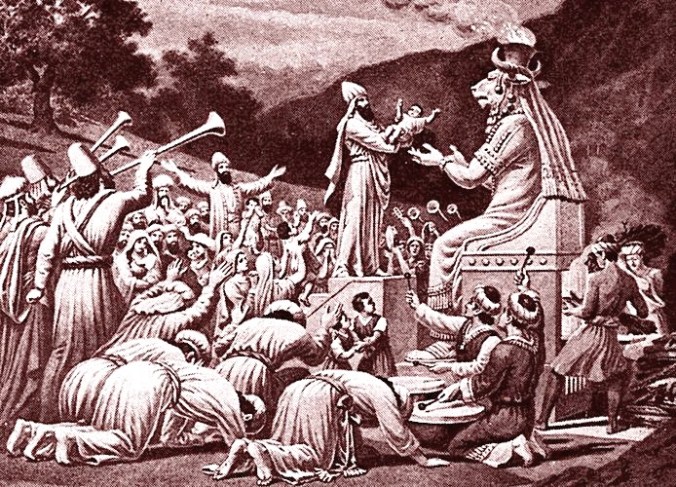
The Catholic News Agency shrugged the story off with a couple of rationalizations: “It’s always been this way” and “This is nothing new.” Neither are satisfactory excuses when making the communion dangerous to the increasing number of Catholics with Celiac disease. The issue is mirrored by the dilemma faced by alcoholics, who fear drinking wine; the Catholics, unlike the Methodists and other Protestant churches, insist on at least minimally fermented wine. Grape juice just won’t do. Why?

“Christ did not institute the Eucharist as rice and sake, or sweet potatoes and stout,” Chad Pecknold, a theology professor at Catholic University, told the Washington Post. “It may seem a small thing to people. But the Catholic Church has spent 2,000 years working out how to be faithful to Christ even in the smallest things. To be vitally and vigorously faithful … is something which is simply integral to what it means to be Catholic.”

[A long bitter section about how bureaucracies are habitually doctrinaire about small matters while ignoring pervasive corruption and destructive hypocrisy has been deleted here, in part because it is ugly, and also because anyone who can’t write their own version hasn’t been paying attention to the Catholic Church for the last 500 years…or even the last 17.] Continue reading

Comment of the Day: “From The Law vs. Ethics File: The Discriminatory Charlotte Pride Parade”

How to construct public policy regarding trans individuals is an increasingly varied and controversial ethics controversy (with another Ethics Alarms post on the topic in progress). This another whiplash ethics area where events and attitudes are moving and evolving too fast for some reasonable people to process. I remember as a child reading a vintage Readers Digest article about Christine Jorgensen and having my father answer my questions about her by saying, “He’s a freak.” The dialogue on the related issues here at Ethics Alarms is always  enlightening, in part because we have the benefit of some very well-informed authorities on the topic.

Pennagain added this impressive post to the latest round in the debate, in response to another commenter’s opinion. Here is Pennagain’s Comment of the Day on the post, “From The Law vs. Ethics File: The Discriminatory Charlotte Pride Parade”:

As far as I could find, the conclusion of Scientific American’s January 2016 article, “Is There Something Unique About the Transgender Brain,” speaks to the results of the all the legitimate studies that have been done to date: . . . given the variety of transgender people and the variation in the brains of men and women generally, it will be a long time, if ever, before a doctor can do a brain scan on a child and say, “Yes, this child is trans.”

So far,  so good. Nothing is proven either way as far as brain differentiation is concerned. But your personal observations are not at that level of science; they are your unsupported (and insupportable) opinions. The problem with that kind of observation is that it can easily be turned on its head, as with “Direct observations by my family, from many teachers and administrators: kids who want attention (for various reasons) tend to come out as trans.”

It’s rather: “Kids who are trans or gay tend to stand out and naturally attract attention.” What’s more, those who observe with knowledge can tell the difference easily.

What’s happening here is a common confusion between sexual orientation and gender identity. As simply as I can put it:

“Gay,” “Lesbian” and “Bisexual” refer to sexual orientation, in other words – who you are attracted to, namely, people of the same gender.

“Transgender” is a gender Identity: how you identify yourself in terms of maleness or femaleness. For a transgender person, the gender identity is one that is different from your biological sex. It can, in fact, have nothing whatsoever to do with whom you are attracted to.

Part of the confusion is that being queer (the word being back in vogue, stuck onto the LGBT as Q) designates one whose gender is known as fluid. In other words, the “stand outs” on the playground and even throughout their lives are those whose behavior is often that of the “opposite” gender. This occurs for two reasons: one is to be born with characteristics of another norm, the other is acquired as a copycat of society in general. What you don’t see,are those boys and girls, men and women, who are identical — naturally, biologically — with “straight” males or females… who can and do “pass”, as it were. Whether they look to you to be butch or femme, they are at home with their penis or vagina.

To get back to the question ‘What is the Difference between Gay and Transgender?’ – one has to do with sexual orientation (who you are attracted to sexually) and the other has to do with gender identity (who you feel yourself to be). Got it?

You are correct in thinking that transgender people, especially when in the (often difficult and painful) process of what is called coming out, used to identify as “gay,” because it was as close as they could come. But they had and have that one differentiation: the conviction and discomfort of being in the wrong gendered body. When a transgender person completes transition, he or she may turn out to have a straight orientation. Or not.

As far as your after finding that society no longer views them as special, have settled back into traditional sexuality goes, you display once again a conventional imagination in an attempt to dismiss both the reality of sexual orientation or gender identity and the complexity and difficulty of coming out against a society — a society that includes your own loved and needed ones — that hates, despises and rejects you. If you really believe this is an attention-getting pose, you are … ill-informed and unable to identify much less re-form your prejudices.

In short ‘What is the Difference between Gay and Transgender?”: One has to do with sexual orientation (who you are attracted to sexually) and the other has to do with gender identity (who you feel yourself to be). Continue reading

Comment Of The Day (2): “Observations On Britain’s Charlie Gard Ethics Fiasco”

This is the second outstanding comment on the Charlie Gard post, and it boldly ventures into the ethics jungle of euthanasia. The discussion must go there, for if society has limited resources, and we have more limited resources than Paul Krugman and Bernie Sanders admit, then when people use up their allotted portion, they either have to die or someone else has to pick up the bill. The recent surge in popularity for single-payer health care is due in part to the old saw about how soldiers think when going into battle. It’s everyone else who’s at risk, not you. Or as my dad liked to put it, “Gee, I’m going to miss those other guys!”

Increasingly, as I get older and think about how different my family’s life would be if both Mom and Dad hadn’t contrived to pop off quickly after relatively short illnesses and minimal hospitalization, I see the same consideration in planning for my loved ones. I don’t want to waste my son’s inheritance to pay for the last and worst years of my life; indeed, I think it would be unconscionable to do so. However, that needs to be my choice, not the Death Panel’s.

Here is Mrs Q’s Comment Of The Day on the post,  “Observations On Britain’s Charlie Gard Ethics Fiasco”:

When medical care is socialized, nihilism & scientism combine to control those who can be useful to the state & those who need to be eliminated from it.

Dutch lawmakers are looking at a Completed Life Bill that would allow those 75+ in age to choose medical euthanasia. The lawmaker pushing the bill, Alexander Pechtold, said it would allow the Netherlands to…

“take the next step for our civilization.”

And what step is that exactly?

The Gard case highlights the dark workings of Marxism for what it is by defining life in terms of how much of a burden it supposedly is to others. That the “greater good” is better served when certain people s lives are considered “complete.”

Baby Gard, as Jack noted, cannot continue to be a financial burden in the context of socialized medicine because in such a paradigm, there are not enough resources to support all of those represented by it. Remember socialism ALWAYS promises more than it can ever deliver and always spends more than it has.

I love it when people tell me how great the health care in France is, while many there complain the immigrants are a drain on the system because they have not put their money into it for years. Or Canada, where our friends cannot afford private insurance and go without certain medications & treatments because they’re not covered by state. Or Europe, where rates of Downs Syndrome are jarringly low because doctors have advocated so severely for abortion of these unborn, that in some countries it has literally been years since such a child has been born. Continue reading