Morning Ethics Warm-Up: 6/30/17

1. Traffic here is cratering in the run-up to the 4th, guaranteeing that for one of the few months in Ethics Alarms history, June 2017 will have seen significantly less traffic than its previous year’s equivalent. 2017 and 2016 are now in a dead heat.

I have some theories: by this point last year the campaign was heating up, and I was being sufficiently critical of both parties and candidates to make everyone happy. Ethics Alarms also started getting a lot of those paid Hillary shills commenting; I banned more commenters in 2016 by far than any other year. Also because of the campaign, there were an unusual number of posts shared by hundreds and even thousands of readers, as well as a record number of the anomalous posts that double or even triple the daily average. Those, I have found, are completely unpredictable. What I consider important or especially astute essays almost never attract readership; the runaway posts are usually about something relatively trivial.

On the other hand, the blog has many more followers in 2017, more consistently high-quality comments, and, as my life partner continues to remind me with dagger glances, revenue is holding steady…

2. There was another Ethics Hero tale to tell yesterday, though the only one I had time for was the group in Texas that bought a car for a young fast-food worker.

Major League Baseball umpire John Tumpane, assigned to a Pittsburgh Pirate home series, was walking from his hotel to the ball park across the Roberto Clemente Bridge when he saw woman climb over the railing to the outside of the bridge. He decided to approach her, and in response to his queries, she told Tumpane she just wanted to get a better view of the Allegheny River below.

The look on her face and the tone of her voice told Tumpane otherwise, so he grabbed her and refused to obey her demands that she let her go…and jump. Another  bystander saw what was going on and joined him, grabbing the woman’s free arm. A third grabbed her legs through the railing as Tumpane implored the gathering crowd to call 911. The three men held on  until emergency responders arrived. Continue reading →

Morning Ethics Warm-Up: 6/29/17

1.  The GOP’s travails as it tries to fix, replace or repeal Obamacare continues to be mocked in both the conservative and liberal media, and by the Democrats who caused the crisis in the first place. Ethically, the party is behaving like a responsible party should with major legislation: not moving in lockstep, with sufficient members of Congress withholding support until the new law appears to be competent and an improvement of the current one. The damned if you do/damned if you don’t game Democrats and the media are playing is wildly dishonest and calculated to win political points at the expense of getting a better system than the festering mess called the Affordable Care Act (irresponsibly passed with public misrepresentations and parliamentary tricks by the other party.)

True, many of the balking Republicans are basing their opposition to the current law less on principle than on polls, which now show a majority of citizens don’t like the proposed bill. On matters of complexity and national importance, polls should play exactly no role in legislation at all. How many of those polled have read the bill or understand it? A tenth of a per cent? Less? Uninformed opinions based on hearsay, ignorance and propaganda are worthless (and after the 2016 election, polls may be as well) ; this is why we have representative democracy and not a direct democracy. Legislators and executive who use polls as crutches are either incompetent, dishonest, cowards, or all three.

2. Especially in light of the despicable tactics of Democrats who are accusing Republicans of killing people by reforming Obamacare, the proper Republican response, which would have the advantage of being both fair and politically smart, would be to announce, through the President:

The failure of the Affordable Care Act is now no longer debatable. Projections for 2018 show massive premium increases. Insurers are pulling out of many markets. The optimistic CBO projections, which critics correctly called absurd at the time, have been decisively shown to be wrong. This law was passed by one party only, using public disinformation,  dubious methods and dirty politics. It has made health care for the public as a whole less affordable, and done nothing to lower health care costs or improve health care quality.

It is now clear that the Democratic Party’s strategy is to shift responsibility for this fiasco to Republicans, by viciously attacking any attempts to fix Obamacare while also preparing to condemn the party if the current law leads to disaster, as it almost surely will on its current course. The Democrats, in short, are placing political considerations over the nation’s health and welfare. Therefore, as of today, the Republican Party will not seek to pass, nor will I sign into law, any health care insurance law or any revisions of the current Affordable Care Act that does not originate from Congressional Democrats, and that Congressional Democrats do not accept accountability for in every respect. The Republican Party will support any such bill, reserving of course the right to suggest additions and changes, but only if there is no question regarding the Democratic Party’s ultimate responsibility for its drafting, as an admission that their original law was fatally flawed.

In the absence of such a bill, I and the Republican Congress will allow the  this “signature legacy of President Obama” to continue, with the understanding that its failure is a Democratic failure, and the lack of a timely fix is entirely due to the cynical tactics of the party that created it.

3. Unethical Quote Of The Day That Is So Predictable That It Isn’t Worth Posting As The Unethical Quote of the Day: Salon

This will be a short break, a one-day experiment: June 27 will be Trump-Free Tuesday here on Salon.

We’ve been thinking about this for a while, and it seems like the right moment. There are so many other things to talk about and think about, in politics, culture or our daily lives. We are stuck with this guy for the foreseeable future, which is a difficult truth for many of us to handle. If we cannot dislodge him from the White House anytime soon, maybe we can start to deflate the outsized role he plays in our national psychology. This is a baby step in that direction.

How will Trump-Free Tuesday work? We have established some rules for ourselves — which we are prepared to break under certain circumstances we have tried to define in advance. (Those circumstances seem unlikely. But who knows what counts as likely anymore?)

We will not publish the president’s name on Tuesday or use his picture. We will not cover his outrageous Twitter utterances or deride his surrogates for whatever stupid things they may or may not say on television. (We try not to do that the rest of the time, too.) We’re certainly going to cover American politics and the United States government, but we will avoid focusing on the dominant personality at the top of the pyramid. We will strive to focus on issues and policies and how they are likely to affect the lives of our readers.

Note the smoking-gun line “If we cannot dislodge him from the White House anytime soon…” Continue reading →

California “Ethics”

California is not only rapidly exiting mainstream U.S. culture, it is forging its own distorted and unethical version of right and wrong.

Three alarming examples:

1. Forging ahead with single payer, and reality be damned.

The Sacramento Bee  pointed out that by replacing current state-run health programs with a single-payer system, the state would still need to come up with an additional $200 billion annually.This year’s state budget in California is about $180 billion. Yes, implementing a single-payer health care system would require doubling California’s current tax burden.

Oh, never mind! The state Senate voted 23 to 14 this month in favor of SB 562, a single-payer proposal that would guarantee universal health care to all Californians. “What we did today was really approve the concept of a single-payer system in California,” declared state Senator Ricardo Lara following the vote.

No, what they did was reaffirm the fact that progressive cant refuses to yield in the face of cold, hard facts, math, reason and common sense. The cheerleading from the Left is mind-numbing. Writes the Nation: “If health care is a right—and it is—the only honest response to the current crisis is the single-payer “Medicare for All” reform that would bring the United States in line with humane and responsible countries worldwide.”

Well, let’s see: health care is NOT a right except in Left-Wing Fantasyland, and all of those “humane and responsible countries” have crushing tax burdens, reduced liberty, economic instability, crushing debt and completely different values, priorities and responsibilities than those of the United States.

Ethics is only ethical when it is practical and practicable in the real world. The ethical response to the fact that single-payer doubles the state budget is to say, “Oh. Well, obviously we can’t do that, then. On to plan B.”

2. That minimum wage increase that Gov. Brown said was based on principle rather than economics? Yeah, about that…

Continue reading →

Case Study In How When Ethics Fail And The Law Steps In, The Law Will Screw Things Up Beyond Repair

Like Title IX, like Obamacare, like so many well-intentioned laws and regulations designed to assist and protect vulnerable citizens or traditionally oppressed groups, the Americans with Disabilities Act (ADA) opened the door for abuse, absurd taxpayer costs, and unanticipated consequences. The ADA was rammed into law by activists compassion bullies who proclaimed that any attention to proportion and cost-benefit analysis was mean and heartless. Here is an example of what else came in that open door:

From the LA Times::

ADA lawsuits are now as common as sex-discrimination lawsuits, with more than 26,000 new claims filed against employers each year. The latest litigants have their sights on the most innovative segment of our domestic economy: e-commerce.In this trend, people sue businesses because their websites aren’t sufficiently accessible to the disabled — because the websites lack assistive technologies for the blind or hearing-impaired, say. It began in 2000, when Bank of America became the first entity to settle a web-accessibility lawsuit. Safeway and Charles Schwab soon followed suit. In 2008, Target paid $6 million to settle a class-action suit brought by the National Federation of the Blind, and nearly $4 million more to cover the plaintiffs’ attorney fees and other costs. More than 240 businesses across the country have been sued in federal court over website accessibility since the beginning of 2015. Similar litigation has been brought against universities on the grounds that the free online courses they offer aren’t captioned for deaf users, and against ride-sharing services because their smartphone apps lack text-to-speech capability for blind users.

…According to the demands of disabled users, in order for a website to be accessible, it must use fewer pictures, present text in a format that is compatible with text-reading software and employ design that allows for easy navigation. But the features that make a website more accessible for one disabled group are bound to be objectionable to another.

They may also conflict with other needs. Consider bank websites, which often employ timers that will shut down an online session for security reasons after a particular time period is exceeded. Such “timeouts” could present problems for some disabled users, but eliminating them in the interest of accessibility could impair security for all.

In the process of making a website accessible, questions invariably proliferate. Do certain color combinations violate the ADA because they confound the colorblind? Are certain layouts inaccessible if they’re confusing to users with a limited field of vision? Do the accessibility requirements apply only to the websites themselves, or do they also apply to Web content, such as advertising on a third party’s website? Will website hosts be responsible for the compliance of third-party sites? Must archived Web content be revised to comply? What about mobile apps? Do temporary technical bugs in an otherwise compliant website constitute a violation? What physical and mental conditions will require accommodation? So far, Web accessibility lawsuits have concerned the vision- and hearing-impaired, but future cases could be brought on behalf of plaintiffs diagnosed with dyslexia, ADD/ADHD, narcolepsy, cognitive impairments, paralysis and many other conditions.

The game is to sue deep pockets website owners and extort settlement pay-offs. That’s fine for the Bank of America, but not for, say, Ethics Alarms. This blog could be put out of business by such a lawsuit, and so could hundreds of thousands of others. Continue reading →

Comment Of The Day (2): “Public Servant Ethics, Employment Ethics, Baseball Fan Ethics, And Senator John McCain”

The post about John McCain’s troubling performance during the Comey testimony inspired this thoughtful comment by dragin_dragon, a self-professed senior citizen (although I had no idea), on the related topic f officials knowing when age and/or infirmity create an ethical obligation to step down and retire in the interests of society. 

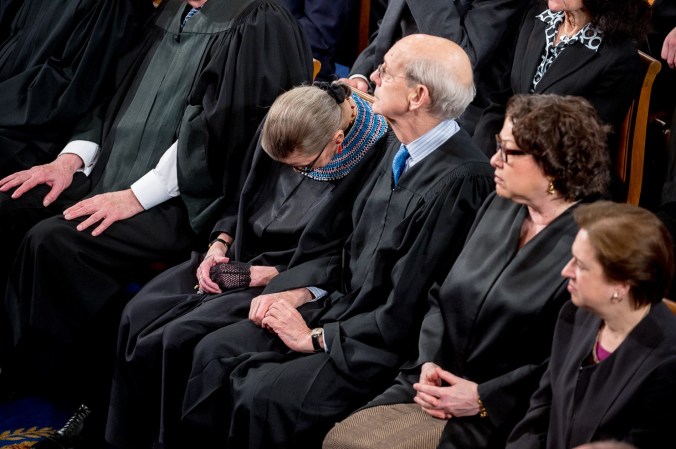
The confounding factor, and one that becomes a powerful rationalization for those who want to stay on in important positions long after their metaphorical pull-date, is that many of them can truthfully argue that their age-ravaged abilities are still better than most of the younger alternatives. Or, as my sister said during a discussion on this topic, “I’d rather have Justice Ginsberg with half her marbles than anyone Trump would nominate.”  I bet that’s how Justice Ginsberg is thinking too. Then there was that attorney with a drinking problem who everyone in the firm agreed was twice as good as any attorney in the firm when sober, and 50% better when drunk as a skunk.

Does that mean the firm should be satisfied if he’s drunk all the time? Isn’t this the same as the age diminished once-brilliant judge?

A topic for another time. Meanwhile, here is dragin_dragon’s Comment of the Day on the post, “Public Servant Ethics, Employment Ethics, Baseball Fan Ethics, And Senator John McCain”:

There comes a time in anyone’s life when it should be obvious that it is time to “Hang up the guns”. In my own life, I am but 71, and I am seeing numerous anomalies in my behavior (walking into a room and wondering why I am here) and in my rational thought (I suspect most who have read my comments sometimes have the same question). I am getting to where I lose debates to my wife on a regular basis (she’ll tell you I’ve always done that). More to the point, I am AWARE of the beginning deterioration. I am wondering if John McCain and Ruth Ginsberg are.

Another thought had occurred to me, however. After realizing that there was some slippage, I have refused an opportunity to run for Alderman and for Mayor of our little newly-incorporated city, because I honestly did not feel I would be able to do the job, either of them, justice, either mentally (what’d you say my name was again?) or physically. I’m winded some mornings after tying my shoe-laces. However, I am reasonably certain that narcissism plays little part in my personality. I suspect it is a BIG part of most elected officials (city, county, state, national) personalities. The idea being “Nobody but ME can do this job properly”, or in some cases, “Nobody but me can do this job, period, well or poorly.” Continue reading →

Comment Of The Day: “Facebook User Ethics : Don’t Spread Panic, And Don’t Make Your Friends As Ignorant As You Are”

The post on Facebook hysteria over the U.S.’s decision to withdraw from the largely symbolic Paris climate change accords has drawn perplexing commentary. The post did not assert a position on climate change, nor did it defend the reasons given for the withdrawal.  The post simply stated that it was irresponsible and dishonest to claim dire consequences of the decision when the accord itself is almost entirely symbolic, requires nothing, in the sense that there are no enforcement mechanisms, and can’t possibly carry the existential weight that social media, politicians, pundits and activists are claiming. It is all appeal to emotion and ignorance.

And it is. Especially since most of the social media hysterics haven’t read the accord and are illiterate regarding climate science.

And they are.

I guess I knew that both climate change flacks and those suspicious of them would shift gears into the messy issue itself and its controversial research and models. The dreaded (and misleading) “97% of all scientists” stat even made its appearance, although, again, it was irrelevant to the post.

Finally, Zoltar Speaks!, Popeye-like, declared that “I ain’t gonna take it, ’cause I can’t take no more!” after a side debate over whether the infamous hacked e-mails among climate-change researchers “proved” that there was a conspiracy to distort the science on climate change (no,  they prove that the scholarly research community members are not as objective and independent as they are professionally obligated to be, and that this makes their conclusions inherently untrustworthy). He produced an epic essay in response, so long and detailed that he posted it on a satellite blog. With his permission, I am posting it in it’s entirety here.

Here is the Zoltar Speaks! Comment of the Day on the post, “Facebook User Ethics : Don’t Spread Panic, And Don’t Make Your Friends As Ignorant As You Are” … Continue reading →

When Ethics Alarms Don’t Ring: A Coach With CTE Continues To Allow Young Players To Risk Brain Damage

…but he felt really guilty about it, so that’s OK.

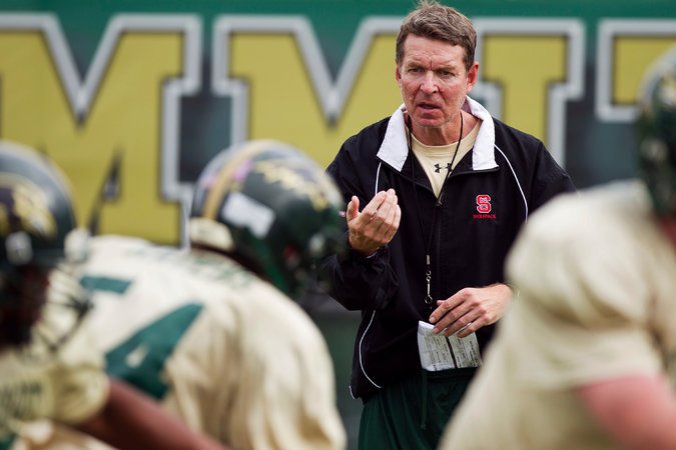
The New York Times had a very strange sports story yesterday. Its subject was the late Don Horton, a prominent assistant coach at Boston College and North Carolina State for nearly 20 years who was diagnosed with Parkinson’s disease but was also experiencing symptoms linked to chronic traumatic encephalopathy, or C.T.E., a degenerative brain disease caused by repeated hits to the head strongly linked to football. The sensitive reporter, Bill Pennington asks,

“Was his deteriorating health, Horton wondered, a consequence of his many years as a football lineman?” Even worse, he worried, was he responsible for exposing hundreds of players to the kind of head trauma now impairing his life? After all, as he had recruited and encouraged scores of athletes to play major college football….There was only one way to be sure if he had C.T.E. His brain would have to be examined post-mortem, the only way to confirm the disease since there is no reliable test for the living. At first Horton balked, but as his cognitive difficulties intensified, he relented and even insisted that the findings of his brain examination be made public.”

The Times article makes this sound like a noble and brave resolution of his crisis of conscience. It was not, however. Having his brain dissected after his death was no sacrifice at all; Horton would be dead, of course.  In the meantime, Horton, despite his symptoms and his wife’s investigation into them, continued sending young men out to get their brains beat in.

We learn,

In 2009, seven years before Horton died, [Horton’s wife] called Chris Nowinski, a co-founder and the chief executive of the Concussion Legacy Foundation, and told him that she thought her husband had C.T.E. She also raised her suspicions with Horton’s doctors, but they said that, even if true, it would not change the course of his treatment.

Horton continued his duties at North Carolina State.

“He never missed a day of work and still produced great offensive linemen,” said Jason Swepson, an assistant coach at North Carolina State at the time. “You could see him struggling sometimes, but he never opened up about it because, I think, he didn’t want to feel like he was letting the group down.”

At home, however, Horton’s illness was leading to a variety of changes, physically and philosophically. His daughters, Libby, 14, and Hadley, 9, had begun playing soccer, but Horton pointedly refused to allow them to head the ball in games or in practices, aware that some studies had linked heading to brain injury.

“Don told them, ‘If I ever see you head the ball, I’ll run onto the field and yank you off myself,’” Maura said.

Although Horton kept his misgivings about football’s potential consequences within his household, he talked about it regularly.

“Don would ask, ‘Are we just carrying this cycle on?’” Maura Horton said. “That was a question I couldn’t answer. But it’s definitely the right question to ask.”

It’s not just the right question to ask, it was a question with an obvious answer, and both Hortons knew it. YES he was just carrying the cycle on. YES, he was continuing to coach college players when he had first-hand, personal knowledge of the horrible fate in store for some or many of them as a result, and said nothing. “Was he responsible for exposing hundreds of players to the kind of head trauma now impairing his life?” If he refused to let his daughters head the ball while playing soccer, we know he was responsible, and so did Coach Horton. Was he in denial? Was he willing to let his player risk crippling cognitive impairment because he wouldn’t and couldn’t give up the only job he knew? Why does the Times suggest that there was any question about his culpability or breach of duty?

Continue reading →

It’s A Comment Of The Day Weekend! First Up…Comment Of The Day: “This Is The Heartbreak Of Anti-Trump Brain Loss…”

I am desperately behind in posting deserving Comments of the Day, and have vowed to catch up. This one, by Zoltar Speaks!, is almost a week old, but fortunately its substance remains very current.

He was responding to the post about Harvard icon Larry Tribe being moved to engage in rumor-mongering and conspiracy theories because of his, and undoubtedly his elite peer group’s, contempt and hatred of the President of the United States. I had been holding it to pair with a long post regarding the daily, embarrassing displays of utter bias and irrationality in the New York Times, based on my forced perusal of the last Sunday edition. That post will arrive sooner or later, but it is unfair to delay wider distribution of Zoltar’s commentary any longer.

I was joking about “Anti-Trump Brain Loss,” but the phenomenon is no joke, and is, in fact, an existential threat to the nation, one more thing that the Trump Deranged are incapable of seeing in their fury. For some reason I was reminded of one of the worst Hollywood  movies ever mad, the hilarious sequel to “The Exorcist,” “The Heretic,” in which we learn that locusts are turned voracious and destructive by being in close proximity with each other. Their beating wings brush against other locusts, and it changes them (we are told) into monstrous forces of destruction. [Note: this is mostly nonsense, but not completely.]  This is like what I witness on Facebook, in the news media and from the more intellectual-limited among Democratic officials, who declare every incident, episode or tweet coming out of the chaotic Trump White House a crisis, then the news media repeats that it is a crisis, and the anti-Trump locusts fantasize about how “the crisis” will finally give them the chance to do what they have been trying to do since November 8, 2016: undo the election.

I was critical of Professor Turley in the previous post, so let me praise his clarity on this topic now. In a post on his blog called “A Question of Law: Calls for the Indictment or Impeachment of Donald Trump Are Transparent and Premature,” he writes,

“Critics increasingly sound like my kids when we drive across country and start to chant “are we there yet?” before we are even a block from the house.  Many view a criminal charge or impeachment as the only hope for America.  However, neither the criminal code nor Article II were meant as post hoc political options for unpopular presidents. Indeed, both are designed to be insulated from public distempers and passions.”

Bingo. Trump hatred has transformed previously responsible adults into children, as well as locusts.  We have never seen anything like it as a nation, and since the infection has mostly crippled an entire political party, the journalism establishment and the pundit class, the risk of permanent harm to the nation is real.  I spent five years warning readers about Donald Trump, and almost two explaining why it was madness to even consider him as a responsible Presidential choice. I did not, however, think for a second that progressive mania in response to a Trump victory—one that arose out of indignation that the Left’s precious agenda would be imperiled by a dolt chosen by the electorate because progressives had become insufferable, arrogant, divisive, cynical, corrupt and increasingly totalitarian—-would create a greater danger than an incompetent President.

Yet that is what has come to pass.  I have always detested the Right’s facile dismissal of liberals as “insane,” as in Michael Savage’s book, “Liberalism is a Mental Disorder,” because it echoes the indoctrination tactics of the Soviet Union, which placed dissenters in mental institutions.  Dubious political beliefs don’t mean one is crazy, but behaving irrationally and irresponsibly because those beliefs aren’t prevailing can produce symptoms of mental disturbance. That seems to be what we are witnessing now.

The locusts’ wings are beating furiously, changing them, driving them mad.

Here is Zoltar Speaks!’s Comment of the Day, the first of several this weekend, on the post, “This Is The Heartbreak Of Anti-Trump Brain Loss…”:

Continue reading →

Ethics Hero: Lindsey Bittorf

I regard people who contribute kidneys to near strangers as residing in a special category of Ethics Hero, in the exemplary ethics category….maybe the exemplary exemplary ethics category.  Considering Don Bedwell, the first individual I learned about who  engaged in this extraordinary act of sacrifice, kindness, and compassion,  I began my 2005 post, “There are special and rare people whose ethical instincts are so pure and keen that they can make the rest of us feel inadequate.”  Bedwell, a traveling businessman, donated his kidney to a waitress who often served him at his favorite Cleveland restaurant when he was passing through the city on business. The second altruistic organ donor was East Haven, Connecticut  Mayor April Capone Almon, who gifted one of her kidneys  to a desperate constituent she barely knew.

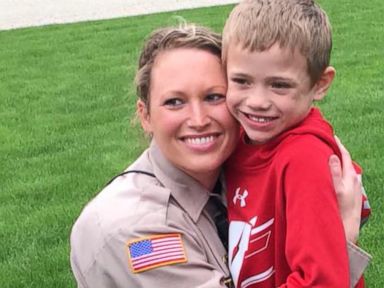
Wisconsin police officer Lindsey Bittorf is the most recent example of this special breed of ethics hero.  She saw a Facebook post from a local mother pleading for someone to rescue might  her  8-year-old son, Jackson Arneson, who needed a kidney. The boy’s family and friends had been tested and none were a match. Bittorf didn’t know the child or the family, but got herself tested on a whim. Doctors told her she was an unusually good match,considering that she was not related to the boy.

Last week, Bittorf  rang the doorbell at Jackson’s home to surprise his family with the good news,  ABC News reported. Jackson could have one of her healthy kidneys.The police officer told Jackson’s mom, Kristi Goll, that it was an “early Mother’s Day gift.”  That’s a bit better than flowers, you’ll have to admit. Continue reading →

Comment Of The Day: “Comment Of The Day: ‘Comment Of The Day: No, Insurance Companies Treating People With Pre-Existing Conditions Differently From Other Customers Is Not Discrimination.’”

I agree, this is getting ridiculous: our colloquy on the ethical and policy complexities of health care policy has created the first Ethics Alarms Comment of the Day on a Comment of the Day on a Comment of the Day. Nonetheless, John Billingsley’s COTD is deserving, as well as interesting and informative. Here it is, his comment on Comment Of The Day: “Comment Of The Day: ‘No, Insurance Companies Treating People With Pre-Existing Conditions Differently From Other Customers Is Not Discrimination’”—which in this case you really should read Charlie Green’s post that prompted it.

I have a few comments on specific points.

“New diseases like RLS”

RLS was first described in 1685 and the first detailed clinical description was in 1944 and it was shown in test recordings in 1962. Not really a new disease but a newly publicized disease. Once a medication was developed that was effective at relieving the symptoms, it became profitable for a pharmaceutical company to target it and raise awareness. The company was not being altruistic, but is it wrong to make money by informing someone that there is a way to relieve the distress they are experiencing? If you have ever talked to someone who really has this disorder, you know how much it disrupts their lives. Is it over diagnosed? Possibly, but polysomnography to make a firm diagnosis is expensive and it is a condition where the clinical symptoms are pretty reliable. Probably cheaper to just treat it.

“Because who’s still going to argue with your doc? Especially when he or she gets side benefits from giving in to the latest DTC ads on network news programs?”

I hate DTC ads. I would be good with a spot that just said, do you experience these symptoms (of RLS perhaps)? If you do, tell your doctor. I actually spent quite a bit of time telling patients why they did not need the newest, expensive drug they heard about on TV or in a magazine either because they didn’t meet the criteria for it or because I felt that the cheaper alternatives were just as effective and needed to be tried first. It was a hard sell, particularly when the patient would say, “but my insurance will cover it.” I, and I think most doctors, take being a good steward of the healthcare dollar seriously. In the past there were sometimes substantial “side benefits” from drug companies especially if you used really expensive things like artificial joints or pacemakers. The most I ever received was dinner in a restaurant and things like cheap pens and sticky note pads. These days there are no more cheap ballpoint pens and meals typically are take out from Newks or equivalent in the office during a presentation. Not something I am likely to sell my soul for although I understand the implications. Continue reading →