Morning Ethics Warm-Up, 10/8/2018: Weenies, Dummies, Hypocrites And Creeps.

Good Morning!

1. But before we get into the ugly part..I want to recommend an article called “Rationalizations for Unethical Behavior in Tech” over at Medium. The writer, April Wensel, is the proprietor of the Compassionate Coding site.

Her article specifically employs several of the rationalizations on the Ethics Alarms list, quotes me with attribution, and does a terrific job demonstrating what the list is there for, and how it can and should be used. Thanks, April!

2. And here is another reason you can’t trust the media: journalists often aren’t very bright or well-educated.  NBC reporter Ken Dilanian opined on Twitter after Kavanaugh was confirmed that…

It may not happen in our lifetimes, but the idea that North Dakota and New York get the same representation in the Senate has to change. “Senators representing less than half the U.S. are about to confirm a nominee opposed by most Americans” https://www.washingtonpost.com/politics/2018/10/06/senators-representing-less-than-half-us-are-about-confirm-nominee-opposed-by-most-americans/ 

To begin with, quoting that Post piece is signature significance for a partisan media hack.  “Most Americans” have insufficient information to oppose or support Kavanaugh on a substantive basis, and uninformed opinions are worthless at best. If “most Americans” opposed him, it was because they were misled, propagandized and fear-mongered into ignorance and bias. This is why we don’t elect Supreme Court justices. The complaint about the Senate that Dilanian glommed onto can be translated as “The Senate is the Senate.” It was designed not to represent the population as a whole, but the states, their interests and their cultures. “It may not happen in our lifetimes” is a statement of ignorance of what it would take to fundamentally change one of the three branches of government from its original form. I’d suggest to Ken that he try reading the Constitution, especially the formula for amending it. The chances that two-thirds of the states will accede to a new Senate construction that lets the big states dictate to the small ones are exactly zero, or essentially the same as the chances that the Electoral College will be abolished.

Dilanian is NBC’s intelligence and national security reporter and frequently appears on MSNBC, and now we know that the network’s intelligence reporter doesn’t understand his own country.

3. Be proud, Democrats! A Democratic Senator I had been blissfully unaware of  until the Kavanaugh nomination stepped up during the  hearings to reveal herself as exemplifying the ugly side of the partisan divide. Hawaii Democratic Sen. Mazie Hirono said that the fact that Kavanaugh was conservative was all she needed to determine that he was lying, for example. She’s a virulent bigot. Yesterday, she was asked twice by CNN’s Dana Bash about whether she thought harassing Republican senators in restaurants was inappropriate. She wouldn’t say “Yes,” sending a clear message that her real position is “No.”

Here’s the exchange: Continue reading

Ethics Hero: Kwame Anthony Appiah, a.k.a. “The Ethicist”

In the past, I mostly visited the New York Times Magazine “The Ethicist” column to take issue with the succession of ethics amateurs and ethicist wannabes the Times employed as its ethics advice columnist. Once Kwame Anthony Appiah took over, this wasn’t as much fun, and I admit I don’t even check the column that often. Appiah is a real ethicist, and knows what he’s doing. I sometimes disagree with his conclusions, but he reaches them using valid ethical analysis, and seldom employs bias or rationalizations.

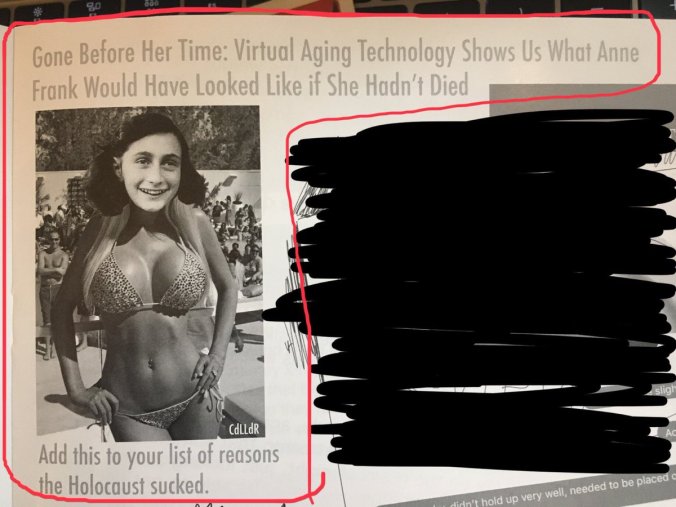
A recent column, however, deserves special praise. The inquirer asked what the ethical course would be to handle historical artifacts that reflected racist attitudes and artwork, like the card pictured above. The writer concluded her question…

I offered it to the National Museum of African American History and Culture in Washington. I never heard from them, so it moved with us. My husband thinks I should throw it away, but that feels wrong. I feel it is history that we should acknowledge, however painful and wrong. Your thoughts?

“The Ethicist’s” response is note-perfect, even with my intentional omission of its best and most surprising section. I’m doing this so you will hit the link and read the full column. Appiah wrote in part,

I am not a fan of the intentional destruction of historical artifacts….It’s a familiar thought that we need to understand our past, not least in order to help us avoid repeating the worst aspects of it. So your impulse to offer this souvenir card to a museum seems right. Of course, the sort of document you describe is well represented in collections already, and this may be why you didn’t hear back. But who knows whether there isn’t something about it that a historian might find useful in unpacking some detail of the history of American racial attitudes?

So if you think this card does have historical value, and you can’t readily find an interested archive or scholar, you could just put it up for sale on eBay, say, where it will join a large assemblage of racist artifacts. You can’t guarantee that you’ll approve of the motives of the buyer, but someone who is willing to pay for it is most likely to preserve it.

Given that your motives are honorable, I don’t share your worry about profiting from the sale. Selling an image isn’t endorsing its message. And my guess is that most contemporary collectors of such items aren’t motivated by racism. Still, if you want to avoid profiting, there’s an easy solution. Just send the proceeds to the National Museum of African American History and Culture. That’s an offer they won’t turn down. Continue reading

Afternoon Ethics Warm-Up, 9/19/18: Conditional Authoritarianism, Fake Reparations, And Profitable Harassment

Having a good and ethical day?

1. Here’s a useful definition…that I formulated while reading another issue of the increasingly and inexcusably anti-Trump propaganda obsessed New York Book Review section. This past weekend’s addition was more obvious than usual. “Democracy at Risk!”  (Not by an opposition party setting out to topple a Presidency with the assistance of the news media—no no no! The risk justifies the opposition party doing this!) “Is Donald Trump a Fascist?”  Hey, what’s Bob Woodward reading, just to pick a celebrity out of a hat? (The interview highlights the lack of self-awareness among the Trump-haters: Bernstein points out how intolerance and hate destroyed Richard Nixon as the Times allows and promotes hate in its war against the current President.) There’s an essay about…white nationalism! A Times reporter has written a book that pronounces the United States as “DOOMED!” And here’s Andrew Sullivan extolling an American revisionism exercise while referring to the current “spasm” of authoritarianism, and Doris Kearns, my old presidential power prof in college, with a new book about her faves, Lincoln, Teddy, FDR, and LBJ. These were great leaders.

The definition: Authoritarianism is when a President you don’t like exerts strong leadership within his powers to accomplish policy goals you disagree with. When a President you do like stretches and exceeds his Constitutional powers to achieve policy goals you approve of, that’s not authoritarianism. That’s great leadership.

As an aside, Andrew Sullivan tells us in his review that “the 2008 Heller decision rejecting a D.C. handgun ban is quite obviously bonkers.” All righty then! I guess that settles it!

2.  Speaking of Bonkers: Emmys Ethics. Michael Che appeared in a pretaped bit in which he handed out “reparation Emmys” to  black performers who supposedly were overlooked by the voting academy. These included Jaleel White (Urkel  on“Family Matters”), Marla Gibbs (nominated five times for her role as Florence on “The Jeffersons”), Tichina Arnold (“Martin,” “Everybody Hates Chris”) and Kadeem Hardison (“A Different World”).
Continue reading

“Antigone In Ferguson”: Embedding The Lie

Mike Brown’s father during a discussion after the performance.

“Antigone in Ferguson”  premiered at Normandy High School, Michael Brown’s alma mater, in September of 2016. Now the Harlem Stage is presenting it in New York City, Off-Broadway. A play is a play and art is art; artists are going to enable juvenile, half-baked and even destructive political ideas and themes, and playwrights will turn their perceptions of reality into stagecraft that they often are far more qualified to execute than the task of making sense out of the world. This drama was conceived and directed by the activist playwright Bryan Doerries in response to the shooting of Michael Brown in Ferguson, Missouri four years ago,  overlays the structure of the ancient Sophocles Greek tragedy with a distorted version of Brown’s death and its aftermath. The goal, says the sympathetic—complicit may be a better word—New York Times, is “to open the door on the thoughts and feelings aroused by the shooting of the 18-year-old Mr. Brown by a white police officer, and by the protests that followed. ”

The play is championed by the Brown family, which means that in part it exists to perpetuate a politically useful lie and the  apparently invulnerable narrative that Brown was the innocent, sweet-natured victim of a racist cop who murdered the teen in the streets of Ferguson, and then got away with his deed because the white justice system is bent on killing young black men.

This quite simply is not what happened. The racialist Obama Justice Department was eager to be able to show that the officer was a killer, but in the end, despite the sympathetic spinning of the news media for months, the evidence did not support that conclusion, and no charges could be brought. Mike Brown, stoned and freshly off roughing up a storekeeper, resisted a lawful arrest, tried to grab a police officer’s gun, and then, when he focused his imposing 300 pound mass on charging the smaller cop who arrested him, got himself shot—stupidly, needlessly. His friend on the scene, however, quickly concocted the “Hands up! Don’t shoot!” exchange that never happened, and as that false version slowly twisted its way from slogan to protest to debunked myth, the facts of Brown’s case were neatly discarded for a narrative that advances the cause of division, anti-police bias, racial hatred, and more. Continue reading

Todd Frazier’s Cheat And The Umpire’s Revenge

Why is the umpire standing on home plate?

In a Mets-Dodgers game a week ago in Los Angeles,  Mets third baseman Todd Frazier leaped into the stands to catch a foul ball. Climbing out, he quickly showed the umpire his glove with the ball in, the umpire signalled an out, and then Frazier tossed the ball to a fan. Did I say the ball? I should have said a ball. The ball Frazier showed the umpire wasn’t the ball hit by the Dodgers’ Alex Verdugo, but a white rubber ball, presumably belonging to a spectator,  that he grabbed after the real one rolled out of his glove during his fall. Frazier claimed that first he thought it was the real ball,  but when he realized it wasn’t, tried to sell the non-catch anyway. And it worked!

“It is Hollywood,” Frazier said later in the week. “Sometimes you’ve got to act out a little bit….I was trying to get out of there as quick as possible. I saw someone pointing at the right ball and I was like, ‘All right, I’m just going to have to play this off.’ I got in the dugout and was telling people I was flabbergasted that I even got away with it.”

There are gray areas is baseball gamesmanship. I wrote an essay about the topic several years ago, and ruled what Frazier did clearly unethical, for several reasons. It was not like the common situation when a player traps a ball in the outfield and acts like he made the play. If the umpire calls an out, the fielder has no more obligation to correct the umpire to the detriment of his team than a batter has an ethical duty to say, “No, ump, that wasn’t a ball four, it was strike three. You missed the call. I’m out.” Frazier actively deceived the umpire by placing the dropped ball in his glove out of the umpire’s sight. Worse, he even used a fake ball to sell the deception. With the exception of the rubber ball, the trick was reminiscent of a famous World Series cheating controversy: Continue reading

On The Disapproval Of President Trump

Talk about cognitive dissonance…

The recent barrage of  anti-Trump stories, self-inflicted Presidential wounds and media smears has the President’s approval ratings down again, back to his unshakable 37% or so core, presumable the American who, as he so memorably joked, would support him if he shot someone in Times Square. It has also been as high in some polls as 50% in the not so distant past, and substantively, not much has changed, except that the economic news keeps getting better. “There’s Never Been a President This Unpopular With an Economy This Good,”writes Bloomberg, and I’m sure that’s true. There was also never an individual as unpopular as Donald Trump elected President of the United States before he was.

The “disapproval rating” of his performance is incoherent, of course, because it is an undecipherable mess of apples, oranges, and wooden shoes.  Some disapprove of Trump because of his almost completely revolting character. Some disapprove of him because they disagree with his policies, since they are socialist, statist  One Worlders who believe, against all evidence, that Barack Obama was a great leader. Some are Republicans who are embarrassed to have such a man representing their party, no matter what policies he pursues. Some are conservatives who regard Trump as not sufficiently conservative, for indeed he’s not a conservative at all. Some are classist snobs. Some are morons who just believe what social media and the mainstream media tells them to believe. I’d love to know how this group breaks down, but we’ll never have that information.

Still, I find it encouraging that Trump remains unpopular despite his many positive achievements, some arguable, some not. It is good that the idea that there is more to being a respectable and admirable President than presiding over positive economic times, strong foreign policy, and military success. It is especially encouraging to see Democrats and progressives being driven to that position after stubbornly refusing to acknowledge that the character of a national leader is important during the Bill Clinton years, and after nominating Hillary. The President of the United States is not a CEO, and not a mere policy wonk (Yes, I recognize the absurdity of calling someone like Donald Trump a “wonk” of any kind). Leadership is as much a symbolic role as a pragmatic one. Leaders shift cultural values and norms; they define, or should, what a nation and its public regard as good, bad, right, wrong, admirable, and unacceptable. This was the basis of my initial, long-held, endlessly expressed, and unyielding opposition to his leadership style and personal demeanor, perhaps most forcefully explained here.

The importance of a President’s character goes far beyond being an automatic role model, however. A President, while he is in office, defines the Presidency itself. If he defines it in negative terms and values, everything connected to the Presidency suffers as well (See: the Cognitive Dissonance Scale): our system, democracy, the separation of powers, constitutional government and its institutions. A President has a duty to strengthen his office for future occupants, and to uphold the highest standards that his predecessors set. Donald Trump does not understand this aspect of his job, and never has. The reasons for this can be debated; he is obviously not a student of history, and as someone who has succeeded by breaking rules and defying conventional wisdom, he would be unlikely to understand why this role should be regarded as different from any other executive post. Continue reading

Monday Morning Ethics Warm-Up And Sunday Left-Overs, 9/10/18: Values Under Fire

Good Morning.

1. A plug. The computer rescue service GuruAid is why I couldn’t get a Warm-Up post up yesterday: about four different technicians spend from 6:30 am to 3:00 pm helping me fix a serious malfunction in my old Dell PC, so I wouldn’t have to lose Windows 7 forever. It wreaked havoc with my day and schedule, but the computer finally starts immediately without black-outs, red screens, blue screens, warning, check points, sudden freezes and other distractions.

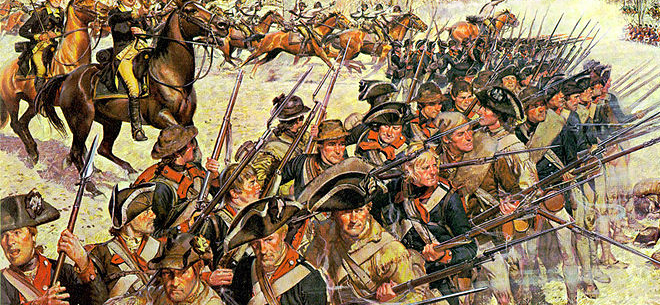
2. Yeah, why waste time on all of this “values” stuff? The Texas Board of Education will decide in the coming months whether to accept the recommendations of a working group to end state requirements that the heroism of the Alamo’s defenders be taught to seventh graders in a required history course, as as study of  William Barrett Travis’s iconic letter written before the final Mexican siege that killed all of the approximately 200 defenders, including Travis. The letter ends, “I am determined to sustain myself as long as possible & die like a soldier who never forgets what is due to his own honor & that of his country — Victory or Death.”

The group of educators and historians, tasked with streamlining social-studies standards, felt that teaching about “heroic” acts at the Alamo was “value-loaded,” and eliminating them from the curriculum, along with the significance of such Alamo figures as Davy Crockett and James Bowie would save 90 minutes.

You know, I don’t think I’m even going to bother explaining what’s wrong and alarming about this, except to note that if you wonder why our rising generations don’t understand what has been great about America, or why being a nation founded on values and ideals is important, this episode ought to enlighten you.

3. Beach ethics. Here is an interesting article about how to maximize ethical conduct at the beach. Continue reading

The Hitler Joke, Our Rights, And Our Nation

Prologue

When I was a junior in high school, I played Ko-Ko in  the Gilbert and Sullivan Club’s production of “The Mikado.” The head of the music department directed, a Jewish teacher named Mr. Einsig. He had the staging notes for all of the Gilbert and Sullivan works from the director who had gained great acclaim from his work with the Boston Light Opera Company, and I must admit, I cribbed many of that director’s ideas myself, through Mr. Einsig.One effective  staging concept was for the encores to “The Flowers That Bloom in the Spring.” Each one was performed as a different ethnic parody, with Ko-Ko singing translated lyrics. It began with Japanese, of course, then French, a Brooklyn dialect, and the biggest hoot of them all, German. I performed it, in my kimono, with an over-the-top Hitler imitation, complete with mustache, ending with an emphatic “Heil” gesture.

It brought down the house. Ten years later, at Georgetown University Law Center, I played Ko-Ko again, did the same Hitler parody again, and brought down the house again. Nobody complained. My late father, crippled for life in the fight against Hitler, detected nothing wrong with the routine. He also loved “Hogan’s Heroes,” with the show’s reluctant, inept, heiling Nazis, and the other Heil-filled spoofs of Hitler by Chaplin, Mel Brooks, and even the Three Stooges.

Now here is what happened to a private school teacher: read the whole, awful thing here. The short version: he was gesturing while explaining something in class, and noticed that his arm was raised Nazi-style, and said, “Heil Hitler,” jokingly. There was no question whether he was serious or not: everyone knew he was joking, and why he was joking. He even stopped and explained to the class that Once Upon A Time, in less enlightened eras, it was considered amusing to mock Hitler and the Nazis.

Ben Frisch, the teacher, a practicing Quaker  whose father was Jewish and who had two great-grandmothers  killed at Auschwitz, was fired by the private school anyway. The school principal who fired him explained his reason to the New York Times magazine  by saying, “One of our pledges is to make all of our students feel safe. And that is something that I take very, very seriously.”

Says the Times reporter in part in reaction to this: Continue reading

Roberto, Jackie, And The Irresistible Urge To Devalue Honors

Eventually almost all possible ethics issues will be explored in baseball commentary, if you wait long enough. They will also be explored incompetently, since the average athlete or sports journalist isn’t much more astute in the field than the average citizen, which means that the analysis will be dominated by emotion, rationalizations, logical fallacies, historical ignorance, and a vacuum in ethics generally.

This phenomenon was on display yesterday, which was Roberto Clemente Day in Major League Baseball. There is no doubt that Clemente was one of baseball’s all-time greats, and 18-year veteran who played his entire career with the Pittsburgh Pirates. He was inducted into the National Baseball Hall of Fame in 1973,  the first Latin American and Caribbean player to be so honored. Clemente’s legacy and reputation is burnished by the fact that he died in a plane crash while trying to bring humanitarian relief to earthquake victims in Nicaragua. He was 38 years old.

Yesterday, in an orgy of Clemente love, sportswriters and players on the MLB satellite radio channel were arguing that Clemente’s uniform number, 21, should be retired by all teams like Jackie Robinson’s number, 42, was retired. The theory: Clemente was as much of a trail-blazer for Latin players as Robinson was for blacks.

This is, to be blunt (I’m feeling blunt today) crap. Continue reading

Unethical Quote Of The Week: Fred Guttenberg…And An Integrity Test For Everyone Else

“Put out my hand to introduce myself as Jaime Guttenberg’s dad. He pulled his hand back, turned his back to me and walked away. I guess he did not want to deal with the reality of gun violence.”

—–Fred Guttenberg, the father of one of the Parkland shooting victims, on Twitter, trying to execute a disgraceful and transparent “gotcha!” to impugn SCOTUS nominee Brett Kavanaugh.

Sorry, Fred, but I know my Presidential history, and if a stranger offers his hand to me, especially in a hostile environment, my mind flashes back to when Leon Czolgosz used the ploy to assassinate President McKinley. That would be my reflection on “the reality of gun violence.” Of course, I don’t know that Judge Kavanaugh is a student of Presidential shootings, but I also don’t see any reason why “I’m Jaime Guutenberg’s dad” should have meant anything to him at all. It wouldn’t to me. Supreme Court designates are  required to have memorized the names of every shooting victim now?

The entire hearing where this occurred looked like a particularly badly-directed scene from an amateur production of “The Persecution and Assassination of Jean-Paul Marat as Performed by the Inmates of the Asylum of Charenton Under the Direction of the Marquis de Sade.” People were dressed up in costumes and screaming; Democratic Senators were grandstanding. Then a complete stranger comes up and offers his hand to the target of all of this hate and commotion.  The fact that Kavanaugh was wary well of his wisdom and judicial restraint.

Anyone who cites this obvious set-up as a relevant or substantive reflection on Kavanaugh’s character or fitness for teh Supreme Court has abandoned all shreds of fairness and integrity, and should be treated accordingly.

Let me be more specific: anyone who criticizes Kavanaugh for this is an asshole.

Take names.