History
The 87th And 88th Rationalizations: The Reverse 15 And The Psychic Historian
Translation: “I got nuthin’!'”
I haven’t been in tip-top shape the last several days, making new posts more of an ordeal than they should be. Luckily this motivates me to catch up on updating the Rationalizations List, which has several waiting additions, including these:
Rationalization #15 A. The Reverse 15, or “If I don’t do it ( and I don’t want to) somebody else will.”
The Reverse 15 uses exactly the same excuse as #15. The Futility Illusion: “If I don’t do it, somebody else will,” but for the opposite purpose. In #15, the rationalizer wants to avoid the consequences of doing something unethical by arguing that his or her refusal to follow orders would have no practical effect: someone else would just step in and do what was demanded anyway. How, asks the fictionalized version of Confederate Captain Henry Wirz in “The Andersonville Trial,” can a post-Civil War military tribunal fairly hold him responsible for cruelly mistreating the Union prisoners in the Georgia prison camp as he was ordered to, when if he refused he would have been shot, and his successor would have abused them anyway?
In 15A, the argument is the opposite. The rationalizer refuses to perform a necessary ethical act out of apathy, callousness or fear, but this was reasonable because he or she was certain that someone else would do the right thing instead. The Reverse 15 could also be called “The Kitty Genovese Rationalization,” recalling that the many people who heard the murdered woman’s screams chose not to “get involves” while convincing themselves that someone would come to her aid. All of the Mount Everest climbers who left a stricken colleague behind to die protested later that they were certain the next climber behind them (or the next, perhaps) would stop to help the man. We pass a stopped car in distress on the highway at night, reasoning that someone else will stop to help, sparing us the trouble.
Sometimes someone does. Sometimes not. This abdication of an ethical duty is accomplished by casting one’s lot, and gambling with the fate of another, while relying on the unpredictable quirks of moral luck. The only ethical decision is to take action. You must do what you know is the ethical act yourself, and not ignore your obligation because you can pass the buck and then argue, disingenuously, “How could I know that everyone else would be as unethical as I am?”
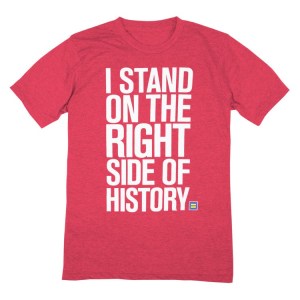
Rationalization #1B. The Psychic Historian, or “I’m On The Right Side Of History”
Morning Ethics Warm-Up, October 10, 2017: Post-Columbus Day Edition

Good Morning.
1 The rhetoric against celebrating Columbus Day is at bottom an attack on American values and the nation itself, making the case that the culture should bask in eternal guilt and shame for the crime of existing. It has always been thus: I heard the counter-Columbus claims when I was a kid and living in Boston, where you can’t throw a spitball without hitting an Italian or a Catholic. Then, however, there were sufficient numbers of responsible elected officials who put those ignorant and warped arguments in their place—the trash. Now, the path of least resistance reigns.
We celebrate Columbus because he brought European culture and civilization to the New World, making our nation possible. He was the butterfly flapping his wings in the Amazon, in Chaos terms: without Columbus, everything might be different. One thing that would not be different, however, is that the stone age cultures that lived in the Americas would not have prevailed, thrived and survived. Blaming Chis for the inevitable destruction of primitive cultures when more advanced and ambitious ones arrived, as they were going to with or without Columbus, is scapegoating of the worst kind.
We also celebrate Columbus because of the good and important things his first voyage symbolizes: mankind’s constant search for knowledge; the bravery of explorers; the visionary who dares to challenge conventional wisdom.
We have not, so far at least, renamed Martin Luther King Day as Victims of Adultery Day. Columbus was a man of his time, working for a brutal regime. He did many things that were wrong even by the standards of the time. Irrelevant. He opened the door from the Old World to the New, and made the United States of America possible.
That’s worth celebrating.
2. Robert E. Lee High School in San Antonio wins some kind of weasel award for responding to pressure to de-honor that racist slave-owner Robert E. Lee by renaming it LEE High School, with LEE being an acronym meaning Legacy of Educational Excellence High School. Pretty impressive, that: managing to be cowardly, irresponsible, and deceitful, all at once. Capitulating to the Left’s statue-toppling, historical airbrushing mania is wrong; doing so while not really doing it is worse. Keep recognizing the General, or don’t.
Who wants people like this teaching their children?
3. ESPN didn’t think it was necessary to suspend anchor Jemele Hill for tweeting that the President of the United States was a white supremacist, but when she dared to suggest that advertisers boycott NFL teams that forbade the kneeling stunt currently killing NFL fan loyalty, ratings, ticket sales and popularity, that really crossed some lines. The network suspended Weeks after she expressed outrage at the ownership of the Dallas Cowboys and Miami Dolphins for making a “No-knee” policy for its players.
“Jemele Hill has been suspended for two weeks for a second violation of our social media guidelines,” ESPN said in a statement. “In the aftermath all employees were reminded of how individual tweets may reflect negatively on ESPN and that such actions would have consequences. Hence this decision.”
Ethics Alarms is on record as holding that Hill should have been disciplined for the anti-Trump tweet, but I sympathize with her here. She had every reason to believe that she had received special dispensation to air her progressive, resistance, Black Lives Matter advocacy using her ESPN visibility as a platform, especially after Disney’s CEO admitted that she hadn’t been disciplined because she was black.
ESPN’s standards are as incoherent as the cause of the kneeling players. They send mixed signals to employees and viewers, satisfying no one, and creating a chaotic culture undermining their own business, which is, remember, covering sports. Continue reading
Comment Of The Day: “Bret Stephens’ Capitulation To New York Times’ Anti-Second Amendment Culture”
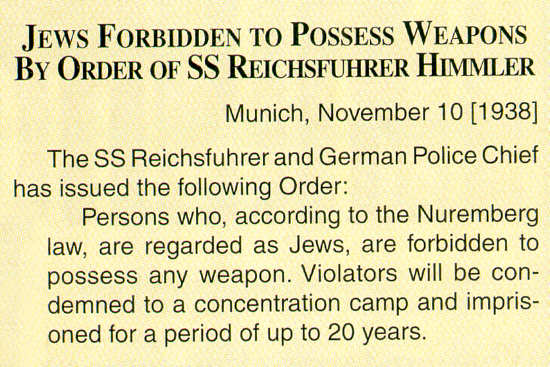
Well, to be fair, who ever heard of a Jewish militia?
Ethics Alarms commenter Mrs. Q is quickly becoming a favorite here, and her thoughtful and, as usual, refreshingly blunt commentary on the gun control debate shows why.
Here is Mrs. Q’s Comment of the Day on the post, Bret Stephens’ Capitulation To New York Times’ Anti-Second Amendment Culture…
“If the opposition disarms, well and good. If it refuses to disarm, we shall disarm it ourselves.”
-Joseph Stalin
***
“Given the FACT that per-capita death-by-gun rates are anywhere from 1,000% to 3,000% higher in the US than in any other civilized country:
IS THIS A PROBLEM? OR NOT?”
“…what is YOUR solution to what seems, at least to me, to be a rather large problem…”
—Charles Green (Ethics Alarms commenter)
***
Anti-2nd amendment enthusiasts and those in favor of the 2nd amendment have two different ideas about what ‘the problem’ is. Having once been very anti-gun to becoming in favor of the 2nd amendment (but not gun owner myself) was a journey that redefined what the primary ‘problem’ is.
Like many leftists I could unquestioningly retort gun “facts”. Certainly I still have concerns around gun violence, and generally pro 2nd amendment folks think gun violence isn’t a good thing either. So first off if we’re going to have a reasonable debate, we need to remember both sides care about people and life. It’s how life is preserved and who it needs to be preserved from – that makes the difference and defines ‘the problem’.
What began to change my mind was the view from those who were disarmed and suffered greatly for it. As mentioned in the post, Jews (and Germans) were disarmed before things got deadly crazy. In communist regimes the people, except for military, were disarmed. In this country blacks and Native Americans were disarmed and more easily murdered (When Bloomberg suggested, in 2015 that black men should be disarmed, we should have seen that as a bad sign). Let’s not forget that Wounded Knee was bigger mass murder than Las Vegas…
Now lets consider how many lives have been lost because citizens were forced to register their arms, were easier to find because of it, and eventually died because they couldn’t protect themselves and their families from tyrants. How many couldn’t have a gun in the 1st place and got killed? Would anyone like to crunch those numbers?
As a woman here’s another view: Rape in Europe is skyrocketing and making women vulnerable due to political correctness and a lack of self protection that would truly stop a predator. In December 2015 the NY Times noted the clear statistical connection between rapes and migrants. Kristin Rhode from the Oslo PD testified that Norway was unwilling to admit “this was a big problem.” Should women, gays, and others vulnerable to potential harmful ideologies wait for a reluctant government more concerned with the appearance of multiculturalism, to protect them? Is this what is meant by “civilized” counties? No. Their socialism is not protecting them. Continue reading
Putting Gun Control In Perspective: The Second Amendment’s Purpose, And How To Protect It

A guest post by texagg04
[The following is a rare guest post. The author is a previous winner of an Ethics Alarms commenter of the year award, which comes with the privilege of a guest post, though no winners have ever cashed their prize in. I decided this effort warranted special status beyond a Comment of the Day, in part because of its length, in part because of its immediacy, and in part because I think it should be read. Only Paul Peterson, the child performer advocate and a personal hero and friend, has been a guest commenter in the past.]
This topic fatigues me every time it arises. Watching the videos of the concert-goers simultaneously brought out two emotions, one of compassion and sympathy for the victims of the crime, and one of sheer “pre-exhaustion” knowing I’d be called upon to rehash all the same, solid arguments to counteract the emotion-driven “do-something-ism.” I’ve resisted wading into the debates because it is all so tiresome, though I have chimed in on occasion. But that doesn’t mean my mind hasn’t been wrestling with this crime, the 2nd Amendment, and the deeper philosophy behind it.
There are a handful of questions this debate inevitably boil down to. I will dispense with any notions that the 2nd Amendment exists for hunting or for fun, though those topics will arise shortly. No, we’ll start off on the honest premise that the 2nd Amendment exists as a democratization of force, where the Constitution, in a sideways manner, supplements the three branched checks-and-balances division of power, with a three tiered “balance of force”, where the National level retained control over the standing army, the States retained control over the Militias (when called out), and the People, armed, represented the lowest rung. And I am of the firm belief that the 2nd Amendment is STILL ultimately essential to liberty.
But that is really the first set of questions that the debate boils down to:
- Can good modern governments still go bad or can we trust modern republics to not go bad?
- How does one fix a bad government or a government on the way to becoming bad?
- Can the citizenry oppose and correct those governments without force or threat of force?
I think that a perusal of the modern history of Western Civilization would tend to show us that yes, governments can most certainly go bad. The blood-letting of Europe from 1917-1945 and the follow-on competition that ended in the early 90s is proof that democracies and republics can flip rapidly into tyrannies. I think a simple survey of contemporary nations will show us that a large number of people are subjugated beneath the yokes of dictatorships. But what of the “good” nations that have disarmed their citizens? They don’t seem to be tyrannical, they seem quite free without a mass of armed citizens forever poised to check them.
I can easily concede that they are relying on the benevolence of their current leadership. It is working fine. For them. Right now.
Still, the essential check on malevolent people with force is the actions benevolent people with force. European nations currently have generally benevolent people with authority over them. We already know, however, that this condition can change and can change rapidly. The peoples of other nations that descended into t oppression, as their culture and governments changed, thought they also lived in modern enlightened times, where tyrannies couldn’t happen to them. I’m moving to this segue because I think checks on these malign forces aren’t merely internal, but external as well. When the European central powers slipped into malevolent rulership, it was EXTERNAL forces of good that came and broke the dictatorships apart and restored the bad actors to republicanism.
I think a certain amount of “momentum” is maintaining that check on the rise of tyrannies in these disarmed nations with “benevolent” governments. That is, I think there’s still an aura of protection provided by the United States that deters any truly awful government from rising in Europe. Then again, that depends upon the presence of a benevolent people willing to use force to check the rise of a bad government. What then if the United States or other good actors stopped being good? I would submit that, disarmed, the people of Europe would have not one bit of ability to stop the rise of tyranny in their own nations.
So why does the United States seem to keep a government that is mostly good? (and it does, you naysayers) The answer is that it has a perpetual check against its getting out of hand: the armed populace. Does this political check absolutely require violent force or the threat of violent force? What about merely electing good actors to replace bad? What about protesting tyrants when they arise? What about petitioning the government for redress of grievances? What about speaking out freely against the dictators when they rise?
Those are all good measures to take when a citizenry must ensure it is in the right before a society slides past a point from which it cannot return from. All of them, however, rely upon a generally benevolent government that will pause and consider the grievances listed by its people. History shows that a rising dictatorship will not care, requiring the people to be more forceful in their demands than mere words can accomplish
Yes: governments, regardless of the advancement of the culture they preside over can still go bad. Yes, there are steps before a government goes bad to rectify the government without violence. No, if the government goes too far, the citizenry cannot fix the problem without violence or threat of violence. And if that the fix cannot come from benevolent outsiders, such as France aiding the colonists in 1776 or the United States and other Allies in World War II, then the citizenry is on its own. Sans firearms, the citizenry will have little recourse, for tyrants don’t care about protests.
This leads to other questions. Are some cultures content with domineering governments that we would consider overbearing at the cost of our security against tyranny? If so, would it be a solution to our “gun problems” to become more like those cultures? Are some cultures more vibrant and energetic and assertive, in such away that all the positives that derive from that vibrancy and assertiveness are inherently accompanied by a set of negatives such as violence and discontent? If it is necessary to solve the violence and discontent by also throwing out the vibrancy and assertiveness worth the trade off?
I don’t want to dive into this too deeply here. It just seems obvious that our culture promotes assertiveness and vibrancy, which generally inculcates an attitude in its people that the government needs to primarily keep out of our business. That attitude, taken to the extreme, is ultimately manifested in a people that must be armed to check the government, as per the opening paragraphs of this essay. Is the violence we see more often in this nation than in others a negative by-product of assertiveness, ambition or individualism? Now, before our resident Europhiles complain, yes, many Europeans are similar, but in general, (and I’ve been to Europe), I’m not impressed. Make no mistake, they enjoy their culture, I’m not expecting them to change it, I just don’t think it’s a culture we want to adopt here, and it’s certainly not one that is any position to oppose a government that decided to overstep its bounds.
That being said, the violence in our nation, though on average now decreasing, still produces extremely violent acts.
(To be clear, I’m speaking of American culture as those values it has traditionally held to, not the “objective” culture that vast swathes of progressives would love us to morph into, a culture which is essentially European in flavor).
Where these two lines of questions collide—that is, the necessity of the 2nd Amendment, and the mass killings that occur at disturbing frequency—it probably is worth revisiting the concept of “Arms” and the right to bear them. I am certain that the ability of the citizenry to check the government is worth the gun violence in America. But can any real steps be taken to alleviate the scope of the violence when it occurs? Because make no mistake, that’s really all we’re discussing when we discuss disarmament: “Fewer people are killed by a mass murderer with a knife than with a machine gun”. Got it. The dude’s still a mass murderer, and you are only trying to keep the kill count down.
There is something to that logic. Yet even though preservation of life is BUT ONE value among many that our Republic perpetually balances, it really doesn’t possess trump-card power over other values. So, if we are to seek “minimization” of casualties as a goal, it can ONLY be found within a solution that preserves the 2nd Amendment’s goals.
Before proceeding, I’m going to take a moment to rehash an essay that I wrote a while back, which discusses the 2nd Amendment (bolded line was not bolded in original):
““A well regulated Militia, being necessary to the security of a free State, the right of the people to keep and bear Arms, shall not be infringed.”
We know the final clause “the right of the people to keep and bear Arms, shall not be infringed” is, on its face, fairly plain-spoken. That these words are hotly debated is baffling, they seem clear and obvious to me. Certainly, an amount of ambiguity exists about “What did the Founders mean by ‘Arms’”? Other arguments can be made about the meaning of “people”…did the founders mean to speak to a collection of individuals with individual rights or to directly to collection itself. But those ambiguities aside, the clause is concise and clear — the people have a right to bear arms; by extension of the philosophy enshrouded in the Declaration of Independence, it would be a natural right.
A review of contemporary documents would show that the term “keep and bear arms” does apply to individuals separately, that bear arms means to carry and use (for a variety of purposes). If this meaning does apply to individuals, then we have the meaning of the term “people”. As for the Founder’s meaning of “Arms”, that debate can rage on. A reading of the Federalist papers and scant few other documents and understanding them would indicate that the Founders intent in the balance of force is that the common man certainly at a minimum has the right to bear an equal firearm to the standard infantryman. It would seem the heavier weapons were relegated to the control of the separate states and to the national army (although the vagueness of Arms at the time does allow a wider definition – but even I don’t think their vision meant for the private citizen to own a tank or a nuke).
The prior phrase “….A well-regulated Militia, being necessary to the security of a free State..” is where I think the Founders are truly eloquent and packed a ton of meaning into 13 words.
Some would tell us that the strong full time army is enough to secure our country from invaders, therefore a ‘militia’ is no longer necessary, therefore the people no longer need the right to bear arms. But the Founders didn’t say “a military necessary to repel invaders”, they said “security of a free State.”They knew all too well that an unchecked central army can easily secure a State… but they wanted a free State. They knew from firsthand experience that centralized force is the primary tool of tyranny, and that only a heavily armed populace was a check against that.
Alexander Hamilton states in Federalist #29: “but if circumstances should at any time oblige the government to form an army of any magnitude that army can never be formidable to the liberties of the people while there is a large body of citizens, little, if at all, inferior to them in discipline and the use of arms, who stand ready to defend their own rights and those of their fellow-citizens.”
Some would tell us the militias existed because the nation couldn’t fund a large full time military. The Founders didn’t say “…Militia, being necessary to alleviate the financial burden of a large Army, and at which point it becomes financially viable, we will say ‘the Army, being necessary for the security of a free State.”
In the same Federalist Paper, Hamilton does assert that the militia does alleviate the financial and social burden of a large standing army, while immediately following with assertions that even should a large standing army exist, the militia would continue as a check against it.
Some would tell us the Militia was meant to be just a supplement. And, yes, all though that is one role of the Militia, that is not what the clause “being necessary” implies. They knew that a free State CANNOT exist WITHOUT a Militia at all! The phrase doesn’t say “A well regulated Militia, sometimes helps for the security of a free State…”. The Founders distinctly say the Militia is NECESSARY to the security of a free State. Because free States are not just attacked from without, but also from within.
What do we glean simply from “…Militia, being necessary to the security of a free State….”
A) the Founders, based on their experience, knew that security means secure from the outside AND the inside
B) the Founders specified precisely what is being secured…a *free* State
C) the Founders specified a non-military entity known as the “Militia”
D) the Founders didn’t just say the Militia was useful, but NECESSARY
E) the Founders considered that no *free* State can exist without the Militia.Why all the emphasis on the militia and the citizen soldier versus a standing professional army? What is this “Militia”, what did the Founders mean by “A well regulated Militia…”?
The founders were certainly speaking about an organization of the separate people as a collected entity. But they understood that entity to be composed of everyone (yes, I know women and slaves etc didn’t count, but the spirit of the militia was that it was every individual). This, the collected, yet dispersed, force of *every* individual citizen, was the final force that was meant to be a check against the centralizing forces. A constant reminder to those wishing to impose non-republican and non-democratic will on the people, the militia and the right to bear arms (as individuals part of the whole) was viewed as indispensable to Liberty as the 1st Amendment, and all the others.
Since the earliest definitions of the militia clearly point to the notion that it is the entire body of the people derived from an INNATE duty of all individual citizens to safeguard the liberty of nation, I certainly do not think the National Guard or the Reserves or any of the armed federal agencies are the Militia. The various Acts and Laws forming those entities merely established professional standing armies, while co-opting the term “militia”. The militia – in terms of the necessary civic spirit of a vigorously liberty oriented people in opposition to the slightest pretext of centralizing and freedom-usurping forces – still and must exist.”
Okay, back on track:
I’m loathe to mention any compromises as the Left has demonstrated, for reason that a compromise today will merely be the next point to begin compromising tomorrow. I think that we can seek some fair solutions to minimizing the casualties wrought by bad actors while still preserving the 2nd Amendment. I won’t call these “common sense” regulations, as I think the term is employed as a dirty trick of the Left to avoid having to make an argument. And fellow Libertarians, follow with me here and don’t get angry, as I’m stifling a certain amount of anger merely pondering this.
Let’s assume a premise, that yes, as Americans we shouldn’t have to be told what we can do with our possessions nor should we have to be told we can’t have something we want. I get it. I get that firearms have traditionally fallen into that category, but I also think that modern generations look at firearms much more differently than the Founders did.
[I feel it: you’re already bristling that I’m about to suggest that indeed, within the category of firearms, there may be more than just machine guns that the government can tell us we don’t need to have.]
Our modern culture has increased the “recreational” aspect of firearms to probably a level that the Founders would have found somewhat…troubling…? I personally don’t think it’s troubling, because MOST people can be trusted to shoot recreationally. But then again, Firearms at their essence are TOOLS of VIOLENCE, originally for sustenance and defense (against Criminals of all types). We have, as a consequence of our material and territorial success, been able to increasingly spend more time shooting for fun, such as targetry or hunting, than we have needed to spend shooting for defense, or for essential sustenance. Nevertheless, you can’t divorce the modern luxury of shooting from its essential purpose. Any sport and recreation derived from that purpose still arises from practicing the skills necessary to utilize firearms as a TOOL of VIOLENCE. Though the guns are “fun”, this does mean they are in a different class of “possession” than, say, your car, or your house, or your laptop. It does mean that maybe they need to be thought about as different sort of property, and a kind that doesn’t get the automatic fruits of liberty pass of “I don’t need the government telling me what I can and cannot have”.
Though the firearms are private possessions and are…kind of fun…we can’t deny that there have to be some limits to firepower and potential destructive force individual can possess, at without expensive permits and registration: Crew served machine guns…rockets…missiles…grenades… etc. Perhaps even these kinds of “potential casualty” considerations can apply to our small arms as well.
Now that I’ve lost most of my libertarian friends, the few hangers-on can possibly let out a sigh of relief, because the compromises I’m going to suggest are going to be seen partly as grossly stupid by the Left and partly as something that may be workable. Conceded: here must be a balance between the 2nd Amendment and the casualties that can come from misuse of firearms.
First, magazines.
You don’t need a 100 round drum…you don’t need a belt fed bullet backpack. Yes, they are fun. Yes, they support recreationally blazing away a lot of bullets without a reload. And I get it, I know you don’t need someone telling you what you don’t need, but, no, you don’t need them as part of the armed citizenry checking the power of an increasingly tyrannical government, which is the goal of the 2nd Amendment. In fact, I’d submit, you only need what an average infantryman carries: which is 7-10 x 30 round magazines. This will probably cause vapors among the Left who wouldn’t be content with anything more than a 3 or 5 round magazine, while simultaneously causing vapors among libertarians who don’t want any limitations in this regard.
Tough. Your objections mean neither of you are considering the purpose of the 2nd Amendment. How does one actually enforce a limitation, not merely on magazine capacity, but on total magazines owned? I’m not sure yet, but maybe it’s possible. I’m more certain that magazine capacity CAN be easily limited to 30 round. I don’t think total magazines owned could ever be limited due to the ubiquity of them across the community, but that may be made moot by a later suggestion.
Rate of fire modifications.
Much has been discussed of “bump firing” or “bump stocks” after the Las Vegas massacre. Yes, they are fun. Yes, they support recreationally blazing away a lot of bullets. And it’s crazy fun. Yes, I know you don’t need someone telling you what you don’t need. But, no, you don’t need modifications that replicate fully automatic firing as part of the armed citizenry checking the power of an increasingly tyrannical government. The primary infantry weapon carried has 2 firing modes: single shot and three round burst (and I only ever heard leaders telling their men to use single shot mode and to make every shot count). If the day ever came that armed insurrection is necessary, it will not consist of Johnny Rambo and his machine gun blazing down uniformed lines of cops; it will consist of many citizens likely with the backing of local or state governments. Those groups of rebels will operate effectively enough with weapons firing at a rate typical of semi-automatic weapons. This will probably piss off the Left, who would rather us be limited to bolt action weapons, this will probably annoy libertarians. But I submit that you aren’t considering the purpose of the 2nd Amendment, and balancing that purpose against bad people killing a lot of innocent people. I think this would be noticeably easier to enforce than the first suggestion, certainly there will be ingenious people who will make their own modifications, but it isn’t that simple.
Now it’s time to really piss off some people:
Ammunition possession.
Could there be a way to limit the total amount of ammunition possessed at any one time, without the burdensome “barcoded” ammunition that has been proposed? I don’t know. I do know that you don’t need 10,000 rounds of ammunition stockpiled. Yes, it’s fun. Yes, it supports the recreational ability to burn off rounds all day long without pause. Yes, I know you don’t need someone telling you what you don’t need. But, no, you don’t need enough ammunition to replenish a battalion through several firefights at any one time. I think, during the Founder’s era, anyone, as a member of the militia, would have been expected to have an ample amount of ammunition—for themselves—to last through a sustained firefight. I don’t know the numbers, but my guess is that would range anywhere from 30-60 rounds of ammunition. But those were different weapons and different standards of “firefight”. I could see a modern argument being made that the average soldier would need about 2-3 “battle loads” available…with a battle load being about 210 rounds of ammunition. Could there be a way to limit citizens to possessing at any one time 500-600 rounds of ammunition, without imposing onerous and invasive regulations? If so, then I could support that limitation. So far, I haven’t envisioned such a scheme. If that makes you angry, I don’t think you understand the purpose of the 2nd Amendment.
I do know this much, whatever schemes are in place, I would NEVER support them if they didn’t support anonymity of individual gun owners. With the rabidity of the Left’s hostility to guns, I would never trust a list of gun-owners to be collected anywhere. But, for example, if a limitation were placed on ammunition possession such that individual’s purchases were tracked and summed up, I would expect some sort of system would be in place to protect the identity of the purchaser unless the limit was reached. Maybe every gun owner has a type of license, with a unique identification number, such that, when an ammunition purchase is made, the unique identification number along with quantity of ammunition is passed on to the regulators, but no names are passed on. Unless at some point the unique ID number has associated with it, MORE ammunition that permitted, then that may trigger going down to the ammo supplier and getting the name of the individual (which would be on any receipts) and determining if there is reason to pursue legal measures. Of course, I have no way of figuring out how the ammo purchaser would reduce the number of rounds on their account based on firing them off so that they stay below or at the permitted amount when they purchase new. It might be completely unworkable.
Those are a handful of random brain-stormed ideas regarding the hardware of the 2nd Amendment that might work to protect the purpose of the 2nd Amendment while minimizing the potential casualties wrought by bad actors. Even then, I think the compromises still fall on the side of us just having to accept a certain level of killing as being the price of our freedom. All of the suggestions really unworkable, in which case, I’ll always default closer to the absolutist 2nd Amendment side of the debate every time, because checking the government that is also the world’s last great hope is WORTH IT.
What about the behavioral side of the 2nd Amendment?
As much as “mental health checks” prior to gun ownership sounds good, I don’t think I could get on board. I can foresee a future in which all manner of questions could be asked specifically to deny the maximum amount of people the ability to own firearms. It’s too easy to abuse and too easy to make the questions politically (or even religiously) flavored.
“Do you think the 2nd Amendment’s purpose is for the possible overthrow of the government?”
“Yes”
“You’re a nutjob, license denied”
or
“No”
“Ok, then you don’t need a firearm. Next!”
I think responsible exposure to and education about firearms from an early age IS a key component of people respecting the role of guns in society, and avoiding that dangerous fantasy that they are some sexy way to go out in a blaze of glory. Would mandatory firearms classes in middle school and high school be so bad? I don’t think so. In fact, I don’t think you can be a responsible and complete citizen if you aren’t at least familiar with the function and employment of firearms.
Should gun owners periodically demonstrate safe handling, possession, and use of firearms? Yes. But I can only back such a requirement if anonymity is maintained at the lowest level possible. That is to say, the only people who know you are due for a “firearms test” are the locals. I cannot support this if aggregated lists of gun owners were made state wide, or national.
Beyond these possible measures I have suggested— I’m not even satisfied by them, as they may be oo difficult to enforce or too easy to become tomorrow’s benchmark for the next round of “common sense” compromises leading us ever closer to total confiscation— I doubt there are many others that are enforceable without the country becoming a police state. That we cannot allow. We may have to live with periodic casualties of liberty.
Assorted Observations On The Sandy Hook Ethics Train Wreck, Las Vegas Strip Edition

- I was serious about directing anyone seeking ethics commentary in reference to the Las Vegas massacre to all of the posts tagged with the Sandy Hook Ethics Train Wreck tag. So far, there is nothing new being said or proposed, just an unleashing of the same tactics, same fake “facts,” and same rending of garments and tearing of hair, whatever that is. I suppose this is healthy as a cultural release, though not in nay other respect. That tag wasn’t on this basic Ethics Alarms post, however, and it is the starting point for any of my commentary on gun control-related matters. The intentionally stark title: The Inconvenient Truth About The Second Amendment and Freedom: The Deaths Are Worth It.
Oh, hell. I’m just going to re-post it. Be back in a second.
There. It’s up.
- So much of the blather everywhere is naked virtue signaling. One commenter here who should know better wrote on one of the other posts that I was criticizing those who were decrying gun violence. Who doesn’t decry gun violence? Why is it necessary to proclaim the obvious? Oh, you really are horrified that 59 innocent people were killed and 500 were wounded? What a sensitive person you are! You are so good, I must take your insistence that we have to do something as a substantive contribution to the discussion.
Decrying senseless violence and wanting gut the Bill of Rights in response are not the same thing, not even close. The first is gratuitous and obvious, and the second is emotional and irresponsible.
- I would not be surprised at all if President Trump further muddled this already incoherent debate by endorsing some new (or old) gun control measures. He would do this, presumably, as he seems to make most decisions, from the gut, or the seat of his pants, or because it seemed like a good idea at the time. The chances that he has thought deeply about the issues involved are nil; the chances that he is familiar with the jurisprudence on the matter is less than nil. It would almost be worth it to watch the reshuffling of loyalties and support among the pundits and commentariat.
Real Nazis, after all, want to confiscate guns.
- Once again, the NRA is being vilified, with the disgusting “blood on their hands” cry. The NRA isn’t sort of like the ACLU; it’s exactly like the ACLU, but with more integrity. If only the ACLU fought to defend the First Amendment as vigorously as the NRA defends the Second. Organizations that take the extreme position on any of the sections of the Bill of Rights create a necessary counterweight to fanatics who would tear them out of our Constitution and culture.
The NRA is extreme. It has to be extreme. The ACLU isn’t extreme enough, and because it will not take an absolutist stance (Like late SCOTUS justice William O.Douglas, who repeatedly wrote that no restriction on speech was justifiable or Constitutional), it has made itself vulnerable to bias, and harmed its credibility.
- It is astounding to me—I guess I foolishly expect people to learn—that the eruption on the latest anti-gun fervor is again being led by ignorance, hyperbole and finger-pointing. The argument of the Federalist essay I posted the link to this morning should be clear as glass: making this a partisan issue guarantees that nothing will get done. Democrats sounding like they are seeking a slippery slope leading to the banning of all firearms guarantees no action whatsoever, dooming even reasonable measures. Forever. Do they really not understand this? Do they really want to try to fix the problem, to the extent it can be fixed? I wonder.
Progressives mostly refuse to read conservative publications like The Federalist. They would rather be pure and stupid than informed and effective. And this, my friends, is why Donald Trump is on his way to a second term.
- The tenor of much of the blather from elected officials and pundits reaffirms my belief that adulthood is a myth. I keep hearing various versions of the lament, “We can’t let this go on! How can we stop it from happening?”
Morning Ethics Warm-Up, 10/1/2017: Puerto Rico, Baseball Ethics, And Good Riddance To Hugh Hefner

Gooood Morning October!
1 And with October comes the wonderful post-season of that all-American sports that does not leave its athletes with brain disease, that requires some erudition and an attention span longer than a terrier puppy’s to appreciate, and that does not subject its fans to incoherent political theater as part of the price of watching a game. Yes, “it’s baseball, Ray.”
Yesterday the Boston Red Sox finally clinched the America League East title, the first time in over a century that this perverse team has won a championship in consecutive years. In other words, nothing can spoil my mood today.
There are a couple of baseball ethics notes, too:
- In Miami, Giancarlo Stanton has one last game to hit his 60th home run, which would make him the sixth major league to reach that mark in baseball history. Two of the six, Babe Ruth, whose 60 homers in 1927 stood as the season record for 34 years, and Roger Maris, the Yankee who broke the record with 61 in something of a fluke season, reached the mark fairly. The other three, Mark McGwire, Sammy Sosa, and Barry Bonds, were steroid cheats. Ever since Stanton caught fire after the All-Star break and looked for a while as if he would exceed 61, wags have been saying that he would become the “real” record holder, since the totals of Mark, Sammy and Barry ( 73, the current record, in 2001) shouldn’t count. Of course they should count. They have to count. The games were official, the runs counted, the homers are reflected in the statistics of the pitchers, the teams, and records of the sport. Bonds should have been suspended before he broke any records, but baseball blew it. Saying his homers (and Sosa’s, and McGwire’s) don’t count is like arguing that Samuel J. Tilden, Al Gore and Hillary Clinton were elected President.
Integrity exists in layers, and the ultimate integrity is accepting reality. The 1919 Reds won the World Series, fixed or not. O.J. is innocent in the eyes of the law, and Roger Maris no longer holds baseball single season home run record.
- In Kansas City, manager Ned Yost did something gracious, generous, and strange. The Royals, a small market team that won two championships with a core of home grown, low-visibility stars, now face losing all or most of them to big free agent contracts that the team simply cannot afford. Fans are often bitter about such venal exits, and teams usually fan the flames of resentment: better that the market be angry at the players than the organization. After Red Sox fan favorite Johnny Damon, a popular symbol of the 2004 World Series winning club, left for greener pastures in the New York Yankees outfield, he was jeered every time he came to bat in Fenway Park for the rest of his career.
But Ned Yost, who will be left with a shell of his team and a new bunch of kids to manage in KC next year, was not going to let the players who made him a winner depart amidst anger and recriminations. During yesterday’s 4-3 victory in front of the home crowd at Kauffman Stadium, Yost engineered an emotional curtain call for all four of the players who were probably playing their last games as Royals.
He pulled them from the game, one by one, all while the team was in the field or the player on the bases, so each could get a long standing ovation: Eric Hosmer in the moments before the fifth inning; Mike Moustakas with one out in the sixth. Lorenzo Cain for a pinch runner. Alcides Escobar in the middle of the seventh.
Nice.
And none of them took a knee on the way out…
2. I have been researching to find any objective reports that support the claim that the federal government and FEMA are not doing their best to help Puerto Rico. There aren’t any. There are plenty of videos of the devastation, but even the New York Times, which is the head cheerleader for anti-Trump porn, has only been able to muster headlines about the relief effort being criticized. All of my Facebook friends writing—it’s really dumb, everybody—about how Trump is uncaring as they signal their virtue by telling us how their hearts go out to the residents of the island literally know nothing about the relief efforts. They don’t know anything about the planning, the logistics, the problems or what is feasible. Nonetheless, they think they have standing to say that it is incompetent, or slow (which means, slower than it has to be), or, and anyone who says this better not say it to me, based on racism. Their assertions arise out of pure partisan bias, bolstered by convenient ignorance.
Vox’s Matt Yglesias, one of the knee-jerk doctrinaire leftists in the commentary world who does an especially poor job hiding his malady, attempted to take a shot at the Trump administration by tweeting,
“The US government supplied Berlin for nearly a year by air despite a Soviet blockade using late-1940s technology.”
This is only a valid comparison for the willfully obtuse. You can’t airlift electricity and water, or a communication and transportation infrastructure that is necessary to distribute supplies. Berlin was surrounded, but it had all of these. Continue reading
Call Me An Alarmist, But This Alarms Me Greatly: The Censorious On-Line Anagram-Maker [UPDATED]

In a recent thread—the context is unimportant—commenter Chris facetiously wrote that “Auntie Yang’s Great Soybean Picnic” is an anagram for “Hitler Did Nothing Wrong.” My mind working the way it works, and being incapable of anagrams myself, I immediately went to an online anagram generator, and typed in “Hitler Did Nothing Wrong.”
The page, Wordplays’ Anagramer, told me that there were no anagrams for that phrase, which is, of course, isn’t true. [UPDATE: See below] “Auntie Yang’s Great Soybean Picnic” isn’t one of them, but there are thousands, my favorite being (courtesy of a the ethical anagram generator here), “Deriding Hog-thrown Lint.” I always deride hog-thrown lint myself.
I amguessing that the only reason Wordplays refused to give me the anagrams I requested was that it decided that I shouldn’t have the right to even write or think the phrase “Hitler Did Nothing Wrong.” Somewhere in programming their site the social justice warrior totalitarians have decided that “bad words” and “bad ideas” can’t be used or thought about, even in jest. Even in an anagram!
‘First they came for “Hitler Did Nothing Wrong, ” and I did nothing. Then they came for “Deriding Hog-thrown Lint.”‘
This isn’t funny, this is scary. There is a large and growing segment of the American public, many quite powerful, who believe in social change by constriction of words and thought. They see technology as their ally, and those who run technology companies show every sign of being such.
These are enemies to democracy and our liberties as defined by our Founding documents, our traditions and history.
They aren’t enemies because they block anagrams due to their crippling political correctness and arrogance. That just means they are silly fools. They are enemies because they don’t think using their power to interfere with the speech and thoughts of others is wrong. They think they are doing good.
And if they can–if we let them—they will warp our culture using laws, intimidation, indoctrination and, of course, technology until everyone believes that controlling words and thoughts is good.
If you think this is just about anagrams, you’re dangerously naive.
UPDATE: Commenter/Blogger Windypundit, who is surely more savvy in these matters than I am, writes in the comments,
I went over to the Wordplays Anagrammer site to play with it. The thing is, I can’t reproduce your results. When I enter the phrase “Hitler Did Nothing Wrong” it displays hundreds and hundreds of anagrams.
Maybe it was just a glitch? …I thought maybe it didn’t work in some browsers, but it worked in all five I tried.
I don’t know what’s going on. I tried twice, and got a “No anagrams found” message. I will assume that it’s me, not them.
The general position of my post stands, however. Even if the web isn’t censoring anagrams, there is a lot of manipulation going on.
Many thanks to Windypundit for the research and the report.
____________________
Pointer: Chris
Comment Of The Day: “Given The Opportunity And The Power, Blacks Will Discriminate Against Whites…I Recommend “In The Heat OF The Night”….”

Once again, a Friday yielded multiple “Comments of the Day.” I’ve noticed this trend for some time, and have no explanation for it, but I am grateful nonetheless.
Here is Isaac’s latest Comment of the Day on the post,Given The Opportunity And The Power, Blacks Will Discriminate Against Whites, Women Will Discriminate Against Men, Gays Will Discriminate Against Straights, And Liberals Will Discriminate Against Conservatives, Because That’s What Human Beings Tend To Do. Now What? I Recommend “In The Heat Of The Night”….
What with the current generation being famously ignorant about just about everything and all, it’s a shame they don’t know much about the Rwandan genocide (there are countless similar tales throughout history, but Rwanda was only 25 years ago and you’d think it’d be fresh in everyone’s mind.) The oppressed can very easily, and very quickly become the oppressors.
The Hutu were every bit the marginalized, persecuted victims. Exploited for labor by Europeans for generations, forced to obey and serve the fairer-skinned, wealthier Tutsi minority. Treated as second-class citizens. Gradually discrimination against them became illegal and the Hutu gained equal rights, and protection against discrimination. The Belgians had cleared out and the Hutu and Tutsi had a chance to treat one another as equals, share the country, and put the past behind them, which the Tutsi were for the most part willing to do. The laws were in place, there was a shared government with a Hutu majority, and the stage was set for reconciliation, but the Hutu were still, on the whole, poorer and less educated by the Tutsi. There was intense resentment among them, constant dredging up of the past, and an unwillingness to wait until time and intermingling evened things out economically. And of course, politicians and media-types willing to stir up the racial enmity for their own selfish reasons. Sounds awfully familiar. Continue reading
Morning Ethics Warm-Up, 9/20/17: More Factchecker Spin, More Hillary (Unfortunately), And A Thank-You [UPDATED!]
Good Morning!
1 One comment thread over the last few days encompassed media fact-checkers and the consistent position here that they are intrinsically biased and untrustworthy. Law prof/blogger Jonathan Turley was so incensed (his term was “floored”) over one of the better factcheckers (Wapo’s Glenn Kessler) spinning for James Comey and against Trump press secretary Sarah Huckabee Sanders that he wrote a column for The Hill exposing it. (Hey! That’s MY job!) He writes on his blog about what prompted the column:
I have discussed previously how there has been a palpable bias in reporting on the Trump Administration. It is often that case that some journalists are not simply satisfied with disagreeing with the Administration. They sometimes take judgment calls or opinions and declare the Trump side to be simply factually incorrect. This relieves the need for readers to address the opposing view of controversies like the alleged misconduct of former FBI director James Comey. Those views are simply dismissed as untrue. This is a prime example.
The professor is right. It’s embarrassing. Read Turley’s whole piece, clearly prompted because Kessler refers to Turley’s repeated indictments of Comey (while saying that he does not believe Comey should actually be indicted). One respect in which the ever-polite and professorial Turley differs sharply from Ethics Alarms: he says that he has ” written for the Washington Post and [has] great respect for the publication. Indeed, I have objected to the attacks by President Donald Trump on the Post and the New York Times which remain two of our premiere journalistic organizations.”
Hmmm.
1) Turley obviously wants to keep writing for the Post, I guess, and 2) premiere members of a group that has become unprofessional and untrustworthy are still unprofessional and untrustworthy. Be that as it may, Turley concludes,
The Post concludes that the memos were, despite Comey’s denial, FBI material and that he violated FBI rules in removing and releasing such information. It also accepts that employees under Comey as director could well have been fired for such violations. It also agrees that the memos might have been either classified or privileged, even though there has been no final determination. Regardless, the Post awarded two Pinocchios for Sanders stating that Comey’s actions were “improper and likely could have been illegal.”
I have to give the Post two “Blue Fairies.” (I do not want to steal the Post’s Pinocchio signature motif so the Blue Fairy in the Disney story will do). After all, it was the Blue Fairy who said, “A lie keeps growing and growing until it’s as clear as the nose on your face.”
2. There are two items about Hillary Clinton in the Warm-Up today, because she is simultaneously a human ethics train wreck of a failed Presidential candidate, but also needs as little publicity for being so as possible. Continue reading
 Ethics Alarms
Jeff H. (aka King Kool), Glenn Logan and Tim Levier are, I believe, the longest-serving contributors here, all of them getting extra credit for following me from the days of the Ethics Scoreboard (still dead in cyberspace, but it will rise again!). Jeff has the extra distinction of being the blog’s resident cartoonist, and his contribution to “Everybody Draw Muhammad Day,” a teddy bear, can occasionally be glimpsed in the Ethics Alarms header.
This is not his first Comment of the Day. This time, he reflects on the folly of ever trying to guess where history is going, not to mention assuming that it will validate contemporary conduct.
Here is Jeff H’s Comment of the Day on the post, The 87th And 88th Rationalizations: The Reverse 15 And The Psychic Historian.
Is there anyone so young or devoid of baseball lore that they don’t get the Ted Williams reference? Jeff probably should have given a heads up…