Morning Ethics Warm-Up, 6/13/2018: Everybody’s A Critic!

Good morning!

(That almost came out “good monging”…not a propitious sign)

1.  Diversity ethics:  The concept that somehow there are sinister motives and undesirable results any time an occupation settles into a demographic mix that isn’t four-square with that of the general population is one more bit of ideological cant. In London, U.K, the mayor has decreed it a crisis that the population using bicycles is disproportionately white, and has  said he is considering setting diversity targets for London’s cycling population to ensure that “progress was achieved.” I liked Amy Alkon’s disgusted reaction to this whole issue, as she asked how  gender equality would be achieved in fields where women show little interest in participating for a variety of reasons, including a greater interest in a work-life balance. How is this artificial PC “diversity goal” going to be achieved, she asks…” Force women at gunpoint to become cardiologists, oil rig workers, and garbagepersons? Force men at gunpoint to become veterinarians and kindergarten teachers?”

Reader (and volunteer Ethics Alarms proof-reading czar) Pennagain just sent me an article about the relative lack of female movie critics (minority movie critics are also under-represented among Hispanics, blacks and Asians. (I would also bet that they are disproportionately gay, but the study discussed didn’t check that, apparently.) Now unlike, say, female  “garbagepersons,” female movie critics predictably have a point of view that would make a substantive difference in film reviews, so I cannot brush aside this particular imbalance with “So what?” Instead I will ask, “What’s stopping them?” Anyone can be a movie critic now: all you need is a website, some dedication, and, one hopes, some understanding of film and culture. Now, being paid as a film critic is a little trickier.

Here is the Wikipedia entry on the New Yorker’s Pauline Kael, still perhaps the most famous U.S. film critic, whose long-lasting prominence, success and influence (I hated her reviews most of the time–overly political and biased, with whole genres she didn’t understand—“guy movies” like Westerns and horror films, that she sniffed at as beneath her) should have inspired more women to enter the field, but didn’t. I presume there is a reason for that, such as that spending your life watching multiple movies a day including many you wouldn’t be caught dead at if it wasn’t mandatory isn’t an attractive career choice, especially if you want a family.

2. From my sexual harassment files...I just rediscovered this, a sexual harassment case I discussed in program for a construction company in the 90’s. An attractive woman who worked in construction (Diversity!) was walking to work with a co-worker when some boor from an apartment window shouted at her, “Hey, show me your tits!” The women misheard the remark, and shouted back, “Sorry, I don’t have any kids!” Her colleague thought th exchange was hilarious, and told her what the guy really said, He also told everyone on the construction site about the incident, and the woman was pestered from then on with men smirking as they made comments like, “Hey, can I see pictures of your kids?” I hear you have two beautiful kids!” “Why don’t you let your kids out more?”  “Boy, I bet you’re proud of those kids of yours.” The women tried to laugh it off, but the joke never died, even though she started telling everyone to knock it off. Finally, she complained to management, and was told that she was being silly and hyper-sensitive. She sued.

Was using the word “kids”  in a coded joke creating a hostile work environment, or did the court find that since the language itself was inoffensive and not sex-related, it couldn’t be sexual harassment? Continue reading →
Don’t Anyone Dare Tell Me They Are Surprised Bill Clinton Thinks Like This…

“I think the norms have really changed in terms of, what you can do to somebody against their will, how much you can crowd their space, make them miserable at work. You don’t have to physically assault somebody to make them, you know, uncomfortable at work or at home or in their other — just walking around. That, I think, is good.”

—Former President Bill Clinton in a clip posted by RealClearPolitics.

No, Mr. President. It was never acceptable to do things to people in your power against their will that made them uncomfortable in the workplace. Never. It was just common and legal for a long, long time, and powerful men like yourself reveled in exploiting and abusing women because they could. And nothing has changed about what was legal and what was not since you were President. The major change in sexual harassment law occurred while you were President, in fact. You just didn’t think the rules and laws applied to you, that’s all. Based on your recent comments, you still don’t think they applied to you.

What an astounding thing for this man to say. Continue reading →

Ethics Quiz: “Pop Hates The Beatles”

I actually remember this number. Alan Sherman was a briefly popular novelty act, a pleasant schlub who wrote not too terrible song parodies which he sang himself, badly. Had a hit record with “Hello Mudda, Hello Fadda” and a few successful albums. Ed Sullivan also inflicted him on America a few times. Continue reading →

A Lost Ethics Movie: John Ford’s “Sergeant Rutledge”

All right: not exactly lost, but certainly almost forgotten.  Released in 1960, “Sergeant Rutledge” was a daring Western with a racial justice theme well before Jim Crow had breathed its last. The iconic film version of “To Kill A Mockingbird” was two years from being made, and master director John Ford told the story of a black “buffalo soldier” wrongly accused of raping and killing a white woman and shooting an officer. The film was the first to feature the Buffalo Soldiers, the all-black cavalry units that continued through World War II, and was the first Western to feature a black protagonist. Sergeant Rutledge, played by the perfectly cast Woody Strode. Rutledge is innocent, but because he is black and a white girl was one of the victims,  he is presumed guilty. The prosecution in his military trial has blatant racist overtones, and Ford unsparingly focuses on the indignities imposed on African Americans in the unsettled frontier culture following the Civil War. In Strode, Ford had an almost too ideal star: everything about him is perfect. He’s brave, well-respected, professional, trusted and gorgeous: Strode was a magnificent former athlete who projected virtue quiet dignity in every film appeared in. I don’t think he ever played a villain.

The movie has some problems, including a Perry Mason-style resolution that is either over-acted, badly-acted, or badly-written: I couldn’t decide. It was also a flop, perhaps because the nation was more ready for the theme two years later, perhaps because Ford’s star was fading fast by 1960, but more likely because it had no major star like Gregory Peck  (or John Wayne, who was busy making “The Alamo”) to persuade audiences take a chance on an unusual film. It is Strode’s only starring role, and Hollywood was just beginning to cast Sidney Poitier in leads—Poitier was a far more versatile actor—in 1960. The other star is Jeffrey Hunter, best remembered today for making the original pilot for “Star Trek” as “Captain Pike.” Hunter never was a box office draw, though he was a strong second lead in Ford’s “The Searchers.”

Somehow the myth has grown that this was a film in which Ford, nearing the end, was “apologizing” for his previous racially insensitivity in other films. That’s revisionism. Ford made Westerns about cowboys and the West, and both were undeniably dominated by whites, with blacks in subservient positions. It’s not insensitive to be faithful to history.  Ford was, by the standards of his time, a progressive liberal, and the kind, apparently now extinct, who could still have close friendships and working relationships with conservatives, like Ward Bond, Walter Brennan, James Stewart and John Wayne. For example, Ford memorably stared down arch-Right director Cecil B. DeMille when DeMille was trying to get the Screen Director’s Guild to install a loyalty oath. Continue reading →

“Bombshell,” Hedy Lamarr, And The Duty To Remember

I alluded to Hedy Lamarr in an earlier post about my favorite celebrities, those who manage to be outstanding in multiple diverse fields at once. The glamorous cult actress is a prime example, being known publicly for her pulchritude and in much more rarefied circles as a brilliant inventor. I had been waiting for the release of the documentary–produced by Susan Sarandon!—about Lamarr, called “Bombshell: The Hedy Lamarr Story” ever since a friend and commenter here told me that it was in the works. Now it is on Netflix, and I watched it. You should too. I’ll just jot down some loosely connected thoughts about the ethics lessons of Lamarr’s life.

  • The sexual exploitation of young women in films may have been worse in the past than it is now, but Lamarr’s life is a reminder of how excruciatingly slowly cultures change. She was made infamous as the star of a sensational sex film in  Germany, shown naked, and also in an apparently explicit sex scene when she was too young (19) and naive to know what the director was doing.

The episode literally shadowed her life. Yet half a century later, very young actresses like Drew Barrymore and Dakota Fanning were similarly abused by directors, the main difference being that public attitudes now make the resulting stigma less permanent.

  • Antisemitism was sufficiently pervasive in the U.S. that Lamarr denied her Jewish heritage for much of her life.

Living a lie is not an ethically healthy existence, but Lamarr had few reasons to trust that she would be accepted for who she was….fewer than most, on fact.

  • There are few more vivid examples than Lamarr of a brilliant woman who rapidly learned that she had to rely on the favor of men based on her physical charms to have any chance of succeeding. Yet it is a bargain with the devil, for the price is not being taken seriously. The suppressed resentment and anger Lamarr reveals in interviews is palpable.

Sometimes I think it’s a mircale that women didn’t rise up and slaughter millions of men while they slept. They deserved it.

  • Hedy Lamarr is primarily remembered now as a running joke in “Blazing Saddles.”

Think about that. Continue reading →

How Does Any Administration Or Federal Agency Allow Someone This Incompetent To Represent It In Public?

I am both puzzled and aghast, if not necessarily surprised.

From the moment candidate Trump pledged that his theoretical administration would employ “the best people,”  he has periodically shown that he or his subordinates mistake “the best people” with “mouth-breathing idiots,  fools, and irredeemable slime-balls” with disturbing regularity. There was Omarosa. There was Anthony Scaramucci. There was Steve Bannon, and pathetic Reince Priebus. There was, of course, Michael Flynn, and is Scott Pruitt. And that is before we even start thinking about Michael Cohen.

I really don’t understand this. For all his flaws…and as Lorenz Hart said in “Pal Joey”…

…one would assume that a successful businessman whose hit reality show was about hiring “the best people” would have some acumen in at least not hiring the worst people. And yet we still get examples like this…. Continue reading →

Bill Clinton’s “Today Show” Rationalization Orgy: Res Ipsa Loquitur*

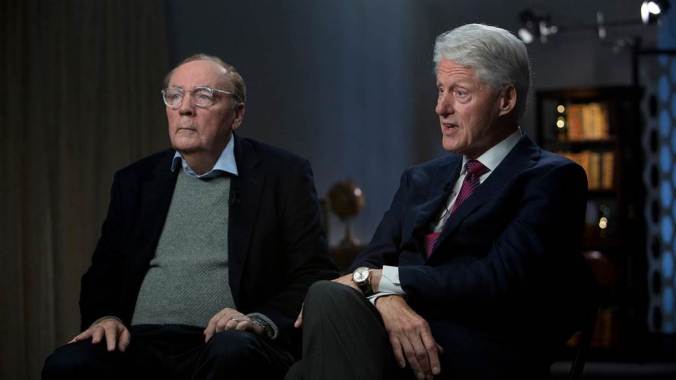
WordPress doesn’t let me embed any videos but those on YouTube, so you will have to click on the link to see Bill Clinton, being grilled on “The Today Show,” access a basket of rationalizations to minimize his wrongdoing in the Monica Lewinsky scandal. Co-author James Patterson (Bill is the latest neophyte novelist Patterson is teaming with for one of his cookie-cutter thrillers) even jumps in to add one.

I think I’ll leave it at that, and challenge Ethics Alarms Readers to identify the rationalizations Bill grasps at here. NBC’s Craig Morton should be commended for asking the tough questions, and not lobbing the softballs Bill expected.

The segment is here.

The Rationalization List is here.

*“The thing speaks for itself.”

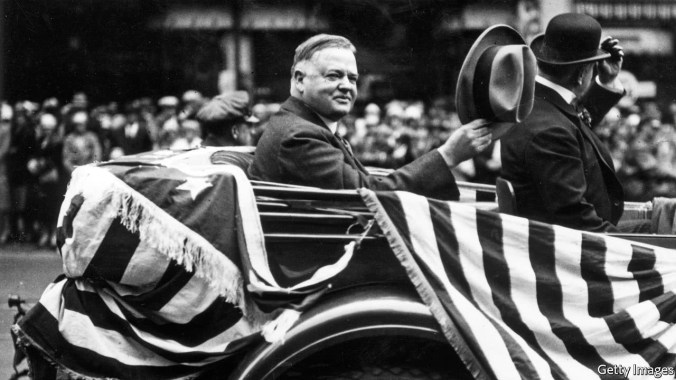
Sunday Evening Ethics Review, 6/3/18: A-Rod, Obama, And Herbert Hoover

Good evening….

1. Why is Alex Rodriguez on the ESPN Sunday Night Baseball broadcasting team? I’m watching the game (Boston at Houston), and I’m wondering, “There weren’t any ex-players who weren’t suspended for a full season for cheating with PED’s (banned performance enhancing drugs)?  There aren’t any ex-players who didn’t repeatedly lie to fans and sportswriters, and generally behave like a loathsome creep both on and off the field?”

Rodriguez will be up for membership in the Hall of Fame shortly, and he falls so short of the minimal requirements of the museum’s character clause that if it were a contest between A-Rod and Barry Bonds, Bonds would win in a landslide, and his election would provoke a major protest among living Hall members.

What kind of values does employing Rodriguez convey to kid viewing the game? What does it say about ESPN’s values, or Disney’s, its parent? Why does Major League Baseball allow a sociopath like A-Rod to represent the game on television?

2. And you thought Trump was a raging narcissist…Maureen Dowd has a damning column about Barack Obama that she muffles with equivocation, perhaps out of fear that Times readers can’t handle the truth, just like they can’t handle the results of Presidential elections. Some excerpts…

Shortly after Donald Trump was elected, Rhodes writes in his new book, “The World as It Is,” Obama asked his aides, “What if we were wrong?”But in his next breath, the president made it clear that what he meant was: What if we were wrong in being so right? What if we were too good for these people? “Maybe we pushed too far,” the president continued. “Maybe people just want to fall back into their tribe.”

This from the most tribe-obsessed, intentionally divisive U.S. President in memory.

“Sometimes I wonder whether I was 10 or 20 years too early,” Obama mused to aides. We just weren’t ready for his amazing awesomeness.

Ack. Gag. Obama was a largely incompetent President and ineffectual leader, and yet he accepts no accountability whatsoever. His failures were everyone else’s fault. Yecchh. The man’s character is  as offensive as Trump’s, just different.

“I couldn’t shake the feeling that I should have seen it coming,” Rhodes writes about the “darkness” that enveloped him when he saw the electoral map turn red. “Because when you distilled it, stripped out the racism and misogyny, we’d run against Hillary eight years ago with the same message Trump had used: She’s part of a corrupt establishment that can’t be trusted to change.”

Bad time to figure that out.

Ya think? Especially since Obama ‘s administration was corrupt itself, as Hillary’s prominent role in it amply demonstrated.

Obama did not like persuading people to do what they didn’t want to do. And that is the definition of politics. He wanted them simply to do what he had ascertained to be right. President Obama could be deliberative, reticent and cautious to a fault, which spurred an appetite for a more impulsive, visceral, hurly-burly successor.

Translation: Obama was weak, and Americans prefer strong Presidents.  He paved the way for Trump. And he doesn’t understand at all, because his courtiers and the suck-up news media would only tell him that he was wonderful…for eight years. Continue reading →

Ethics Quiz: Operation Paperclip

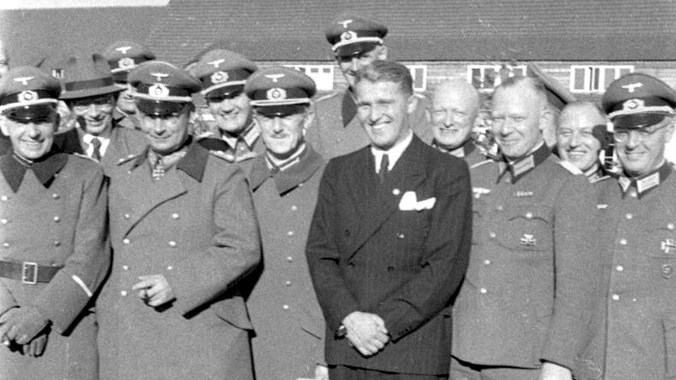
That’s Wernher in the nice suit…

In the previous post, I discussed the position holding that scientists should be shunned, and even blocked from grants and research opportunities, based on their character flaws, statements, and workplace misconduct.

Operation Paperclip was a secret program of the Joint Intelligence Objectives Agency that occurred between 1956 and 1959.  The operation  brought more than 1,600 Nazi German scientists, engineers, and technicians, most notably Wernher von Braun and his V-2 rocket researchers, plus their family members (bringing the total to over 6,000 Germans)  to the U.S. for government employment in the effort to gain a military and scientific advantage over the Soviet Union in the post-war world. The Soviet Union took their own selection of German scientists.

The Ethics Incompleteness Principle states that…

…when a system or rule doesn’t seem to work well when applied to an unexpected or unusual situation, the wise response is to abandon the system or rule—in that one anomalous case only— and use basic ethics principles and analysis to find the best solution. Then return to the system and rules as they were, without altering them to make the treatment of the anomalous situation “consistent.” No system or rule is going to work equally well with every possible scenario, which is why committing to a single ethical system is folly, and why it is important to keep basic ethical values in mind in case a pre-determined formula for determining what is right breaks down.

Your Ethics Alarms Ethics Quiz Of The Week: Continue reading →

Dick Tuck, Ethics Corrupter

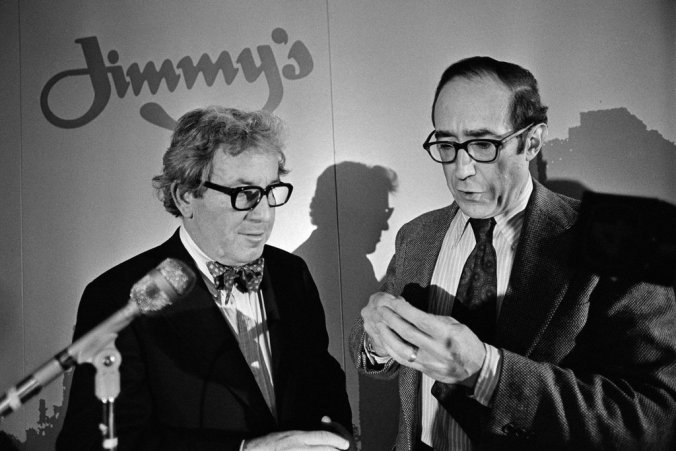
Dick Tuck, accepting an award from Democrats in 1973.

“Prankster-at-large,’ the New York Times pleasant obituary calls Dick Tuck, who died this week at the age of  94. He “bedeviled” Barry M. Goldwater, Richard M. Nixon and other Republicans, we are told. He was a “king gremlin of political shenanigans.” It all sounds so cute, so harmless.

This is inexcusable spin. Dick Tuck is the grandfather of such dirty campaign tricks as the infamous “Canuck” letter in 1972, and the “Pizzagate’ Hillary Clinton child trafficking rumor in 2016. He was an ethics corrupter, who “inspired” Richard Nixon to launch his own dirty tricks operation, a pioneer of political sabotage who helped make such unethical tactics as false flag operations and internet rumor-mongering the plague they are today. Nice job, Dick!

Writes the Times, admiringly… Continue reading →