Ethics Hero Emeritus: Irena Sendler (1910-2008)

Sendler

I missed learning about the death of Irena Sendler (Irena Sendlerowa) in 2008, and this occurred because the mass news media barely took note of it. Lots of celebrities died that year whose passing prompted extended mourning in the press and examinations of their legacies: Paul Newman, Heath Ledger, Sir Edmund Hillary (a member of the Ethics Alarms Heroes Hall of Honor), Charlton Heston, Aleksandr Solzhenitsyn, and many others. There was no room for a final appreciation of the life of Irena Sendler, apparently. Today, the website Bio.com doesn’t list her among the notable deaths of that year, though it finds room for Fifties stunt singer Yma Sumac—remember her? She had a four octave range! And Arthur Showcross: he murdered 11 women from 1988 to 1990 in upstate New York, earning the nickname “The Genessee River Killer.”

All Irena Sendler did was save 2500 children from the Treblinka death camp. Continue reading

Comment of the Day: “Of The Good Muslim, Paris, ‘1984’, And The Compulsion To Deny The Truth”

Mulsim women

Left-of-center Ethics Alarms follower deery gets a lot of heat on Ethics Alarms, but he has a much-valued knack for spawning edifying exchanges. In this reply to one of his comments arguing that Christianity and Islam near equivilency in their more extreme positions, Ulrike delivers the Comment of the Day, in the battle following the post, “Of The Good Muslim, Paris, ‘1984’, And The Compulsion To Deny The Truth.”

Here it is:

I’d like to make the claim that 1300 years ago, in almost any society women were the losers but now the distinction can be seen by anyone who has eyes. Christians moved on from those times and their nations became successful world powers. On the other hand, oil seems to be the main driving force behind anything in the Arab League.

And yes, in the beginning Islam had a positive influence on the scientific community in so far as it united the Arabic world which up to that date was splintered into tribes. Arabic became the lingua franca and facilitated the trade of knowledge and commodities. The Arabs become the driving force in translating ancient Greek literature – I could go on and on, the list is long, but I’m too lazy. So while we still lived like Neanderthals, the Arabic world had flourishing cities that were the trade centers of the Orient.

Now here’s the rub: The decline of science and the renunciation of modernity can also be attributed to Islam. How can that be, when I just stated that it was a major factor in the rise of science. Well, not Islam as a religion facilitated this rise but its role in uniting the arabic world economically and territorially. But when the Muslim faith came to be the established force behind everything and anything its disciples started to consolidate the belief that science was equal to renouncing Allah.

If you set yourself the task to name any invention in medicine, chemistry, physics or engineering from the last two hundered years that originated in the Arabic world – you have your answer which faith benefited progress more. Christian society developed towards modernity and Muslim society turned away from it… Continue reading

Five Ethics Observations On The US’s Paris March Snub

world-leaders-paris-march

In case you didn’t catch it, more than 40 world leaders joined the start of a Paris march for unity against terrorism and for freedom of speech, linking arms in a demonstration of solidarity. Even Netanyahu and Abbas were there! The Paris march may have included more than 1.6 million marchers before it was done, reportedly the largest demonstration ever. More than three million have now marched across France in response to the deaths of 17 resulting from extremist attacks in Paris last week, beginning with the executions of the staff of the satirical newspaper, “Charlie Hebdo.”

You would expect, and I am sure that the world expected, that the United States of America, reputedly the leader of the free world and the nation that most symbolizes the human right of free speech, would have participated in the event with enthusiasm, conviction, and prominence. But no. President Barack Obama did not come to Paris to join with his fellow world leaders. He did not send Vice President Biden either. Though Attorney General Holder was in Paris, he was not directed to attend the march, and did not.  The United States was only represented by its ambassador, who is not a world leader, and whose job it is to attend routine functions large and small.

Initially the criticism of the obviously intentional snub was muted, with the toadying mainstream news media, as has been its standard operating procedure since 2008, acting and speaking as if there was nothing amiss. Fox News, also as usual, was the exception, but since that network is isolated and pigeon-holed as a reflexive Obama critic “no matter what he does,” this was initially ignored as more right-wing carping. Then, to his great credit, CNN’s Jake Tapper took to Twitter to say  that he was “a little disappointed personally” at the lack of a strong U.S. presence, and in a later statement, escalating to saying that he “was ashamed.” He then wrote in an opinion piece…

“I find it hard to believe that collectively President Obama, Vice President Joe Biden, Secretary of State John Kerry, Secretary of Defense Chuck Hagel, Treasury Secretary Jack Lew and Attorney General Eric Holder — who was actually in France that day for a conference on counterterrorism — just had no time in their schedules on Sunday. Holder had time to do the Sunday shows via satellite but not to show the world that he stood with the people of France?

There was higher-level Obama administration representation on this season’s episodes of “The Good Wife” on CBS.”

Good for Jake Tapper, one of the few relatively objective broadcast journalists who is worthy of public attention and trust. Continue reading

Black James Bond Ethics

Fleming's Bond (l) and Bond-in-Waiting Idris Elba

Fleming’s Bond (l) and Bond-in-Waiting Idris Elba

There’s really no denying it: some conservatives have persistent hang-ups about race, and it undermines their more rational, perceptive views on other matters. A relatively trivial but revealing example occurred in the aftermath of the Sony computer hack by North Korea (or Hacker X). One of the revelations was that Sony, which owns the James Bond franchise, was seriously considering re-booting the character, currently played by the estimable, but aging, Daniel Craig, with a black  British actor (be sure to mock anyone who calls him an “African-American), Idris Elba.

If you are unfamiliar with Elba, you should watch the British series “Luther” on Netflix. He’s terrific: athletic, sexy, charismatic and passionate, not to mention his  aura of cold-bloodedness and danger—in short, perfect for James Bond. But Rush Limbaugh, apparently seeking to retroactively validate the title of Al Franken’s book, “Rush Limbaugh Is A Big Fat Idiot,” decided to use the threat of non-traditional casting to make liberal heads explode, his mission in life:

“That’s NOT who James Bond is, and I know it’s racist to probably even point this out: We had 50 years of white Bonds because Bond is white. Bond was never black. Ian Fleming never created a black Brit to play James Bond. The character was always white. He was always Scottish.”

It is hard to pack so much idiocy into five sentences, but Rush is up to the task. James Bond is a British secret agent: race doesn’t factor into the stories at all. We’ve had 50 years of white Bonds because that’s the conventional way of portraying the character, that’s all. Rush’s argument here is just “Everybody does it.” So what? James Bond movies are entertainment, and if an entertaining James Bond film can be made with Elba as Bond, and there is no reason in the world why not, then James Bond can be black. Continue reading

Comment of the Day: Prosecutor Ethics, “What The Hell Were You Thinking?” Dept: Dog-Whistling “Dixie” To The Jury

Dixie

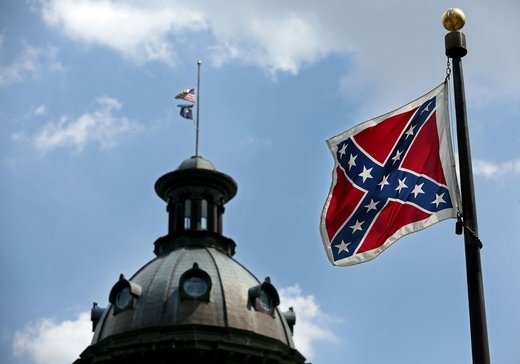
I will introduce this fascinating Comment of the Day by one of the blog’s masters of the long form comment, Chris Marschner,  by saying that I think it is only tangentially related to the post, though he would disagree. Chris is writing about the history of “Dixie” and why it should not be associated with racism. Whether I agree with that analysis or not, the fact is that the public does overwhelmingly associate the song with a longing for the simplicities of the Old South, when the darkies were singing in the cotton fields and those Northern folks weren’t sticking in their noses where they don’t belong. This is the basis of an Idaho court’s decision to overturn the conviction of a black defendant after the prosecutor gratuitously and needlessly quoted the lyrics of the song in her closing argument.  That decision was correct, because the issue is whether the comment could reasonably have been an appeal, or seemed like an appeal, or have had the effect of an appeal, to racial bias. I don’t think that conclusion is arguable.

Here is Chris’s Comment of the Day on the post, Prosecutor Ethics, “What The Hell Were You Thinking?” Dept: Dog-Whistling “Dixie” To The Jury:

The prosecutor failed her client – the people- not because she used the words of an 19th century song but because she failed to come to understand that history and culture of the US has been so bastardized that even an appellate court has no understanding and context of the origins of the song and the history and culture of the south. And, because of its misunderstanding believes the lyrics to be racially prejudicial.

“Maybe Erica is so young, color blind and historically ignorant that she had no idea that “Dixie” has been played at Klan rallies and used as the campaign theme for states rights, segregationist, white supremacy candidates since the Civil War. Maybe she didn’t recognize the cotton reference as racial.”

This song was written by a northerner named Daniel Decatur Emmett and performed in New York in an 1859 minstrel show by Emmitt in blackface. The reference to cotton is geographic in nature because cotton represented the primary agricultural commodity and wealth creator of the southern states – nothing more unless one is predisposed to finding anything related to the antebellum south as racist

Many songs have been coopted by various groups but to suggest that lyrics of Dixie are inherently racial because they are used by White supremacists is faulty logic. If a white supremacist adopted the image of Leonardo D’Vinci’s David or Venus d’ Milo or other classical work of art on their flag that would not mean that any such depiction suggests racial superiority. Continue reading

Prosecutor Ethics, “What The Hell Were You Thinking?” Dept: Dog-Whistling “Dixie” To The Jury

"Wait...WHAT did you just say??"

“Wait…WHAT did you just say??”

Canyon County Deputy Prosecutor Erica Kallin wanted to make the point that the defense attorney for the African American defendant, James D. Kirk, was trying to lead the jury to ignore the evidence that pointed to his guilt in his trial for lewd conduct with a 17-year-old girl and sexual battery of a 13-year-old girl—making them, in effect,”look away” from the truth. How could she make that argument in a vivid way? Clarence Darrow used to use poems in his famous closing arguments; was there a memorable poem that used the phrase, “look away”?

“Eureka!” Erica thought. She found it! So she said to jury deliberating on the case:

“‘Oh I wish I was in the land of cotton. Good times not forgotten. Look away. Look away. Look away,’ And isn’t that really what you’ve kind of been asked to do? Look away from the two eyewitnesses. Look away from the two victims. Look away from the nurse and her medical opinion. Look away. Look away.”

The jury convicted Kirk, on both counts; the evidence against him was indeed strong. He was sentenced to 20 years in prison. Continue reading

Comment of the Day: “Comment of the Day: ‘Hard Lesson Of The Walmart Tragedy: Bad Ethics Kills’”

Homefront-the-Revolution-592

My post about the tragic shooting incident in the Idaho Walmart continues to generate fascinating comments, not always directly related to the post. (Linking publications and websites to the contrary, I took no position on guns or gun control measures, though I have elsewhere on Ethics Alarms. The post’s positions were anti-incompetent gun ownership and anti-irresponsible parenting.) In the inevitable gun-related debates that have emerged, frequent commenter and blogger Shelly Stow opined that the need for guns to resist a government that attempts to crush individual freedom no longer exists.

This sparked the Comment of the Day, a history lesson as well as an explication for the need to have the last resort of armed revolution available, from 2014’s most prolific commenter, texagg04, and here it is, beginning with a quote from Shelly’s comment, on the post, “Comment of the Day: ‘Hard Lesson Of The Walmart Tragedy: Bad Ethics Kills’”:

“I disagree that, should our citizenry today become threatened by a government bent on tyranny, weapons in the hands of that citizenry would right the situation.”

Wait. What????

So, you are saying that IF we truly faced a tyrannical government at home THEN we aren’t supposed to do anything about it to overthrow it. And that’s precisely what you are saying if you think weapons in the hands of citizens isn’t the right situation.

What???? God knows in the face of a tyrannical government, sit-ins, hunger strikes, and demonstrations accomplish precisely nothing. Certainly no external forces would come to our succor — the UN, populated by precisely the kind of tyrannies we don’t want? No. Western Europe, which can’t even be bothered to solve it’s own problems? No…

Come now… Continue reading

The Ethics Conflict Of Chevy Chase’s Newlands Fountain and How To Resolve It

Chevy Chase Circle

Chevy Chase Circle is the official border separating the District of Columbia and Chevy Chase, Maryland. The inscription on the fountain at the center of Chevy Chase Circle honors Francis Griffith Newlands, saying, “His statesmanship held true regard for the interests of all men.” He was a three-term senator from Nevada,  serving from 1903 until his death in 1917, but more important to this controversy, founded the Chevy Chase Land Co., which created neighborhoods on the Washington and Maryland sides of the circle. Yes, the founder of Chevy Chase is honored with a fountain in Chevy Chase Circle. What could possibly be wrong with that?

The problem is that Senator Newlands was a racist, and a proactive one. He was a white supremacist who described blacks as “a race of children” too intellectually handicapped for democracy. In 1912, he attempted to have  the 15th Amendment, which granted voting rights to African American men, repealed. Not surprisingly, his vision of Chevy Chase did not include black residents, or Jewish ones for that matter.

The Advisory Neighborhood Commission that represents the D.C. section of Chevy Chase wants to remove Newlands’ name from the fountain, and has introduced a resolution calling on the D.C. Historic Preservation Office to rename the landmark “Chevy Chase Fountain.” The reason is his advocacy of anti-black policies.

This is a classic ethics conflict, a problem in which valid ethics principles oppose each other. There are so many conflicting ethical principles and objectives at work here: Continue reading

Remembering Christmas Music

nativity

It is slowly dawning on me that Christmas music, one of the annual joys of my childhood and perhaps yours, is in a perilous state, both culturally and aesthetically. The best of the songs musically are religious in nature, which means that schools won’t pass them along to their charges as happened routinely when I was a child, and even playing them on the radio is likely to be regarded as a religious statement. I just loved the music, as I think most kids would if they ever got the chance before they were brainwashed into believing the ancient songs were subversive.

A full court cultural press is underway to make those songs as rarely heard outside of church as hymns, and I don’t see the trend as reversible. One obvious bar to a comeback: current pop stars don’t have the pipes to sing most of them without causing a sound pollution emergency. Or, if one of the few singers who could actually hit the notes dared to cover a carol like “O Holy Night,” he or she would feel required to apply flourishes of the sort that make every rendition of “The Star Spangled Banner” at a major sports event an invitation to PTSD.

Even for the more secular Christmas repertoire, the clock is running out. The most listenable versions, and the definitive ones in most cases, are by performers of the past who are not just dead, but also long forgotten by the current culture. An hour of classic Christmas recordings on the radio is now a reminder of how old I am and close to joining great singers like Bing Crosby, Judy Garland, Andy Williams, Nat King Cole, Jo Stafford, Burl Ives, Gene Autry, Frank Sinatra, Dean Martin, Elvis—dead, dead, dead. I guess Brenda Lee is still alive, so “Rockin’ Around The Christmas Tree” is a little less depressing, but it’s a minor classic at best. It’s gotten so bad that when I hear “The Little Drummer Boy,” I find myself wondering if the whole Harry Simeone Chorale is dead too—Harry died in 2005, and the recording is 56 years old, after all.

Meanwhile, our post-modern culture is sneering at the whole idea of Christmas songs, and Christmas itself. Most modern Christmas songs either are making fun of Christmas, about sex, or just lousy. The tradition is being undermined in more creative ways, too: this week I watched a 2012 straight-to-video movie called “12 Disasters of Christmas,” based on the loopy premise that “The Twelve Days of Christmas” was really a coded recipe for stopping the 2012 apocalypse predicted by the Mayan calendar. “The Mayans knew that the knowledge would have to be preserved for centuries, so they devised a song that would carry the secret and would be passed on and learned by children for generations,” explains the old codger who’s figured it all out. (But why would they choose such a monotonous and stupid song?) Come on, guess: How does the “Chosen One” stop the end of the world? [Answer below.]*

The movie is on to something, though. The Christmas songs that have the best chance of persevering though this age of  cynicism and cultural illiteracy may be those that either tell a story  or that have an interesting one related to their creation. The simple and beautiful tune of “Silent Night,” for example, as one of those films they used to show in school assemblies every year before some anti-religious hysteric sued, was composed for guitar in response to a Christmas Eve crisis for a small church in the Austrian alps in 1818: the church organ wasn’t working.  I have found that Irving Berlin’s “White Christmas”  affects me far more deeply since I learned that the Berlins’ infant son died on Christmas day, and that while his children celebrated Christmas as a cultural holiday, Berlin and his wife did not. They spent each Christmas after their son’s death in mourning. The song is a wistful remembrance of a happier time that the composer will never experience again.

Maybe another Christmas song will persevere if its origins are remembered; I was reminded of its history this week as a result of the thaw in U.S. relations with Cuba. Though my wife hates it, the song is one of my favorites, perhaps because it brings back warm memories: I watched the song’s first national broadcast with my sister and parents, and the Marshalls bought the recording the next day.

It was 1962. Noel Regney and Gloria Shayne were a husband and wife songwriting team of modest success. They were saddened by the lack of any spiritual content in popular Christmas songs then; imagine what they would think today.

Like all Americans, they were petrified during the thirteen days of the Cuban Missile Crisis, when the world stood on the brink of nuclear annihilation. As the crisis intensified, Regney found himself inspired to write down a simple poem with a Christmas theme. (Later, the couple would say that neither of them could ever sing the song through, because of the strong emotions it recalled.) When the nation could finally take a deep breath of relief as the threat ended,  Gloria devised a melody for her husband’s words, though he had always been the composer when he and wife wrote songs together.

The result of this unique variation on their collaboration was recorded before the end of 1962, but it wasn’t until the following year, when Bing Crosby sang the team’s creation live on ABC’s  “Hollywood Palace,”  that it became widely known. The song written during the Cuban Missile Crisis became a best-seller, Crosby’s last hit Christmas record, and also the last popular Christmas song to have a religious theme.

It was, and remains, a prayer for peace.

____________________________

* By finding and wearing FIVE GOLDEN RINGS, of course!

On Its 100th Anniversary: Remembering The Great War’s Christmas Truce Of 1914

christmas-truce-1914-H

On December 7, 1914, as the horrible, pointless, world-disrupting “War to End All Wars”  was only five months old, Pope Benedict XV suggested a truce for the celebration of Christmas. The governments of the battling nations rejected the idea, but in the days leading up to  Christmas and after, many of  the soldiers in the trenches of this ugly conflict took the Pope’s advice.

On December 20, Germans soldiers in some areas took in British wounded from the no man’s land between the warring armies. A German soldier reported on December 22 that both sides had been heard singing Christmas Carols in the trenches. German troops arriving into the lines had begun bringing Christmas trees, and some men placed them on the parapets of the fire trenches. Then, on Christmas Eve, many German and British troops serenaded each other across the lines. Allied soldiers reported that sometimes their singing was accompanied by German brass bands. Then, Christmas Day, 1914, some of the German soldiers left their trenches and  carefully approached Allied lines, shouting“Merry Christmas” in French and English. Allied soldiers climbed out of their trenches, and shook hands with the men who had only recently been trying to kill them. Some even exchanged exchanged gifts of cigarettes and and food. There were even instances where soldiers from opposing sides played soccer: in England, one organization is holding a match next week against a German team to commemorate such contests. Continue reading