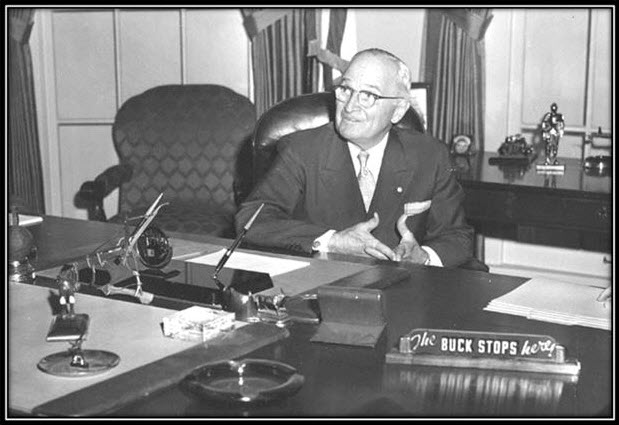
A Presidents Day Celebration (PART 1): I Love These Guys, I Really Do. Yes, Every One Of Them.

Hall of the Presidents

I have a lifetime love affair with the Presidents of the United States.

I love these guys, every one of them. The best of them are among the most skilled and courageous leaders in world history; the least of them took more risks and sacrificed more for their country than any of us ever can or will, including me. Every one of our Presidents, whatever their blunders, flaws and bad choices, was a remarkable and an accomplished human being, and exemplified the people he led in important ways. Every one of them accepted not only the burden of leadership, but the almost unbearable burden of leading the most dynamic, ambitious, confusing, cantankerous and often unappreciative nation that has ever existed. I respect that and honor it.

I have been a President junkie since I was eight years old. It’s Robert Ripley’s fault. My father bought an old, dog-eared paperback in the “Believe it or Not!” series and gave it to me. It was published in 1948. One of Ripley’s entries was about the “Presidents Curse”: every U.S. President elected in a year ending with a zero since 1840 (William Henry Harrison) had died in office, and only one President who had dies in office, Zachary Taylor, hadn’t been elected in such a year. The cartoon featured a creep chart—I still have it—listing the names of the dead Presidents, the years they were elected, and the year 1960 with ???? next to it. When Jack Kennedy, the youngest President ever elected, won the office in 1960, my Dad, who by that time was sick of me reminding him of the uncanny pattern, said, “Well, son, so much for Ripley’s curse!”

You know what happened. (John Hinckley almost kept the curse going, but Ronald Reagan, elected in 1980, finally broke it.) That year I became obsessed with Presidential history, devising a lecture that gave an overview of the men and their significance in order. My teacher allowed me to inflict it on my classmates.  Much later, Presidential leadership and character was the topic of my honors thesis in college. When I finally got a chance to go to Disneyland, the first place I went was the Hall of Presidents. When the recorded announcer said, “Ladies and Gentlemen, the Presidents of the United States!” and the red curtain parted to show the audio-animatrons of all of them together, it was one of the biggest thrills of my life.

Today I will honor our past Presidents with some of my favorite facts about each of them, trying hard not to get carried away. Is it ethics? It’s leadership, which has always been the dominant sub-topic here, but yes, it’s ethics.  I know I’m hard on our Presidents, as I think we all should be: supportive, loyal, but demanding and critical. I am also, however, cognizant of how much they give to the country and their shared determination to do what they think, rightly or wrongly, is in the country’s best long-term interests. File this post under respect, fairness, gratitude, and especially citizenship. And now…

“Ladies and Gentlemen, the Presidents of the United States!

Continue reading

Now THIS Is An Ad Hominem Attack! or “Boy, Is Howard Dean An Ass, or What?”

“True, Harry didn’t go to college, but he’s a Democrat.”

People commenting on Ethics Alarms constantly accuse me of making ad hominem attacks, when what they mean to say is “You’re name-calling.” I’ll cop to name-calling. It’s can be a bad habit, but it has its uses, best illustrated when President Ronald Reagan referred to the Soviet Union as an “evil empire.” The description was true, and it immediately focused values-based criticism on a government and culture that needed it and deserved it.

Ad hominem, in contrast, is a logical fallacy in which one attempts to counter a substantive argument by attacking the character or other aspects of the advocate that can’t possibly have any bearing on the argument’s validity. For example, “you’re uglier than a pug” does nothing to disprove the substance of your adversary’s position, even if he is. Similarly, Bill Cosby has argued, even before 34 women accused him of raping them, that his advocacy of black community responsibility should not be undermined because of questions about his own rectitude.

There is nothing inherently fallacious, however, about diagnosing the conduct or statements of someone as proof that he or she is a fool, or a liar, or a jerk. It may not be civil, and it may be unfair, but it is not an ad hominem attack. As I have  explained it before, if I say you are an idiot because I think your comments are idiotic, that is a legitimate, if rebuttable assumption. (I may also be using “you are an idiot” as shorthand for “you are talking/sounding/acting like an idiot, and should avoid that.”) If I say you are an idiot, and therefor everything you say must be dismissed and ignored as the rantings of an idiot, that’s an unethical debating technique, ducking the argument by impugning the advocate.

Distinguishing between these very different but similar-appearing phenomenon can be a problem when trying to be fair to someone whose prior statements and conduct have already generated a negative diagnosis, and thus a bias. I have concluded, for example, that Joe Biden is a dolt, that Michele Bachmann is not playing with a full deck; that Sarah Palin is intellectually lazy and irresponsible, that Newt Gingrich is manipulative and untrustworthy, that Bill Maher is a pompous, none-too-bright blowhard and that Howard Dean is a vicious and unscrupulous ideologue. Nonetheless, I have to fight to assess what they say on the basis of merit, not my well-considered assumptions. It’s hard. When an idiot asserts something, is it unreasonable to be more skeptical of the statement than one would if, say, a brilliant, credentialed, unbiased observer said the same thing? (Wow—I can’t think of a single one!) No. And this is why ad hominem attacks, especially coy, subtle, clever ad hominem attacks, work so well in politics.

This brings us to that vicious and unscrupulous ideologue, Howard Dean. Continue reading

Instant Ethics Train Wreck: The Alabama Gay Marriage Stand-off

What does Dred Scott have to do with the Alabama gay marriage mess? Absolutely nothing.

What does Dred Scott have to do with the Alabama gay marriage mess? Absolutely nothing.

This summer, the Supreme Court will again take up the issue of the Constitutionality of state gay marriage bans, having left the question open (why, I don’t know) after striking down the Defense of Marriage Act in 2013. Since that ruling, the states have been busy little bees, some passing laws banning same-sex marriage, some doing the opposite, then fighting out multiple appeals at various levels of the judicial system. Three things are certain: the cultural and legal acceptance of same-sex marriage looks unstoppable; all states need to agree on what a legal marriage is; and some faith-based same-sex marriage opponents will not give in until the last dog dies.

Beginning at the end of last week, a messy situation in Alabama involving all of these factors burst into a full-fledged ethics train wreck. The links in this post will let you immerse yourself in the mess if you choose: I’m going to try to be clear. Here is what has transpired so far:

1) A federal judge, District Court Judge Callie V. Granade,  struck down the state’s ban  on same-sex marriages in January and said that Alabama could start issuing licenses last week unless the U.S. Supreme Court stepped in and stayed her order. A stay was immediately requested by the Alabama Attorney General, who properly defended the state’s law.

2.) The 11th Circuit Court of Appeals refused to step in and stop her order from going into effect.

3) The U.S. Supreme Court also refused the stay request, allowing marriages to proceed in Alabama.

4) Roy Moore, chief justice of the Alabama Supreme Court, reminded everyone that probate judges report to him, not the federal judge and not the Attorney General, and do not have to issue marriage licenses to gay couples until he tells them to. He told them not to.

5) Some Alabama probate judges followed Moore, and some went ahead and issued the licenses. Mass confusion reigned.

6) Meanwhile, the refusal of the U.S. Supreme Court to issue a stay pending its ruling on state same-sex marriage laws later this year was widely interpreted as tantamount to SCOTUS deciding the case before it was even argued.

7) Justice Clarence Thomas, in a dissent from the  majority’s rejection of the stay (we don’t know what the vote break was), argued that “This acquiescence may well be seen as a signal of the Court’s intended resolution of that question. This is not the proper way to discharge our . . . responsibilities.”

8) Justice Ruth Bader Ginsberg, meanwhile, appeared to endorse gay marriage in an interview.

9) Attempting to break the impasse, U.S. District Judge Callie V.S. Granade ordered Mobile County, Alabama to start issuing marriage licenses to same-sex couples, paving the way for resistant officials across the state to follow suit, in a decision stating that the state’s ban on same-sex marriage had been struck down and that ­Mobile County’s probate judge had to adhere to that decision.

10) Chief Justice Moore remains unmoved, but now most of the probate judges are following the federal order.

Got that?

Good, now you can explain it to me.

What a mess.

Here are the ethics verdicts on the participants so far: Continue reading

The Eternal Ethics Conflict: Drawing Lines, Enforcing Them

cross-the-line

Yesterday traffic caused me to arrive a bit later than usual at my monthly gig as the instructor in the legal ethics portion of the D.C. Bar’s mandatory orientation session for new admittees. It was after 9 AM (my segment starts at 9:20), and as I approached the glass doors to the lecture hall lobby, I saw a distraught women angrily berating one of the D.C. Bar staff. I knew instantly what was going on.

You see, the courts approving the program insist that every attendee be there at the start: the doors close at 9, and anyone arriving late, no matter what the reason, is out of luck. They can’t attend the session, can’t get credit for it, and have to return the following month. That rule is on the website and in all communications with the Bar, along with the warning that there are no exceptions, and no effective excuses. Every month, someone misses the deadline; every month, that person goes ballistic. This women, however, was remarkable.

She had flown to D.C. on the redeye, she said. Her cab was stuck in traffic, and when she arrived in the cavernous Reagan Building where the day-long course takes place, she had ten minutes to spare. Unfortunately, the Reagan Building eats people. I have wandered its halls lost many times. I keep expecting to encounter a bearded, Ben Gunn-like figure who grabs my pant leg and jabbers about how he’s been trapped by the bewildering signage, and has been living off of Cub Scouts since 1992. The woman made it to the right hall in just 12 minutes, which is impressive without a GPS. But she was still two minutes late. Continue reading

Big Lies Die Hard

No, this was no way to pick a President..

No, this was no way to pick a President..

It is clear after nearly 15 years that bitter Democrats will always believe that the 2000 Presidential election was “stolen,” just as the losing parties in 1824, 1876 and 1988 claimed those elections were stolen. (In 1876, the election was stolen.) But as the cliche goes, while they have a right to their opinion, they do not have a right to their own facts. I understand why Democrats flogged this myth during the first term of the Bush Presidency—it was irresponsible, dishonest and divisive, and helped make political discourse the vile swill it is today, but I understand it. However, history should not be permanently warped by strategic lies.

The 2000 Election Big Lie turned up again today, in an indignant letter to the Washington Post. George Will had written a column condemning third party Presidential candidates for warping elections, using Ralph Nader’s quixotic 2000 run as an example and claiming that Nader cost Gore the White House. Will was wrong. Nader ran on his usual “pox on both parties” platform, and nobody knows how his voters would have split if he hadn’t run, or how many of them would have voted at all. Nader’s lawyer, Oliver Hall, protested against Will’s analysis in a letter to the editor, properly pointing out that a chaos-theory illustrating confluence of factors led to Gore’s narrow electoral college loss, not the least of which was that Gore was an inept candidate. (The person most responsible for Gore’s defeat, of course, was Bill Clinton.)

That correct interpretation, however, runs counter to the Big Lie, so partisan reader Bill Yue reiterated it today. His letter claimed that “the removal of any one of those elements ” mentioned by Hall would “likely have put Gore in the White House,” “for example, if the Supreme Court had allowed the recount to continue.” Continue reading

Some Final, Hard Words Before Kick-off

cteliving

I made this comment to the main post on the Super Bowl, and decided that the point is important enough to elaborate on a bit and post here.

I’ve  become depressed talking to people on Facebook and elsewhere about the post. They don’t even pretend to have a real argument. Some fall back on the same rationalizations I explored in the post: one guy on Facebook’s rejoinder consisted of writing, “why worry about this when Congress and the White House are full of liars.” And people “liked” that response, which makes no sense at all.  The rest of the determined Super Bowl fans say, “Yeah, you’re right, but I like football and don’t want to think about it.”  That just is not a rational, ethical response to learning that your support is perpetuating a corrupt system that is exploiting and hurting people. It isn’t.

The NFL is not on the same scale of evil as slavery (yeah, I know, but we need the slaves to keep our lifestyle, so I don’t want to think about it) or the Holocaust (Yeah, but I don’t know any Jews, and the country’s doing well, so I don’t want to think about it) or a daughter-molesting husband (Yeah, but he’s a good provider, and I love him, so I don’t want to think about it). Sure, this is a game, but the process of self-delusion, corruption and passive acceptance of evil is exactly the same. Tell me how it isn’t.

And you know, it takes a lot less sacrifice to stop making it profitable for the NFL to lie and pay young men unto dementia and suicide than it did to reject slavery in the South, or Nazism in Germany, or even for an abused wife to report her husband for raping their daughter…because it is just a game. You can live a very happy life, a full life, a fun life, without the NFL being part of it. It’s corrupting American society and you. Don’t you they see that?

I guess slavery and the Holocaust didn’t have cool commercials, so that’s something…

Ashley Judd, Hillary Clinton, and Celebrity Malpractice

Mount Rushmore

I had hoped to have my “Celebrity Code of Ethics” complete for this post, but it isn’t, so I’ll just allude to some of its likely provisions.

I like Ashley Judd, I really do. I’m not sure why she never became the reigning female light drama star of her generation; she’s every bit as good as Sandra Bullock or Julia Roberts, and that voice! Now she’s routinely relegated to repetitious action movies and will be playing Jennifer Lawrence’s mother any day now—oh well, that’s show biz. Judd is also more articulate and intellectually curious than the average celebrity, so it was with great pain and disappointment that I learned that she had recently said this, in an interview with Larry King, about the presidential prospects of Hillary Clinton:

“I think she might be the most overqualified candidate we’ve had since – you know, Thomas Jefferson or George Washington.”

Now, I don’t expect celebrities to be historians or experts on anything  other than their profession and areas of specialty. However, one tenet of celebrity ethics is the same as that of doctors: “First, do no harm.” That means, for someone like Judd, a celebrity has an ethical duty to recognize that a disturbing number of people think that because she is rich and famous, she is necessarily  informed, responsible and wise, as well as a role model, and therefore, unlike the usual drunk on a barstool, when that celebrity says something outrageously ignorant, stupid and misleading, hundreds of thousands of people believe it and align their own beliefs accordingly. That’s harmful, and doing it is unethical. Continue reading

Bias Check

Confirmation bias

Detecting and overcoming one’s own biases is one of the most important features of being ethical. “Bias makes you stupid,” after all, and stupidity can make you unethical. As the author of an ethics blog, this is of special concern to me, as I am constantly making choices that bias could seriously affect. Some of those choices include what issues and events have ethics components, which are most important to publicize, how should the ethical issues be analyzed, what conclusions are fair and reasonable, even how long a particular post should be, what authorities and references should be included, and what style—scholarly? humorous? bemused? indignant? outraged?—will best illustrate a point.

As regular readers here know, I can be harsh, often too harsh, when a commenter dismisses my commentary as partisan or ideologically motivated. First of all, it isn’t, and I resent the accusation. Second, it’s a cheap shot, essentially attacking my motives, objectivity and integrity rather than presenting substantive arguments. Third, it is a simpleminded approach to the world in general, and democracy in particular, and life, presuming that “there are two kinds of people,” and one type is always wrong, while the other type is always right. There is nobody I agree with all the time, and I am far from alone in that trait. People who agree with the same people all the time are not really thinking. They are just taking the easy route of picking sides, and letting others think for them.

Obviously, my approach to controversies, problems and ethical analysis are influenced by thousands of factors, including my parents,  my upbringing,  where I have lived,  teachers, friends, and family members, experiences, books, plays, movies and popular culture, interests  and passions (like leadership, American history, and baseball), what I’m good or successful at and I’m not, and so much else. These are not biases: once such influences mold your way of looking at the world and passing through life, they are, in fact, who you are. I’m comfortable with who I am. I just don’t want biases making me me stupider than I am.

Thus I am always interested in trying to identify where I stand on a the ideological scale. Some of my conservative friends think I’m liberal; all of my liberal friends think I’m conservative. Two sides again: I am confident that it is their place on the scale that leads to those perceptions. Today I encountered another test that supposedly divides liberals and conservatives sharply.  It comes from political scientist and philosopher James Burnham’s  1964 book “The Suicide of the West.” Burnham was one of those radical leftists who did a complete reversal in middle age and became an influential conservative theorist. You are asked to agree or disagree with these 39 statements, and the result reveals your ideological bent.

Here are the questions: Continue reading

Comment of the Day: “Ethics Alarms Encore: ‘Aesop’s Unethical and Misleading Fable: The North Wind and the Sun”

AESOPSFABLNever let it be said that we aren’t eclectic on Ethics Alarms! Today’s Comment of the Day is a thoughtful response to my objections to Aesop’s “The North Wind and the Sun,” a 2011 post that I republished this week in fascination over how it continues to draw traffic. The thread here and on the original has touched on many diverse topics, including theology; commenter Rich (in CT), however, just submitted the most interesting analysis yet.

Here is his Comment of the Day on the post, Ethics Alarms Encore: “Aesop’s Unethical and Misleading Fable: The North Wind and the Sun:

”The comparison of God and Satan in Job to the Sun and Wind is an apt comparison, because the fable relies on “divine privilege”. An exercise of divine privilege should not be taken as an example of behavior that non-divine entities should emulate. Rather, they are external parameters that set up a hypothetical environment to illustrate the lesson of the story.

I specifically say “lesson”, because the objective of the story need not be a superficial “moral”. The “moral” that was selected here was a lazy plot device by an author who attempted to pigeon-hole the fable into his limited definition of a fable. While the particular moral in the version you share is useless, the fable perhaps might better illustrate both the use of strategic thinking and well as illustrate the role of moral luck in one’s success. A more apt “moral”, if any, might be to be clever, but acknowledge the limit of cleverness.

Ethical behavior never takes place in a vacuum, but must balance certain principles with the current circumstances. In the fable, an arbitrary task is selected, and the two actors use the tools at their disposal to attempt to achieve the task. The wind has two tools: blow hard or soft; the sun has analogous tools: beat hard or soft. Given the task, arbitrarily set up as a competition, only one had tools that could creatively solve the task.

The tale here thus illustrates a few important principles that are of value to a child; creative use of ones tools can lead to success, and that not everyone has a every tool available. A non-lazy author might use the fable to teach the value of cooperation, pooling a group’s tools to complete a task.

The particular task is irrelevant, and is set up as an exercise of divine privilege. Mere mortals have no right to manipulate the weather, but the fable’s embodiment of the solar rays and moving air manipulate these elements in an ethically neutral manner. The selection of a mere mortal as a target of task, might be to lead the reader indirectly, through empathy, to the conclusion that some circumstances are arbitrary and beyond one’s control. The objective might be to teach humility, that one is never entirely responsible for one’s success, no matter how clever one might be.

I thus agree that the particular version of the fable shared is unethical. This is, however, the result of a lazy author. The premise, if used wisely, is ethically neutral; Aesop, or some other interpreter, could use the premise of the story to teach a valuable lesson if so desired.


The Destructive, Useful, Unethical Presumption of Bigotry, Part 2: The Oscar “Snub”

selma-4

For the second time in nearly two decades, and for the first time since 1998, the Oscars will be awarded to only white acting nominees. This, then, if you listen to the caterwauling race-baiters, is because Hollywood is racist. The Academy’s voters just hid it well since 1998, that’s all. Does that make any sense to you?

There are few more infuriating and transparently illogical examples of an unfair slapping down of the race card than looking for bigotry in the notoriously arbitrary, bias-soaked, essentially meaningless choices for “best” in the various Academy Award movie-making categories. Yet the race card sharks were up to the task.  Naturally, the authority on the subject was Al Sharpton, he whose own performance quality on his MSNBC TV show is so amateurish that it would be shut out in any community theater awards.

“In the time of Staten Island and Ferguson, to have one of the most shutout Oscar nights in recent memory is something that is incongruous,” Sharpton told The Daily News. Wait, what??? Incongruous is the assertion that the nominations for film-making excellence should be influenced in any way by how many blacks are killed resisting arrest. Anyone who finds that to be a logical argument for why more black actors should have been nominated for Oscars is useless to any rational discussion of the issue. I want a show of hands. Continue reading