When Evil Doesn’t Seem Wrong: The Post World War II Lobotomies

The recent, shocking discovery that the Soviet Union forcibly lobotomized thousands of World War II veterans when the battle-weary soldiers could not cope with the post traumatic stress created by the horrors of war reaffirms our convictions about the dehumanizing effects of totalitarian government.

Wait…did I say the Soviet Union? My mistake. It was our government that did this, and sent letters to their families like this one:

lobotomy instructions

From the Wall Street Journal this week: Continue reading

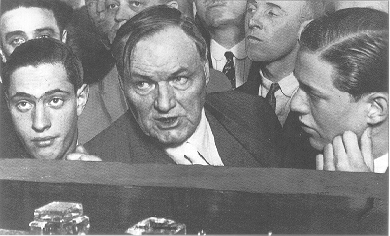
Perspective: The Trial of Nathan Leopold and Richard Loeb (1924), Clarence Darrow’s Closing Argument, And Judge Caverly’s Sentence

Darrow and his clients

Darrow and his clients

I just commented, on the controversial post here about Judge Boyd and the media frenzy regarding the “affluenza” defense offered by Ethan Couch’s lawyers, that the fact that so many of the comments, many of them angry, focused on the fact that a spoiled, rich kid got a break, or, as they used to say in the old days, mercy, that I began thinking about the famous Leopold and Loeb murder trial.   In 2011, I  posted a shortened version of Clarence Darrow’s famous closing argument in that trial, one of my favorite of all courtroom speeches, and it seems appropriate to do so again. It is far from a perfect parallel, but any excuse to revisit Darrow at his best is a good one.

 Nathan Leopold and Richard Loeb were, like Ethan Couch, young, rich and spoiled; they also were Jewish and gay. Their crime was  far worse than Crouch’s: they planned and executed the murder of a child just for the fun or it, and to show that they could outsmart authorities. (Ironically, they were arrested almost immediately). The two teenagers were charged with the premeditated murder of fourteen year-old Bobby Franks. Both defendants were brilliant students (Leopold, the youngest graduate in the history of the University of Chicago; Loeb, the youngest graduate of the University of Michigan),  and the sons of wealthy and successful Chicago businessmen. Neither showed any remorse for their terrible crime. There is no question that had they been poor, they would have been sentenced to die, and would have been hanged. Their parents, however, could afford to hire Clarence Darrow, a foe of capital punishment who had never had a single one of his often guilty clients executed. They got their money’s worth.

His summation on August 22, 1924, remains perhaps the most persuasive and eloquent argument against capital punishment ever made in a court or anywhere else.  It is also an argument for mercy, and especially mercy for the young. The plea worked: Judge John L. Caverly spared Leopold and Loeb, and he sentenced them to life imprisonment without parole—under the circumstances and in those days of rough justice, a gift. In his sentencing statement, which is posted here after Darrow’s summation, Caverly did not indicate that he was swayed by Darrow’s eloquence or reasoning. Caverly based his sentence on the ages of the defendants. Darrow was counting on this particular vulnerability of Caverly, who had helped establish juvenile justice courts in Chicago. Later, Nathan Leopold suggested that he and Dickie Loeb might have gotten the same result if they had simply submitted their birth certificates into evidence.

I doubt that he would have bet his life on it. The pressure on Caverly to hang these two despicable sociopaths was overwhelming, and having Clarence Darrow put his decision in such heroic terms had to steel his nerve, if it needed steeling. Still, as with Judge Boyd in the Couch case, there is no way to be sure that he would not have spared Leopold and Loeb anyway. Also as in Ethan Couch’s case, critics said this was disparate justice, bought and paid for.

This is a condensed version of Darrow’s closing,  edited for The Essential Words and Writings of Clarence Darrow, (2007),  that I co-edited with historian Ed Larson.  Here is one of the great orators of the 20th Century, one of the great progressive thinkers in our history, and the greatest trial lawyer who ever lived, arguing for the life of two murderers and for the soul of our civilization. I do not share Darrow’s absolute rejection of the death penalty, but I always do for a few hours, at least, after reading this. Continue reading

Sen. John McCain And Critics of “The Handshake”: The Pain Of Obama Derangement Syndrome

The Horror.

The Horror.

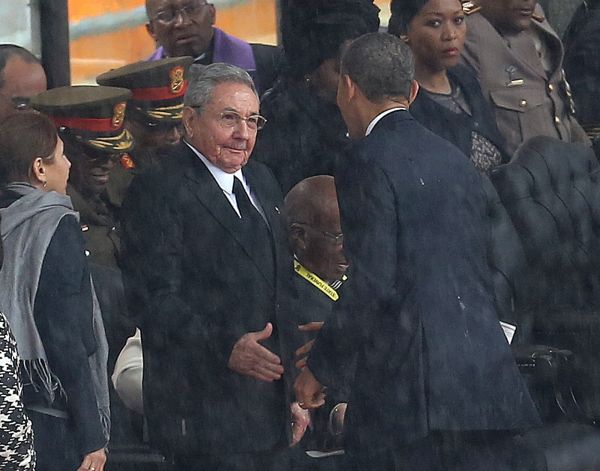
There are many, too many,  aspects of President Obama’s conduct of his office that deserve to be singled out for legitimate criticism. Shaking hands with Raul Castro at a non-political gathering of world leaders is not one of them. It’s not even close.

The fury with which Republican and conservatives large and small, prominent among them Sen. John McCain, have attacked the President for this obligatory, unremarkable and  essentially meaningless nod to civility shows that they are in full fever with Obama Derangement Syndrome, a crippling malady with antecedents in the Nixon, Reagan, Clinton and Bush 43 administration. Rapid psychiatric intervention is called for. In this instance, President Obama is blameless. He did what any responsible President would do, and what many before him have done. Continue reading

Nelson Mandela, John Brown, And The Perils Of Hagiography

Mandela

He wasn’t a saint. Is it unethical to say so?

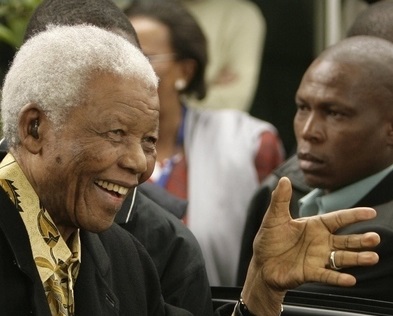
The truth made a surprising appearance where one should least expect it, MSNBC, yesterday. As the rest of the news media was awash in the sanctification of the late South African leader Nelson Mandela, former TIME reporter Richard Stengel, who worked closely with Mandela his autobiography, told shocked MSNBC hosts yesterday that the image of  Mandela being broadcast was, in fact, a false one.

“He was a pragmatic politician,” Stengal told “Morning Joe” that Mandela “wasn’t a visionary necessarily, he wasn’t a philosopher, he wasn’t a saint. But he never deviated from [his goal of overturning apartheid]. But anything that would get him there, he embraced, including violence. He created the violent wing of the ANC. And people don’t realize that and don’t remember that. We’ve kind of made him into a Santa Claus. He wasn’t. He was a revolutionary.”

The same day that Mandela’s death was reserved for testimonials and glowing remembrances, the website Buzzfeed had the impertinence to re-publish some of Mandela’s less Santa-like quotes, including praise for communism, communists, and dictators, and condemnations of the U.S. and Israel: Continue reading

The Onion’s Tragic Headline

“Nelson Mandela Becomes First Politician To Be Missed”

viewless…says the headline currently being sported at the Onion, the web’s preeminent satirical website:

JOHANNESBURGFollowing the death of former South African president and civil rights leader Nelson Mandela today at the age of 95, sources confirmed that the revered humanitarian has become the first politician in recorded history to actually be missed. “Today we lost not only an international hero and a symbol of the resilient human spirit, but also the very first political figure ever who people actively wish was still alive and affecting world affairs,” said political historian Wallace M. Delaney of Columbia University…

The Onion’s rueful satire may well escape millions of Americans as old as 40, because it probably seems tragically accurate. Continue reading

Ethics Quote Of The Week: Peggy Noonan

 “A fellow very friendly to the administration, a longtime supporter, cornered me at a holiday party recently to ask, with true perplexity: “How could any president put his entire reputation on the line with a program and not be on the phone every day pushing people and making sure it will work? Do you know of any president who wouldn’t do that?” I couldn’t think of one, and it’s the same question I’d been asking myself. The questioner had been the manager of a great institution, a high stakes 24/7 operation with a lot of moving parts. He knew Murphy’s law—if it can go wrong, it will. Managers—presidents—have to obsess, have to put the fear of God, as Mr. Obama says, into those below them in the line of authority. They don’t have to get down in the weeds every day but they have to know there are weeds, and that things get caught in them. It’s a leader’s job… to be skeptical that grand schemes will work as intended. You have to guide and goad and be careful. And this president wasn’t.”

—-Former Reagan muse and current pundit Peggy Noonan in a Wall Street Journal op-ed titled “Low-Information Leadership.”

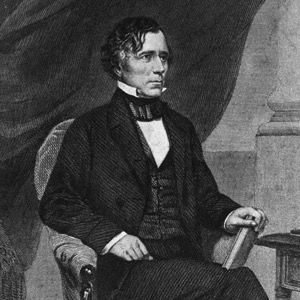
At least President Pierce had an excuse.

At least President Pierce had an excuse.

This is, of course, rank incompetence, but worse than that, it is arrogant, willful, shocking and frightening incompetence. It gives me no pleasure to say that I saw the signs of this years ago, for  years ago there was reason to be hopeful. Presidents learn, most of them, anyway. This one, without any experience to speak of in governing, management, leadership or even organizational process, not only hasn’t learned, but has never shown the slightest recognition that he has anything to learn. Continue reading

Being Fair To Harry Reid: This Began With A Borking

Blame the first domino, not the last one..

Blame the first domino, not the last one..

I generally revile Senate Majority Leader Harry Reid for his hyper-partisan leadership of the Senate, his unethical statements and his manner of conducting himself.  Still, I am bound to take this rare opportunity to defend Sen. Reid, who is taking the brunt of  criticism from both Democrats and Republicans for weakening the filibuster last week. True: he didn’t have to take this course, and I think it will probably, as the talking head shows Sunday seemed to agree, make the toxic and dysfunctional politics in Washington worse, not better. Reid, however, is not the primary one at fault. He was doing his job as he saw it, dealing with circumstances that are now beyond his control.

What led to the so-called “nuclear option” becoming reality was an unplanned convergence of Machiavellian politics, breaches of professional duty, dishonesty, irresponsible legislating, lack of statesmanship, unfairness, disrespect, bad luck, incompetent leadership, and most of all, a cycle of revenge that is now only likely to continue. Most of this was out of Harry Reid’s hands.

History shows that U.S. Presidents were once virtually always given the benefit of the doubt regarding judicial appointments to the federal courts, except in the rare cases of serious ethical questions or dubious qualifications. It was a good system, and the right system, and both parties followed it, realizing that the ideological mix in the courts was fluid and cyclical, and that today’s new conservative judge would eventually be offset by the appointee of the next liberal President, and vice versa. Democrats destroyed that tradition and accord on judicial appointments when in 1987, the Senate Democrats blocked President Reagan’s nomination of Robert Bork, who had been selected by President Reagan to fill a vacancy on the U.S. Supreme Court. Continue reading

My JFK Ethics Tale

 Shredded Files

As regular readers here  know, I am not an admirer of the character of John Fitzgerald Kennedy, though he had some notable leadership skills that I respect. His reputation as a great man and President is vastly inflated and, in a strange way, I may share some of the responsibility for that.

Several years ago, I had just completed an ethics seminar for the DC Bar. One of the issues I discussed was the lawyer’s ethical duty to protect  attorney-client confidences in perpetuity, even after the death of the client. An elderly gentleman approached me, and said he had an important question to ask. He was retired, he said, and teased that I would want to hear his story. I don’t generally give out ethics advice on the fly like this, but I was intrigued.

“My late law partner, long before he began working with me, was Joseph P. Kennedy’s “‘fixer,'” he began, hooking me immediately. “Whenever Jack, Bobby or Teddy got in trouble, legal or otherwise, Joe would pay my partner to ‘take care of it,’ whatever that might entail. Well, my partner died last week, and when I saw him for the last time, he gave me the number of a storage facility, the contract, and the combination to the lock. He said that I should take possession of what was in there, and that I would know what to do. Continue reading

Kaboom!*: Will All Those Who Deny The Existance Of An Anti-Conservative Bias In The Mainstream Media Explain….

"Hey, he killed the President---he was a Teabagger, right?"

“Hey, he killed the President—he had to be a Teabagger, right?”

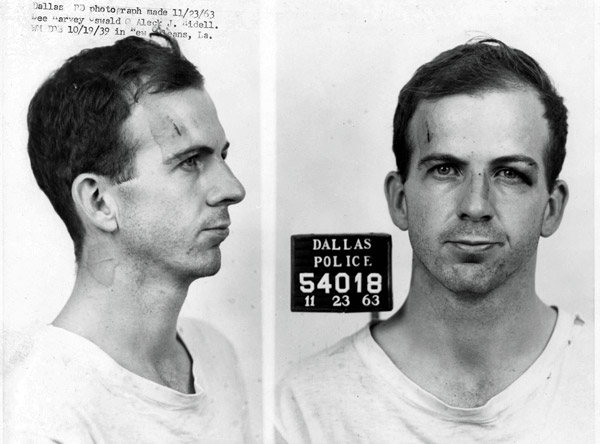
…how it is that both the Washington Post and the New York Times, in the days before  the anniversary of President Kennedy’s assassination, ran essays that link right-wing, radical, anti-liberal sentiment in 1963 Dallas with today’s conservative political positions? The Post, doing explicitly what the Times does slyly, even makes the connection direct. Its essay is called “Tea party has roots in the Dallas of 1963”—as in the implicit innuendos, ‘people like those in today’s tea party killed JFK’ and thus ‘the people who think like that probably want to kill this President too.’

We’re seeing a lot of liberal despair, nastiness and desperation these days, aren’t we? The instinct seems to be to lash out. Of course, one would think that competent, responsible  and fair editors of the two most prestigious U.S. dailies would read this tripe, hand it back to the authors and say, “Hey, go home, have a drink, and take a nap. It’s not so bad, really. Obamacare may be all right. We’ve got Obama’s back. Now, I’m going to do you a favor and forget you wrote this.”

But no. Continue reading

The Ethics Duncehood Of WaPo Blogger Eric Wemple, And Martin Bashir’s Forced Apology For, Uh, Saying That Someone Should Defecate In Sarah Palin’s Mouth

When is an apparent #1 class apology not good enough? Well, in the case of the matter at hand, there are two reasons.

The apology in question came from Martin Bashir, who, as I mentioned in a previous post, used his MSNBC show to suggest that Sarah Palin’s overblown analogy between the financial burden on future generations created by U.S. debt and actual slavery warranted her having to submit to someone expelling excrement into her mouth, and urinating on her as well. He really did say this. On the air. Carefully and deliberately.

See? Yet suddenly, after the weekend, Bashir was contrite, and delivered as elegant and sincere-sounding apology as one could imagine:

“I wanted to take this opportunity to say sorry to Mrs. Palin and to also offer an unreserved apology to her friends and family, her supporters, our viewers, and anyone who may have heard what I said. My words were wholly unacceptable. They were neither accurate, nor fair. They were unworthy of anyone who would claim to have an interest in politics, and they have brought shame upon my friends and colleagues at this network, none of whom were responsible for the things that I said. I deeply regret what I said, and that I have learned a sober lesson in these last few days. That the politics of vitriol and destruction is a miserable place to be, and a miserable person to become. And I promise that I will take the opportunity to learn from this experience.” Continue reading