An Ethics Lesson From the All-Star Game

It really is one of the most enduring sports deja vus—every year, sportswriters and fans engage in thousands upon thousands of words of complaint regarding baseball’s annual All-Star Game, the 2011 edition of which will occur tomorrow night in Phoenix. This year was no exception, and as is always the case, no consensus or conclusions were reached, except that everyone agrees that the game is mishandled, mismanaged, unfair and illogical in every possible way.

I have been thinking of the game’s plight as an ethics case study that proves a core truth: you can’t do the right thing if you don’t know your objectives, stakeholders, and how to prioritize them. In the All-Star Game as it has evolved, there are competing interests and stakeholders with no clear agreement regarding which takes priority over the other. It is literally impossible to do be fair: somebody always will be disadvantaged, and because there is no single objective either, utilitarian balancing doesn’t work.

It was not always this way. When the All-Star game was first conceived in 1935, it was intended to raise money for the players’ pension fund, the players then being generally paid little more than grocery clerks.  Since the game had to draw as much of a paying crowd as possible to make money, the rosters and starting line-ups were constructed to include the biggest stars and most popular players. It didn’t matter whether Babe Ruth was off to a great start or not: it wouldn’t be an All-Star Game without him in the starting line-up, so he was the right-fielder. Managers picked the team that they thought would both be the “starriest” and that would give them the best chance to win the game. Continue reading
The Ethics of “No-Body” Murder Prosecutions.

Oh! THERE's the body!!!

Texas lawyer Robert Guest has opined that a Texas jury would have convicted Casey Anthony in a heartbeat, and cites as proof the February conviction of Charles Stobaugh in Denton County. He was accused of killing his  estranged wife, though no body has ever been found at all.

Maybe.  There are a lot of differences in the circumstances of the two cases, not the least is that finding a badly decomposed body with a piece of electrical tape across her mouth has a big advantage over never finding any body at all: at least you are certain that the victim is dead.  Stobuagh, like Anthony, engaged in a pattern of lies and strange statements; for example, he suggested that his wife, who suddenly vanished and stopped using her bank account, credit cards and cell phone, was “playing a prank.”  He also began seeing a new girl friend more or less the moment his wife vanished. I’d say the biggest difference is the presumption of a motive: husbands killing their wives, especially their estranged wives, is a common and well-recognized form of homicide, with a motive that any married person immediately understands. A mother killing her young child, in contrast, is very unusual, and the presumption is that no mother would do it. The Anthony prosecution was more difficult than the prosecution of Stobuagh, even with Caylee’s body. Continue reading

“Professionalism?” What’s THAT? Julie Chen, CBS and the Descent of Broadcast Journalism

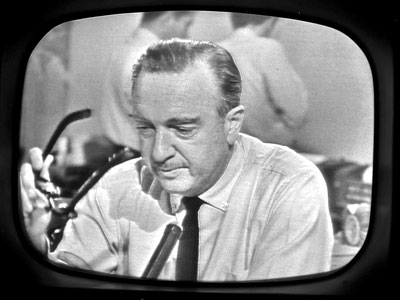
Walter could keep it together. Not Julie Chen.

The Casey Anthony verdict is doing some good: it is exposing the awful deficit in objectivity and professionalism in the broadcast media.

The latest example: while CBS’ “The View” rip-off, “The Talk,” was underway,  viewers saw co-host Julie Chen break down as she tried to read the news that Casey  Anthony had been found not guilty of killing her daughter Caylee. Chen attempted to read the verdict, but was overcome with emotion  and was unable to continue, asking her co-hosts,  “Help me out here.”

In 1937, radio broadcaster Herbert Morrison was correctly criticized for being unable to keep his composure and report the flaming destruction of the zeppelin The Hindenburg without weeping and becoming unintelligible. In 2011, a woman described in her official bio as a “news anchor; reporter; and journalist” couldn’t compose herself to read the news of a not guilty verdict. Continue reading

Ethics Heroes: The Casey Anthony Jury

America saved Casey Anthony, and we should be glad it did.

A Florida jury pronounced Casey Anthony not guilty of murder, aggravated child abuse or aggravated manslaughter in connection with the 2008 death of her two-year-old daughter, Caylee. It did find that she had lied to investigators and police, which was well-established during the trial.

Did she murder her daughter, as the prosecution claimed? Oh, sure she did; I don’t think any of the jury members will be asking Anthony to babysit for their kids any time soon. But the case against her was circumstantial. She was proven to be a liar, irresponsible, feckless, self-centered, deluded and callous, and the prosecution’s theory made a lot more sense that the defense’s alternative scenario. Still, there was not enough evidence to find Casey Anthony guilty of murder beyond a reasonable doubt. That’s the standard, not “it’s almost certain that she did it.” Despite all the media pundits who said it would be a slam-dunk conviction, despite all the community sentiment to make the party girl mother pay with her life for killing her child, the evidence to meet the intentionally tough standard of American justice just wasn’t there.

Already, reporters and commentators are comparing the verdict to the O.J. Simpson trial. Wrong. Continue reading

Ethics Quote of the Day: The Washington Post

OK, Tea Party, this should be right up your alley.

“We hope that some members of Congress’s new “Tea Party Caucus” can make it down to the fireworks Monday night. It might be a good time to reflect on the primary motivation for the original Boston Tea Party, which was that Americans should not be taxed by a government in which they had no parliamentary representation. That right to a voting representative is still denied to all who live in the nation’s capital, and some of them must be wondering why members of Congress who so revere the Founders haven’t done something about it.”

The Washington Post editorial board, in a “footnote” to its editorial about the enduring importance of the Declaration of Independence.

Little more needs to be said. The fact that the citizens of the District of Columbia, who number more than the populations of several states, are unrepresented in the House and the Senate is beyond disgraceful. Yes, there are troublesome issues to be worked out. It is also clear that if the either political party placed a higher priority on fairness and self-government than it did on political considerations, the problem would have been settled by now—after all, the District has been without representation for more than 200 years.

Most of the blame, however, goes to the Republicans, who have been obstructing D.C. representation for the most naked of self-serving motives: it is a predominantly African American, knee-jerk liberal city, and would surely contribute two Senators and one Representative to the Democratic cause. (This is also an example of a self-fulfilling prophecy, since the memory of how the GOP blocked its citizens from the most basic American right will and should keep the District deep blue until the stars turn cold.)

Well, too bad: the fact that most DC residents are Democrats is no excuse for keeping them from meaningful participation in national lawmaking. The Post is exactly right: if the Tea Party has integrity and is true to its principles, it will firmly endorse representation for the District of Columbia. This would also have the beneficial side effect of ending the liberal trope that the Tea Party is racist at its core. The main reason for doing it, however, could be more obvious. It is the right thing to do, and overdue as well.

Ethics Quote of the Era: Thomas Jefferson and the Continental Congress of 1776

“We hold these truths to be self-evident, that all men are created equal, that they are endowed by their Creator with certain unalienable Rights, that among these are Life, Liberty and the pursuit of Happiness.–That to secure these rights, Governments are instituted among Men, deriving their just powers from the consent of the governed, –That whenever any Form of Government becomes destructive of these ends, it is the Right of the People to alter or to abolish it, and to institute new Government, laying its foundation on such principles and organizing its powers in such form, as to them shall seem most likely to effect their Safety and Happiness.”

—-The Declaration of Independence, authored by Thomas Jefferson, edited, ratified and signed by him,  Button Gwinnett, Lyman Hall, George Walton, William Hooper, Joseph Hewes, John Penn, Edward Rutledge, Thomas Heyward, Jr., Thomas Lynch, Jr., Arthur Middleton, John Hancock, Samuel Chase William Paca, Thomas Stone, Charles Carroll, George Wythe, Richard Henry Lee, Benjamin Harrison Thomas Nelson, Jr., Francis Lightfoot Lee, Carter Braxton, Robert Morris, Benjamin Rush, Benjamin Franklin, John Morton, George Clymer, James Smith, George Taylor, James Wilson, George Ross, Caesar Rodney, George Read, Thomas McKean, William Floyd, Philip Livingston, Francis Lewis, Lewis Morris, Richard Stockton, John Witherspoon, Francis Hopkinson, John Hart, Abraham Clark, Josiah Bartlett, William Whipple, Samuel Adams, John Adams, Robert Treat Paine, Elbridge Gerry, Stephen Hopkin,  William Ellery, Roger Sherman, Samuel Huntington, William Williams, Oliver Wolcott
Matthew Thornton.

Ethics Heroes all.

Thank you, guys.

(You can read the entire document that changed the world…undeniably for the better…here.)

Custer, Gettysburg, and the Seven Enabling Virtues

Sometimes the Enabling Virtues will save an army, and sometimes they’ll get you killed.

July 3, 1863 was the date of Pickett’s Charge, when Confederate General Robert E. Lee ordered a desperate Napoleonic advance against the Union line at Gettysburg in what has come to be a cautionary tale in human bravery and military hubris. The same day marked the zenith of the career of George Armstrong Custer, the head-strong, dashing cavalry officer who would later achieve both martyrdom and infamy as the unwitting architect of the massacre known as Custer’s Last Stand.

Custer’s heroics on the decisive final day of the Battle of Gettysburg teach their own lessons, historical and ethical. Since the East Calvary Field battle has been thoroughly overshadowed by the tragedy of Pickett’s Charge, it is little known and seldom mentioned. Yet the truth is that the battle, the war, and the United States as we know it may well have been saved that day by none other than undisciplined, reckless George Armstrong Custer. Continue reading

More Than a Fool: Bachmann, John Quincy Adams, and Wikipedia

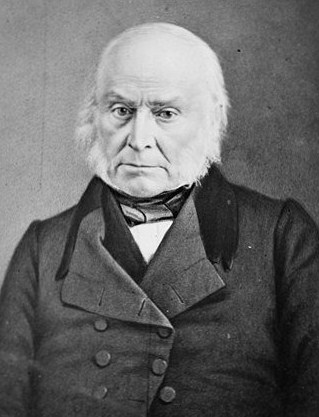
John Quincy Adams, Sixth President, slavery foe, and time-traveling Founding Father

I will strive a bit longer to avoid concluding that Michele Bachmann is as irresponsible, dishonest and dangerous as I strongly suspect that she is, though my determination may not last the time it takes to write this post. I won’t wait any longer to conclude that she is a fool.

In one short week since the controversy erupted over Fox News anchor Chris Wallace daring to ask her on the air, “Are you a flake?” and her subsequent botching of both her answer and the question’s fevered aftermath, she has stumbled into two flaky episodes. One—her mixing up Western movie star icon John Wayne with serial child killer John Wayne Gacy—was at least funny. The other, far less forgivable—her claim that the Founding Fathers “worked tirelessly until slavery was no more in the United States”—has signature significance. Continue reading

July 2: A Good Day to Thank Minnesota For Saving The Country

If you know anyone from Minnesota, today would be a good day to say “thank you.”

July 2 was the second day of the decisive Civil War battle at Gettysburg, Pennsylvania, and the most complicated and wide-ranging day in the conflict. So much was going on at Seminary Ridge and Cemetery Ridge, on Little Round Top, the Peach Orchard, Devil’s Den and a half dozen other key features on the battle field that whether an instance of heroism was recorded or forgotten is as much a matter of chance as anything else. Even determining what was the turning point in the day’s conflict, which ultimately was won by the forces of the North, is an exercise in searching for order in chaos.

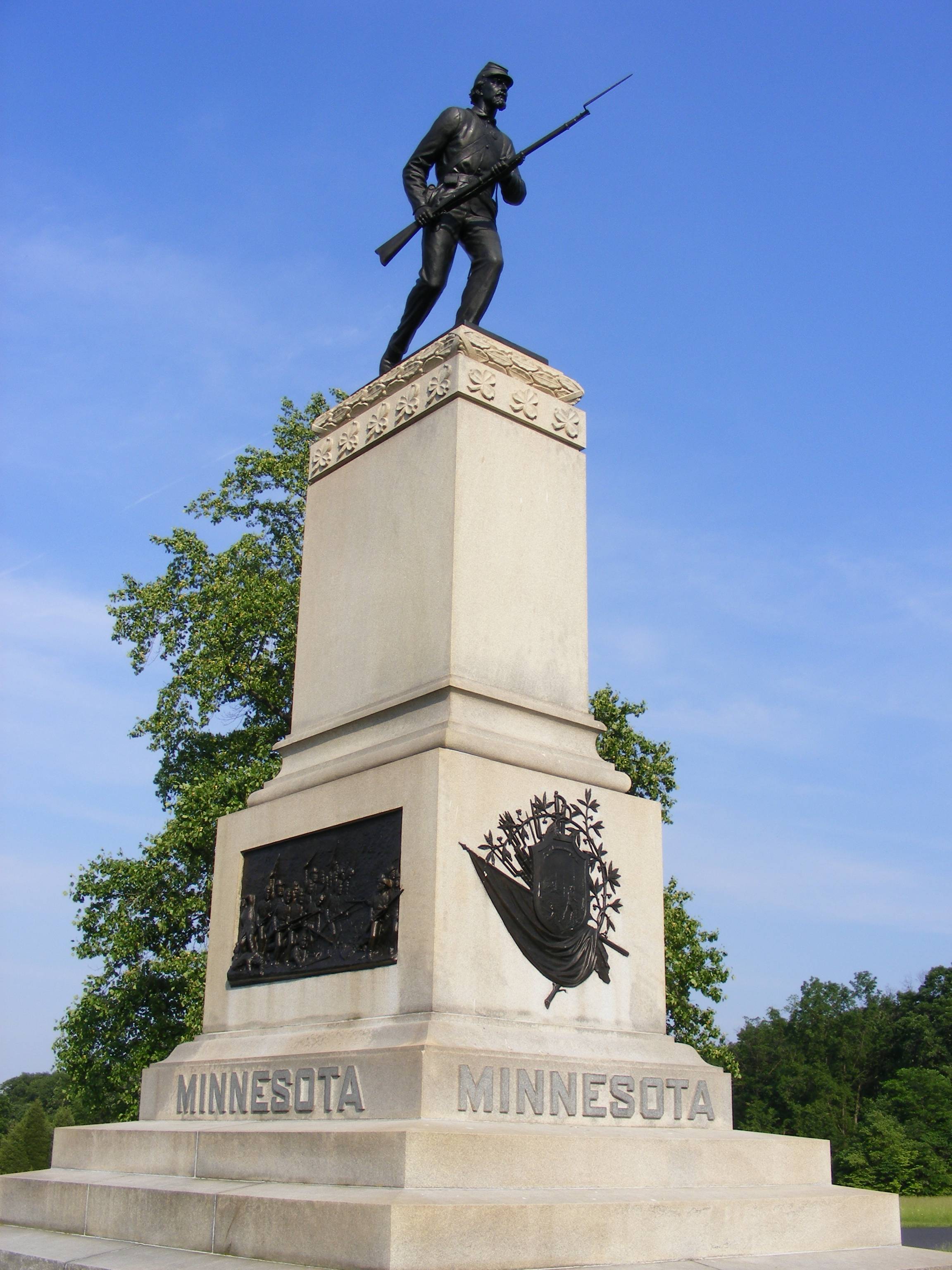
There is no question, however, that the First Minnesota Volunteer Regiment’s astonishing heroics stand out even among the many other examples of gallantry on that day. The battlefield monument to the First Minnesota is the one of the largest erected to any Union regiment, and yet it has not guaranteed our cultural memory of the epic sacrifice those soldiers made. Other second day exploits, due to sometimes arbitrary choices made by historians and film makers, have taken up the limited space available in the public’s attention to the details of the Civil War.

This is an injustice. As the battle raged for Cemetery Ridge, crucial high ground occupied by Union forces, General Winfield Hancock saw a serious breach in the Union line, and realized that Wilcox’s Alabama Brigade had to be opposed and stopped in their advance until he could round up reinforcements. He ordered the First Minnesota to charge the brigade and hold the position, even though its 262 men would be outnumbered by a force of more than 1200.  Continue reading

Ethics Quote of the Week: “Ethics Bob” Stone

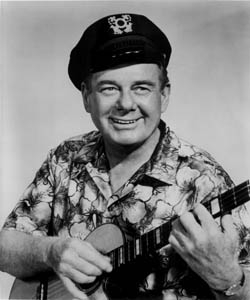
Is Joe Scarborough the new Arthur Godfrey, as in "nice guy" revealed as "unethical creep"?

“It’s always upsetting when one of your heroes turns out to be an unethical creep.”

Ethicist and business ethics professor Bob Stone on his blog “Ethics Bob,” expressing his disappointment in the conduct of MSNBC talk show host Joe Scarborough, who persuaded guest and colleague Mark Halperin to “go for it” when Halperin suggested that his description of President Obama’s press conference was not appropriate for public broadcast, and then did nothing to accept responsibility for the uproar when Halperin referred to Obama as “kind of a dick.” Halperin was suspended indefinitely by MSNBC, following a complaint from the White House.

Bob had expressed hope, in a comment to the Ethics Alarms criticism of Scarborough’s role in the incident, that Scarborough would do the right thing by the next day. He did not. And Bob is correct: this is proof positive that Scarborough is an unethical, cowardly creep.

What should “Morning Joe” have done? Several things: Continue reading