Follow Up and Clarification On The Hiroshima Apology Cable: I Was Wrong, I Apologize…and More

This is my indignation going up in smoke.

There are certain advantages that come from making an incorrect conclusion and publicizing it: sometimes you learn something valuable.

Here’s what I have learned about the diplomatic cable discussed in my post, “How Do I Write A Measured Ethical Analysis When I Am Shaking With Indignation and Rage?“:

1. The officer was reporting a hypothetical situation that the Japanese government official raised during the planning stage of the Obama’s visit.

2. The White House never proposed an apology. The fear of the Japanese was that if he went to Hiroshima, some groups within the country would expect an apology.

3.This key paragraph contains the officer’s assurance to the American Ambassador that the Japanese government would prevent any call, from the Japanese, for a public Presidential apology.

I have all of this from a reliable, credible diplomatic source who I know personally and who was in Japan at the time the cable was sent. This is no credit to me: I received an e-mail that said, in effect, “You Moron! You have no idea how to read diplomatic cables!!! Here’s what really happened…” Continue reading →

Ethics Dunce: Gov. Rick Perry

GOP Presidential Candidate History: The Battle of Concord, fought in 16th Century New Hampshire

I’ve been down this road too many times with various Tea Party favorites, so I’ll make it brief:

  • If you are going to keep talking about the Founders, the Declaration, the Constitution and the Revolutionary War, get your facts right. Paul Revere was not warning the British (Sarah); the Shot Heard ‘Round the World was not fired in New Hampshire, no Founding Father  did  spend his life trying to get rid of slavery,  and John Quincy Adams wasn’t a Founding Father (Michele); and “life, liberty and the pursuit of happiness” isn’t from the Constitution (Herman).
  • Don’t make the public more cynical than it already is about the intelligence and competence of its elected leadership by sounding like an ignoramus.
  • Don’t make our already historically ignorant public even more ignorant by giving it  bad information, from a supposedly trustworthy source. Continue reading →

How Do I Write A Measured Ethical Analysis When I Am Shaking With Indignation and Rage?

None of these men had the arrogance to believe it would be appropriate to apologize for the difficult choices made by their predecessors. They were right.

UPDATE, 10/13 Readers: This post has been proven wrong, based on a misinterpretation of a diplomatic cable that has been clarified to Ethics Alarms by a reliable and objective source. You can read  the explanation, and my apology, here.

I will try.

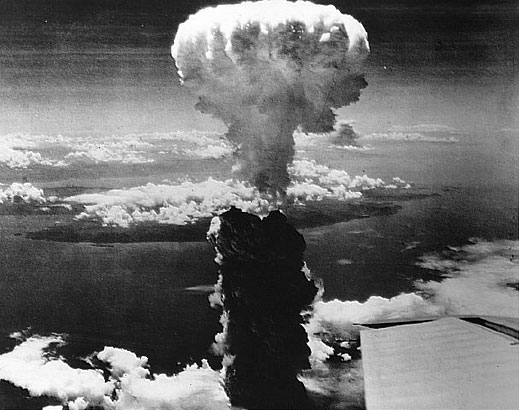
A secret cable dated Sept. 3, 2009 was recently released by WikiLeaks.  Sent to Secretary of State Clinton, it reported that Japan’s Vice Foreign Minister Mitoji Yabunaka told U.S. Ambassador John Roos that “the idea of President Obama visiting Hiroshima to apologize for the atomic bombing during World War II is a ‘nonstarter.'”*

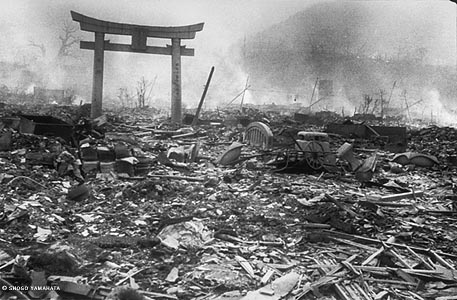
The Japanese did President Obama and the United States an enormous  favor, but the utter foolishness and lack of comprehension of national principles, American history and the duties of presidential leadership shown by the fact that the idea of such an apology could get to the point where the Japanese had to reject it goes beyond mind-boggling and shocking to frightening, infuriating and offensive. Continue reading →

Ethics Confusion in Ken Burns’ “Prohibition”

I enjoy all of Ken Burns’ documentary series, and I am grateful for them. They do a better job of teaching history than the schools, and they are always thought-provoking and, of course, beautifully executed. At the same time, I am aware of the limitations in Burns’ approach, beginning with his genre. Documentaries are inherently misleading works, more misleading in the hands of some, like Michael More, than others. The sifting of which material to use, how to balance issues, choices of photographs and film footage and even the inflections of voice betrayed by narrators (To his credit, Burns has all of his narrators deliver their script in the exact same measured and deliberately-paced tones; I found myself wondering how many times Burns forced “Prohibition” narrator Peter Coyote to listen to previous Burns stand-ins David McCullough and John Chancellor in “The Civil War” and “Baseball” until he sounded as much like their clone as they sounded like identical twins) unavoidably slant the final product, sometimes unintentionally, but usually with a motive. To the extent that viewers realize this, it is an ethical medium, but for most, especially those unfamiliar with the subject matter and with no independent knowledge to draw on, it is not.“Prohibition,” Burns’ latest PBS series that debuted last week, has a more obtrusive agenda supported with more dubious logic than his previous documentaries, reminding me, at least, that his historical conclusions should always be taken with a measure of skepticism. Continue reading →

The Media Pundits’ Bigoted Preemptive Attack on Chris Christie

THIS seems to be a logical method for choosing a President.

Democrats and progressives are apparently terrified that a Republican will enter the presidential race who isn’t a religious zealot, a libertarian ideologue, a political tyro, a Mormon or a Texan, but a charismatic governor of a big northeastern state who is pragmatic, credible and successful. That would be Chris Christie, Governor of New Jersey, who may be about to throw his hat in the ring. So the word has gone out to the media, or the media is just sufficient trained to protect Democratic presidents without further instruction, that it needs to define Christie before the American public has a chance to form its own opinion, and the definition it has arrived at is fat.

You know, fat. As in Rush Limbaugh fat, fat like the political cartoonist Herblock always drew lobbyists and “Big Business.” Diamond Jim Brady fat; fat like Sydney Greenstreet, the villain in all those Humphrey Bogart movies. Fat means bad; fat means lazy; fat means unhealthy, and ugly. Fat people consume more than their share, and are disproportionately responsible for global warming and soaring health care costs, don’t you know. They  have no self-control; they don’t have self-respect. We dread being stuck next to one of these porkers in an airplane. You can’t trust fat people. That’s really all you need to know about Chris Christie. This is America—we worship beautiful people. Fit people. Thin people….like, say, President Obama. Do we want to be led by someone who is fat? Of course not! Continue reading →

The Ethically Messy, Legally Muddled, Drone Killing of Anwar al-Awlaki

Ah, those were the good old days: when warfare was simple, fair, brutal and stupid!

The C.I.A. drone killing of Anwar al-Awlaki, an American citizen who was also an Al Qaeda leader, is raising multiple ethical controversies that pollute each other,  making ethical coherence all but impossible.

The issues:

  • The target was an American citizen. Whatever his crimes, shouldn’t he have the right to a trial before being summarily executed?
  • There is no conclusive proof that he actually did anything that resulted in violence against Americans, or posed an imminent threat to national security. Was he targeted for his words, rather than his conduct? How can it be legal or ethical for the U.S. to target a citizen for death because of his political views?
  • The United States has officially forsworn assassination as a military or intelligence tactic. Yet this appears to have been one.
  •   Yemen is not a field of combat, and there was no imminent threat to human life creating an exigency to require U.S. forces to target someone there, whether he was a citizen or not.

Last Meal Ethics

Sure, the dinner was great, but the after-dinner entertainment was terrible...

The dragging-death killer of James Byrd, Lawrence Russell Brewer, went to his Texas execution last week after ordering up a true pig-out for his last meal: two chicken fried steaks smothered in gravy with sliced onions; a triple meat bacon cheeseburger with fixings on the side; a cheese omelet with ground beef, tomatoes, onions, bell peppers and jalapenos; a large bowl of fried okra with ketchup; one pound of barbecue with half a loaf of white bread; three fajitas with fixings; a Meat Lovers pizza; three root beers; one pint of Blue Bell vanilla ice cream; and a slab of peanut butter fudge with crushed peanuts. When it arrived, he didn’t eat any of it. Texas authorities were annoyed, or insulted (“I make you a delicious meal, your favorite, and this is the gratitude I get?”), or something. Brewer’s wasteful order caused the state  to re-consider the appropriateness of the tradition of the last meal accommodation for the condemned, and legislators decided to eliminate it entirely. Other states have begun to debate doing the same thing.

It’s time for the question that needs to start most ethics discussions: “What’s going on here?” Continue reading →

Ethics Quote of the Month: Clarence Darrow’s Closing Argument in the Trial of Nathan Leopold and Richard Loeb (1924)

When capital punishment is in the news, it's time to listen to Clarence Darrow.

I know I have previously quoted portions of Clarence Darrow’s famous courtroom plea for mercy in the “thrill killing” murder trial of teenagers Nathan Leopold and Richard Loeb. It can never be read too many times, however, and is an essential backdrop to any discussion of capital punishment. Darrow, who hated the death penalty and defended over a hundred clients facing it, never lost a capital punishment case. This, however, was the only time he articulated why he believed that capital punishment was wrong. 

Nathan Leopold and Richard Loeb were charged with the murder of fourteen year-old Bobby Franks. Both defendants were brilliant students (Leopold, the youngest graduate in the history of the University of Chicago; Loeb, the youngest graduate of the University of Michigan), Jewish and the sons of wealthy and successful Chicago businessmen. Neither showed any remorse for their act, which had been coldly undertaken as a demonstration of their superior intellects. Darrow was hired by the Leopold and Loeb families to keep their sons from dying on the gallows, and he decided to plead their case directly to the judge.

His summation on August 22, 1924, remains perhaps the most persuasive and eloquent argument against capital punishment ever made in court or anywhere else. And it worked: Judge Caverly spared Leopold and Loeb, and they were sentenced to life imprisonment. This is a somewhat shortened version, edited for The Essential Words and Writings of Clarence Darrow, a 2007 paperback compiled by historian Ed Larson with some help from me. Here is one of the great orators of the 20th Century, one of the great progressive thinkers in our history, and the greatest trial lawyer who ever lived, arguing for the life of two murderers and for the soul of our civilization. I do not share Darrow’s absolute rejection of the death penalty, but I wouldn’t want to have to argue against him either. Continue reading →

The History Channel’s Unethical Science Fiction

Apparently cable TV needs some basic ethics rules, particularly focusing on integrity. SyFy, the science fiction channel, includes professional wrestling prominently in its programming, as well as movies that qualify as horror or fantasy but have no science, fictional or otherwise, in evidence. Chiller, the horror channel, includes movies that are pure suspense or science fiction, as well as re-runs of the reality show “Fear Factor,” which would belong on the Stupid Channel if there was one (other than E!, of course.) This week, a religious program was on Chiller; I have no idea what that was about. Meanwhile, The Learning Channel has become the Child Exploitation Channel, led by the “Jon  & Kate plus 8” franchise, spin-offs and imitators. What are we learning? Not much, except that the names of cable channels mean little or nothing.

Nevertheless, while it is sloppy and false branding to show “Apollo 13” on the SyFy channel, it is considerably worse to show fiction and fantasy on The History Channel, which is what The History Channel has been featuring recently with “Ancient Aliens,” a series that presents the wacko theory that aliens visited Earth centuries ago as fact. Continue reading →

Perry, Insomnia, Leadership, and the Death Penalty

When should a leader lose sleep over a decision?

A lot of ink has been spilled over NBC’s Brian Williams’ question to Rick Perry regarding the death penalty, the Republican candidates debate audience’s strange reaction to it, and Perry’s response. Conservatives see Williams’ question—“Your state has executed 234 death row inmates, more than any other governor in modern times. Have you struggled to sleep at night with the idea that any one of those might have been innocent?”—as a loaded query by a biased questioner who is pressing the progressive anti-death penalty agenda. Liberals see Perry’s answer as proof-positive that he is an unthinking, unfeeling, blood-thirsty monster. Continue reading →