Ethics, History, and Robert Redford’s “The Conspirator”

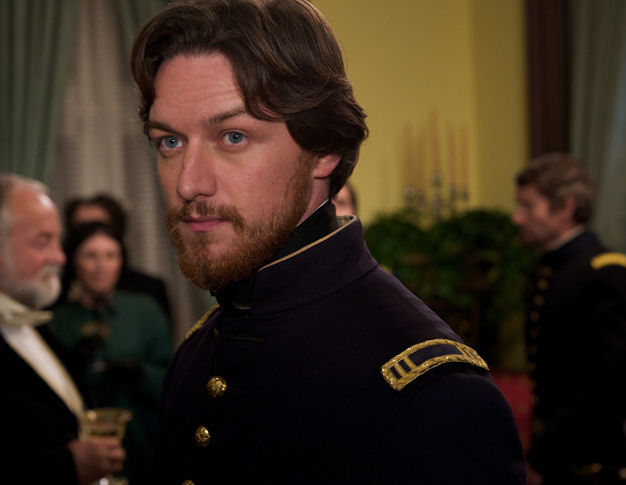
James McAvoy as Frederick Aiken, a Civil War era Ethics Hero you've never heard of.

Throughout Hollywood history, there have been actors who regularly used their screen personas to explore ethical issues: Henry Fonda, Glenn Ford, Paul Newman, John Wayne of course, Clint Eastwood, and recently, George Clooney. None of these focused their artistic attentions on ethics more sharply than Robert Redford, however, in such films as “All the President’s Men,” “The Candidate,” “The Proposition,” and “The Natural,” and he has continues his exploration of ethics as a director, in such films as “The Milagro Beanfield War” and “Quiz Show.”

Redford’s most recent film, “The Conspirator,” is another ethics movie, as well as one that explores law and American history. I am a Lincoln assassination buff, and I was eager to see the movie until I read several reviews criticizing it as a heavy-handed allegory attacking the Bush administration’s response to 9/11. Score one for the confirmation bias trap: the movie is nothing of the kind. Continue reading →
Memorial Ethics,Part I: Recalling The Martin Luther King Memorial Controversy

  (For Memorial Ethics, Part Two, go here.)

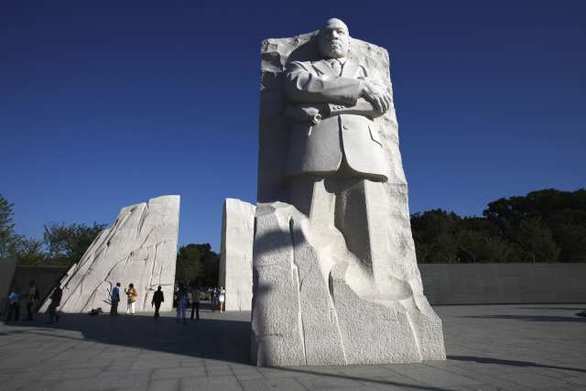
[It is almost forgotten now, but when the design of the new Martin Luther King Jr. Memorial was chosen back in 2007, there was much unhappiness in the black community. A Chinese artist was chosen to design the memorial, and this raised issues both ethical and ironic. Now that the memorial is completed (the planned dedication this week has been postponed due to Hurricane Irene), it seems clear that critics aimed their objections in the wrong direction: the problem wasn’t the designer, but the design, an imposing piece of classic Socialist-Worker art that would look at home in Red Square. But, hey, there’s lots of bad art in Washington, covering an abundance of styles: the large bust of JFK in the Kennedy Center makes it look like President Kennedy was made out of chewing gum. At least some bad Communist statuary is a change of pace.

The debate over the choice of artist was interesting, and is even more so in retrospect. It is worth pondering as the new monument joins the National Mall. Here is my article on the matter, slightly edited from the original published on The Ethics Scoreboard in 2007, followed by a response from the artist selection’s most vocal critic.]

An intense controversy surrounds the choice of a statue’s sculptor, specifically the Chinese artist whose design was selected by the Martin Luther King Jr. National Memorial Project Foundation to become a major monument to the martyred civil rights leader in Washington, D.C. Continue reading →

To the Pro-Obama Race-Baiters: “Have You No Sense of Decency at All?”

Ah, if only Joseph Welch and his well-aimed indignation were here today!

We knew, way back when President Obama was running for his first term, that the temptation to paint any opposition to his leadership or his policies as proof of racism would be irresistible  for the less ethical among his supporters in the Democratic Party and among the media. This came to pass, but we should prepare for much worse.  Now that the President has a thoroughly wretched record and is, to an extent I personally haven’t seen since the paranoid days of Richard Nixon, attempting to avoid accountability by blaming everyone in sight—a thoroughly unleaderly display—the race-baiters have served notice that they will be out in force this time as well, more shameless than ever. Continue reading →

Calvin College, Forfeiting Its Right To Exist

As further proof of evolution, the chimp is behaving exactly like his distant relatives, the adminsitrators of Calvin College

I don’t know what the exact point is that marks where a religious school’s departure from legitimate adherence to its core beliefs metastasizes into a nuisance to society and civilization by affirmatively encouraging life-crippling ignorance. I do know, however, that Michigan’s  Calvin College has passed that point.

Two religion professors at Calvin wrote scholarly papers suggesting that new discoveries in genetics and evolution raised questions about the literal reading of Genesis that could no longer be brushed aside. Neither professor questioned the existence of God or the role of their church, but they argued that the findings of rigorous, modern science may require a theological re-examination of literalist Biblical teachings. Readers of The Banner, the publication of the Christian Reformed Church in North America, promptly blew a Biblical gasket:

“To protect the church and college from false teachers and contrary orthodox beliefs it would be right to let these guys go,” said one commenter. “Clearly, professors who deny the scriptures as interpreted by our creeds and who have broken the promise they made when they signed the Form of Subscription should be fired,” said another. From yet another: “Why is it that so many Christians and academics in Christian colleges seem more concerned about keeping in step with what the world teaches than they are about what God’s Word teaches? Are we ashamed of God’s Word in the face of the beliefs of our worldly peers?”

Calvin investigated the two professors, and as a consequence one of them, John Schneider, resigned the tenured position he had held for 25 years, as part of a settlement with the college. Continue reading →

Ethics Quiz: If This Is Wrong, Why Does It Make Us Cheer?

Robert Harding, post Holly. The Duke would have been proud of her. Should we be?

In Des Moines, a man who told police later that he “likes young girls” tried to lure one into his clutches, and ended up with a black eye and a several bruises. Robert C. Harding attempted to coax Holly Pullen’s 13-year-old daughter into an alley outside the Pullen home.The teen got her mother to go into the alley instead, and when Holly Pullen asked what he wanted, Harding said he wanted to marry and have sex with her daughter. Then he offered to buy her. Holly promptly beat the the snot out of him. (Harding was later tracked down by Pullen’s husband and others, and turned in to the police.)

This was violent, vigilante justice. It was also technically assault and battery. Your Ethics Quiz question is this:

Given all of these reasons why Holly’s conduct was unethical, why do we viscerally approve of it? Continue reading →

Case Closed on Obama’s Leadership Skills

Anyone who watched the Beltway public issues panel show “Around Washington” knows that there is no more loyal defender of Barack Obama than Colbert King. King is a Democrat and a card-carrying progressive, and also a Pulitzer Prize winner and career-long Ethics Hero, as he has doggedly and revealingly documented the corruption in all corners of the Washington. D.C. government. Colbert King, in short, is a truth-teller, and while his ideological leanings have often caused him to defend Obama when it would be more responsible not to, he has integrity. This weekend, in his weekly column for the Washington Post,  he joined a chorus of conservative critics by expressing dismay that the President would choose this time to take a vacation on Martha’s Vineyard:

“Is there anyone in the White House with nerve enough to tell Barack Obama that Martha’s Vineyard is the last place on earth that the president of the United States should find himself next week? Don’t get me wrong. I don’t begrudge the chief executive a little time off from the Oval Office. But to be leaving town to spend 10 days luxuriating in an affluent, New England summer town when millions of Americans can’t find work? To fly off to the Vineyard when the public is losing faith in Washington’s ability to fix the nation’s economic problems, and with people anxious about their futures? What is he thinking?”

I can answer that, and in fact I have. Continue reading →

Comment of the Day: “Comment of the Day: ‘The Barefoot Contessa and the Compassion Bullies'”


Does the truth matter?

No, that wasn’t a typo: Karl Penny just achieved a first for Ethics Alarms, a Comment of the Day in response to a Comment of the Day.

The COD at issue was Gary’s assertion that he had no obligation to align his ethical preferences according to my analysis (or any other) of the “Ina Garten rejects Make A Wish” dispute, and that to him it was “just a story” that he could use or ignore according to what he chose to believe.

This inspired Karl’s excellent Comment of the Day, which also contains one passage that would justify another Ethics Alarms first, an Ethics Quote of the Week in a Comment of the Day on a Comment of the Day. I bolded it. Thanks, Karl: Continue reading →

Comment of the Day: “Scent Branding, Mind-Control, and Ethics”

Elizabeth was the first one to dive into this murky, interesting, science fiction/ “Brave New World” issue that I examined in  “Scent Branding, Mind-Control, and Ethics,” on a topic that confused me more the longer I considered it. What resulted was unusually long, perhaps accounting for the lack of comments, and Elizabeth’s reaction is long as well, but worth reading. There is something potentially sinister here, or perhaps around the corner—or just in our imagination and fears. Scent manipulation, and all it implies, is in the wilderness of ethics, where human nature, science and commerce meet.

Here is the “Comment of the Day”:

“I agree this is a complicated issue.  As you said, restaurant smells (natural, I assume) tend to make people hungry (or more hungry than they really are), as do waiters with large platters of beautiful food which often encourage patrons order more, different, and perhaps more expensive food than what they may have had in mind.  The goal of the restaurant is to sell food:  if memory serves, it’s only been in the last 20 years or so that restaurants had at least parts of their kitchens open to the dining area so “good smells” could waft out from them.  My memory from childhood of elegant restaurants were the multiple green baize doors that completely closed the kitchen off from the dining room.  So was this change intentional or simply simpler and cheaper as restaurant designs?  I don’t know, but it’s different. Continue reading →

Robert E. Lee and the Abuse of Principle

Lee: Use his life as a warning, not an inspiration.

As both political parties and the President of the United States seem to be determined to subject the American people, economy and standing in the world to disaster in the defense of principles, it might be a good time to reflect on the fact that principles detached from reality have little value, and that rigidly adhering to principles to the detriment of the community and civilization is not a virtue.

In the current issue of Humanities, historian James Cobb makes these points vividly, if tangentially, while reflecting on the odd reverence with which Americans, and not just Southerners, regard Robert E. Lee. I am proud to say that the lionization of Lee never made sense to me, not even when I was a small boy. But he is the epitome of someone who is revered as a role model and hero for his supposed character and values rather than what he actually did with them.*

Cobb begins his essay with this anecdote:  Continue reading →

Texas: Resisting Creationism, Embracing Enlightenment

Uh...NO.

Lost in the hysteria over the U.S. government’s self-created default crisis was some good news for integrity, education, and the advance of human knowledge.The Texas Board of Education unanimously (8-0) approved scientifically accurate high school biology textbook supplements from established mainstream publishers that cover the origins and implications of evolution theory and findings, rejecting the creationist-backed supplements from International Databases, LLC. (The creationist-crafted materials submitted by that group was not only “laced with creationist arguments,” said one reviewer, but was also “shoddy”, “teeming with misspellings [and] typographical errors,”and “mistaken claims of fact.”)

The efforts of creationists and Christian fundamentalist forces to ignore and discredit overwhelming scientific evidence of evolution on earth, along with the many biological, anthropological, geological and historical conclusions that spring from the body of research in the field, have created hurdles for educators, impediments to students, and embarrassment to organized religion for more than a century. Continue reading →