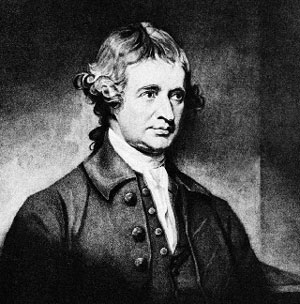
Ethics Quote of the Week: Edmund Burke (1729-1797)

So...any chance of you coming out of retirement, Ed?

“Parliament is not a congress of ambassadors from different and hostile interests; which interests each must maintain, as an agent and advocate, against other agents and advocates; but parliament is a deliberative assembly of one nation, with one interest, that of the whole; where, not local purposes, not local prejudices, ought to guide, but the general good, resulting from the general reason of the whole. You choose a member indeed; but when you have chosen him, he is not member of Bristol, but he is a member of parliament. If the local constituent should have an interest, or should form an hasty opinion, evidently opposite to the real good of the rest of the community, the member for that place ought to be as far, as any other, from any endeavour to give it effect.”

—-Edmund Burke, British political theorist, philosopher and statesman, in his speech to the electors at Bristol, November 3, 1774

Why Burke’s principles are relevant today should be obvious. What is depressing is that I have to resort to quoting an 18th Century statesman to express them, because no current elected officials in the United States seems to be capable of either articulating such ideals or acting accordingly.

Thanks to Ethics Bob Stone for reminding me of one of Burke’s best speeches.
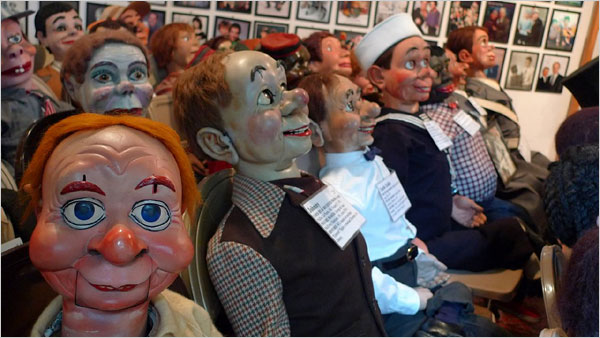
Rep. Wu and the Scourge of Government by Ventriloquist Dummies

I have a 90% completed post tentatively entitled “Why We Are Doomed” sitting in my drafts file, and I can’t bring myself to finish or post it. I don’t want to believe we are doomed, so the Golden Rule keeps telling me that I shouldn’t be trying to convince others we are doomed. I believe in hope. I believe that cultures, especially this culture, can do the right thing and still be successful, provided that they can find leaders and role models who represent and encourage ethical values.

On the other hand, I really do believe we, that is to say, the United States of America, are probably doomed.

A story unfolding now, a sad saga that has really been unfolding for a long time, illustrates one of the factors I lament over in my languishing draft. Rep. David Wu (D-Ore.) has been accused of an “unwanted sexual encounter” with the teenage daughter of a longtime friend. We have to be careful here, but there seems to be little doubt that the “encounter” occurred.  The Oregonian has reported that sources aware of the incident say that Congressman Wu, who is 56, “acknowledged a sexual encounter to his senior aides but insisted it was consensual.”

Wu has been a train wreck waiting to happen for a long, long time. Continue reading →

Rep. West’s E-mail: Not Sexist, But Uncivil and Unprofessional…Just Ask George Washington.

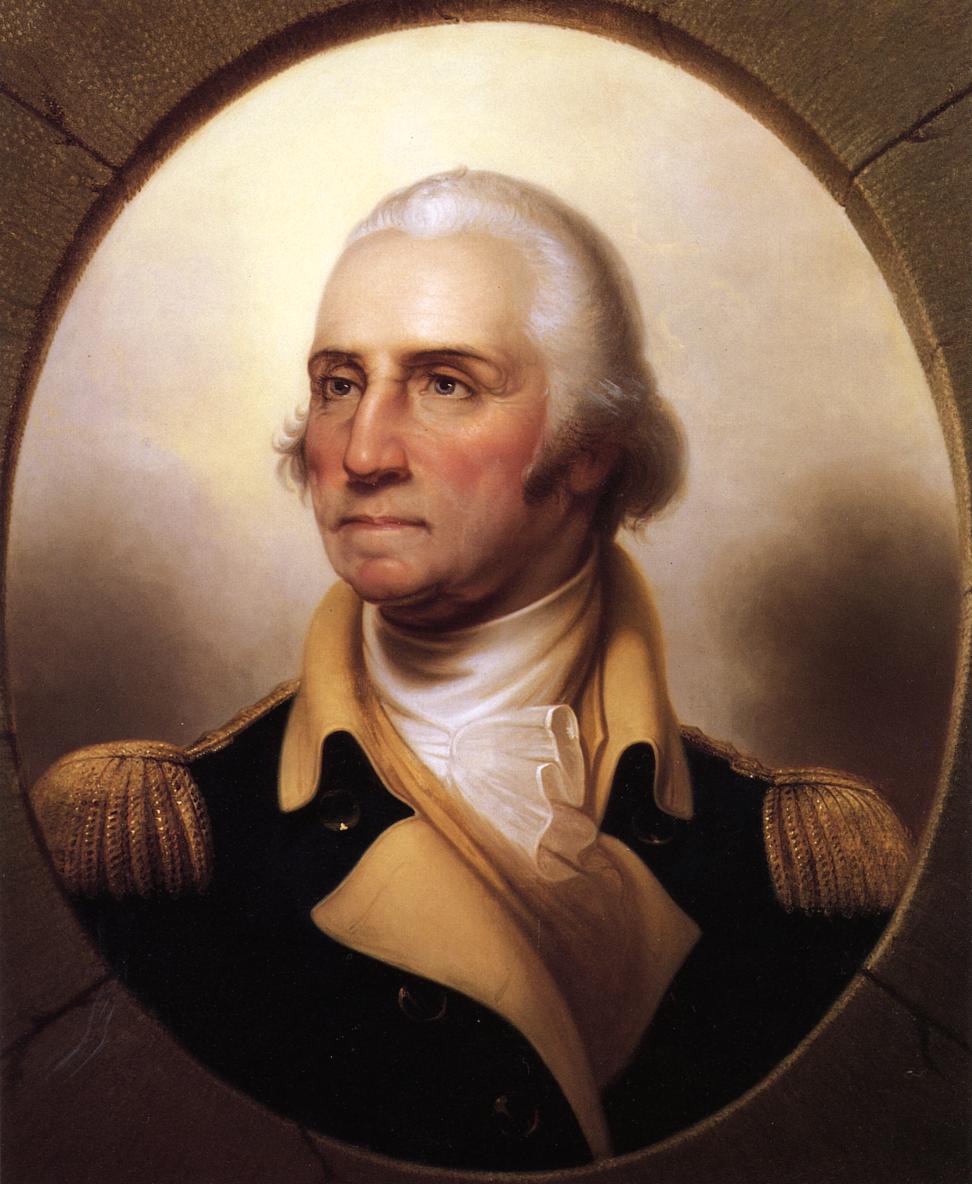
The Father of Our Country has a verdict on Rep. West's e-mail

Rep. Allan West (R-Fla), a Tea Party rock star, shot off a wounded and combative e-mail to Rep. Debby Wasserman-Schultz after she made a speech on the House floor that attacked as “unbelievable” that a South Florida representative (That is, West) would back a plan that slashes health-care entitlements:

“The gentleman from Florida. who represents thousands of Medicare beneficiaries, as do I, is supportive of this plan that would increase costs for Medicare beneficiaries, unbelievable from a Member from South Florida [and that]…slashes Medicaid and critical investments essential to winning the future in favor of protecting tax breaks for Big Oil, millionaires, and companies who ship American jobs overseas.”

Wasserman-Schultz’s comments were, as many of her comments are, of questionable quality: why would it be unbelievable to her for a Representative to vote against the perceived narrow interests of his constituency for what he felt, rightly or wrongly, was the greater good? Is Wasserman-Schultz such a poll-driven hack that she can’t even comprehend why a member would support a measure out of conscience rather than electoral self-interest?  That quibble aside, however, there was nothing about the Democratic National Committee chair’s remarks that crossed the lines of accepted political speech.

West was apparently angered because she leveled her criticism after he had left the floor. Point taken: okay, maybe he was justified to take offense. He was not justified to send an e-mail, copied in to leadership of both parties, saying this, however: Continue reading →

Eight Glasses of Water and the Climate Change Bullies

Never mind.

A surprising new report announces that the well-established health standard that we should all drink at least eight glasses a day is a myth, with no data to support it.  Moreover, the report says, drinking so much water may actually be harmful.  Meanwhile, widespread acceptance of water and hydration as a health benefit has led directly to the explosion in the use of bottled water, wasting money and creating an environmental crisis with so many discarded plastic containers.

I would hope that such news, and we get these kind of sudden “never mind!” stories with fair regularity, might convince some of the more insulting critics of global warming skeptics to temper their contempt.
The ideologues and conspiracy theorists who refuse to accept that the world is warming—though nobody really knows how much or how long—and that the effect is likely caused by mankind—though nobody can say with certainty that mankind can reverse or stop it—are rightly derided, up to a point. But those who question the astonishing certainty with which some climate change scientists, Al Gore, and a passel of pundits, columnists and bloggers who barely passed high school chemistry claim to know what the effects of global warming will be, even though doing so requires extensive estimates, extrapolations and assumptions, are being no more than prudent, considering how frequently far simpler scientific conclusions have proven to be flawed, exaggerated, or as may be in the case of  the eight glasses of water, just plain wrong. Prudence is especially appropriate when speculative science transmuted into doctrine calls for huge expenditures of scarce resources and the re-ordering of national priorities, effecting nations, commerce, businesses and lives. Continue reading →

Ethics, Stereotypes, and Holly Golightly

"Andy Hardy, the Asian Years"

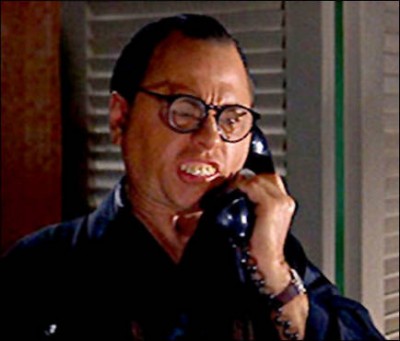
A Bronx woman, Ursula Liang, has started a petition against Brooklyn Bridge Park’s “Movies With A View” series showing “Breakfast at Tiffany’s,” the 1961 Audrey Hepburn classic that gave us “Moon River” and one of actress Hepburn’s most endearing performances. Why? Well, the movie, which has long been popular for summer screenings in New York City and elsewhere, also contains a pre-political correctness performance by Mickey Rooney as Holly Golightly’s comic Japanese neighbor, “Mr. Yunioshi.”

Rooney’s performance, in my opinion, was cringe-worthy even in 1961, one of director Blake Edwards’ not uncommon excesses in vaudeville humor, placed in a context where it didn’t belong. It is a scar on an otherwise marvelous film, but there is nothing inherently wrong with comic stereotypes. Stereotypes are a staple of comedy, and have been forever; the question is whether a particular stereotype is cruel, gratuitous, harmful, or funny. Some stereotypes are cruel and funny. Continue reading →

An Ethics Lesson From the All-Star Game

It really is one of the most enduring sports deja vus—every year, sportswriters and fans engage in thousands upon thousands of words of complaint regarding baseball’s annual All-Star Game, the 2011 edition of which will occur tomorrow night in Phoenix. This year was no exception, and as is always the case, no consensus or conclusions were reached, except that everyone agrees that the game is mishandled, mismanaged, unfair and illogical in every possible way.

I have been thinking of the game’s plight as an ethics case study that proves a core truth: you can’t do the right thing if you don’t know your objectives, stakeholders, and how to prioritize them. In the All-Star Game as it has evolved, there are competing interests and stakeholders with no clear agreement regarding which takes priority over the other. It is literally impossible to do be fair: somebody always will be disadvantaged, and because there is no single objective either, utilitarian balancing doesn’t work.

It was not always this way. When the All-Star game was first conceived in 1935, it was intended to raise money for the players’ pension fund, the players then being generally paid little more than grocery clerks.  Since the game had to draw as much of a paying crowd as possible to make money, the rosters and starting line-ups were constructed to include the biggest stars and most popular players. It didn’t matter whether Babe Ruth was off to a great start or not: it wouldn’t be an All-Star Game without him in the starting line-up, so he was the right-fielder. Managers picked the team that they thought would both be the “starriest” and that would give them the best chance to win the game. Continue reading →

The Ethics of “No-Body” Murder Prosecutions.

Oh! THERE's the body!!!

Texas lawyer Robert Guest has opined that a Texas jury would have convicted Casey Anthony in a heartbeat, and cites as proof the February conviction of Charles Stobaugh in Denton County. He was accused of killing his  estranged wife, though no body has ever been found at all.

Maybe.  There are a lot of differences in the circumstances of the two cases, not the least is that finding a badly decomposed body with a piece of electrical tape across her mouth has a big advantage over never finding any body at all: at least you are certain that the victim is dead.  Stobuagh, like Anthony, engaged in a pattern of lies and strange statements; for example, he suggested that his wife, who suddenly vanished and stopped using her bank account, credit cards and cell phone, was “playing a prank.”  He also began seeing a new girl friend more or less the moment his wife vanished. I’d say the biggest difference is the presumption of a motive: husbands killing their wives, especially their estranged wives, is a common and well-recognized form of homicide, with a motive that any married person immediately understands. A mother killing her young child, in contrast, is very unusual, and the presumption is that no mother would do it. The Anthony prosecution was more difficult than the prosecution of Stobuagh, even with Caylee’s body. Continue reading →

“Professionalism?” What’s THAT? Julie Chen, CBS and the Descent of Broadcast Journalism

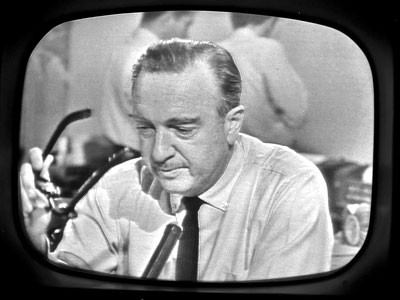
Walter could keep it together. Not Julie Chen.

The Casey Anthony verdict is doing some good: it is exposing the awful deficit in objectivity and professionalism in the broadcast media.

The latest example: while CBS’ “The View” rip-off, “The Talk,” was underway,  viewers saw co-host Julie Chen break down as she tried to read the news that Casey  Anthony had been found not guilty of killing her daughter Caylee. Chen attempted to read the verdict, but was overcome with emotion  and was unable to continue, asking her co-hosts,  “Help me out here.”

In 1937, radio broadcaster Herbert Morrison was correctly criticized for being unable to keep his composure and report the flaming destruction of the zeppelin The Hindenburg without weeping and becoming unintelligible. In 2011, a woman described in her official bio as a “news anchor; reporter; and journalist” couldn’t compose herself to read the news of a not guilty verdict. Continue reading →

Ethics Heroes: The Casey Anthony Jury

America saved Casey Anthony, and we should be glad it did.

A Florida jury pronounced Casey Anthony not guilty of murder, aggravated child abuse or aggravated manslaughter in connection with the 2008 death of her two-year-old daughter, Caylee. It did find that she had lied to investigators and police, which was well-established during the trial.

Did she murder her daughter, as the prosecution claimed? Oh, sure she did; I don’t think any of the jury members will be asking Anthony to babysit for their kids any time soon. But the case against her was circumstantial. She was proven to be a liar, irresponsible, feckless, self-centered, deluded and callous, and the prosecution’s theory made a lot more sense that the defense’s alternative scenario. Still, there was not enough evidence to find Casey Anthony guilty of murder beyond a reasonable doubt. That’s the standard, not “it’s almost certain that she did it.” Despite all the media pundits who said it would be a slam-dunk conviction, despite all the community sentiment to make the party girl mother pay with her life for killing her child, the evidence to meet the intentionally tough standard of American justice just wasn’t there.

Already, reporters and commentators are comparing the verdict to the O.J. Simpson trial. Wrong. Continue reading →

Ethics Quote of the Day: The Washington Post

OK, Tea Party, this should be right up your alley.

“We hope that some members of Congress’s new “Tea Party Caucus” can make it down to the fireworks Monday night. It might be a good time to reflect on the primary motivation for the original Boston Tea Party, which was that Americans should not be taxed by a government in which they had no parliamentary representation. That right to a voting representative is still denied to all who live in the nation’s capital, and some of them must be wondering why members of Congress who so revere the Founders haven’t done something about it.”

—The Washington Post editorial board, in a “footnote” to its editorial about the enduring importance of the Declaration of Independence.

Little more needs to be said. The fact that the citizens of the District of Columbia, who number more than the populations of several states, are unrepresented in the House and the Senate is beyond disgraceful. Yes, there are troublesome issues to be worked out. It is also clear that if the either political party placed a higher priority on fairness and self-government than it did on political considerations, the problem would have been settled by now—after all, the District has been without representation for more than 200 years.

Most of the blame, however, goes to the Republicans, who have been obstructing D.C. representation for the most naked of self-serving motives: it is a predominantly African American, knee-jerk liberal city, and would surely contribute two Senators and one Representative to the Democratic cause. (This is also an example of a self-fulfilling prophecy, since the memory of how the GOP blocked its citizens from the most basic American right will and should keep the District deep blue until the stars turn cold.)

Well, too bad: the fact that most DC residents are Democrats is no excuse for keeping them from meaningful participation in national lawmaking. The Post is exactly right: if the Tea Party has integrity and is true to its principles, it will firmly endorse representation for the District of Columbia. This would also have the beneficial side effect of ending the liberal trope that the Tea Party is racist at its core. The main reason for doing it, however, could be more obvious. It is the right thing to do, and overdue as well.