No.
But NBC’s David Gregory thinks so. Here was his exchange with Republican Speaker John Boehner on “Meet the Press” yesterday: Continue reading
No.
But NBC’s David Gregory thinks so. Here was his exchange with Republican Speaker John Boehner on “Meet the Press” yesterday: Continue reading
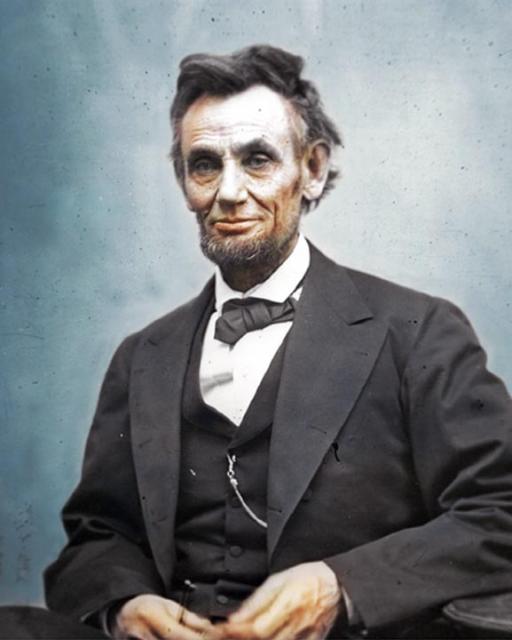 John Steele, on his essential blog, the Legal Ethics Forum, had the wit and wisdom to post Abraham Lincoln’s “Notes for a Law Lecture” today in commemoration of Abe’s birthday. I had been looking for an appropriate post for the occasion, and I cannot improve on John’s selection. Written around 1850, it is as excellent a statement of what lawyers should aspire to in 2011 as it was when Lincoln was practicing, and it also confirms our 16th President’s eloquence, clarity of thought, and instincts for good.
Happy Birthday, Mr. Lincoln.
________________________________________________________________
Abraham Lincoln’s Notes for a Law Lecture Continue reading
 The tragic life of J. Paul Getty III, grandson of the late oil tycoon who long held the title “The World’s Richest Man,” is testimony to the truth that wealth is no match for a family culture devoid of ethics.
Getty III, known to his friends as Paul, died last week at the age of 54. He had been confined to a wheelchair-bound for 30 years, after a drug overdose caused a stroke that left him paralyzed, mute and mostly blind. His father, J. Paul Getty II, who had little contact with his son after divorcing his mother when Paul was a child, refused to help him with any of his inherited billions, declaring that his son had earned his misfortune with his irresponsible ways. In truth, few sons have been given more reason to doubt their self-worth based on their callous treatment by their father figures. Continue reading
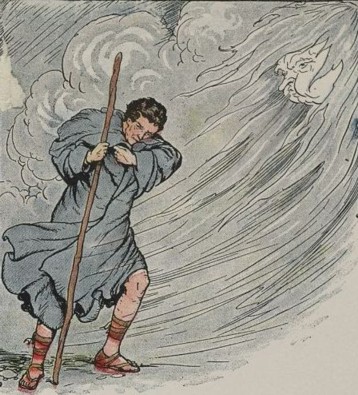 Today, by happenstance, I heard an Aesop’s Fable that I had never encountered before recited on the radio. Like all Aesop’s Fables, this one had a moral, and it is also a statement of ethical values. Unlike most of the fables, however, it doesn’t make its case; it is, in fact, an intellectually dishonest, indeed an unethical, fable.
It is called “The North Wind and the Sun,” and in most sources reads like this:
“The North Wind and the Sun disputed as to which was the most powerful, and agreed that he should be declared the victor who could first strip a wayfaring man of his clothes. The North Wind first tried his power and blew with all his might, but the keener his blasts, the closer the Traveler wrapped his cloak around him, until at last, resigning all hope of victory, the Wind called upon the Sun to see what he could do. The Sun suddenly shone out with all his warmth. The Traveler no sooner felt his genial rays than he took off one garment after another, and at last, fairly overcome with heat, undressed and bathed in a stream that lay in his path.”
The moral of the fable is variously stated as “Persuasion is better than Force” , or “Gentleness and kind persuasion win where force and bluster fail.”
The fable proves neither. In reality, it is a vivid example of dishonest argument, using euphemisms and false characterizations to “prove” a proposition that an advocate is biased toward from the outset. Continue reading
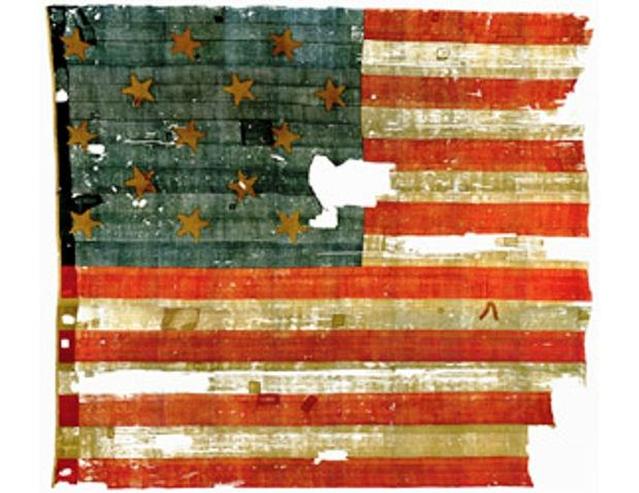 Pop songbird Christina Aguilera has been ridiculed and condemned in every forum imaginable for botching the lyrics of “The Star Spangled Banner” at the Super Bowl. The last time a performer got this kind of abuse for a National Anthem performance (not counting Roseanne Barr’s infamous crotch-grabbing, off-key screeching of the anthem to begin a San Diego Padres game, which was not so much a performance as a clinical demonstration of what boorishness looks and sounds like) was when the late Robert Goulet massacred the lyrics before a national radio audience to introduce the Cassius Clay-Sonny Liston Heavyweight Championship fight. The incident haunted Goulet the rest of his life, although he was a good sport about it.
As with Goulet (he was Canadian, for heaven’s sake!), the condemnation of Aguilera is not merely unfair, but ignorant. Continue reading
 “Columbinus” is a tough play by Stephen Karam and PJ Paparelli that combines interviews and news footage about the Columbine shootings with dramatic and cinematic techniques to explore the human and cultural issues raised by the tragedy. It is not “Grease,” by any means, and though many high schools have produced it successfully, I would not quarrel with the decision by any school official who decided that the show was inappropriate for high school drama and that it would better to do, say, “The Mikado.”
But Lexington High School principal Natalie Cohen managed to make this decision in the worst way imaginable, for the worst reasons imaginable, showing rank ignorance of the purpose of theater while being irresponsibly dismissive of the efforts and creative energies of her students. Continue reading
[ The discussion in the earlier post today regarding ABC’s revolting “What Would You Do?” convinced me that I should re-post this essay about a real-life “What Would You Do?”tragedy, which originally appeared on The Ethics Scoreboard in 2006. Entitled “Death on Everest,” It has been lightly edited to bring it up to date.]
As 34-year-old mountaineer David Sharp lay near death on Mount Everest, over 40 other climbers trudged past him on their march to the peak. All had oxygen with them, and a few even stopped briefly to give Sharp a few breaths. But still they climbed on, and Sharp perished. His demise on May 15, 2006 has gone into ethics lore alongside the infamous death of Kitty Genovese on March 13, 1964. Genovese was murdered outside her apartment building in Queens while thirty-eight neighbors watched and did nothing.
The two incidents stem from very different causes, however. While Genovese’s death was fueled by urban fear and apathy, a mass failure of courage and the willingness to assume responsibility in a crisis, Sharp was the victim of that universal ethics-suppressant, the powerful non-ethical consideration. Continue reading
It has been fascinating and troubling listening to conservative radio talk-show host Mark Levin lambast fellow conservatives who have been siding with the revolutionaries trying to end the 30 year rule of Hosni Mubarak in Egypt. Levin argues that such support is foolish and ignorant, because there is no way for the United States to be sure that the resulting new government, even if it is more democratic than the current one (hardly a difficult bar to clear), wouldn’t be worse for the interests of the United States. Continue reading
 Much of my weekend was occupied by reading, writing, thinking, and talking about the bizarre controversy over a community theater production of Gilbert and Sullivan’s “The Mikado,” which, by a series of misunderstandings, misdeeds, hypocrisies and journalistic malpractice, has created much anger and unhappiness for no legitimate reason at all. If you are late to the story and want to catch up, you can do so here, here, here, and here.
For the first and perhaps only time I can honestly say that Ethics Alarms is the most reliable source on a story. There may be plenty of ethicists who are more knowledgeable, scholarly, prudent and experienced than I am regarding ethics theory, but none of them knows this topic—Gilbert and Sullivan and “The Mikado”, like I do. I have 50 years experience performing, directing, studying, parodying and laughing at the works of these Victorian geniuses. The second I read the astoundingly wrong-headed interpretation being attached to the Missoula Community Theatre’s inclusion of Sarah Palin in Ko-Ko’s famous song “I’ve Got a Little List,” I surmised exactly what was going on, and my assessment has been confirmed by everything that has come to light since.
I will summarize what we now know in brief (well, briefer than reading all the posts) form:
The ethics call on this story is easy, though it is tempting to say otherwise.
Anthony S. Darwin was on the lam for six years in Wisconsin, eluding law enforcement authorities who were seeking to arrest him on pending charges of aggravated battery, bail jumping, battery, robbery with use of force, substantial battery and identity theft. Then he suddenly surrendered… because he realized he needed treatment for a life-threatening cancer. Continue reading

