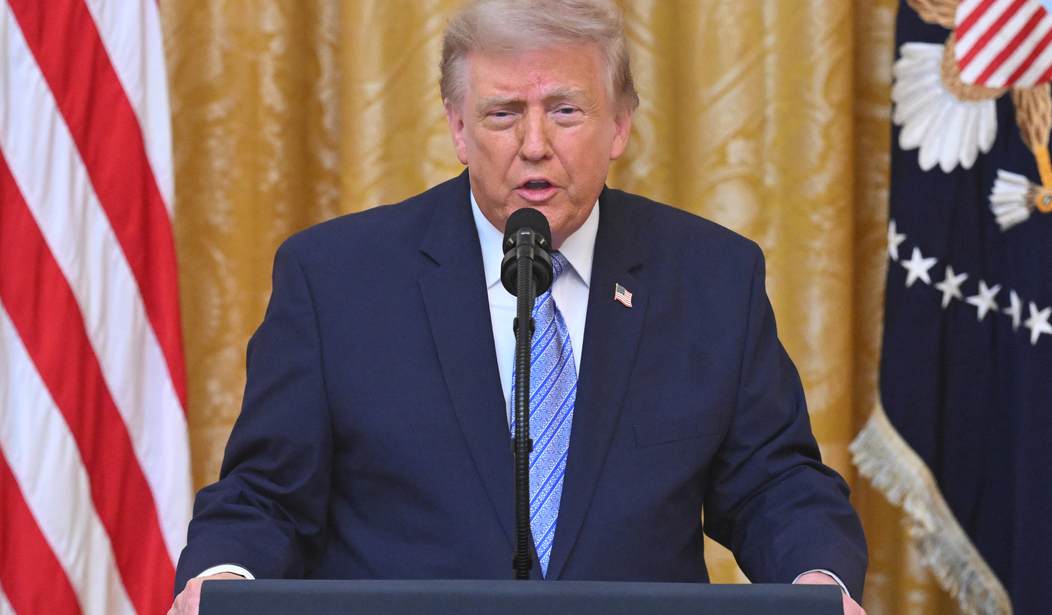
1. The President has gotten much better at delivering speeches from a teleprompter which means that he’s worked on it, something neither George W. Bush or John McCain had the commitment and diligence to do. Trump was always better when riffing, but that led into interminable, unfocused rants, like his infamous 2024 nomination acceptance speech. Last night’s speech was, for Trump, remarkably crisp, succinct, and well-delivered.
2. As he was starting off, making the speech feel like a State of the Union message, I could see in my mind’s eye all the “lies” that the Axis fact-checkers would complain about this morning. I wish the President didn’t have to describe everything he views as an accomplishment in hyperbolic terms, as a superlative: “the best,” “the greatest,” “the biggest.” Surely he must know that the habit automatically invites skepticism: if some achievement really was the best, Trump would have a difficult time getting anyone to believe it. Isn’t there an advisor, a friend, a supporter, someone who could tell him this is a self-defeating approach?
3. My vote for the most unethical hyperbole last night: “This country was dead.”
4. The President was pointed as he brought out into the open the Deep State sabotage and the mainstream media propaganda that has hindered both of his terms. Good.
The House this week passed a measure, the Sunshine Protection Act, that would set America’s clocks to daylight saving time permanently once it clears the Senate and is signed into law by the President. The bill itself raises no ethics issues at all: it is the reactions to it and the reasons, real and alleged, for those reactions that ping ethics alarms.
The headline is tongue-in-cheek, incidentally. Most of my life I heard that Daylight Savings Time was Ben Franklin’s idea. Ben was an amazingly prolific innovator and out-of-the-box thinker, but he was not the originator of the practice, so we can neither blame him nor praise him. Another myth is that DST was implemented for the benefit of farmers. Actually, farmers have been one of the strongest opponents of DST because the factors that influence farming schedules, like dairy cattle’s readiness to be milked, are dictated by the sun, so clocks going back and forth just complicates things. In general, Retailers, sports, and tourism interests like daylight saving, while agricultural and evening-entertainment interests do not.
Personally, I just want one time in place all year, because the changeover is traumatic for me whenever it happens. I have a long list of screw-ups, missed deadlines and meetings on my record. I bet no year has ever passed without one.
Like so many policies, the Daylight Savings Time tradition has had and continues to have all manner of unintended consequences, and those are controversial too. There is some data that shows that crime and accidents are reduced by DST, but precise causation issues make such data inherently dubious. A 2017 analysis of 44 studies concluded that DST leads to electricity savings of 0.3%, but we now know, or should, we can’t trust studies because we can’t trust the reseachers who perform them. Ditto for a 2017 study in the American Economic Journal: Applied Economics that estimated that “the transition into DST caused over 30 deaths at a social cost of $275 million annually,” primarily by increasing sleep deprivation. Another study claimed that hospitals see a 24% increase in heart attacks and a 6% increase in fatal crashes each year when the time changes.
President Trump has advocated permanent Daylight Savings Time, so that’s enough for the Axis of Unethical Conduct to oppose it. Predictably, the Washington Post rushed to publish “Why standard time is better for your health than daylight saving time:A proposed bill would make daylight saving time permanent. But standard time is actually better for your body, according to science.”
According to science! Even the Post’s readers tended to agree that this take was hooey. A typical reaction:
The movie is “Little Big Man,” 1970’s very strange, sui generis, Western satire/drama anti-Vietnam film that visits Western movie tropes, warps history, and mixes horror with humor. I was second-guessing my leaving it out of “Twenty-Five Indispensable Movies For Understanding American Culture,” so I decided to watch it again.
Is it “Little Big Man”anti-American? I don’t know: the film certainly shows our culture’s admirable ability to engage in self-criticism and reflection fearlessly when it is called for. None of the other films on the list deal sufficiently with the U.S.’s conflicted feelings about Native Americans and their unjust but unavoidable fate. That’s too big an issue to leave off the list.
That whiny, divisive, Trump Deranged video re-hashing familiar progressive, “No Kings” talking points while attacking the elected President of the United States is as good a symbol as any of the despicable efforts the Angry Left…now in the process of morphing into the Communist Left, made to undermine our 250th Anniversary celebration.
What a collection of Hollywood has-beens and hysterics! Then, for good measure, they had to include Margaret Atwood, because everyone knows President Trump wants to force American women to be baby machines. Then there was Chuck Todd, by far the worst, dimmest, most biased an partisan host “Meet the Press ” ever had, whining on his podcast,
Trump’s doing all of us a favor by selfishly trying to steal this anniversary from us. We now see who he really is. So no, it’s not the celebration we deserve. It’s not the one we could could have had. But we get a mirror, and the mirror is telling us something. The country is a lot bigger than Donald Trump. It is bigger than any president and it’s obviously bigger than any political party. And there’s no one definition of patriotism. But it still needs leaders who understand that. It still needs citizens who insist on it. And it still needs people willing to say that the national story belongs to all of us, not just whoever happens to hold power at any one moment. America at 250 may be a lost opportunity. Donald Trump has absolutely sullied the brand of America, doesn’t have to be at 275 Donald Trump has absolutely sullied the brand of America. But America 275 does not have to be…For some people the central text in their lives is religious and I respect that. For me the constitution has always carried that kind of weight. So that’s why I’m so angry and feel betrayed. I do. I feel betrayed as an American by him on this. The Constitution is not perfect, but it gives us a way to keep going. It gives us structure for disagreement. It gives us a method for repair. It gives us the possibility of becoming better without pretending we were always good.May it makes some of the same promises that some religious texts do for people.And this is why I’m so pissed off. Not because I love the country less, but because I love the idea of America enough to resent seeing it cheapened by this man.America deserved better at 250. Someday, I believe it will get better, but it’s in your hands.”
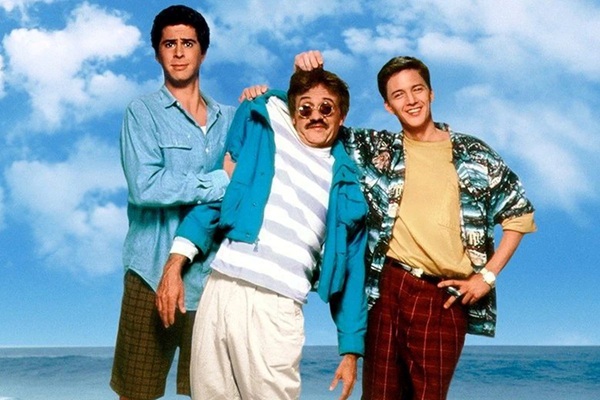
Is the reference to “Weekend at Bernie’s,” the silly cult hit from 1989 about two guys lugging a corpse around, too obscure now? Remember?
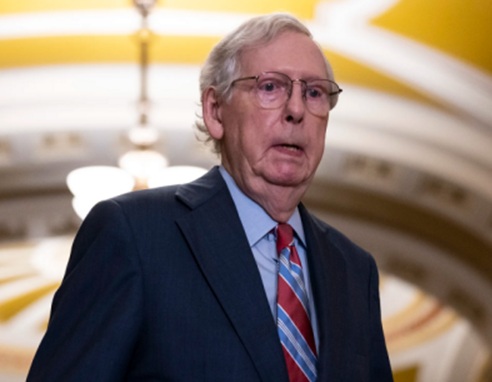
But I digress. In addition to that awful film, the current machinations of the Republican Party to conceal the presumably dire and maybe even Bernie-like condition of former Republican Senate Leader Mitch McConnell is disturbingly redolent of how the Democrats humiliated the late Senator Diane Feinstein in her dotage in 2023.
“The party’s reduction of Senator Diane Feinstein, 90, once a sharp and professional Senator from California, but now a sick, mentally-diminished shell, to its marionette is particularly ugly. Last week, Feinstein relinquished the power of attorney to her daughter, a tacit admission that she was no longer competent to handle her own affairs. Yet she remains in a position that requires her to participate in decisions regarding the affairs of the United States and its many millions of citizens. How could she be incapable of acting in her own interest but still qualified to do the job her constituents (foolishly) elected her to do? Obviously, she can’t.
“Feinstein had already begun to display disturbing signs of age-related cognitive decline before a series of health issues sent her into medical earlier this year. She was missing from the Senate for months, and when she returned appeared frail and confused. Since returning to Washington DC, she has appeared frail and has shown the public several alarming mental lapses. She should resign, of course, but may no longer have the requisite mental acuity to understand that she should resign. Her party, meanwhile, is perfectly satisfied to allow her to embarrass herself and scar her reputation as a distinguished public servant as long as she allows it to pull her strings so Democrats can maintain their filament-thin majority in the Senate…”
McConnell is arguably worse off than Feinstein, since he may be dead. From the Washington Post:
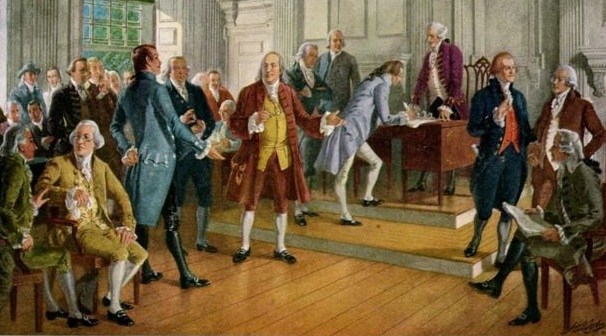
The Mecklenburg Declaration of Independence, or “Meck Deck, as its friends call it, was a document allegedly signed on May 20, 1775, in Charlotte, North Carolina by a committee of citizens of Mecklenburg County. The document declared local residents “free and independent” from British rule in response to news of the battle of Concord. Some North Carolina historians argue that Thomas Jefferson cribbed from the Meck Deck to draft his Declaration of Independence, and that’s because they are North Carolina historians.
The evidence that Jefferson plagiarized the earlier document is weak to say the least. To begin with, there is no authentic copy of the Mecklenburg Declaration of Independence in existence For me, that should end the controversy.
The story is that twenty-seven of Mecklenburg County’s civic leaders led by Col. Thomas Polk, who was the great-uncle of President James K. Polk, received news the colonial battles against the British in Massachusetts culminating in the British defeat an Concord a month earlier. They signed of the document “in a rustic backwoods courthouse which stood nearby in the center of the intersection of Trade and Tryon Streets,” according to a plaque that now stands in Charlotte’s Independence Square. The declaration was read to a large crowd that had gathered at the courthouse steps, according to eyewitness accounts. Tavern owner James Jack volunteered to deliver the document to the Continental Congress in Philadelphia, but the North Carolina delegation never brought it before the full Congress.
Like so many disputed documents, the Meck Deck was destroyed in a fire in1800 fire at the home of Meck Dec secretary John Alexander. In 1819, however, Alexander’s son, William, delivered what he claimed to be an accurate copy that had been reconstructed from memory by his father.
From memory. That makes the thing hearsay and ineligible to serve as admissible evidence in any court or even a credible investigation. Nevertheless, The Raleigh Register published it, and the text bore sufficient resemblance to THE Declaration that it set the day’s conspiracy theorist’s tongues a wagging. John Adams, then corresponding routinely with his old friend and rival, mentioned the Meck Deck in a letter to Jefferson dated June 22, 1819. Jefferson wrote that he had never heard of it, much less read it, and in a letter responding to Adams on July 9, 1819, said the document was probably a hoax. That letter was published after Jefferson’s death (on the 50th anniversary of THE Declaration’s signing in 1826, when Adams died as well) in 1829. Jefferson’s hoax accusation prompted the North Carolina legislature to establish a committee to investigate the matter.
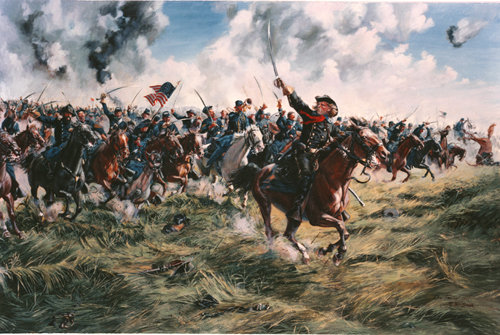
Today, July 3, in 1863 was the date of Pickett’s Charge, when Confederate General Robert E. Lee ordered a desperate Napoleonic advance against the Union line at Gettysburg in what has come to be a cautionary tale in human bravery and military hubris. The same day marked the zenith of the career of George Armstrong Custer, the head-strong, dashing cavalry officer who would later achieve both martyrdom and infamy as the unwitting architect of the massacre known as Custer’s Last Stand.
I have vowed to do all I can, which admittedly isn’t much, to get the story of what I like to call Custer’s First Stand into our nation’s cultural memory. I wrote much of what you are reading now way back in 2011, and have not adequately fulfilled my pledge since, although I have mentioned “Yellow Hair” (as his Native American conquerors called him) periodically over the years. Many historians have opined that Custer may have saved the Union army from defeat at Gettysburg with his bold actions this day, and therefore may have saved the Union itself. That accomplishment is far more important than the blunder at Little Big Horn that defines Custer’s image and reputation.
Custer’s heroics on the decisive final day of the Battle of Gettysburg teach their own lessons, historical and ethical. Since the East Calvary Field battle has been thoroughly overshadowed by the tragedy of Pickett’s Charge, it is little known and seldom mentioned. That is wrong.
Tell your friends and families the story, which has never been portrayed on screen. It is a really good story.
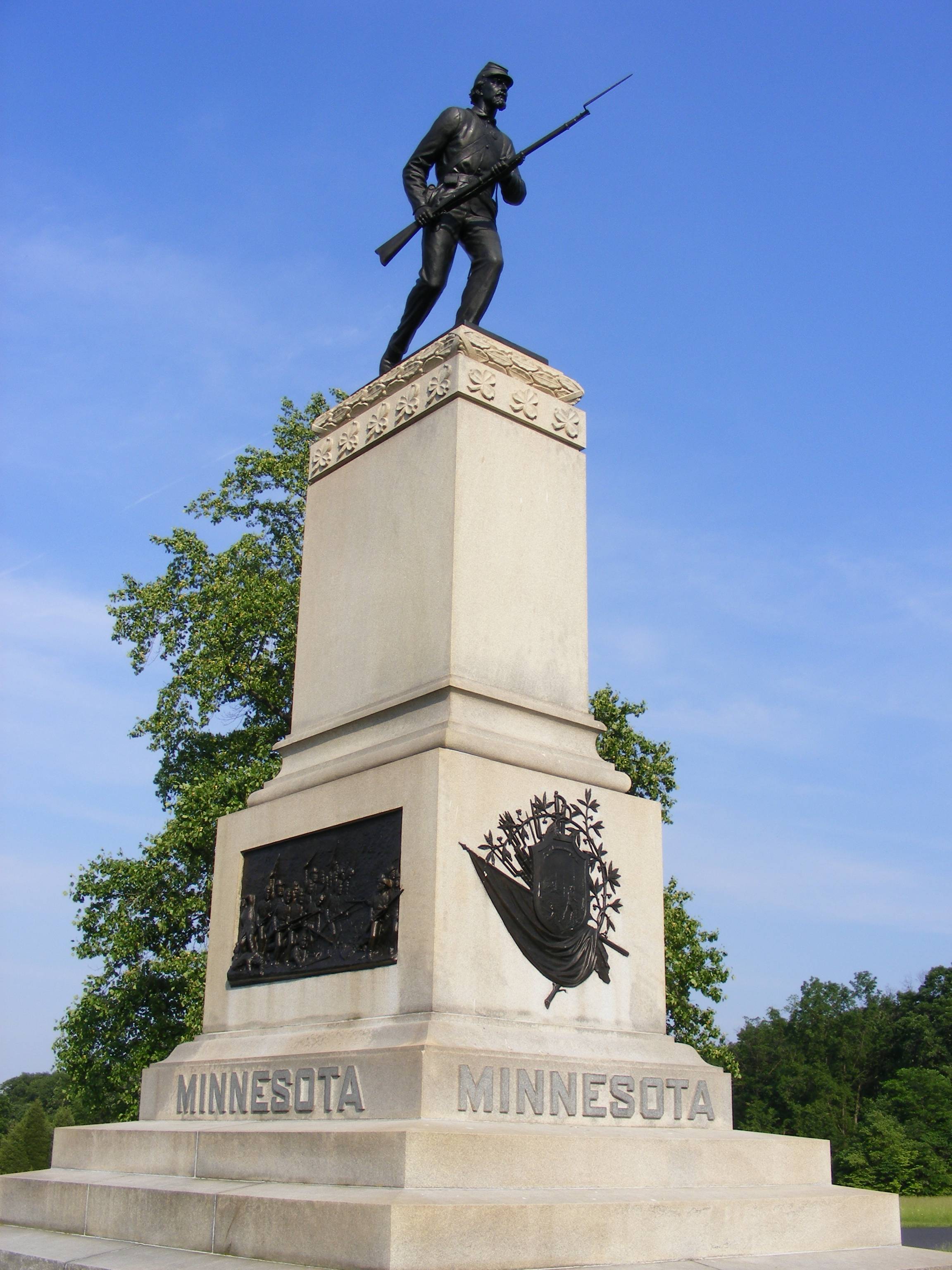
If you know anyone from Minnesota or is unfortunate enough to have to live in that ethically-addled state today, pause in your appropriate contempt for the blight on the Republic the Land of Lakes has become in recent years. Express your gratitude for their state, whose brave soldiers in this day in 1863 may have quite literally saved the United States of America and made this 250th celebration possible.
I know, I know. Minnesota has gone completely nuts. It has an incompetent, silly, uber-woke governor; its Attorney General is an anti-white racist and probably a criminal, the Mayor of Minneapolis is an Ethics Villain, it has an anti-Semitic Congresswoman who has openly admitted that her first loyalty is to Somalia, its opposition to ICE operations represents more of a genuine insurrection than anything that occurred during the 2021 Capitol riot, and the state is in a tight race with California, Washington, Oregon, New York and Maryland for the booby-prize of “Most Embarrassing State .” But ’twas not always thus.
July 2 was the second day of the decisive Civil War battle at Gettysburg, Pennsylvania, and the most complicated and wide-ranging day in the conflict. So much of desperate significance was going on at Seminary Ridge and Cemetery Ridge, on Little Round Top, the Peach Orchard, Devil’s Den and a half dozen other key features on the battle field that whether an instance of heroism was recorded or forgotten is as much a matter of chance as anything else. Even determining what was the turning point in the day’s conflict, which ultimately was won by the forces of the North, is an exercise in searching for order in chaos.
There is no question, however, that the First Minnesota Volunteer Regiment’s astonishing heroics stand out even among the many other examples of gallantry on that day. The battlefield monument to the First Minnesota is the largest erected to any Union regiment, and yet it has not guaranteed our cultural memory of the epic sacrifice those soldiers made. Other second day exploits, due to sometimes arbitrary choices made by historians and film makers, have taken up the limited space available in the public’s attention to the details of the Civil War.
This is a massive injustice. As the battle raged for Cemetery Ridge, crucial high ground occupied by Union forces but under siege by the Grays, General Winfield Hancock saw a serious breach in the Union line. He realize, in horror, that Wilcox’s Alabama Brigade was on the verge of breaking through, possible dooming Meade’s army to defeat. The attack had to be blunted and and its advance stalled until he could round up sufficient reinforcements to repel the rebels.
Hancock ordered the First Minnesota to charge the brigade and hold the position, even though its 262 men was outnumbered by a force of more than 1200. It wasn’t quite the hopeless odds face by the defenders of the Alamo, but the regiment’s prospects were grim enough.
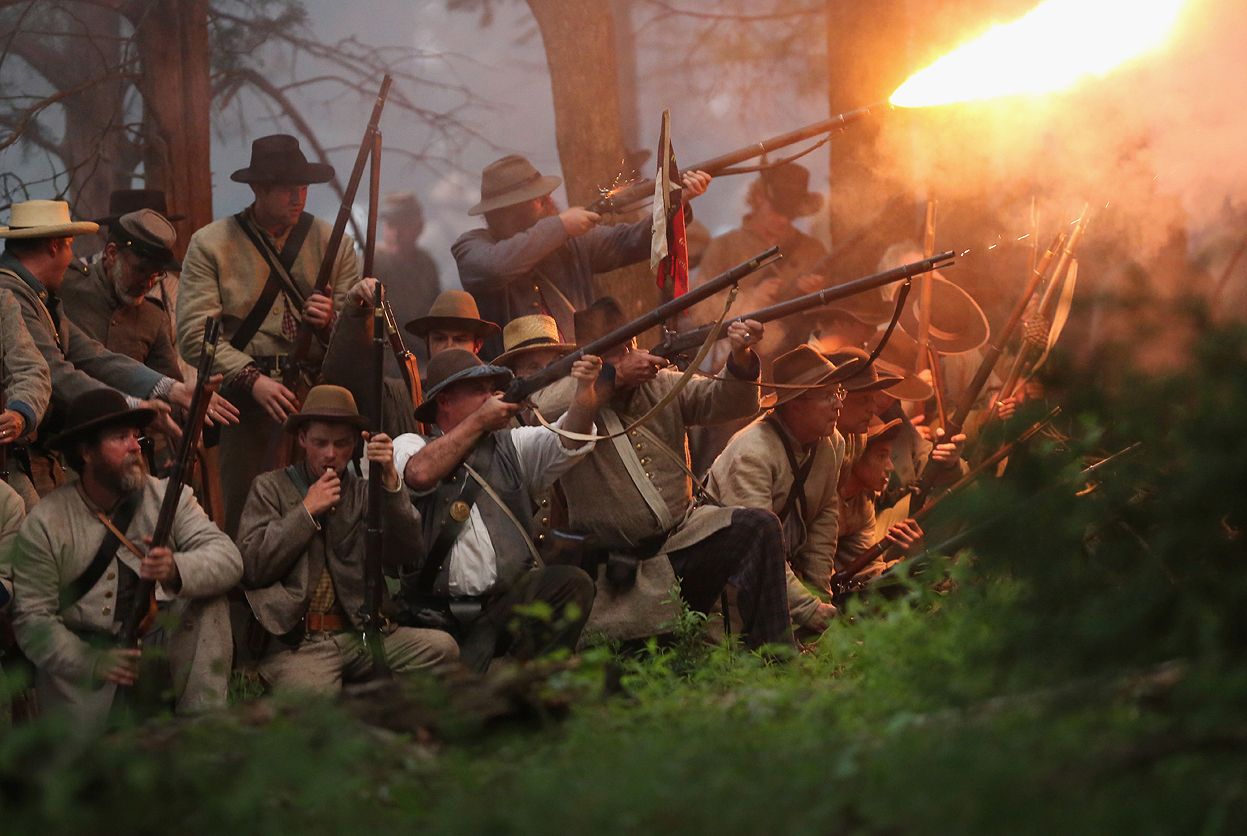
Today is July 1, which is always treated across the United States as the gateway to a long weekend and the Fourth of July, and little more. This year, it is the run up to the 250th Anniversary of out nation’s founding. July 1 is also, however, the anniversary of the first day of the Battle of Gettysburg, the most important and most deadly battle of the many important and deadly conflicts in the American Civil War. The two American armies that clashed in the Pennsylvania town sustained more than 50,000 casualties on the Gettysburg battlefield, which may be the saddest and noblest place in America. It is also reputed to be the most haunted, which considering the number of souls lost between July 1 and 3 in 1863, shouldn’t surprise anyone.
[Digression: The Gettysburg Hotel is allegedly haunted, and the proprietors designate specific rooms as haunted. The rent for those rooms is less than the other rooms because, I was told when I called to inquire regarding reservations, “guests tend not to stay the whole night in those rooms.]
Our 250th celebration is an appropriate time to remember Gettysburg, because it is one of those landmark events in American history that could have so easily turned out differently, and if it had, we would never have made to the Centennial, never mind the 250th. The fact that the North prevailed was due to a confluence of random events, the essence of moral luck.
If you have not made at least one pilgrimage to the battlefield, you owe it to yourself, to your family, and to the memory of the combatants, to go. You need not swelter in July. Gettysburg is just as inspiring in the Spring or Fall.
I didn’t venture an opinion on whether President Trump’s executive order banning birthright citizenship would fly with the Supreme Court (I did post about Justice Jackson making a fool of herself during oral argument), but I would have been surprise if today’s decision had turned out differently than it did.
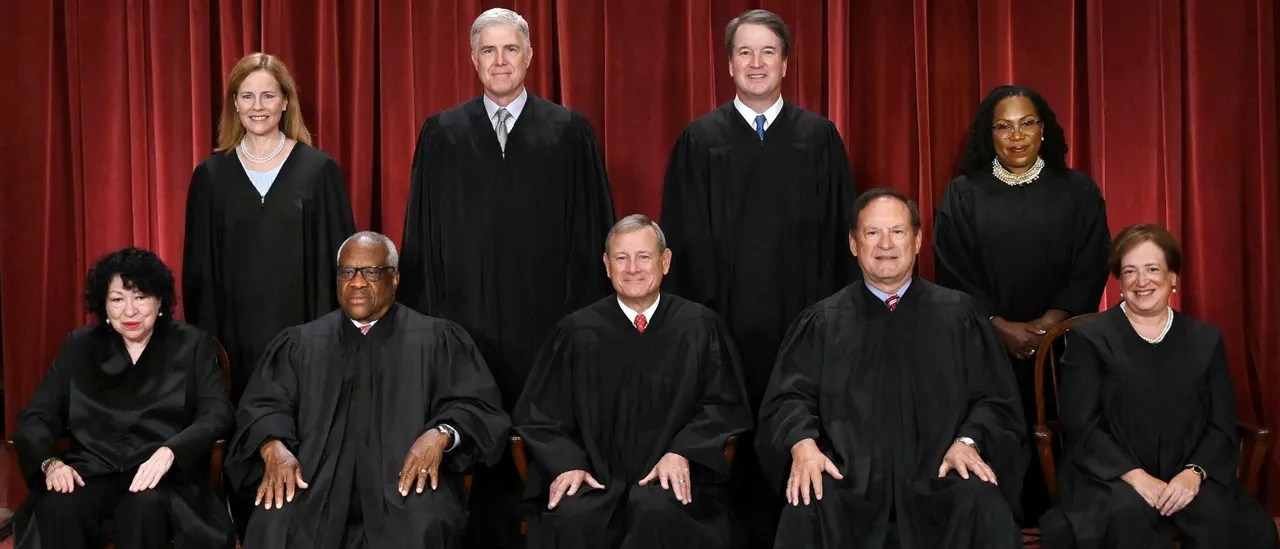
The Supreme Court ruled today that President Donald Trump’s executive order was unconstitutional. The ruling was announced just as I was preparing commentary on earlier decisions this week: that post will arrive later today.
Chief Justice Roberts wrote the majority opinion in the 6-3 ruling. “If Congress intended to limit American citizenship to the children of those domiciled in the United States, nothing in the succinct language of the Citizenship Clause conveyed that design,” Roberts wrote. Justice Brett Kavanaugh concurred in the result but dissented on the reasoning. Such concurring opinions are for professors and geeks, to be cited in law review articles and wild-hair judicial opinion dicta.
Justice Samuel Alito made some interesting points in his dissent about how birthright citizenship has very different, and potentially perilous implications today that never occurred to the Founders, writing,