[The previous post reminded me of this one, from 2015. Here it is again, slightly updated and edited. It’s as accurate now as it was then, unfortunately.]
At the rate things are going, I am certain that before long no pop vocal interpretations of traditional Christmas music will be easily accessible on the radio. This is a cultural loss—it’s a large body of beautiful and evocative music—and someone should have, one would think, the obligation of preventing it. But I have no idea who.
I realized this when I felt myself getting nostalgic and sad as I listened to a series of “Christmas classics.” For one thing, they all reminded me of my parents, whose absence beginning in 2011 permanently kicked my enjoyment of the season in the groin. For another, all the artists were dead. Bing: dead. Frank: dead. Elvis: probably dead. Andy Williams, Nat King Cole, Dean Martin, Judy Garland, Burl Ives, Gene Autry, The Andrews Sisters, Perry Como, Elvis, Karen Carpenter, John Denver–dead. Long dead, in most cases. Christmas has become a serenade of dead artists. Except for the narrow range of country music stars for those who enjoy “O Holy Night” with a twang, living pop artists don’t sing these songs. OK, Mariah Carey, Josh Groban and Michael Bublé. Not many others. A few years ago, Sirius-XM was so desperate to find living artists that it was playing the Seth McFarland Christmas album. Seth can sing, but I’m sorry, but it’s hard to enjoy “Silent Night” while picturing “The Family Guy.”
It says something, I am not quite sure what, about our deteriorating political culture that the two poorest losers in American Presidential election history were the last two losing candidates, and whoever third place belongs to—Aaron Burr maybe? John Adams? Adlai Stevenson made some ungracious comments after his second defeat by Eisenhower suggesting that Ike’s weak heart would make Nixon President—is too far from them to be seen with the Mt. Palomar telescope.
Hillary Clinton had the title wrapped up, I assumed for all time, after her four-year whine-fest following her defeat by Donald Trump. She announced herself a member of “the resistance,” blamed everyone and everything imaginable except the real culprit (herself), and encouraged surrogates and the news media to attempt various dishonest arguments to cast suspicion on Trump’s victory. Was her refusal to make the traditional statement wishing the new President well and pledging to do what she could in the interest of unity and the national interest the catalyst for the Democrats’ villainous effort to undermine Trump’s Presidency by false accusations, contrived impeachment and ad hominem slurs? Whether it was or not, Clinton openly fumed and seethed about her loss, trapped in the anger stage of grief and never moving on to acceptance.
Donald Trump, of course, passed her in the Bad Loser race like she was standing still once the 2020 election night showed Joe Biden was a winner. Not only did Trump refuse to concede, he continued to insist that the election was rigged and even that he had won…in fact, won by a landslide. He encouraged public protests and employed lawyers who over-promised, made intemperate claims, and either came close to the line of unethical advocacy or crossed it.
What continues to amaze, as pro-abortion supporters and activists throw every conceivable argument they can come up with against the proverbial wall in hopes that one might stick,is how insubstantial, emotional and often intellectually dishonest those arguments are. As the Supreme Court deliberates, we are certain to hear and read many more, and I honestly can say that I am hoping for a legitimate and persuasive one to finally emerge.
What I fear we will get, however, as the arguments do not stick but slide off that wall like wet tissue, is more warnings, threats, insults and jeremiads, like Justice Sotomayor’s despicable “stench” question, which I translate as, “Aren’t you properly terrified that if we don’t just do as the pro-abortion machine demands rather than analyze a difficult problem objectively according to facts, law and ethics, people who have already made up their minds regardless of all of those will be furious?”
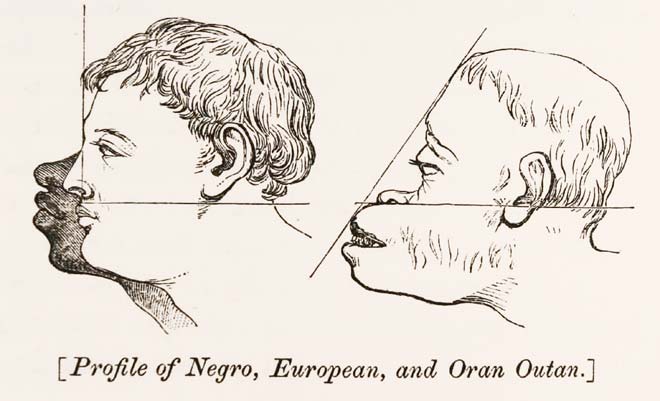
The “pro-choice” rhetoric increasingly reminds me of the arguments made by the slave-holding South as thoughtful abolitionists and the anti-slavery sentiment strengthened ten-fold by “Uncle Tom’s Cabin” began backing defenders of “the peculiar institution” into a corner. They primarily invoked invalid or dishonest arguments: “science” and “studies” claiming to prove that black people were not quite human (see above), and did not have the “necessities” (to quote poor Al Campanis a century later) to be free; slavery had been permitted so long that it constituted a betrayal to end it; a Supreme Court ruling had protected the practice, and the way of life that slavery’s practitioners enjoyed and benefited from immensely would be threatened if slavery were banned. These are all essentially the same arguments being advanced today to justify continuing to treat another group of vulnerable and exploited human beings as property and non-humans. The fetus doesn’t deserve human rights because it isn’t “viable” or “cognizent.” A right that has been part of the law for half a century should never be challenged. Roe v. Wade is to the unborn as Dred Scott was to slaves.
And, perhaps most of all, American women have thrived by treating developing babies as disposable by “choice.”
Here is Ryan Harkins’ Comment of the Day addressing the related argument, advanced by a law professor, that the right to kill the offspring of incest and rape is essential to the advancement and success of people like her.
1. Where “Ick” and unethical become indistinguishable...Airlines have enough problems without having to deal with…this. A message was sent through the Aircraft Communications Addressing and Reporting System (ACARS) alerting a Delta crew in Atlanta that a passenger in seat 13A was “breastfeeding a cat and will not put cat back in its carrier when [flight attendant] requested.” And she was. Every time the passenger was asked to cease and desist, she attached the cat, which was of the hairless variety, not that it’s relevant, to her nipple again. A flight attendant on board during the incident, wrote on social media,
“This woman had one of those, like, hairless cats swaddled up in a blanket so it looked like a baby,” she said. “Her shirt was up and she was trying to get the cat to latch and she wouldn’t put the cat back in the carrier. And the cat was screaming for its life.”
2. A you have probably heard by now, CNN canned Chris Cuomo. This is a classic example of doing the right thing for the wrong reason: Cuomo should have been fired because he’s a terrible, unethical, none-too-bright journalist. The fact that he also mishandled a conflict of interest, abused his sources and used his position with CNN to assist his brother as The Luv Guv tried to avoid accountability for sexual misconduct all flowed from CC’s incompetence and ethical dunderheadedness. A serious scandal of some kind involving “Fredo” was inevitable.
[Introduction:I was pleased to see this addition today’s Open Forum by E2. I have seen “American Holocaust: Deceit and Indifference,” and intended to eventually do a post about this terrible episode in U.S. history. I was especially thrilled to see the references to Breckenridge Long (above). I have long considered building a page here of American ethics villains through the years, and Long deserves to be on it.]
***
I spent 90 excruciating minutes a couple of weeks ago watching “American Holocaust: Deceit and Indifference”– a PBS documentary which unlike other PBS productions actually tries to relate an unvarnished truth. It is a devastating piece, and oddly, seems to disappear and then reappear on Amazon.
I knew a fair amount about all this from my history reading, but this was much more. It has real photographic documentation (e.g., a photo of a document about Jewish immigration to the US, with a handwritten note: “Ignore… [signed] FDR”); and a detailed photograph of the State Department’s Breckenridge Long’s advisory to US consulates worldwide about ways in which they could delay Jews’ emigration to the US between 1940 and 1944 – not coincidentally when 6 million died at the hands of the Nazis.
Slavery, our original sin, is not the topic here. And yes, we denigrated and mistreated the Irish, Italian and Chinese immigrants, but at least they were allowed to come here and had a chance to live. Not so for the Jews in Germany and Eastern Europe when the Final Solution arrived. The horrible truth is that it was not a primary cultural or bias problem among the general population that condemned so many innocent Jews including children to death, but a persistent and sinister State Department policy.
November 29 marks the anniversary of the world making a firm choice in a position of ethics zugszwang, as the United Nations voted in 1947 to partition Palestine and create an independent Jewish state. Things have never been peaceful or, apparently, resolvable since. Jews and Arabs had been arguing over the region since the first decade of the 20th Century, as both groups wanted the British-controlled territory. The Jews had come from Europe and Russia establish a Jewish state in their ancient homeland. The native Palestinian Arabs wanted to stop Jewish immigration and set up a secular Palestinian state. In 1929, violence between Arabs and Jews broke out, and Great Britain attempted to limit Jewish immigration to appease the Arabs. The Holocaust spurred many Jews to entered Palestine anyway, however illegally, and in the 40s the Jews were the terrorists, attacking British forces in Palestine. When the U.S. sided with the Zionists in 1945, Great Britain gave up and handed its dilemma over to the United Nation, which on November 29, 1947, voted to partition Palestine.
The Jews got more than half of Palestine, despite constituting less than half of the population. The Palestinian Arabs fought the newly empowered occupants, but the Jews prevailed, not only securing their U.N.-granted share of Palestine but some of the Arab portion as well. On May 14, 1948, the State of Israel declared its official existence, and the the next day, Egypt, Jordan, Syria, Lebanon and Iraq attacked. They chose…poorly. The Israelis again prevailed, and again expanded their territories at Arab expense, taking Galilee, the Palestinian coast, and a strip of territory connecting the coastal region to the western section of Jerusalem. The Palestinians have never abandoned their goal of eliminating the Jewish state, and after so many decades, the chances of a peaceful and permanent resolution of this hundred-year-old ethics train wreck are approximately zero.
Meanwhile, Happy Hanukkah, and remember the Maccabees!
1. Note from The Great Stupid. In a new holiday-themed Peloton commercial, a modern Scrooge discovers his best self by peddling away. Awakening, he rushes to the window, just like in the Dickens tale, and shouts to the juvenile in the street, “What day is it, child?” Child? Everybody knows that the line is “What day is it, boy?” Ah! But because all commercials and casts must have a requisite number of black actors, the lad was black, and even Scrooge can’t call a black individual boy, even if he is a boy. So the “Christmas Carol” parody, which is the whole point, is knee-capped for political correctness. This director’s advice: either be bold and cast a white kid to play the white kid in the story, or ditch the concept entirely. Or…
…cast two white actors in a two-character TV ad. Now that would be revolutionary!
2. Did I miss Hillary Clinton taking over the Salvation Army? The Salvation Army’s solution to being called on it’s CRT embrace: deny, deny, deny. Also: lie. Indignantly!
As Ethics Alarms noted a few days ago, two internal Salvation Army documents, a guidebook titled “Let’s Talk About Racism” and another called the “Study Guide on Racism” fully endorse the “anti-racism” pro anti-white racism theme. “In the absence of making anti-racist choices, we (un) consciously uphold aspects of White supremacy, White-dominant culture, and unequal institutions and society,” the first document states—you know, like casting a black kid as Scrooge’s new friend. From the latter: White people are guilty “unconscious bias” and “unwittingly perpetuate racial division…We must stop denying the existence of individual and systemic/institutional racism. They exist, and are still at work to keep White Americans in power.”
I feel “Bite me!” rising up my gorge into my mouth even as I type that.
The Salvation Army is shocked—shocked!—that anyone would think it’s playing race games. In a perfect Jumbo, the group responded, “Critical Race Theory? What Critical Race Theory?”
“…[S]ome individuals and groups have recently attempted to mislabel our organization to serve their own agendas. They have claimed that we believe our donors should apologize for their skin color, that The Salvation Army believes America is an inherently racist society, and that we have abandoned our Christian faith for one ideology or another. Those claims are simply false, and they distort the very goal of our work….” The Salvation Army occasionally publishes internal study guides on various complex topics to help foster positive conversations and grace-filled reflection among Salvationists. By openly discussing these issues, we always hope to encourage the development of a more thoughtful organization that is better positioned to support those in need. But no one is being told how to think. Period.”
Except that both of the documents tell employees how to think… like Ibram X. Kendri.
The next part of the denial is hilarious…
In this case, the guide “Let’s Talk About Racism,” was issued as a voluntary resource, but it has since become a focus of controversy. We have done our best to provide accurate information, but unfortunately, some have chosen to ignore those efforts. At the same time, International Headquarters realized that certain aspects of the guide may need to be clarified. Consequently, for both reasons, the International Social Justice Commission has now withdrawn the guide for appropriate review.
Translation: “OK, you caught us!”
The explanation, perhaps even more than the anti-white play-books, makes it clear that this is a charity that no longer can be trusted.
It’s not as if a racist, Marxist, anti-American organization like Black Lives Matter has to try to be obnoxious, but nonetheless, it treated Thanksgiving celebrants with that holiday message this week. Normally Comment of the Day posts that arrive in an Open Forum are accorded guest blogger honors, but I couldn’t figure out a clean way to unlink the two comments presented here. I apologize to P.M. and Steve.
The “stolen lands” indictment has rankled me for a long, long time, and the two Ethics Alarms regulars between them have done an excellent job of covering the issue.
First up is Steve-O; P.M. Lawrence will take over later.
***
steal [stēl] VERB [stolen (past participle)}: 1. take (another person’s property) without permission or legal right and without intending to return it. “Thieves stole her bicycle” · synonyms: theft · thieving · thievery · robbery · larceny · burglary · shoplifting · pilfering · 2. dishonestly pass off (another person’s ideas) as one’s own. “Accusations that one group had stolen ideas from the other were soon flying” synonyms:plagiarize · copy · pass off as one’s own · infringe the copyright of · pirate · poach · borrow · appropriate
conquer [ˈkäNGkər] VERB 1. overcome and take control of (a place or people) by use of military force. “The Magyars conquered Hungary in the Middle Ages” synonyms: defeat · beat · vanquish · trounce · annihilate · triumph over · be victorious over · best · get the better of · worst · bring someone to their knees · overcome · overwhelm ·
So tell me, which of the above definitions more accurately reflects what happened here in the US? To steal something from someone, the other person must first possess it. Can you really steal from those who don’t believe anyone can own land? Not really. But you can conquer that area.
Unfortunately, history is almost nothing but conquests. It’s not the story of people becoming friends. History has been about conquests since Sargon of Akkad conquered the Sumerians and since Joshua led the Hebrews over the Jordan to attack and take the city of Jericho. In fact, if you go all the way back to the earliest Biblical stories, the Hebrews first came to be when and because a sheik in the Bronze Age Mesopotamian city of Ur answered a call that came directly from the man upstairs promising him the land originally promised to Caanan, grandson of Ham, because Ham proved himself unworthy by seeing Noah drunk and uncovered in his tent and doing nothing about it. Most of the rest of the Old Testament is about the Hebrews getting, losing, and getting back the land promised to them by God. Most of us grew up reading of Joshua bringing the walls of Jericho down and cheering on David as he stood up to Goliath, giving Saul’s army the chance to defeat the Philistines, and never once asking the question of whether they were right. However, come to the modern state of Israel, and suddenly it’s stolen land, stolen from the Palestinians, who were never a nation to begin with, and at any rate were Johnny-come-latelys since the Caananites, Hebrews, Seleucid Greeks, Romans, Persians (briefly), Byzantines, Crusaders, and Turks had the territory before them.
Shepard, who has been obsessed with Watergate for decades and has written three previous books about the scandal, forced the release of a secret prosecutors’ “road map” used to convince a grand jury to indict key Watergate figures and spur the impeachment inquiry. He also claims his research shows that Watergate prosecutors were coordinating with Judge Sirica, which was one reason many of them, included the sainted Special Prosecutor Archibald Cox, improperly took documents with them when they left the case. Amusingly (I guess), the Washington Examiner calls this “a big legal no-no.” That’s one way of putting it, I guess—a stupid way. If true, it’s grounds for disbarment for the lawyers and impeachment for the judge.
President Kennedy was assassinated on this date in 1963, easily my most vivid memory of any national event in my lifetime. I am not an admirer of Jack Kennedy as a President or a human being, but it is hard to imagine a more wrenching disruption of the nation’s course, spirit, fate and future than what occurred that day in Dallas.
We watched everything unfold for the rest of the week on our black and white TVs, from Walter Cronkite’s somber announcement that the President of the United States was dead, to the shooting of Lee Harvey Oswald, through to the D.C. funeral procession and John-John’s salute.
The day still represents traumafor me, and I am sure to many others of my generation: when Grace and I were planning our wedding in 1980 and November 22 was suggested as the most convenient date, I insisted on the 23rd instead. This is also the date that kicks off the dreaded holiday season, stuffed with milestones good and bad (I count seven between now and New Years), periods of anxiety, nostalgia and anticipation in between, and too much longing and memories of loss to bear.
I hate it.
1. Yes, it’s an unethical Christmas tree. In the town of Grimsby in North East Lincolnshire, the official Christmas tree has been taken down from the town center after a local uproar declaring the 10 foot, conical artificial tree a “national embarrassment.” It also cost a thousand pounds. The town’s explanation was, shall we say, confusing, with Councillor Callum Procter claiming,
There are great plans for celebrating the start of the Christmas period next week. Unfortunately, the Christmas Market tree was installed too early, and we understand that people were confused and thought this was our civic tree. The tree has been removed temporarily today and our contractors are reinstalling again, for free, ahead of the market next week. I’m looking forward to seeing people enjoying the illuminations, the market, and the revamped St James’ Square with the civic tree and the special lighting on the Minster as part of the Christmas experience.
Wait…the town is going to put the same tree back up, and everyone will like it because it won’t be “too early”? I am dubious. Here’s the tree:
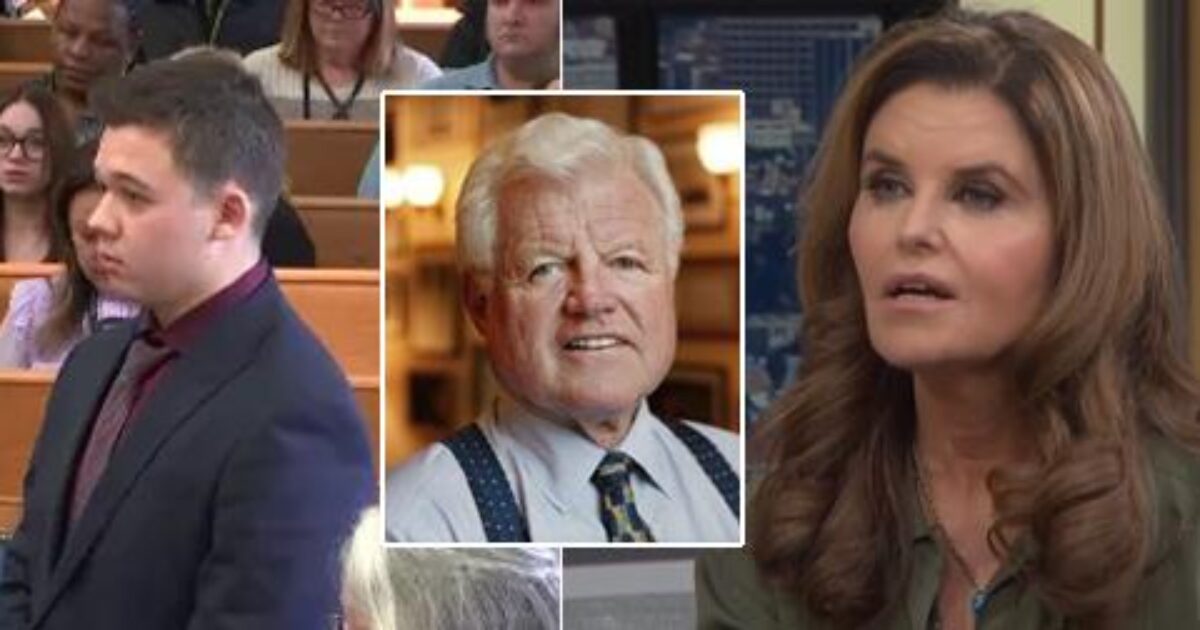
Maria Shriver, once a Peabody and Emmy award-winning journalist for NBC News and now an occasional guest host, took to Twitter to post, “I’m trying to take a beat to digest the Rittenhouse verdict. My son just asked me how it’s possible that he didn’t get charged for anything. How is that possible? I don’t have an answer for him. The idea that someone could be out with a semi-automatic weapon, kill people, and walk is stunning. I look forward to hearing from the jury. This is a moment for them to explain how they came to their decision.”
Shriver’s brain fart is reminiscent of Jimmy Carter’s fatal debate fantasy on 1980 when he claimed that had been discussing nuclear policy with his daughter Amy. If anything, Shriver’s tale is more unlikely: her sons are 24 and 28. Aren’t these products of the best private schools better educated than to be mystified by the basics of criminal law? And how could Shriver think that Rittenhouse wasn’t charged with any crimes?
Knowing a hanging curve right over the plate when he sees one, Ted Cruz, as they like to say of Republicans, “pounced.” He tweetstormed,