Noonish Ethics Round-Up, 2/19/2020: That Other Day That Will Live In Infamy…

Hi!

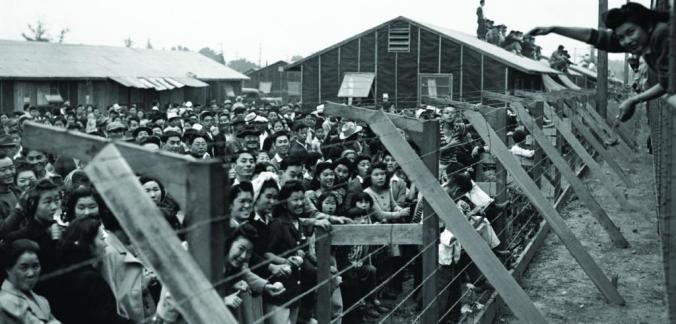
1. On this day in 1942, President Franklin D. Roosevelt signed Executive Order 9066, empowering the Army to issue orders emptying parts of California, Oregon, Washington and Arizona of immigrants from Japan, who were precluded from U.S. citizenship by law, and nisei, their children, who were U.S. citizens by birth. After the order, which was upheld by the U.S. Supreme Court including future liberal icon William O. Douglas, the Japanese-Americans  were first warehoused at “assembly centers,” which could be racetrack barns or on fairgrounds, then shipped to ten detendtion camps in Western states and Arkansas. Armed guards and barbed wire, plus morning roll call were part of the degrading and punitive experience.

It is fair to say this treatment was substantially rooted in racism, for there was no mass incarceration of U.S. residents with ties to Germany or Italy. Once the U.S. appeared to be on the way to victory along with its Allies in December 1944, the Executive Order was  rescinded. By then the Army was enlisting Japanese American soldiers to fight in Africa and Europe. President Harry Truman told the all Japanese-America 442nd Regimental Combat Team: “You fought not only the enemy, but you fought prejudice—and you have won.”

California is now preparing to formally apologize to the families of those interned.State Assemblyman Al Muratsuchi (D-Torrance) introduced a resolution that will formally apologize for California’s “failure to support and defend the civil rights” of Japanese Americans during that period,” and it is expected to pass today.

It’s naked grandstanding and virtue signaling, of course. The federal government apologized for the unconstitutional imprisonment and granted financial redress to survivors with the Civil Liberties Act of 1988, and the Supreme Court overruled its decision  upholding internment in 2018. Continue reading

“Mini-Mike” Height Ethics

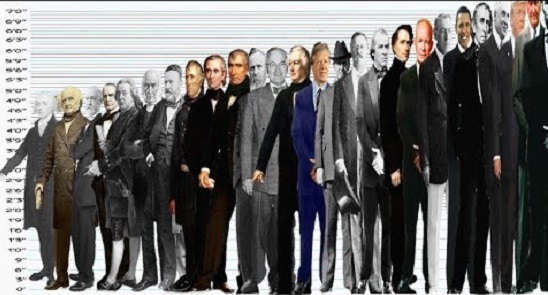
When President Trump tweeted that Michael Bloomberg was a  “5’4” mass of dead energy,”this instantly was seized upon by “the resistance” and the news media (like NPR) as one more Trump “lie” to add to the list. Why, all you have to do is google Bloomberg’s height to learn that the ex-NYC mayor and media mogul currently trying to buy the Democratic  nomination for President is a full 5’8″ tall, and also to be informed that 5’8″ is average for an American male!

The tweet was, of course, as infantile as it was Trump-like, redolent of candidate Trump’s mockery of Marco Rubio as “Little Marco.” It was also a lot closer to accurate than Google’s bias-driven mythology. Heck, I knew that Bloomberg was short—anyone who has seen him in a group does—and 5’8″ isn’t short. Edward Welsch, who worked for Bloomberg, writes in Commentary,

As a former Bloomberg News employee, I heard this and shook my head in disbelief. Google is lying. I’ve seen the man in person, and he’s strikingly short. My colleagues and I estimated him at 5’5”. Reviewing morning news reports, I note that Google isn’t the only one that inflates Bloomberg’s height. The Daily Caller and NBC News give him 5’7”, the Washington Free Beacon 5’6”. Apparently Bloomberg himself has said 5’7”,  but then he’s also claimed to be 5’10”, which is taller than I am and contrary to my memory of having to tilt my head downward when I stood near him on one occasion several years ago.

Continue reading

Morning Ethics Warm-Up, 2/18/2020: ARRRGH!!!

Grrrr…

Well, that’s my reward for setting the all-time ethics Alarms record for posts yesterday (8): I wake up to find my desk top won’t connect to the internet, sending me into Verizon Customer Service Hell. Then the tech puts me in safe mode, where I can connect to WiFi, but my password stops working, and I can’t get out of safe mode. I’m doing this post on my laptop, or as it affectionately known on Ethics Alarms, the Typo Machine. Other asides:

  • The Get Well bouquet Other Bill sent my wounded wife on behalf of the blog’s commentariat after her fall finally withered after exactly three weeks. It brightened our home and her spirits, and we are very grateful.
  • We joke about Trump Derangement, but the phenomenon resembles an actual illness, unlike its predecessors, the Clinton, Bush and Obama Derangement Syndromes. What has changed is the news media, which feeds and magnifies the mob-mentality and blind hatred with its daily, sometimes hourly, click-bait outrage stories aimed at the President. The Deranged immediately post them to a throng of “likes,” spawning the usual insulting comments. Imagine, a daily game based on denigration of the President of the United States, played daily and gleefully by millions of Americans. It is not healthy, responsible, respectful, or fair.

1. Wow, the Houston Astros sign-stealing scandal is  making people angrier as time goes on. MLB is taking measures to protect Astros players from retaliation from pitchers, as dark comments have been made about how the competition will inflict punishment on the cheating players even if Commissioner Rob Manfred has not. Yesterday, a poll participated in by thousands of baseball fans favored the Astros having to forfeit their 2017 World Championship by a three to one margin. (Please  recall that taking away the title was my recommendation when the scandal first broke.)

I also find it disturbing that while the Astros players and owner have been on an apology tour (though not a very effective one), deposed Red Sox manager Alex Cora, who was identified by the MLB investigation as the mastermind behind the sign-stealing scheme, has said nothing–no confession, no apologies, no statements at all.

Another scandal related note: the MLB Network’s Brian Kenny expressed amazement at the difference between players angry reactions to the sign-stealing revelations and the way they closed ranks and largely refused to condemn the steroid cheats. “They say now that they weren’t playing on a level playing field with the Astros knowing what pitches were coming,” Kenny said. “Level playing field! What did they think was the situation when the batters were juicing?” Continue reading

Ethics Alarms Celebrates Presidents Day: The Speeches: Theodore Roosevelt’s “The Man In The Arena,” April 23, 1910

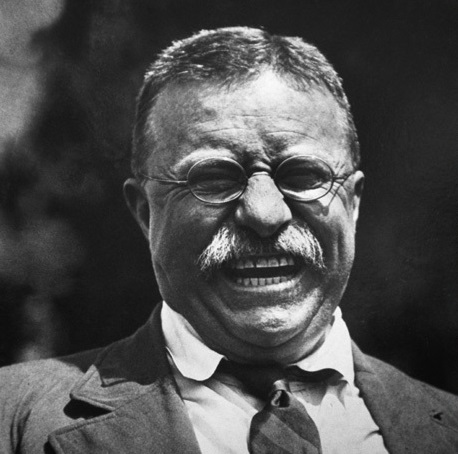
Theodore Roosevelt wasn’t still President when he gave his speech,  “Citizenship In A Republic”,  at the Sorbonne, in Paris, France on April 23,, 1910. He was a President, though, and getting ready to run for the office again; moreover, you can have a speech be any more pure Teddy than this one.

It is his most quoted speech as well as the one which describes his essence. I wonder if President Trump has read it? Teddy wouldn’t approve of Trump, I think, but he would have to admire the President’s determination to spit  in the eyes of his critics, and “whose face is marred by dust and sweat and blood; who strives valiantly; who errs, who comes short again and again, because there is no effort without error and shortcoming; but who does actually strive to do the deeds; who knows great enthusiasms, the great devotions; who spends himself in a worthy cause; who at the best knows in the end the triumph of high achievement, and who at the worst, if he fails, at least fails while daring greatly, so that his place shall never be with those cold and timid souls who neither know victory nor defeat.”

That describes Donald Trump these past three years as much as any President, including Teddy Roosevelt.

Strange and impressive associations rise in the mind of a man from the New World who speaks before this august body in this ancient institution of learning. Before his eyes pass the shadows of mighty kings and war-like nobles, of great masters of law and theology; through the shining dust of the dead centuries he sees crowded figures that tell of the power and learning and splendor of times gone by; and he sees also the innumerable host of humble students to whom clerkship meant emancipation, to whom it was well-nigh the only outlet from the dark thraldom of the Middle Ages.

This was the most famous university of mediaeval Europe at a time when no one dreamed that there was a New World to discover. Its services to the cause of human knowledge already stretched far back into the remote past at a time when my forefathers, three centuries ago, were among the sparse bands of traders, ploughmen, wood-choppers, and fisherfolk who, in hard struggle with the iron unfriendliness of the Indian-haunted land, were laying the foundations of what has now become the giant republic of the West. To conquer a continent, to tame the shaggy roughness of wild nature, means grim warfare; and the generations engaged in it cannot keep, still less add to, the stores of garnered wisdom which where once theirs, and which are still in the hands of their brethren who dwell in the old land. To conquer the wilderness means to wrest victory from the same hostile forces with which mankind struggled on the immemorial infancy of our race. The primaeval conditions must be met by the primaeval qualities which are incompatible with the retention of much that has been painfully acquired by humanity as through the ages it has striven upward toward civilization. In conditions so primitive there can be but a primitive culture. At first only the rudest school can be established, for no others would meet the needs of the hard-driven, sinewy folk who thrust forward the frontier in the teeth of savage men and savage nature; and many years elapse before any of these schools can develop into seats of higher learning and broader culture.

The pioneer days pass; the stump-dotted clearings expand into vast stretches of fertile farm land; the stockaded clusters of log cabins change into towns; the hunters of game, the fellers of trees, the rude frontier traders and tillers of the soil, the men who wander all their lives long through the wilderness as the heralds and harbingers of an oncoming civilization, themselves vanish before the civilization for which they have prepared the way. The children of their successors and supplanters, and then their children and their children and children’s children, change and develop with extraordinary rapidity. The conditions accentuate vices and virtues, energy and ruthlessness, all the good qualities and all the defects of an intense individualism, self-reliant, self-centered, far more conscious of its rights than of its duties, and blind to its own shortcomings. To the hard materialism of the frontier days succeeds the hard materialism of an industrialism even more intense and absorbing than that of the older nations; although these themselves have likewise already entered on the age of a complex and predominantly industrial civilization. Continue reading

Ethics Alarms Celebrates Presidents Day: The Speeches. III. FDR’s First Inaugural Address, March 3, 1933

By late winter 1933, the Great Depression had caused more than 11,000 of 24,000 banks to failed, wiping out the savings of depositors. Millions of Americans were unemployed and desperate;  millions more were working at vastly diminished wages that barely provided subsistence. Currency values had dropped  and farms were failing.

The Democratic Party had  run on a vague but revolutionary  platform  that made it clear  that the election of its Presidential  candidate, Franklin D. Roosevelt,  would result in unprecedented governmental growth to deal with the crisis. Roosevelt’s task in his first speech as President was to calm the burgeoning panic, and to reassure America that it was in competent hands.

Lincoln, Reagan and Roosevelt were the greatest orators ever to hold the office of President, and FDR was perhaps the greatest of them all. His strong and confident delivery, cocky body language and dramatic delivery made this speech a success as much as its content. And, of course, it contains his most famous quote, and one of the endearing quotes in our history.

I am certain that my fellow Americans expect that on my induction into the Presidency I will address them with a candor and a decision which the present situation of our Nation impels. This is preeminently the time to speak the truth, the whole truth, frankly and boldly. Nor need we shrink from honestly facing conditions in our country today. This great Nation will endure as it has endured, will revive and will prosper. So, first of all, let me assert my firm belief that the only thing we have to fear is fear itself–nameless, unreasoning, unjustified terror which paralyzes needed efforts to convert retreat into advance. In every dark hour of our national life a leadership of frankness and vigor has met with that understanding and support of the people themselves which is essential to victory. I am convinced that you will again give that support to leadership in these critical days.

In such a spirit on my part and on yours we face our common difficulties. They concern, thank God, only material things. Values have shrunken to fantastic levels; taxes have risen; our ability to pay has fallen; government of all kinds is faced by serious curtailment of income; the means of exchange are frozen in the currents of trade; the withered leaves of industrial enterprise lie on every side; farmers find no markets for their produce; the savings of many years in thousands of families are gone.

More important, a host of unemployed citizens face the grim problem of existence, and an equally great number toil with little return. Only a foolish optimist can deny the dark realities of the moment.

Yet our distress comes from no failure of substance. We are stricken by no plague of locusts. Compared with the perils which our forefathers conquered because they believed and were not afraid, we have still much to be thankful for. Nature still offers her bounty and human efforts have multiplied it. Plenty is at our doorstep, but a generous use of it languishes in the very sight of the supply. Primarily this is because the rulers of the exchange of mankind’s goods have failed, through their own stubbornness and their own incompetence, have admitted their failure, and abdicated. Practices of the unscrupulous money changers stand indicted in the court of public opinion, rejected by the hearts and minds of men. Continue reading

Ethics Alarms Celebrates Presidents Day: The Speeches. II. President Ronald Reagan’s Address To The Nation, January 28, 1986

U.S. Presidents are leaders of their parties, but that is only one role among many that the U.S. Presidency has evolved to serve. There are times when it is crucial for the President to be seen as the symbol of the nation and the representative of all Americans, whether some Americans are able to concede that fact, or not. Some of the greatest Presidential speeches were inspired by national tragedies, as a Chief Executive was forced by events to serve as “Comforter-in- Chief,”  and to to set aside partisanship in times of tragedy to speak words that remind us that, despite what may be passionate differences, we are all Americans.

No President was better qualified by his experience and talents to fulfull this role than Ronald Reagan, after we all watched the Space Shuttle Challenger launch and then explode into pieces on that beautiful, cloudless day.

Ladies and gentlemen, I’d planned to speak to you tonight to report on the state of the Union, but the events of earlier today have led me to change those plans. Today is a day for mourning and remembering.

Nancy and I are pained to the core by the tragedy of the shuttle Challenger. We know we share this pain with all of the people of our country. This is truly a national loss.

Nineteen years ago, almost to the day, we lost three astronauts in a terrible accident on the ground. But we’ve never lost an astronaut in flight; we’ve never had a tragedy like this. And perhaps we’ve forgotten the courage it took for the crew of the shuttle; but they, the Challenger Seven, were aware of the dangers, but overcame them and did their jobs brilliantly. We mourn seven heroes: Michael Smith, Dick Scobee, Judith Resnik, Ronald McNair, Ellison Onizuka, Gregory Jarvis, and Christa McAuliffe. We mourn their loss as a nation together. Continue reading

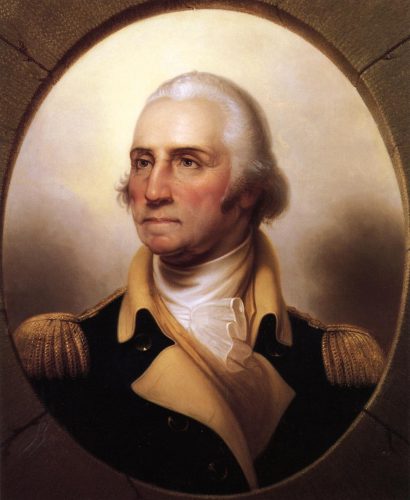
Ethics Alarms Celebrates Presidents Day: The Speeches. I. President Washington’s Farewell Address

George Washington’s last “address” was really a letter, sent to Congress and published in newspapers across the nation,  to “Friends and Citizens” as the first President’s second term was nearing its end in 1796

The U.S. Senate began the tradition of having a member of Congress read the letter every February 22, Washington’s birthday, beginning in 1862, as a morale-boosting gesture during the Civil War. Citizens of Philadelphia had petitioned Congress to commemorate the forthcoming 130th anniversary of Washington’s birth by reading the Address at a joint session of both houses. Future President and Tennessee Senator Andrew Johnson introduced the petition in the Senate. “In view of the perilous condition of the country,” he said, “I think the time has arrived when we should recur back to the days, the times, and the doings of Washington and the patriots of the Revolution, who founded the government under which we live.”

Here is Washington’s “Farewell Address”:

Friends and Citizens:

The period for a new election of a citizen to administer the executive government of the United States being not far distant, and the time actually arrived when your thoughts must be employed in designating the person who is to be clothed with that important trust, it appears to me proper, especially as it may conduce to a more distinct expression of the public voice, that I should now apprise you of the resolution I have formed, to decline being considered among the number of those out of whom a choice is to be made.

I beg you, at the same time, to do me the justice to be assured that this resolution has not been taken without a strict regard to all the considerations appertaining to the relation which binds a dutiful citizen to his country; and that in withdrawing the tender of service, which silence in my situation might imply, I am influenced by no diminution of zeal for your future interest, no deficiency of grateful respect for your past kindness, but am supported by a full conviction that the step is compatible with both.

The acceptance of, and continuance hitherto in, the office to which your suffrages have twice called me have been a uniform sacrifice of inclination to the opinion of duty and to a deference for what appeared to be your desire. I constantly hoped that it would have been much earlier in my power, consistently with motives which I was not at liberty to disregard, to return to that retirement from which I had been reluctantly drawn. The strength of my inclination to do this, previous to the last election, had even led to the preparation of an address to declare it to you; but mature reflection on the then perplexed and critical posture of our affairs with foreign nations, and the unanimous advice of persons entitled to my confidence, impelled me to abandon the idea.

I rejoice that the state of your concerns, external as well as internal, no longer renders the pursuit of inclination incompatible with the sentiment of duty or propriety, and am persuaded, whatever partiality may be retained for my services, that, in the present circumstances of our country, you will not disapprove my determination to retire.

The impressions with which I first undertook the arduous trust were explained on the proper occasion. In the discharge of this trust, I will only say that I have, with good intentions, contributed towards the organization and administration of the government the best exertions of which a very fallible judgment was capable. Not unconscious in the outset of the inferiority of my qualifications, experience in my own eyes, perhaps still more in the eyes of others, has strengthened the motives to diffidence of myself; and every day the increasing weight of years admonishes me more and more that the shade of retirement is as necessary to me as it will be welcome. Satisfied that if any circumstances have given peculiar value to my services, they were temporary, I have the consolation to believe that, while choice and prudence invite me to quit the political scene, patriotism does not forbid it.

In looking forward to the moment which is intended to terminate the career of my public life, my feelings do not permit me to suspend the deep acknowledgment of that debt of gratitude which I owe to my beloved country for the many honors it has conferred upon me; still more for the steadfast confidence with which it has supported me; and for the opportunities I have thence enjoyed of manifesting my inviolable attachment, by services faithful and persevering, though in usefulness unequal to my zeal. If benefits have resulted to our country from these services, let it always be remembered to your praise, and as an instructive example in our annals, that under circumstances in which the passions, agitated in every direction, were liable to mislead, amidst appearances sometimes dubious, vicissitudes of fortune often discouraging, in situations in which not unfrequently want of success has countenanced the spirit of criticism, the constancy of your support was the essential prop of the efforts, and a guarantee of the plans by which they were effected. Profoundly penetrated with this idea, I shall carry it with me to my grave, as a strong incitement to unceasing vows that heaven may continue to you the choicest tokens of its beneficence; that your union and brotherly affection may be perpetual; that the free Constitution, which is the work of your hands, may be sacredly maintained; that its administration in every department may be stamped with wisdom and virtue; that, in fine, the happiness of the people of these States, under the auspices of liberty, may be made complete by so careful a preservation and so prudent a use of this blessing as will acquire to them the glory of recommending it to the applause, the affection, and adoption of every nation which is yet a stranger to it. Continue reading

Ethics Quiz: Plot E

The Oise-Aisne American Cemetery and Memorial is an American military cemetery in northern France consisting of four main burial plots, labeled A, B, C and D, containing the remains of 6,012 service personnel who died during World War II.

There is also a secret Plot E. It lies about a hundred yards away from the cemetery, and  contains the remains of 96 American soldiers who were executed by hanging or firing squad for serious crimes committed during or shortly after World War II. Collectively, they were responsible for the murders of 26 American soldiers and the murder or rapes of 71 British, French, German, Italian, Polish and Algerian civilians.

Plot E was established in 1949 to contain the remains of what the Graves Registration call “the dishonored dead.” It was deliberately hidden from view,  surrounded by hedges and located in a forest. Officially, Plot E does not exist. The plot  is not mentioned on the cemetery’s website or in any maps brochures.

The dead have small flat stone markers the size of index cards: no names, just sequential numbers engraved in black. Individual graves are supposed to be impossible to identify. It was not until 2009 that a Freedom of Information request obtained the full list of those buried in Plot E, and the names can now be found on-line, most notably on Wikipedia. One name of note is Louis Till (that’s his marker above) , the father of the 14 year old Chicago teen lynched for “looking at a white woman” while visiting Mississippi.

Darren Smith, Jonathan Turley’s weekend blogger on Res Ipsa Loquitur, argues regarding the strange and cruel burial ground:

[I]n addition to what is at least in my view a human right to a proper and named burial, a historical aspect is sacrificed in the anonymous enumeration of the dead whose history becomes lost to oblivion…[A]t what point does the punishment end? In the case of death of a convicted person is the sentencing extended to eternity through the erasure of the convicted from the human consciousness? Must they fall into oblivion? We would be rather callous to think that these men did not have children, parents, or siblings and were erasable…

[Former Secretary of Defense during the Vietnam War Robert] McNamara lamented how [ General ] Curtis LeMay proposed that if their side lost the war, they would be tried as war criminals. “And we were”, according to McNamara “acting like war criminals” in area bombing Japanese cities. The justification to this is of course based on one’s perspective and certainly which side of the pond they were born upon. Yet there was a great amount of evil done at that time, but it was often the leaders and policy makers who justified such actions who are honored with their own large memorials. Yet these ninety-six Dishonored Dead are ordinary soldiers, [have] no right to be named, it seems. Or perhaps these Dishonored Dead present a topic of a perpetual embarrassment to the American Military or government, one that is best forgotten. It is a hard pill to swallow that among the millions who served honorably, there were at least a hundred who acted with evil intent and greatly unbecoming a professional soldier. Yet given the aging population of those serving, I very much doubt that any living military personnel of WWII today can truly argue they suffer any affront resultant from the naming of these men. Seventy years ago, yes–today I think time has healed that wound.

We would not pardon these men’s crimes by granting them a proper burial, with name and epitaph afforded all other soldiers. But they at least deserve to be known.

Do they?

Your Ethics Alarms Ethics Quiz is…

Is there a valid and persuasive ethical reason to provide marked graves and accessible burial sites for the executed residents of Plot E?

Continue reading

Comment Of The Day: “The Big Lies Of The “Resistance”: #8 ‘Trump Only Cares About Himself, Not The Country'”

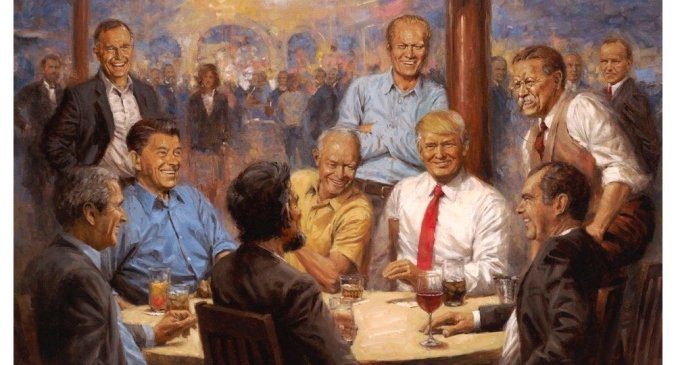
Jeffrey Valentine has given us a perfect send-off into Presidents Day weekend with an epic post ranking the 44 men who have led our nation.

When I was a lad, Presidential ranking lists were common and popular. Jeffrey’s version is better and fairer than most of them. Then as now, the historian cabal was overtly political, overwhelmingly liberal, and successfully misleading the public with false narratives gilded into accepted truth. Worst of all was Kennedy’s house historian, Arthur M. Schlesinger, Jr.  who was routinely treated by the news media of the time as an objective authority, which he most certainly was not. He placed his friend and idol JFK in the “Near Great” category, scrupulously ignored the warts on Democratic Presidents like Wilson and Jackson, and was especially unfair to Eisenhower, whose “hidden hand” Presidency has gradually won admirers the more we learn about what he was doing.

Ethics Alarms is dedicated to the subjects of both ethics and leadership, so Jeffrey’s commentary is especially welcome as well as timely. Here is Jeffrey Valentine’s Comment of the Day on the post, “The Big Lies Of The “Resistance”: #8 “Trump Only Cares About Himself, Not The Country.” I’ll be back for a brief comment at the end:

Perhaps moreso than the original post, Adimagejim’s comments about former President Obama [JAM: Commenter Adimagejim was extremely critical of President Obama ] got me thinking about how I think about Presidents and how they rank. The more I think about it, I put Presidents into seven distinct categories. As you will see, my personal opinions don’t always mesh with popular opinion. I will also note that while I find the Presidents fascinating, I won’t even pretend to study them to to the extent that our host has.

The categories are as follows:

1. The Greats with no caveats. These are the Presidents who could objectively say “I was a great President because…..”, have a really reasonable explanation of why they were great, and not have to explain away any major part of their respective presidencies. In this category, I place George Washington, Thomas Jefferson, James Monroe, James K. Polk, Abraham Lincoln, Theodore Roosevelt, Harry S. Truman, and Ronald Reagan. [You’ll note these categories won’t create perfect rankings, per se, as I believe there is at least one president (Roosevelt) in paragraph 2 objectively better than Jefferson, Monroe, Polk, Truman, and Reagan].

[Note One: This ethics blog is often very critical of Jefferson-reasonably so as a man- but I’m ONLY analyzing the presidencies of these men. I think his presidency was clearly successful-even if he wasn’t an ethical individual. In fact, Jefferson may be the major exception that probes Jack’s rule that, generally speaking, the country is better served by an ethical man holding the presidency.]

[Note Two: James K. Polk doesn’t quite seem to fit on this list. I think his reputation is a function of consequentialism, however. He expanded U.S. territory, which set the stage for the civil war. Historians blame him for this- I don’t think that’s fair. I read somewhere that a historian once stated he resolved matter for HIS time. I think it’s unfair to expect a president to do more. What he resolved for his time- he resolved well. He was, therefore, a great, but not legendary, president.]

2. The Greats with Significant Caveats: These are the Presidents who could objectively say, “I was a great president because…”, have a really reasonable explanation about why they were great, but would have a major controversy or issue to to explain away in terms of their legacy. Caveats are always, in my mind, considered based on their respective times. My more liberal friends might put Washington in this category, because he owned slaves. I do not. This list includes Andrew Jackson (Trail of Tears), Franklin Delano Roosevelt (Japanese American Internment), Dwight D. Eisenhower, (McCarthyism), Lyndon B. Johnson, (The Vietnam War), and Bill Clinton (Monica Lewinsky). Continue reading

The Big Lies Of The “Resistance”: #8 “Trump Only Cares About Himself, Not The Country”

When I combined the seven previous “Big Lies of the Resistance” posts I though I had collected them all. What a mistake. Not only had I complied an incomplete list, I had managed to miss the most egregious, unfair and, for the impeachment effort, the most useful Big Lie of all. I’m sorry. It’s time to remedy my error.

I’ve been feeling the need to add Chapter 8 to the Big Lie record since the midst of the Democrats’  ostentatiously unfounded impeachment claims over the President’s dealings with the Ukraine. Their entire argument was built on an assumption: President Trump sought further information regarding the suspicious activities of Joe and Hunter Biden while the elder Biden was Vice-President and the younger was somehow pulling down big bucks from a Ukrainian corporation only to “find dirt” on his likely opponent in the Presidential election. This description was repeated over and over again by the news media, like a mantra or a hypnotic suggestion. Hearing it so often and repeated with such certitude, one might almost forget that the President of the United States has a legitimate purpose in finding out whether a high elected official in the previous administration was influence peddling, sacrificing the interests of the nation for a wayward son.

The President’s attackers and those who have been searching for a way to remove him without having to prevail at the ballot box have framed the controversy as if there was no reason on earth to suspect Joe Biden of wrongdoing–after all, he’s a patriot—so Trump’s waving a Congressional aid package as a carrot that could turn into a stick was an attempt to “interfere with the election.”

The funny part is that there was never any evidence that this was Trump’s motive. It was assumed that this was Trump’s motive because “everyone” knows he’s a bad guy.

We heard this during the Russian conspiracy investigation constantly: Trump “colluded” with the Russians because of course he did—he’s that kind of guy. The Trump haters who slowly devolved into the Trump Deranged came to regard the President’s character as one and the same as guilt of the dastardly acts they attributed to him. This is called, I remind you, bias. Bigotry. Prejudice…the intellectually indefensible assumption that someone is guilty of unethical acts because of who and what they are, rather than what we know they did. Continue reading