“Oh The Humanity!”

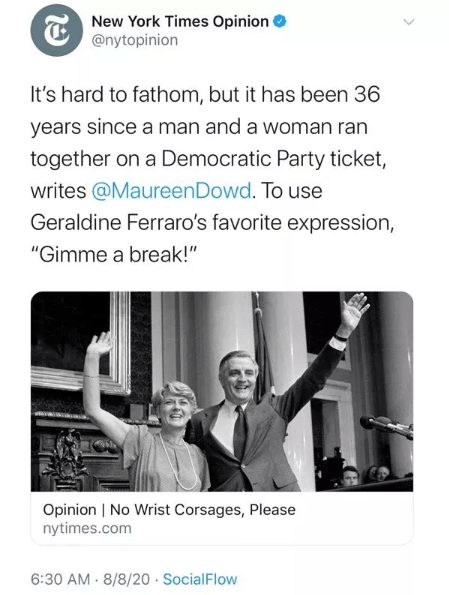
Today is the anniversary of one of the most vividly recalled disasters in U.S. history.  On May 6, 1937, the German passenger airship LZ 129 Hindenburg, a flying equivalent of The Titanic,  burst into flames while trying to dock with its mooring mast at the Naval Air Station in Lakehurst, New Jersey. The conflagration was captured in spectacular and now iconic newsreel footage, as well as in dozens of photographs.

Many  are surprised to learn that there were only were 35 fatalities in the explosion, 13 passengers and 22 crewmen,  among the 36 passengers and 61 crewmen on board (There was one fatality on the ground). The accident looked far more horrible than it was.

The appearance of the accident was so spectacular that it ended the passenger airship business That’s a  classic example of the Barn Door Fallacy, in which the reaction to  predictable and often inevitable disasters leads to  emotional over-reactions, as if by retroactively making an event impossible it can be reversed. Airships were a safe mode of travel (and a luxurious one: remember “Indiana Jones and the Last Crusade”?) in good weather when they were filled with Helium. The Hindenburg and other German Zeppelins used highly flammable hydrogen, making them flying tinderboxes, just waiting for a spark. But once the fireball that the ship became was gasped at world wide, no  explanations could make the visceral image recede. Nobody wanted to get on those things again. Continue reading

The Pulitzer Prizes Disgrace Themselves, And For The Same Reason The Nobel Peace Prize Did…Race

When I explain the Josephson Institute’s Six Pillars of Character, I often emphasize a single ethical value under each of the “pillars” as the heart of that category. For the pillar labeled “Trustworthiness,” It’s an easy choice. The core value is integrity. Unless an organization, institution or human being possesses and displays integrity, they should not and cannot be trusted.

When the Nobel Peace Prize committee, already wounded by its  ridiculous award of the honor to Palestinian terrorist Yassir Arafat in 1994, gave another to U.S.  President Barack Obama, who had been in office less than ten months, it settled any question about its integrity: it had none. The excuse—it certainly wasn’t an explanation–was that he had made “extraordinary efforts to strengthen international diplomacy and cooperation between people”. This was fantasy, and even Obama, who should have rejected the award, said that the award was a “call to action.” The Nobel Peace Prize is not a political advocacy organization, or wasn’t. This was an unmistakable political endorsement, based on the race of the recipient. It was a rejection of its mission, and institutional integrity. No one should care who the Peace Prize goes to now. It’s a fake honorIt cannot be trusted.

Today, the committee of the Pulitzer Prize , which was established to encourage and recognize excellence in journalism, decided to toss its own integrity away in order to signal its virtue to the ideological clones of its members. Again, the catalyst was race. In the category of commentary, the prize of $15,000 was awarded to Nikole Hannah-Jones of The New York Times “for a sweeping, deeply reported and personal essay for the ground-breaking 1619 Project, which seeks to place the enslavement of Africans at the center of America’s story, prompting public conversation about the nation’s founding and evolution.”

There is a problem with this description however. The enslavement of Africans is not at the center of America’s story, and virtually no reputable historians agree that it is. The assertions made by Hannah-Jones were not merely passionate, they were substantially false. Five of the most distinguished American historians protested to the Times, saying in the course of a tough and critical letter, Continue reading

Before The Rot Set In: Wendell Willkie And James Beggs [Corrected]

A quote in an obituary for long-time NASA chief James Beggs, who died this week at the age of 94, shocked me into realizing once again how alien basic ethics have become to our leaders in business, government, politics…hell, just about anywhere.  And once again, I’m wondering what good I’m doing, and why I bother.

Beggs had overseen more than 20 successful space shuttle launches, but he was on administrative leave due to an investigation of his conduct when the Challenger launched and exploded in 1986. As we have discussed on Ethics Alarms, a landmark example of failed ethics and decision-making caused the temporary leadership of NASA to ignore dire warnings from two engineers and send the shuttle and its precious human cargo up in dangerously cold weather.  Indeed Beggs called NASA  from his exile that fateful day to express his concern about icing. He resigned from NASA in 1986, about a month after the Challenger disaster.

Beggs was reluctant to criticize his former agency’s culpability in the accident, but he was adamant that “they shouldn’t have launched.”  “Whether I would have done anything different at the time, I’ve thought about that,” he said. “I think I would have, but that’s pure conjecture.”

Remarkable. How often does a critic of a past decision have the intrinsic fairness and integrity to say that? The Wuhan virus landscape has been polluted by extravagant and unjust second-guessing from the start, as everyone from politicians to pundits to plumbers are just certain that they would have known how to handle an unprecedented situation with significant unknown factors and substantial risk. They would have reached a different, quicker,better approach than the individual who actually had to make the call.

It’s a disgusting spectacle, and an unethical one. The “right” decision can always be made to seem obvious after the fact; critics cannot possibly know what their state of mind would have been at the actual time the decision had to be made by someone else. Beggs’ acknowledgement of that, in a situation where he could have credibly second-guessed his colleagues without equivocation, demonstrates the character of a decent and ethical professional determined to do and say the right thing even when opportunities are present for personal gain.

That story, in turn, reminded me of…Wendell Willkie. Continue reading

Comment Of The Day: “Captain Crozier And The Ghost Of Billy Mitchell”

Eddie Rickenbacker

We have a lot of Michaels commenting here, and one of them, plain old Michael, I have had the honor and pleasure of knowing personally. In this fascinating Comment of the Day, he provides some fascinating details regarding Billy Mitchell’s trial, and some other perspective as well. The post immediately expanded by reading list.

Here is Michael’s Comment of the Day on the post, “Captain Crozier And The Ghost Of Billy Mitchell“:

As a cadet at the USAF Academy (class of 1969) I had Billy Mitchell  among my pantheon of heroes. Nonetheless, my philosophy professor, Col Malcolm Wakin, had us debate the ethics of the Billy Mitchell trial. He was not trying to get us to “an answer” (although it seemed pretty clear that the members of the Court were biased, and our debate centered more on Mitchell’s actions); rather, to engage in debate. It was one of the reasons he was my favorite Academy professors. Always probing. Always promoting open debate. This is a rather long intro, but I wanted the background of my own “ethics awakening” known.

Wakin was a major when he started promoting the idea that military academies should include philosophy departments. Other officers denigrated the idea, but the USAF decided to establish an Academy philosophy department and selected Major Wakin as its first department head. At the time, that meant a “temporary” promotion directly to full colonel! Therefore, not long after being called “silly” by many other officers, he outranked them. He was department head for many years, eventually retiring as a Brig General and being sought by many companies and the US Olympic Committee to provide ethics advice. Continue reading

Captain Crozier And The Ghost Of Billy Mitchell

Billy Mitchell, at the court martial he wanted…

Why I didn’t think to include the tale of General Billy Mitchell in the Ethics Alarms posts regarding Captain Brett Crozier, the former commander of the aircraft carrier Theodore Roosevelt who forfeited his job by going around the chain of command to protect his crew, I really don’t know. But it’s normal for people to forget about Mitchell, and I don’t understand that, either. He, like Crozier, was an unconventional Ethics Hero, and a crucial one. And he may well have saved the world.

Do you not know the story of William Lendrum Mitchell, born December 29, 1879, died February 19, 1936? You should. Every American should.

He grew up in Milwaukee., Wisconsin. At age 18 he enlisted as a private in the army, and by the age of 23 he had become  the youngest captain in the U.S. Army. It was a pattern; being a prodigy and trailblazer in the military came naturally to Mitchell. In 1913, at the age of 32, he became the youngest officer ever assigned to the General Staff of the War Department in Washington. At a time when most in the military considered the airplane a novelty, “a risky contraption” of little or no value in combat,  Mitchell immediately saw the potential of air power, and believed that planes represented the future of warfare.

The United States had only fifty-four air-worthy planes  when it entered World War I in 1917, and only thirty-five air-worthy officers, including Mitchell, to lead them. Again he was a first, this time the first  American officer to fly over enemy lines. He organized the first all-American Air Squadron; one of his recruits, Eddie V. Rickenbacker, became a legend as  Mitchell moved his American air units to counter Manfried von Richthofen, the “Red-Baron.” When Germans planned to unleash a major ground offensive and the Allied commanders were desperate to learn where  it was being mounted, Mitchell volunteered to fly low over the enemy’s lines, and his daring mission discovered thousands of Germans concentrating close to the Marne River. Armed with Mitchell’s intelligence, the Allies launched a surprise attack on the German flank and scored a major victory. Mitchell’s solo reconnaissance flight was hailed as one of the most important aerial exploits of the war. Continue reading

A Professional Ethics Case Study…From Broadway

Before you read the post, can you guess who that actor is in the Afro?

Lately I’ve been helping a lot of lawyers seeking to create so-called Rule 5.4 law firms in the District of Columbia. In these firms, unique to the District, non-lawyers can be full partners. This means that they can share in the firm’s fees, which is something otherwise forbidden and a major ethics breach in the 50 states. Lawyers cannot, must not, dare not share their fees with non-lawyers…unless those non-lawyers are partners in the same firm.

There are certain requirements for that to happen, and the main one is that the non-lawyers must be supervised by a lawyer in the firm to ensure that the non-lawyers don’t engage in conduct that would be unethical for a lawyer.  The legal profession is justifiably wary that the unique priorities of the legal profession cannot be easily absorbed or understood by those who have been trained and influenced in a different culture.

It is right to be wary. Lawyers have enough trouble avoiding violations of their own rules; doctors, accountants and others, steeped in different alignments of values, can’t just shift gears like suddenly being in a law firm is like test driving a sports car. For so-called “non professionals,” a category that is increasingly contentious, it may be even harder to adjust, if not impossible.

Lawyers are often  overly optimistic about their non-lawyer partners’ ability to learn the importance of keeping all client confidences, not crossing over into the unauthorized practice of law, sensing possible conflicts of interest and illicitly soliciting clients, or engaging in misrepresentation and deceit, to name just a few. Lawyers tend to think that all professional ethics should be fungible. It’s a dangerous misconception, and there is a little cautionary tale from, of all places, Broadway, that illustrates it.

It has been mostly forgotten, but in 1969, a musical called“Buck White” opened at the George Abbott Theater. Its unlikely star: draft-resisting ex-heavyweight boxing champion Muhammad Ali.

Yes, you read that correctly. Continue reading

Let Us Have A Moment of Appreciation For The Rude, The Vulgar And The Defiant, For They Are America’s First Line Of Defense Against Totalitarianism

Oh, how I love this about Americans!

New York Mayor Bill de Blasio announced a new program to help protect New Yorkers against the Wuhan virus outbreak. It’s quite straightforward, really: report your neighbors to authorities.

“We still know there’s some people who need to get the message,” the city’s socialist mayor said on Twitter.  “And that means sometimes making sure the enforcement is there to educate people and make clear we’ve got to have social distancing.”
The simple solution, he explained is to snap a photo of an offending person or crowd, set the location on the image, and  “text it to 311-692.”

“Action will ensue,” de Blasio promised.

History has taught us that governments seeking to bend the public to its will “for the greater good” usually seek the cooperation and participation of citizen lackeys eager to ingratiate themselves with their ascendant masters. Fortunately, the United States was settled and created by people who came here to escape presumptuous tyrants and oppressive governments not of their choosing. The contrarian RNA and traditions run deep, and it always gives me a thrill to see that while they may have been diluted a bit over time, in the face of those who either do not comprehend this nation or do not respect its unique values, the old defiance flames forth. Continue reading

When Ethics Alarms Don’t Ring Because You Never Were Taught About Nazi Germany

In Montana, the Valley County Health Department sent out a flier to businesses decreeing that all essential workers from outside the county must wear pink armbands or bracelets signifying their quarantine status in order to shop in the county. Anyone not wearing a pink armband, the flyer said, would be reported to police.

If that graphic is too blurry for you, it reads in part,

Anyone who is from out of town or out of Valley County who has a PINK wristband has been here 14 days or more and no longer needs to do the strict self-quarantine. They may enter your business. Anyone who is from out of town or out of Valley County, staying here/working here, and has not completed the 14 day quarantine is REQUIRED BY THE VALLEY COUNTY HEALTH OFFICER ORDER to use curbside delivery only. They are not to enter your business to shop.

Boy, that reminds me of something. What is it? It’s right on the tip of my tongue…something to do with..is it the Holocaust? Could that be it? No, it can’t be. No health department would be that stupid, would it? Especially when mayors and governors around the country are being accused of having a “Who’s the best dictator?” competition? Would it? Really?

Here’s the Nazi badge code, in case you can’t read German: Continue reading

Monday Morning Ethics Warm-Up, 4/20/2020: Phantom Patriots Day Edition

The Battle of Menotomy, April 19, 2020.

“One if by land, and two if by sea
And I on the opposite shore will be
Ready to ride and spread the alarm
To every Middlesex village and farm
For the country folk to be up and to arm!”

Today, the third Monday in April,  is supposed to be Patriots Day in Massachusetts (and  few other states.) It absolutely should be a national holiday, as it celebrates the battles of Concord and Lexington as well as the rides of Paul Revere and his fellow messengers the night before. I typed the excerpt above from Longfellow’s “Paul Revere’s Ride” from memory; I wonder how many students today  have even heard of the poem, or Concord and Lexington, for that matter.

The original holiday was on April 19, the date of both battles, but Arlington, Massachusetts, where I hail from, was actually the site of a bigger battle than either on the same day. On their way back from Concord after being soundly beaten at the bridge, the Redcoats marched through the town of Menotomy (Arlington now), where 5,100 militia men from surrounding towns had gathered after, unfortunately, the British had marched through the Menotomy on the way to Lexington Green with little resistance.  The volunteers, stationed around houses, stone walls, fields and barns, did considerable damage to the already limping British in the fighting that followed, but Arlington residents have always been a bit sheepish about the timing of the fight, and historians regard it as  anti-climactic following the tragedy at Lexington and the surprise victory at Concord.

Patriots Day is a big  deal in Boston, where the Boston Marathon is run annually on that date. The Red Sox also play a unique 11 am game, so spectators can leave the park and watch the finish of the race. All gone this year, of course.

That doesn’t mean that we shouldn’t remember, and honor, the heroes, victims and events of 1775 that made the United States of America possible.

1. This is the kind of thing that will lead to serious back-lash against the pandemic dictators. The city of San Clemente was alarmed that some teens, bored with pplaying video games all day, every day, continued to skateboard in a local skate park despite orders that all parks be closed. Its solution?  Fill the park, at taxpayer expense, with 37 tons of sand. The money to build the park was raised by a nonprofit coalition of local families who wanted a place for their kids to be able to skate safely, and they were not even notified that the park would be filled with sand, according to KCAL-TV. Continue reading

From The Ethics Alarms Archives: “The Siena Research Institute’s Lousy Independence Day Gift: Misleading, Biased and Incompetent Presidential Rankings”

Now and then an old post suddenly get a lot of clicks. Often this will draw my attention to an essay I had forgotten: such was the case with this post from 2010. Someone on Reddit put it up for discussion, and last week the old post had hundreds of views. I was intrigued and re-read it. Good post!

I would change a few observations—in the intervening years we have learned that Woodrow Wilson was even worse than I thought—and add some, but the post was long, and a thorough evisceration of this embarrassing survey’s results would require a book.

***

The Siena College Research Institute persuaded over 200 presidential scholars to participate in a survey designed to rank America’s forty-three Chief Executives. There is great deal to be leaned from the resulting list that the Institute proudly released on July 1; unfortunately, very few of the lessons have anything to do with the men on it.

The list shows us that:

  • A survey is only as good as its design
  • Historians who call themselves “presidential scholars,” working together, could do no better in their supposed area of expertise than to arrive at a ranking that would get most 7th Graders a C in junior high school History, raising serious questions about how history is taught in our universities, but perhaps explaining why Americans choose to be so ignorant of their nation’s past.
  • Historians are, as a group, biased toward liberal causes, against conservatives, and in favor of people who are like them.
  • They are unable to recognize their biases, even when a list like this one makes them stunningly obvious.

Lists are mostly for fun and to start arguments. When one purports to make historical judgments, however, and the individuals doing the judging are supposed to be experts, there is still a responsibility to try to do the task fairly, competently, and responsibly. Continue reading