How Popular Culture Makes Us Misinformed And Stupid: Gunfights And Sub Battles

I recently perked some interest here in a comment when I mentioned how my dad, who taught various forms of weapon use while a trainer in the Infantry, railed at every example of a “Mexican stand-off” represented in a movie or TV show. “First one to shoot wins, or both quickly realize that there’s a mistake, and put down the guns,” he said. I was inspired by the Netflix Western “The Ballad of Lefty Brown,” which is very good, but the writer really liked Mexican stand-offs.

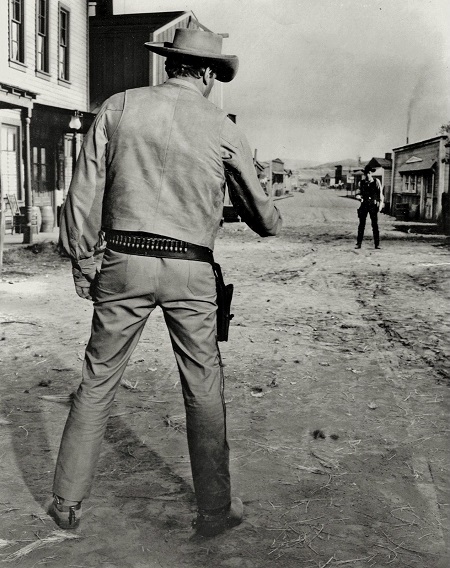
Another example is the old, dusty street showdowns Westerns have featured for a hundred years. They just didn’t happen, except for a few anomalies. One of them occurred this date  in 1865, when Wild Bill Hickok faced off in the Springfield, Missouri city square against a former Confederate soldier named Davis Tutt in a dispute over a watch.  Wild Bill won—his skill with a pistol was no myth—but the dime novel writers used the episode and Hickok’s colorful persona to create the impression back East that Wild West gun fighters were having quick draw showdowns daily. In fact, the Hickok-Tuttle affair was the first one documented.

The classic western showdown, also called a walkdown, was far rarer than drunken men shooting at each other spontaneously, ambushes and sneak attacks. The showdowns aren’t even as common in the movies as some people think who should know better. One article on the History Channel site talks about showdowns “like in ‘High Noon.'” Despite the title, there is no classic showdown in “High Noon.” And once he stopped making two-reelers as a B-movie star, John Wayne’s characters were never in any “middle of the street” duels either. Continue reading →

Comment Of The Day, Part 1: “Ethics Warm-Up, 7/19/2020: And The Hits Just Keep On Coming!”

Another Comment of the Day first for Ethics Alarms: Steve-O-in-NJ’s’s  COTD, touching on history, culture and current events, came in at just over 2200 words, all worth reading, but triggering the Ethics Alarms convention of publishing such lengthy ethics in two parts.

I’m also grateful for another chance to post one of the over-heated protest songs from a time I remember well, if not fondly.

Poor Phil Ochs.

Here, a visit to the political and social madness of the Sixties,  is Part I of Steve-O-in-NJ’s Comment of the Day  on the post, “Ethics Warm-Up, 7/19/2020: And The Hits Just Keep On Coming!”

I wrote this past week about this country being headed for its own version of the Troubles, the 30-year conflict between those who wanted to separate from the UK and those who did not in Northern Ireland that might sound romantic in a song over pints in a pub, but was hell for ordinary people to commute, shop, and raise a family in. Now I’m thinking as well that we may be regressing, back to a much darker time all our own. For a lot of us, it’s not even in living memory. If you’re forty or under, the 60s and 70s are only times you read about in books and maybe get a taste of when you tune in to an oldies station or look at a grainy, less-than-perfect family photo of men in bell-bottoms with afros and women in tube tops and platforms. If you’re between forty and fifty, maybe you have hazy memories of John Travolta in white dancing to disco, yellow smiley faces everywhere, polyester, leisure suits, and the early VW Beetle. You probably have memories of laughing like a loon…and cowering just as often…at early Sesame Street.

You probably have less fond memories of the daily count on the evening news of the days the hostages spent in Iran. It’s only if you’re over 50, maybe even over 55, that you’re going to have any kind of reliable memories of the really darkest days.

Many talk about the political left of that time in romantic terms similar in spirit if not words to those that romanticize the Troubles. In those songs and hazy memories it was all the Kennedy brothers, Martin Luther King, music festivals, hippy girls with flowers in their hair, communes where everyone ate organic food and no one disagreed and grooviness, man! 🕉✌🏻☮ Very few still talk about the Weathermen, the Black Panther Party, the Symbionese Liberation Army, and similar organizations. Even if they do, they still get romanticized as people reaching out to find a cause and make positive change in a society that hadn’t been listening for way too long.

What they leave out is that two days after the day I was born, three of the most radical of radicals perished in the destruction of a townhouse in Greenwich Village…due to the premature explosion of a nail bomb they were planning to plant at Fort Dix to kill NCOs and their dates. What they also leave out is that when my dad, then just getting started on what would be a long career would walk from the subway to his building, nearly every building in the area had suffered either a bombing or an attempt at one. They don’t mention that both One Police Plaza and Federal Plaza had also been targeted. They don’t mention that in 1975 Fraunces’ Tavern was hit, and four were killed. Even if they do, they don’t talk about the smoke, or the dust, or the fear in the air so palpable you could cut it with a knife if you dared, or the fact that ambulances from EMS and every hospital in the area were lined up like taxicabs at an airport, with no shortage of business to be had. All told there were 2,500 bombings in this time. If things had played differently this day or that, who knows, maybe I would have grown up with a different father, or without one at all. Continue reading →

Reflections On The Penobscot Expedition

Remember the Penobscot Expedition? Of course you don’t. Today’s history lesson has many aspects worth pondering, but I only recall some mention of the fiasco from growing up in Arlington, Massachusetts. It struck me now as notable thanks to valkygrrl’s Great Americans contest, still generating comments here. One commenter suggested Paul Revere: I wonder if this episode in his career was considered. I assume not.

On July 19, 1779, in the middle of the Revolutionary War, the would-be state of Massachusetts, on it own and without consulting either Continental political or military authorities, set out on  badly planned a 4,000-man naval expedition that ended up as the biggest naval disaster in U.S. history until the attack on Pearl Harbor.

The commanders were Commodore Dudley Saltonstall,  Adjutant General Peleg Wadsworth, Brigadier General Solomon Lovell aaaaand Lieutenant Colonel Paul Revere.   19 warships, 24 transport ships and more than 1,000 militiamen set out  to capture a 750-man British garrison at Castine on the Penobscot Peninsula, then part of Massachusetts, but now known as “Maine.”

On July 25, the Massachusetts forces launched a series of disorganized land attacks, largely leaving their naval forces, which were mostly manned by untrained sailors,  out of the battle. This gave the British crucial time for reinforcements to arrive. General Lovell, the commander of the land assault,  saw Sir George Collier’s seven British warships arrive and retreated, expecting Commodore Saltonstall to oppose them. Instead, Saltonstall, quickly decided that resistance was futile and  surprised everybody by fleeing upriver and burning his own ships. Continue reading →

Requiem For “My Mammy”


I was just running an errand, and on the Sirius XM 60’s Channel they were playing the top 40 songs from this date in 1967 (my favorite year). And what should come on but The Happenings, the Four Seasons-imitating group best known for “See You In September” and the whitest group in history, singing “My Mammy,” the Al Jolson trademark song that he originally sang in blackface.  (I apologize for using the non- “Jazz Singer” version of Jolson singing the song, but an article about blackface got Ethics Alarms banned from Facebook, and I don’t want to give them provocation to have me shot The video above also has another Jolson standard, “April Showers.” There’s nothing wrong with more Jolson; he was one of the great ones.)

I had forgotten that The Happenings had a mild hit with it as the follow-up to “I Got Rhythm.” “My Mammy,”music by Walter Donaldson and lyrics by Joe Young and Sam M. Lewis, is a terrific, tingles-up -the-spine song and performance piece (“I’d walk a million miles for one of your smiles!”), but I assume it is now impossible to present because of its blackface connotations.

The loss of “My Mammy” isn’t  a great tragedy, but it’s still a tragedy. Big chunks of our culture are going to be torched before this insanity burns itself out, if it ever does. I have a feeling that I’ll be fighting this battle for the rest of my life.

A Brief Note To Commenters…

I am so proud of you all, and Ethics Alarms,  today. The quality of discussion on multiple posts and threads is outstanding, as varied, eloquent and and thoughtful as I have ever seen it. I offer my sincere thanks and appreciation to all participants.

And since I’m here, I might as well note that July 16 is Ethics Ambivalence Day, or perhaps Watch Out For Moral Luck Day. Which of these events that occured on July 16th can be confidently and uncontroversially  designated in retrospect as “good”?

  • In 1790, Congress declared Washington, D.C. the new capital.

The new Congress chose a swampy, humid, muddy and mosquito-infested site on the Potomac River between Maryland and Virginia to be the nation’s permanent capital. Brilliant!

  • In 1918, the Romanov family was executed.

This ended a 300-year imperial dynasty,  and sent Russia down the road of Communism.  But they got rid of those damn Czars!

  • In 1935,  the world’s first parking meter was installed.

The world’s first parking meter, known as Park-O-Meter No. 1, was installed on the southeast corner of what was then First Street and Robinson Avenue in Oklahoma City, Oklahoma, eventually helping municipalities to balance their budgets nation wide.

  • In 1951, “Catcher in the Rye” was published.

J.D. Salinger’s only full-length novel, about a confused and nihilistic teenager would be taught in high schools for half a century. Why, I will never know.

  • In 1995, Amazon opened for business.

No comment.

  • In 1945, at 5:29:45 a.m., the Manhattan Project resulted in the first atom bomb successfully exploding in Alamogordo, New Mexico.

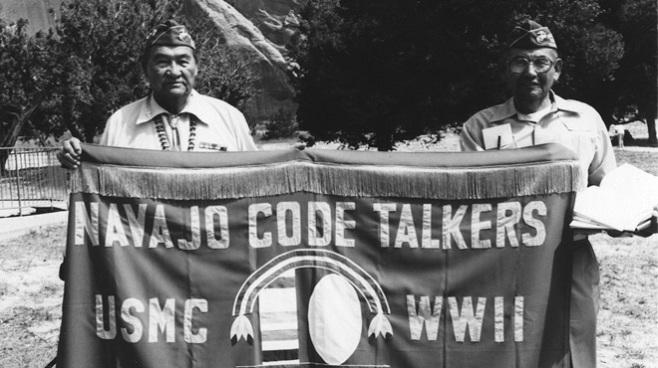
Another Vote For “The Washington Code Talkers”

The Washington Redskins ownership finally was forced to capitulate in the decades long- battle to force a beloved and fanatically supported NFL team to ditch the name that fans were beloving on the dubious theory, rejected by most native Americans and people capable of  critical thought, that despite all outside appearances having a team carrying a  Native American name dishonors Indians rather than keeps their story up front and vital in American consciousness and culture. Because the decision was a sudden biproduct of the George Floyd Freakout, the D.C. team wasn’t prepared for a change, and had no names in reserve. (It apparently had a shot at the name “Warriors,” which alliterates at least, but was late moving on the copyright and trademarks, so that name has, as they say, left the wigwam.

Meanwhile, gag names are flying around like arrows at the Little Big Horn, so ending the mockery is urgent. We are hearing calls for the Washington Weasels, the Washington Swamp-Dwellers, the Washington Investigators, the Washington Slime, The Washington Bootlickers…even the retro “Washington Murderous Savages.”  (I was an early advocate for “The Washington Concussions.”) However, one serious suggestion offered by the President of the Navajo Nation Jonathan Nez is brilliant: the Washington Code Talkers.

I second, with enthusiasm.

Few professional sports team have nicknames carrying any historical significance. Most are generic animals, birds, even reptiles. Some of the oldest names are meaningless, like “Red Sox.” Just a few refer to or referenced history: the now defunct Chicago Fire, the San Francisco 49’ers, the Philadelphia 76ers, and a few others. One great virtue of the Code Talkers, in addition to keeping the Native American connection to the D.C. team, is that it would compel the team’s fans to learn some history for a change. (I assume that the 2002 Nicholas Cage bomb, “Windtalkers,” did not have sufficient reach to educate most Americans.)

Who, or what,  were the Code Talkers? Continue reading →

In Defense Of The Terrorist: Clarence Darrow Eulogy For John Brown

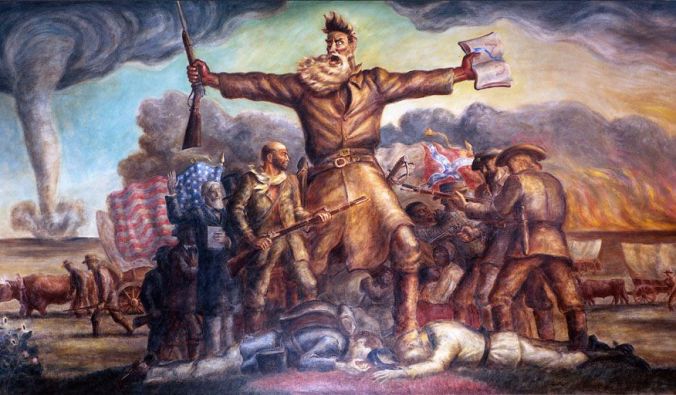
In the ongoing debate here regarding what constitutes a great American—sparked by reader valkygrrl’s guest post on the topic as well as the President’s recent remarks at Mount Rushmore, the question of whether abolitionist John Brown belongs has been the most contentious. I don’t believe that one can ethically assign a murderer and law-breaker (and unraveling fanatic) like Brown to the “great American” category,  but a figure unquestionably smarter than I whom I believe unquestionably was  one of the greatest Americans did, and his argument deserves attention and thought. That figure is Clarence Darrow.

Brown was much admired by Darrow’s iconoclast father, Amirus Darrow, and his mother was an anti-slavery activist, turning the Darrow home into a stop on the Underground Railroad.  Born in 1857, Darrow was too young to remember the pre-Civil War period, and Brown was hanged in 1859. Nonetheless, the admiration for Brown was passed on from father to son, and there are moments in Darrow’s career where his actions seemed consistent with Brown’s philosophy of the ends justifying the means when the stakes were important enough, notably the conduct that almost got him disbarred and imprisoned for jury tampering. (Darrow was guilty, but was acquitted because he had a great defense attorney—Clarence Darrow.)

John Brown was a hero of Darrow’s , who didn’t have many: the abolitionist, Voltaire, and his friend and mentor John Peter Altgeld were about it, as far as I can tell. Periodically, on the anniversary of Brown’s birthday (May 8), Darrow would give a speech eulogizing Brown to a progressive group. Its final sentence is the most quoted:

The radical of today is the conservative of tomorrow, and other martyrs take up the work through other nights, and the dumb and stupid world plants its weary feet upon the slippery sand, soaked by their blood, and the world moves on.

Incredibly, Darrow’s John Brown Eulogy is impossible to find on the web now; I have no idea why. (Enter that sentence in Google, and what pops up is…me!) Thus I am  reproducing Darrow’s speech here, for two purposes: first, to let you consider Clarence Darrow ‘s argument for why we should honor John Brown, and second, to have an online home for it.

It is not the whole speech, but my own shortened and edited version. I am still hunting for the whole document in a form I can post (I have it in several books), and when I find it, I’ll substitute the complete version for this: Continue reading →

Guest Post: Who Are The Greatest Americans?

by Valkygrrl

[Introduction: Ethics Alarms opined that the President’s proposed “Garden of American Heroes” was badly conceived, and his initial nominations for inclusion proved the point. Mercurial commenter Valkygrrl  took the initiative to devise a process for Ethics Alarms readers to compile a better list, and also to organize the results, which I found fascinating. Any further reactions will be confined to the comments.]

The Rules:

1: No presidents, always some controversy, we have other ways of honoring them.
2: Any person who held office must be chosen for something they did outside of said office, no honoring for using the mechanisms of the state no matter how beneficial to society.
3: No Confederates (obvious divisiveness.)
4: You may have only one living person on your list.
5: Your list must be made in good faith. You may not choose anyone you believe will upset or anger me; no “owning the libs”. Honest mistakes accepted.
6: Do not remove someone from your list because they were mentioned by someone else. I want to see if we can find some consensus. That means people Trump or Jack mentioned are allowed.

Here’s the list of nominees as submitted by participants (editorial descriptions mine);

Marian Anderson: Singer, Civil rights activist, Medal of Freedom recipient.

Neil Armstrong: Aviator, Astronaut, First human to set foot on Luna

Isaac Asimov: Teacher, Author of the Foundation series; Seven-time Hugo Award winner (Plus one Retro-Hugo awarded in 2016), Democratic party activist, serial sexual harasser

Irving Berlin: Composer of famous patriotic music

John Brown: Hero, undaunted, true and brave, And Kansas knows his valor when he fought her rights to save; Now, tho the grass grows green above his grave. Popular legend holds that his soul continues to march.

John Moses Browning: Industrialist, Firearms designer.

George Carlin: Humorist, Mentor to time-traveling Gen-Xers.

Andrew Carnegie: Industrialist, Philanthropist, Union buster.

Joshua L. Chamberlain: Union General, Medal of Honor recipient.

Meriwether Lewis  and  William Clark: Explorers, Naturalists. Two very different people presumably nominated for a single achievement alone. Clark was a bit of a bastard.

Samuel Colt: Firearms manufacturer, used assembly line principals before Henry Ford.

Clarence Darrow : Country lawyer, Civil libertarian, Attention whore, Cigar aficionado. Continue reading →

Comment Of The Day: “Waning Sunday Ethics Reveries, 7/12/2020: You Know, Ethics Isn’t Fun For Me When Everyone’s Acting Irrationally”

I have a couple of Comments of the Day on the runway and a guest column too, but when Steve-O-in-NJ delivered one of his epic epistles—I think they transcend “comments”—of Alizia Tyler length, I had to choose it to end the day. The topic is one Ethics Alarms has discussed in recent week: the disturbing similarities between the Red Scare and McCarthyism and the current George Floyd Freakout.

Here is his Comment of the Day on the post, “Waning Sunday Ethics Reveries, 7/12/2020: You Know, Ethics Isn’t Fun For Me When Everyone’s Acting Irrationally”:

I dub this the White Scare.

No doubt there are still a few people who have nightmares of the living nightmare of sitting uncomfortable and squirming in the lowest seat in the Senate chamber. You sit alone before an intimidating array of microphones, all eyes on you, questions being fired at you like crossbow bolts from every angle about anything and everything. You don’t exactly know how you got there, maybe someone said your name was mentioned in connection with some gathering or that you said or wrote something that concerned them. Your finances, your job, your friendships, your family, nothing is off-limits. Question after question, hour after hour, it drags on until you forget when it began and have no idea when it will end. Letters you wrote years ago, conversations you barely remember having, meetings you remember attending, but can’t remember who else was there, leave alone the subject, the questions keep coming. As you shake inwardly, your shirt soaked from the stress of the interrogation and the fear of its consequences, the stern-faced Senator Joseph McCarthy of Wisconsin fixes you with a glare like God throwing the Egyptian host into a panic and thunders possibly the most dreaded question in history, “Are you now or have you ever been a member of the Communist Party?” Refuse to answer, give the wrong answer, claim not to remember, or equivocate, and you are finished, tarred as a “Red,” a Communist, someone in league with the most evil regime then in the world, and the second or third worst ever, against America, the Constitution, and everything that was good.

If you have few friends when you sit down in this loneliest chair in the world, you could well have none when you leave it. There’s a very good chance that if you held a security clearance it will be revoked, because there are just too many maybes for you to be trusted. There’s a good chance that you will lose your job as you can’t hide or scrub off the red stain. There’s a very good chance your life and your family’s life will collapse or be greatly damaged or diminished. Continue reading →

Ethics Quote Of The Week: Prof. Jonathan Turley

“The sordid history of White House pardons makes this commutation look positively chaste in comparison.”

—-George Washington University Law School Professor Jonathan Turley, responding to the wildly exaggerated indignation of pundits and Democrats over President Trump’s commutation of Roger Stone’s sentence.

Turley, who is always courtly and, for my tastes, excessively restrained even when pulling apart the most irresponsible positions, was clearly irritated by CNN’s legal analyst Jeffrey Toobin, a grand hack, who declared that the commutation was “the most corrupt and cronyistic act in perhaps all of recent history” (“cronyistic”?) and  Senator Mitt Romney’s characterization of it as “unprecedented, historic corruption.”

Turley took to The Hill to give Toobin, who should know better, and Romney, who was just exercising his Trump-bashing muscles without concern for such trivialities as facts, a lesson in American Presidential history, saving me the time and trouble: Continue reading →