Sunday Ethics Reflections, 6/28/2020: For The Defense….

Greetings from the Ethics Alarms bunker…

1. I’m current reflecting on a personal and professional ethics conflict. A colleague and long-time professional competitor—I would never call him a friend—has been ousted from his leadership position in the very successful organization he founded as a result of unproven allegations of sexual harassment and assault. It was a “believe all victims” situation, as well as what feels like a successful coordinated effort to “get” someone who had accumulated a lot of enemies, resentment and envy in a notoriously nasty industry once his power was waning.

On one hand, I feel like I should reach out to him and offer my guidance and support (as an ethicist and sexual harassment trainer, not a lawyer, and gratis, of course). On the other, I am pretty certain that he is guilty of at least some of what has been alleged, based on confidential accounts I have recently heard from reliable sources. Ethically, however, his ousting (it appears that he was given the option of “retiring”) lacked due process and fairness, and the organization was guided by public relations motives rather than legal or ethical ones.

Whose side should I be on?

2. Stop making me defend Facebook! As if there wasn’t enough to worry about, the aggressive pandering mode of corporations right now is being exploited by would-be censors of political speech. Facebook CEO Mark Zuckerberg announced updated election policies and stricter “hate speech” rules in response to employee protests and pressure from activists, whose transparent objective is to silence or constrict any political views antithetical progressive positions and goals. In a message last week, Zuckerberg  outlined plans to police disinformation relating to voting and elections, to flag certain content that risked triggering violence (I wonder what  that standard is like today?) and concluded,
Continue reading →

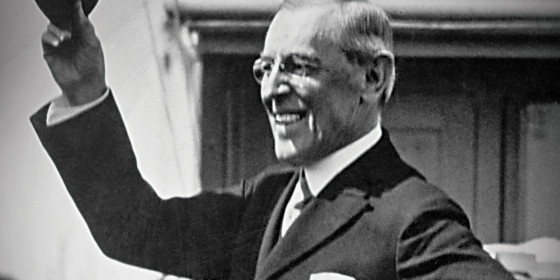
My Ethics Conflict: Woodrow Wilson’s Name Should Have Been Removed At Princeton Long Ago, But Erasing It Now Opens The Floodgates, Part I: The Case For Woodrow

Reviewing, I see that the original Black Lives Matter attack on American values, history and culture first broke out in 2015. Then as now, Democrats rushed to embrace the racist group’s anti-white, anti-police and anti-America agenda, seeking, as usual, to enamor itself with its base. That was also the first time Princeton University was urged by student activists to remove honors to Wilson from the campus, though Wilson was not only a President of the United States (and according to Democrats until recently, one of the greatest) but also a lauded president of Princeton. The 2015 calls for his airbrushing out of Princeton’s history coincided with many similar attempts, some successful, to dishonor past historical figures whose legacies or conformity with modern values had been called into question.

College campuses, not city streets, were ground zero in 2015. Yale and the University of Missouri led the madness. At Mizzou, black students manufactured racial outrage out of ambiguous and off-campus incidents, then engaged in what Ethics Alarms then termed  an “I’m mad at the world and somebody has to pay for it” tantrum (Hmmm! Still sounds pretty good!), demanding all sorts of special accommodations and race-based policies and hirings, and demanding the university president’s resignation. Thomas Wolfe did resign, giving us an early precedent for all the capitulation and cowardice we are seeing today. As we’re seeing today, intimidation, race-bullying and attacks on free expression and language were part of the assault:

  • Amherst students demanded a crack-down on any free speech in the form of criticism of Black Lives Matters or the protest goals.
  • Dartmouth’s Black Lives Matters members roamed through the campus library, verbally assaulting white students attempting to study.
  • Smith College held a sit-in, and barred reporters-–the new breed of campus freedom-fighters just don’t like that pesky First Amendment—unless they promised to cover the protest positively. .
  • Occidental College students occupied a three-story administration building, demanding “a series of actions ranging from racist to just unreasonable to oppressive” in the name of “safety” and “diversity”, of course. Predictably, the leftist faculty which helped make the students this way were fully supportive.Refresh your recollections with the list of student demands here; my favorites: demanding an increase in tenured black professors and black doctors; funding for the student group for black men, which is racist and counter-diverse by definition; and “elimination of military and police rhetoric from all documents and daily discourse.”

Why is this so familiar? Continue reading →

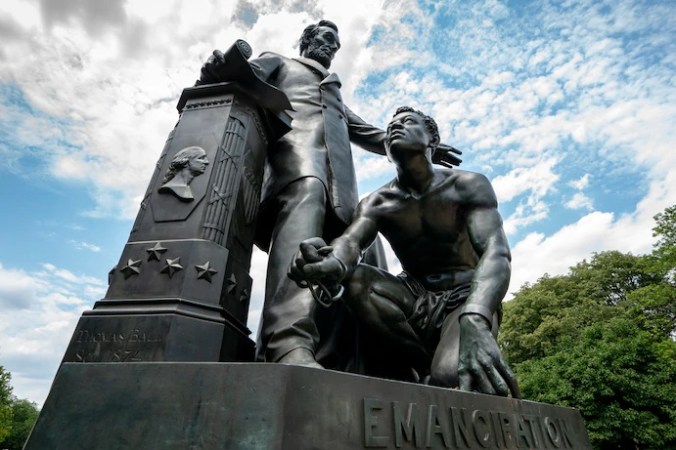
Stipulated: The Emancipation Statue Represents White Supremacy. It Still Has To be Protected.

Facts don’t matter to a mob. This is why indulging mobs–ever and at all—is foolish and dangerous. It is also why the current push to remove the Emancipation Statue, also known as the Freedman’s Memorial, has to be resisted, and successfully.

I know a slippery slope when I see one; I think I’ve established that since I saw this particular slippery slope  being greased five years ago. I saw that it would slide right into the Founders and an attempt to separate the United States from its origins and the brave and brilliant patriots who risked everything to attempt this experiment in liberty.

If any statute of Lincoln is allowed to satisfy the mob’s lust for vengeance and power, any memorials and honors to Jefferson and Washington are doomed, including the Washington Monument. As with the less violent and more dignified—but no less dangerous— mobs that destroyed lives and reputations during the Red Scare and McCarthy  era, politically motivated mobs like the Black Lives Matter-catalyzed demonstrators will treat each victory as a green light for escalation. It is astounding that so many supposedly educated people in government, academia, business and the arts have somehow forgotten this fact in their rush to grovel and submit, hoping, as Winston Churchill observed of appeasers, that the crocodile would eat them last.

The attack on America escalated when NFL players began “taking a knee” during the playing of the National Anthem, one of the main symbols of our nation and its values. The players and their spiritual leader, Colin Kaepernick, made incoherent efforts to explain why their disrespect during the Anthem wasn’t aimed at the melody, but at the nation it—well, the racism that—well, they never could manage to explain their logic. That’s because the protest was really aimed at the United States itself. Continue reading →

Today’s George Floyd Freakout Disgrace: The Metropolitan Museum of Art

 The triggering event:

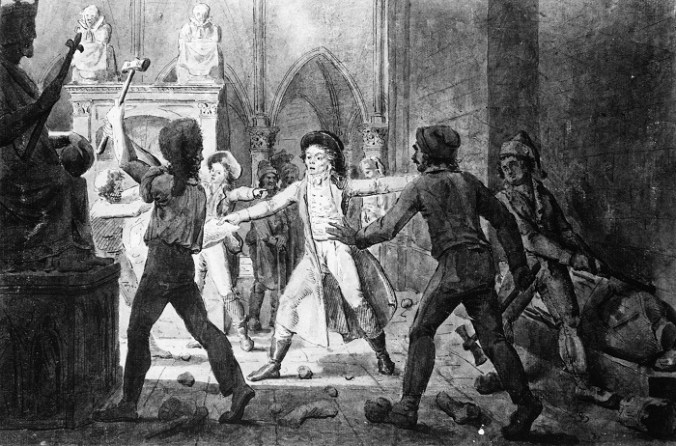
The museum’s powerful chairman of European paintings, Keith Christiansen, who has worked at the Met for 53 years, posted this image on Instagram. It depicts .

Christiansen also wrote,

“Alexandre Lenoir battling the revolutionary zealots bent on destroying the royal tombs in Saint Denis. How many great works of art have been lost to the desire to rid ourselves of a past of which we don’t approve. And how grateful we are to people like Lenoir, who realized that their value — both artistic and historical — extended beyond a defining moment of social and political upheaval and change.”

The statement was entirely appropriate and true.

But as we know, Facts Don’t Matter.

The response:

The post was quickly attacked  in a tweet by the advocacy group of arts workers, Art + Museum Transparency: “Dear @metmuseum, one of your most powerful curators suggested that it’s a shame we’re trying to ‘rid ourselves of a past of which we don’t approve’ by removing monuments — and, worse, making a dog whistle of an equation of #BLM activists with ‘revolutionary zealots.’ This is not OK.”

Responses to the tweet were similarly critical.

The reality:

  • Removing monuments is cultural suicide, and paves the road to historical ignorance.
  • BLM activists are “revolutionary zealots,” and denying it, or trying to punish those with the honesty and integrity to say so, won’t alter that fact.

Here is how Hawk Newsome, the president of Greater New York Black Lives Matter, described the movement in an interview with Martha MacCallum on Fox News, as reported by the NY Post:

“If this country doesn’t give us what we want, then we will burn down this system and replace it. All right? And I could be speaking figuratively. I could be speaking literally. It’s a matter of interpretation… Let’s be very real…. What is this country rewarding? What behavior is it listening to? Obviously not marching. But when people get aggressive and they escalate their protests, cops get fired, Republican politicians talking about police reform… Wow, it’s interesting that you would [ask what Black Lives Matter hoped to achieve through violence] because this country is built upon violence. What was the American Revolution? What’s our diplomacy across the globe? We go in and we blow up countries and we replace their leaders with leaders who we like. So for any American to accuse us of being violent is extremely hypocritical….. I think you should be applauding me, seeing how you guys are huge supporters of the Second Amendment….. But it seems to be the hypocrisy of America that when black people start talking about arming themselves and defending themselves, [that] talk is ‘violent.’ But when white people grab assault rifles and go to our nation’s, their state capitals, it’s all good… I just want black liberation, and black sovereignty. By any means necessary.”

Funny, that sure sounds like revolutionary zealotry to me. Continue reading →

How Bad Is The Madness? This Bad… [Corrected!]

Trust me, that’s appropriate for this post. So is this:

What’s the connection? Well, as part of the effort to declare virtually all Western  culture racist to justify tearing it down, Black Lives Matter activist Fiona Onasanya, a former member of the UK parliament, argues that Rice Krispies are racist because the three elves who are the spokeselves for the Kelloggues cereal are all white. Moreover, she argues, “Coco Pops and Rice Krispies have the same compòsition (except for the fact CP’s are brown and chocolate flavoured)… so I was wondering why Rice Krispies have three white boys representing the brand and Coco Pops have a monkey?”

And you thought banning “Eskimo Pie” was loony.

Her first contention is mind-meltingly stupid, but also ominous. I have no doubt that the extreme and essentially racist logic of the George Floyd Freakout will eventually reach this point if it hasn’t already. Any group, even as small as three (or two?) that doesn’t include a black member, or at least, in this case, an “elf of color,” is prescriptively based on discrimination and thus racist.  We are seeing evidence of this trend taking root in such weird developments as “Jake from State Farm” suddenly changing color. Soon the Three Stooges will have to be colorized to show a black Stooge, and it will have to be Moe, since he’s in charge. It can’t be Larry, who’s submissive, or Curly, who’s an idiot. No, it has to be Moe, and the sight of him abusing the white Stooges will suddenly make the old comedy shorts popular again.

I’m kidding, but just barely. Continue reading →

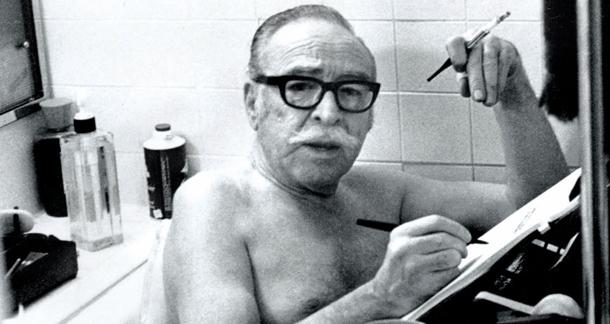
What A Difference A Month Makes: Re-Watching “Trumbo”

It was only in May that I had a quick note in a morning warm-up declaring the 2015 film “Trumbo” an ethics movie. That it is, but subsequent developments have made me realize it is much more, including frightening.

The film, starring Brian Cranston as the most famous member of the “Hollywood Ten,” now is a glass of ice water recieved full in the face, shocking viewers into the realization that the George Floyd Freakout is the catalyst for a second wave of McCarthyism. This one varies from the first in that the current version is being fueled by the Left rather than conservatives, and that it is far more violent, and potentially more dangerous.

After watching the film again and reviewing the history, for “Trumbo” is easily the best film about the blacklist, there is no question in my mind that this is true. Previously, I regarded the use of “McCarthyism” as a useful if over-used metaphor, like “witch-hunt.” (“McCarthyism” usually refers to the oppression and intimidation of the entire “Red Scare” period, including the blacklist, which was Fifties for “cancelled.” The “Hollywood Ten” were victims of the fascist House Un-American Activities  Committee, which was separate from the vicious Wisconsin GOP Senator, but “House Un-American Activities  Committee-ism” doesn’t roll off the tongue well.) Now it is evident that we are witnessing  in the United States  a mutated clone of what occurred across the country in the beginning of the 1950’s, with “racist” the current label being used to bully, silence, and ruin careers and lives, rather than “Communist.” Continue reading →

Morning Ethics Warm-Up, 6/22/2020: Let’s Stop Moping Around! Get Up! Get Out! Attack The Day! [Now With Leonard Bernstein!]


Update: I decided we needed a less pokey version, so now we have Leonard Bernstein’s, and the whole thing. THAT should cheer you up…

Boy, am I sick of everyone telling me how depressed they are.

1. Translation: “I’m an idiot.”  Now Seattle Mayor Jenny Durkan is saying  that the city will close the so-called “Capitol Hill Autonomous Zone.” It turned out to be exactly what anyone with any sense predicted it would be, with three shootings so far and a rape, along with a leader ( war lord?) who had the gall to complain when the Seattle EMTs didn’t immediately respond when shots rang out. The mayor  had said that the anarchist outpost would lead to a “summer of love,” marking her as a Sixties-romanticizing dolt, but now she says she was obviously joking-–yes, the Joke Excuse. She never said it was “in jest” before the completely predictable violence broke out.

I apologize for not highlighting her as an Incompetent Elected Official of the Month, but she was competing with Bill De Blasio.

2. Fearmongering. It should be apparent by now that the news media does not want the country to re-open, does not want the economy to begin recovering before the election, and is pushing its anti-reopening goal through fearmongering, in part by focusing on isolated cases of individuals getting hit by the Wuhan virus particularly hard.

This morning HLN kept repeating a long feature about a thirtyish Broadway star who has been disabled by the virus for 80 days, and another man not in a high-risk group who has been suffering for 100 days. The Times and the Washington Post are full of apocalyptic reports about the number of cases rising. Another news outlet said, “The U.S. reported more than 33,000 new coronavirus cases on Saturday – the highest total since May 1 – while the surge of infections in several states is outpacing growth in coronavirus testing.”  ARRRGH! We;re DOOOMED!

One commentator called this “needless” frightening the public. Wrong. It is  needed because it is a part of the ongoing effort to defeat President Trump.

The Centers for Disease Control predicted that cases would increase as the country reopened, not that it has much credibility at this point. Remember? The lock down was never intended to stop the spread of the disease, but to slow it down,  flatten the curve, stock up on supplies, fix the CDC’s testing botch, and find treatments. That was mostly accomplished. The nation cannot continue to let the economy deteriorate: depressions kill people too.

Meanwhile, the death rate is declining even as the number of cases spike, and there’s a reason for that. In all outbreaks, a disease claims the most vulnerable first. This is known as Farr’s Law, named after William Farr,  a British epidemiologist and early statistician  who recognized the importance of death statistics and identifying causation. Not only has the current epidemic claimed many of the most vulnerable in the U.S., thanks in great part to the catastrophic decision of states like New York to send infected seniors to nursing homes, millions of Americans have antibodies.

The combination means that even if there are lots of new cases going forward, the death toll is likely to be far less severe than it has been. Do not hold your breath waiting for the media to explain this.

Just for fun,  check and see how many news organizations have mentioned Farr’s Law. Continue reading →

Ethics Dunce: Nikole Hannah-Jones

Nikole Hannah-Jones, staff writer at The New York Times and lead essayist in The New York Times Magazine’s “1619 Project” tweeted that she finds the common rebuttal of presentism—the popular practice of condemning those of different times and cultures for not magically acquiring the evolved beliefs and values that those who have had the advantage of decades and even centuries of experience, observation and enlightenment—that those criticized were of their time “offensive.”

“I mean, Hitler was a man of his time. Bin Laden was a man of his time,” the Pulitzer Prize winner tweeted. “It’s a justification and unnecessary.”

This is the quality of analysis and thought we now receive from the best of American. journalists, one who has been deemed worthy of the occupation’s highest honor.

First, it is profoundly unrealistic and unfair to expect those raised in a culture with long-established values to determine on their own that such values are flawed or based on faulty assumptions and information. This should be intrinsically obvious to anyone capable of critical thought. Continue reading →

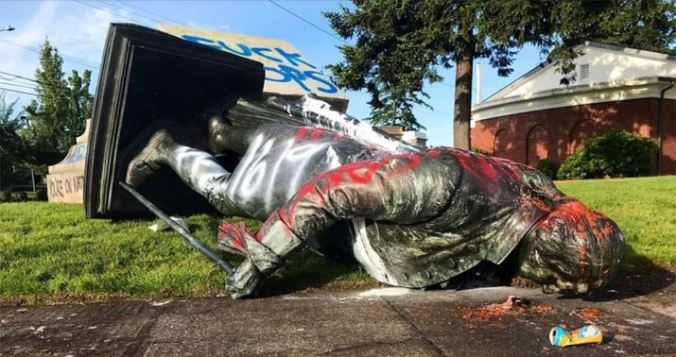
Statue-Toppling, The Ethics Incompleteness Principle, And Calvin Griffith, Part Two

Where Cal Griffith’s statue once stood…

Here is what Calvin Griffith said in the 1978 remarks that led the Minnesota Twins to remove his statue in from of the team’s stadium, Target Field.

Griffith was invited to speak to the Lions Club in Waseca, a small city in southern Minnesota. Taking questions from the audience after his planned speech, someone asked Griffith  why he brought the Twins to Minnesota from Washington, D.C., in 1961. Griffith lowered his voice, asked if there were any blacks around, and  looked around the room. Apparently confirming that his audience was all white,  Griffith said,

“I’ll tell you why we came to Minnesota. It was when I found out you only had 15,000 blacks here. Black people don’t go to ball games, but they’ll fill up a ‘rassling ring and put up such a chant it’ll scare you to death. It’s unbelievable. We came here because you’ve got good, hardworking, white people here.”

It’s hard to get more racist than that, at least short of a Klan rally. I’ll poll this at the end of the post, but I believe that this is a case where the Ethics Incompleteness Principle applies, and the usually valid ethical objections to pulling down the statues of problematic, controversial or subsequently disgraced historical figures have to yield to other considerations, which are these: Continue reading →

Comment Of The Day: “Saturday Ethics Freakout, 6/20/2020: Fake News, Resignations, Topplings And Cancellations…But Also Hope,” Item #4

The toppling of a statue of our 18th President and the Civil War general who defeated Robert E. Lee, Ulysses S. Grant, in San Francisco should disabuse the historically literate of any misconception that all of the George Floyd demonstrators are concerned with “systemic racism.” Dishonoring Grant, as well as Francis Scott Key, whose statue also was pulled down, is signature significance for enmity toward the United States itself. 

Steve-O-in-NJ performed a service for all of us by taking the time to provide a concise and informative summary of this important American’s life of public service for Ethics Alarms readers. There are several references to Ulysses S. Grant on the blog; the most extensive was this segment of the President’s Day post in 2015:

My son is named after Grant, arguably the nicest and most sensitive of our Presidents. (How this sensitive man was able to sacrifice his soldiers in the thousands to win the horrible battles he did is an enigma.) As a cadet at West Point he drew pictures of horses obsessively; in the field, he refused to allow any of his men to see him unclothed. He loved his wife passionately, and wouldn’t allow her to get her badly crossed eyes fixed, because “God made her that way.” When his daughter was married, he retired to his bedroom and could be heard sobbing for over an hour.

As President, he was fatally handicapped by his nature, which caused him to trust people he shouldn’t and allowed others to exploit his good nature. The result was several scandals engineered by his appointees and associates, including Crédit Mobilier and the Whiskey Ring. Yet he had a natural aptitude for leadership, as his superb autobiography proved on every page. He could manage and lead; what he was bad at was manipulation, deceit, pretense, and retribution—in short, politics.

In one odd area, his customary sensitivity was completely lacking. He hated music of any kind.

Here is Steve-O-in-NJ’s Comment of the Day on Item #4 in the post, “Saturday Ethics Freakout, 6/20/2020: Fake News, Resignations, Topplings And Cancellations…But Also Hope”:

Apparently a lot of people don’t know their Presidents or their Civil War history. The man on the statue in Richmond is Robert E. Lee, commander of the Army of Northern Virginia, and General-in-Chief of all the Confederate Armies. The man in the San Francisco Park, although likewise bearded and in the uniform of the time, is his polar opposite. Born Hiram Ulysses Grant in Ohio, he adopted the name Ulysses Simpson Grant when he was admitted to West Point to avoid the embarrassing initials H.U.G. Graduating 21st of 39, he never planned to be a career officer.

During the Mexican-American War, where he was “an untidy young captain” as opposed to Lee being pronounced “the very finest soldier I ever saw in the field” by General Winfield Scott, and which he opposed as a land grab, he discovered he was actually a skilled officer, and began to change his mind about what he would do for a career. However, he left the army in 1854 after he was found drunk on duty and offered the choice of resigning or being court-martialed.

For the next seven years, Grant struggled between farming, real estate trading, and a few other things, none of which he was very good at. At one point he pawned his gold watch to buy his family Christmas gifts. He did not vote for the first Republican candidate for the presidency, John Fremont, because he could see this would probably lead to the country splitting in two. He did during this period acquire a slave named William Jones from his father-in-law. However, he found he didn’t have it in him to force him to work, and manumitted him before a year had passed. As the election of 1860 approached, he found himself becoming increasingly opposed to slavery.

Grant was a civilian when the Confederates fired on Fort Sumter, and initially Lincoln’s top military officer, George McClellan, turned down his request to be recommissioned. However, before the month was out, the governor of Illinois made him his military aide and a colonel, tasked with mustering in the Illinois militia. By August, old General Fremont, who he hadn’t voted for, made him a general himself and a district commander. That November he won the first major Union victory of the war at Fort Donelson. The following April his victory in the bloody Battle of Shiloh (for which he was roundly called a butcher and accused of drunkenness again) killed Confederate hopes of conquering the Mississippi Valley. That November he assumed command of the Army of the Tennessee, and ordered freed slaves to be incorporated into the ranks.

You probably know or should know the rest: the taking of Vicksburg, the brief reverse at Chickamauga, the taking of Chattanooga, his naming to supreme command (btw, before this, only Washington had held the three-star rank), and the slow, methodical advance into the South on five fronts. It took a year and was not without some reverses and mistakes, but ultimately he forced the Army of Northern Virginia under Robert E. Lee to withdraw from the Confederate capital at Richmond and flee west. On April 9, 1865, Lee tried to break through the Union cavalry screen, but was forced to abort the attack when he topped a ridge and saw two untouched full corps of Union infantry. He had no choice but to surrender.

Grant was actually heartbroken to receive the surrender of a man he had served with, even though he considered the Southern cause one of the worst ever fought for. He granted generous surrender terms, including letting the officers keep their personal sidearms and the soldiers keep their horses. He also stopped all celebration among his own men, reminding them that the rebels were now their countrymen again. He later personally opposed any attempts to try Lee and his officers for treason, since he had promised otherwise at the time of the surrender.

He actually became Secretary of War for a time during the presidency of Andrew Johnson, but issues with the appointment led to a complete break between the two men. He remained popular, though, and was elected the next president, in an attempt to unify the nation. During his presidency he actively fought the Ku Klux Klan and fought for civil rights for the freedmen, including the Fifteenth Amendment. His policy toward the Indians unfortunately fell apart in his second term. His reputation among historians was low until recently, due to scandals among his cabinet. It has enjoyed a revival recently, starting with a biography by Edward Jean Smith in 2001.

So, what do we take away from this long story (which could be a lot longer)? Ulysses S. Grant was, like all men, human, and like most humans, had feet of clay. Like most men, he passed through some difficult times, some of which were his own fault, and, like most men, he was probably given some opportunities that he might not have deserved. However, I can confidently say that he made more than the most of his second chance in the US Army, and was the right man at the right time to deal with the greatest crisis this nation has ever faced on the battlefield. He was as good a strategist and tactician as Lee, he just had the good fortune to have at least three lieutenants who were almost on the same level (Sherman, Thomas, Sheridan), while Lee had only the one (Jackson, whose loss he never recovered from). I can say with confidence that he was a man of his word, even when it might have been expedient not to be. I can also say with confidence that he did the best anyone could with the almost impossible task of putting a broken and embittered nation back together again.

He never betrayed the oath he swore twice, and he never once considered turning against his nation, although he did leave its service for a time. He never struck a blow against a fellow American, save one who was in open rebellion. He was not in sympathy with the Southern cause, and thought it was wrong, however, in the end he realized that continued hostility toward the defeated states would be counterproductive. He did not display any particularly racist attitudes or belief that one race was superior to another, in fact he incorporated freed slaves into his army. Continue reading →