Ethics Alarms Celebrates Presidents Day: The Speeches. I. President Washington’s Farewell Address

George Washington’s last “address” was really a letter, sent to Congress and published in newspapers across the nation,  to “Friends and Citizens” as the first President’s second term was nearing its end in 1796

The U.S. Senate began the tradition of having a member of Congress read the letter every February 22, Washington’s birthday, beginning in 1862, as a morale-boosting gesture during the Civil War. Citizens of Philadelphia had petitioned Congress to commemorate the forthcoming 130th anniversary of Washington’s birth by reading the Address at a joint session of both houses. Future President and Tennessee Senator Andrew Johnson introduced the petition in the Senate. “In view of the perilous condition of the country,” he said, “I think the time has arrived when we should recur back to the days, the times, and the doings of Washington and the patriots of the Revolution, who founded the government under which we live.”

Here is Washington’s “Farewell Address”:

Friends and Citizens:

The period for a new election of a citizen to administer the executive government of the United States being not far distant, and the time actually arrived when your thoughts must be employed in designating the person who is to be clothed with that important trust, it appears to me proper, especially as it may conduce to a more distinct expression of the public voice, that I should now apprise you of the resolution I have formed, to decline being considered among the number of those out of whom a choice is to be made.

I beg you, at the same time, to do me the justice to be assured that this resolution has not been taken without a strict regard to all the considerations appertaining to the relation which binds a dutiful citizen to his country; and that in withdrawing the tender of service, which silence in my situation might imply, I am influenced by no diminution of zeal for your future interest, no deficiency of grateful respect for your past kindness, but am supported by a full conviction that the step is compatible with both.

The acceptance of, and continuance hitherto in, the office to which your suffrages have twice called me have been a uniform sacrifice of inclination to the opinion of duty and to a deference for what appeared to be your desire. I constantly hoped that it would have been much earlier in my power, consistently with motives which I was not at liberty to disregard, to return to that retirement from which I had been reluctantly drawn. The strength of my inclination to do this, previous to the last election, had even led to the preparation of an address to declare it to you; but mature reflection on the then perplexed and critical posture of our affairs with foreign nations, and the unanimous advice of persons entitled to my confidence, impelled me to abandon the idea.

I rejoice that the state of your concerns, external as well as internal, no longer renders the pursuit of inclination incompatible with the sentiment of duty or propriety, and am persuaded, whatever partiality may be retained for my services, that, in the present circumstances of our country, you will not disapprove my determination to retire.

The impressions with which I first undertook the arduous trust were explained on the proper occasion. In the discharge of this trust, I will only say that I have, with good intentions, contributed towards the organization and administration of the government the best exertions of which a very fallible judgment was capable. Not unconscious in the outset of the inferiority of my qualifications, experience in my own eyes, perhaps still more in the eyes of others, has strengthened the motives to diffidence of myself; and every day the increasing weight of years admonishes me more and more that the shade of retirement is as necessary to me as it will be welcome. Satisfied that if any circumstances have given peculiar value to my services, they were temporary, I have the consolation to believe that, while choice and prudence invite me to quit the political scene, patriotism does not forbid it.

In looking forward to the moment which is intended to terminate the career of my public life, my feelings do not permit me to suspend the deep acknowledgment of that debt of gratitude which I owe to my beloved country for the many honors it has conferred upon me; still more for the steadfast confidence with which it has supported me; and for the opportunities I have thence enjoyed of manifesting my inviolable attachment, by services faithful and persevering, though in usefulness unequal to my zeal. If benefits have resulted to our country from these services, let it always be remembered to your praise, and as an instructive example in our annals, that under circumstances in which the passions, agitated in every direction, were liable to mislead, amidst appearances sometimes dubious, vicissitudes of fortune often discouraging, in situations in which not unfrequently want of success has countenanced the spirit of criticism, the constancy of your support was the essential prop of the efforts, and a guarantee of the plans by which they were effected. Profoundly penetrated with this idea, I shall carry it with me to my grave, as a strong incitement to unceasing vows that heaven may continue to you the choicest tokens of its beneficence; that your union and brotherly affection may be perpetual; that the free Constitution, which is the work of your hands, may be sacredly maintained; that its administration in every department may be stamped with wisdom and virtue; that, in fine, the happiness of the people of these States, under the auspices of liberty, may be made complete by so careful a preservation and so prudent a use of this blessing as will acquire to them the glory of recommending it to the applause, the affection, and adoption of every nation which is yet a stranger to it. Continue reading

Ethics Quiz: Plot E

The Oise-Aisne American Cemetery and Memorial is an American military cemetery in northern France consisting of four main burial plots, labeled A, B, C and D, containing the remains of 6,012 service personnel who died during World War II.

There is also a secret Plot E. It lies about a hundred yards away from the cemetery, and  contains the remains of 96 American soldiers who were executed by hanging or firing squad for serious crimes committed during or shortly after World War II. Collectively, they were responsible for the murders of 26 American soldiers and the murder or rapes of 71 British, French, German, Italian, Polish and Algerian civilians.

Plot E was established in 1949 to contain the remains of what the Graves Registration call “the dishonored dead.” It was deliberately hidden from view,  surrounded by hedges and located in a forest. Officially, Plot E does not exist. The plot  is not mentioned on the cemetery’s website or in any maps brochures.

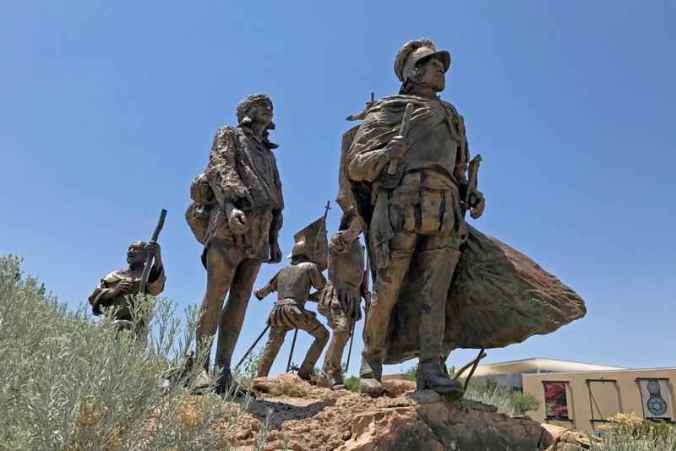
The dead have small flat stone markers the size of index cards: no names, just sequential numbers engraved in black. Individual graves are supposed to be impossible to identify. It was not until 2009 that a Freedom of Information request obtained the full list of those buried in Plot E, and the names can now be found on-line, most notably on Wikipedia. One name of note is Louis Till (that’s his marker above) , the father of the 14 year old Chicago teen lynched for “looking at a white woman” while visiting Mississippi.

Darren Smith, Jonathan Turley’s weekend blogger on Res Ipsa Loquitur, argues regarding the strange and cruel burial ground:

[I]n addition to what is at least in my view a human right to a proper and named burial, a historical aspect is sacrificed in the anonymous enumeration of the dead whose history becomes lost to oblivion…[A]t what point does the punishment end? In the case of death of a convicted person is the sentencing extended to eternity through the erasure of the convicted from the human consciousness? Must they fall into oblivion? We would be rather callous to think that these men did not have children, parents, or siblings and were erasable…

[Former Secretary of Defense during the Vietnam War Robert] McNamara lamented how [ General ] Curtis LeMay proposed that if their side lost the war, they would be tried as war criminals. “And we were”, according to McNamara “acting like war criminals” in area bombing Japanese cities. The justification to this is of course based on one’s perspective and certainly which side of the pond they were born upon. Yet there was a great amount of evil done at that time, but it was often the leaders and policy makers who justified such actions who are honored with their own large memorials. Yet these ninety-six Dishonored Dead are ordinary soldiers, [have] no right to be named, it seems. Or perhaps these Dishonored Dead present a topic of a perpetual embarrassment to the American Military or government, one that is best forgotten. It is a hard pill to swallow that among the millions who served honorably, there were at least a hundred who acted with evil intent and greatly unbecoming a professional soldier. Yet given the aging population of those serving, I very much doubt that any living military personnel of WWII today can truly argue they suffer any affront resultant from the naming of these men. Seventy years ago, yes–today I think time has healed that wound.

We would not pardon these men’s crimes by granting them a proper burial, with name and epitaph afforded all other soldiers. But they at least deserve to be known.

Do they?

Your Ethics Alarms Ethics Quiz is…

Is there a valid and persuasive ethical reason to provide marked graves and accessible burial sites for the executed residents of Plot E?

Continue reading

Comment Of The Day: “The Big Lies Of The “Resistance”: #8 ‘Trump Only Cares About Himself, Not The Country'”

Jeffrey Valentine has given us a perfect send-off into Presidents Day weekend with an epic post ranking the 44 men who have led our nation.

When I was a lad, Presidential ranking lists were common and popular. Jeffrey’s version is better and fairer than most of them. Then as now, the historian cabal was overtly political, overwhelmingly liberal, and successfully misleading the public with false narratives gilded into accepted truth. Worst of all was Kennedy’s house historian, Arthur M. Schlesinger, Jr.  who was routinely treated by the news media of the time as an objective authority, which he most certainly was not. He placed his friend and idol JFK in the “Near Great” category, scrupulously ignored the warts on Democratic Presidents like Wilson and Jackson, and was especially unfair to Eisenhower, whose “hidden hand” Presidency has gradually won admirers the more we learn about what he was doing.

Ethics Alarms is dedicated to the subjects of both ethics and leadership, so Jeffrey’s commentary is especially welcome as well as timely. Here is Jeffrey Valentine’s Comment of the Day on the post, “The Big Lies Of The “Resistance”: #8 “Trump Only Cares About Himself, Not The Country.” I’ll be back for a brief comment at the end:

Perhaps moreso than the original post, Adimagejim’s comments about former President Obama [JAM: Commenter Adimagejim was extremely critical of President Obama ] got me thinking about how I think about Presidents and how they rank. The more I think about it, I put Presidents into seven distinct categories. As you will see, my personal opinions don’t always mesh with popular opinion. I will also note that while I find the Presidents fascinating, I won’t even pretend to study them to to the extent that our host has.

The categories are as follows:

1. The Greats with no caveats. These are the Presidents who could objectively say “I was a great President because…..”, have a really reasonable explanation of why they were great, and not have to explain away any major part of their respective presidencies. In this category, I place George Washington, Thomas Jefferson, James Monroe, James K. Polk, Abraham Lincoln, Theodore Roosevelt, Harry S. Truman, and Ronald Reagan. [You’ll note these categories won’t create perfect rankings, per se, as I believe there is at least one president (Roosevelt) in paragraph 2 objectively better than Jefferson, Monroe, Polk, Truman, and Reagan].

[Note One: This ethics blog is often very critical of Jefferson-reasonably so as a man- but I’m ONLY analyzing the presidencies of these men. I think his presidency was clearly successful-even if he wasn’t an ethical individual. In fact, Jefferson may be the major exception that probes Jack’s rule that, generally speaking, the country is better served by an ethical man holding the presidency.]

[Note Two: James K. Polk doesn’t quite seem to fit on this list. I think his reputation is a function of consequentialism, however. He expanded U.S. territory, which set the stage for the civil war. Historians blame him for this- I don’t think that’s fair. I read somewhere that a historian once stated he resolved matter for HIS time. I think it’s unfair to expect a president to do more. What he resolved for his time- he resolved well. He was, therefore, a great, but not legendary, president.]

2. The Greats with Significant Caveats: These are the Presidents who could objectively say, “I was a great president because…”, have a really reasonable explanation about why they were great, but would have a major controversy or issue to to explain away in terms of their legacy. Caveats are always, in my mind, considered based on their respective times. My more liberal friends might put Washington in this category, because he owned slaves. I do not. This list includes Andrew Jackson (Trail of Tears), Franklin Delano Roosevelt (Japanese American Internment), Dwight D. Eisenhower, (McCarthyism), Lyndon B. Johnson, (The Vietnam War), and Bill Clinton (Monica Lewinsky). Continue reading

The Big Lies Of The “Resistance”: #8 “Trump Only Cares About Himself, Not The Country”

When I combined the seven previous “Big Lies of the Resistance” posts I though I had collected them all. What a mistake. Not only had I complied an incomplete list, I had managed to miss the most egregious, unfair and, for the impeachment effort, the most useful Big Lie of all. I’m sorry. It’s time to remedy my error.

I’ve been feeling the need to add Chapter 8 to the Big Lie record since the midst of the Democrats’  ostentatiously unfounded impeachment claims over the President’s dealings with the Ukraine. Their entire argument was built on an assumption: President Trump sought further information regarding the suspicious activities of Joe and Hunter Biden while the elder Biden was Vice-President and the younger was somehow pulling down big bucks from a Ukrainian corporation only to “find dirt” on his likely opponent in the Presidential election. This description was repeated over and over again by the news media, like a mantra or a hypnotic suggestion. Hearing it so often and repeated with such certitude, one might almost forget that the President of the United States has a legitimate purpose in finding out whether a high elected official in the previous administration was influence peddling, sacrificing the interests of the nation for a wayward son.

The President’s attackers and those who have been searching for a way to remove him without having to prevail at the ballot box have framed the controversy as if there was no reason on earth to suspect Joe Biden of wrongdoing–after all, he’s a patriot—so Trump’s waving a Congressional aid package as a carrot that could turn into a stick was an attempt to “interfere with the election.”

The funny part is that there was never any evidence that this was Trump’s motive. It was assumed that this was Trump’s motive because “everyone” knows he’s a bad guy.

We heard this during the Russian conspiracy investigation constantly: Trump “colluded” with the Russians because of course he did—he’s that kind of guy. The Trump haters who slowly devolved into the Trump Deranged came to regard the President’s character as one and the same as guilt of the dastardly acts they attributed to him. This is called, I remind you, bias. Bigotry. Prejudice…the intellectually indefensible assumption that someone is guilty of unethical acts because of who and what they are, rather than what we know they did. Continue reading

Saturday Ethics Warm-Up, 2/15/20: Dresden, Bloomberg, Snopes, Climate Change, And “The Chalkening”

Good Morning…

1. Dresden bombing ethics. February 13-15, 1945 witnessed the Allied firebombing of Dresden, Germany, with the resulting deaths of between 22,000 and 135,000 civilians. depending on whose propaganda you choose to believe. Regardless of the number, the destruction of the German cultural center and questionable military target so late in the war—after its loss in the Battle of the Bulge, Germany’s defeat was just a matter of time—was instantly controversial, and is still intensely debated today.

The attack, which dropped more than 3,900 tons of high-explosive bombs and incendiary devices on the city, destroyed more than 1,600 acres. By all accounts, the human toll was horrific. Lothar Metzger, a survivor, wrote,

We saw terrible things: cremated adults shrunk to the size of small children, pieces of arms and legs, dead people, whole families burnt to death, burning people ran to and fro, burnt coaches filled with civilian refugees, dead rescuers and soldiers, many were calling and looking for their children and families, and fire everywhere, everywhere fire, and all the time the hot wind of the firestorm threw people back into the burning houses they were trying to escape from.

Was the firebombing of Dresden a war crime?  If the Allies had lost the war, it would have become a war crime. As we have discussed here before, the concept of war crimes is confounding and hypocritical at best. If the attacks were deemed essential to ending the war as soon as possible, then they were ethically defensible.

Much of the debate over the years has focused on whether the bombing was terrorism. Of course it was, as were the atom bombs dropped on Hiroshima and Nagasaki, and General Sherman’s March to the Sea. Terror is a legitimate weapon in warfare, when the objective is to destroy the enemy’s will to fight. Attacks on civilians for revenge and to inflict gratuitous death and pain for no legitimate strategic purpose are unethical . The distinction is usually in the eye of the beholder.

Wikipedia has an unusually thorough article on the Dresden attack, and I found this paper interesting as well. Continue reading

Amy Gets A “Gotcha!”

Senator Amy Klobuchar, the suddenly surging Democratic Presidential candidate, stumbled when she was quizzed by reporter Guadalupe Venegas of Telemundo on the name of the president of Mexico.

When asked “Can you tell me his name?” about the leader of the rather important U.S. neighbor to the south, Klobuchar answered “No.”

It is Andrés Manuel López Obrador,  known by his initials, AMLO ,  who took office in December 2018. (I had to look it up.) Continue reading

Oh, Great: Baseball Turned Bernie Sanders Into A Socialist

First the sign-stealing scandal, and now this.

It is, apparently not exactly a new revelation that having his juvenile heart broken by a baseball team set Bernie Sanders on the dark road that had stops in Moscow and the Workers’ Paradise, but it is a timely moment to expound on the tale, readying as the Vermont Senator is to tear the Democratic Party asunder.

Many distinguished Americans of a certain age, from historian Doris Kearns Goodwin to Old Blues Eyes himself have waxed nostalgic about Walter O’Malley’s great betrayal, when he yanked the beloved Brooklyn Dodgers away from their iconic Ebbets Field home to the corrupt embrace of La La Land.

As  baseball fans know *or should), the year was 1957. The Brooklyn Dodgers, affectionately called “Dem Bums” by  the locals, had finally rewarded their community with a World Series championship over the hated Bronx-dwelling Yankees in 1955. Then, on a day that lives in infamy, Dodgers owner O’Malley announced that the team was leaving. (So were their National League rivals, the New York Giants, heading to San Francisco.) The Dodgers were a massive part of the Brooklyn community’s self-image, and the degree of trauma  it suffered cannot be underestimated. Bernie suffered too, and the scars still ache. Sanders told the Times in a recent interview:

“It was like they would move the Brooklyn Bridge to California. How can you move the Brooklyn Bridge to California?… I don’t want to tell you that was the sole reason that I’ve developed the politics that I’ve developed. But as a kid, I did see in that case about the greed of one particular company. And that impacted me.”

And here we are. In one of the more dramatic examples of Chaos Theory in action and the Law Of Unexpected Consequences, an upheaval in the  national pastime started the dominoes tumbling that threaten the Democratic Party and the nation’s economic stability 63 years later. What fun! Continue reading

Morning Ethics Warm-Up, 2/13/2020: I’m So Sorry I Missed Your Birthday, Mr. Lincoln.

I am awash with shame.

Yesterday was Abe Lincoln’s birthday, and I didn’t remember until late last night. This is the inevitable result of Presidents Day, the lazy combination of Lincoln and Washington’s birthdays into one floating holiday that lumps all our Presidents together as if they were equally laudable. (They are all laudable, but not equally.) Thus Franklin Pierce gets as much love from our calendar as Abe and George, which is ridiculous. ( President Pierce’s birthday I remember, because it’s the same date as my wedding anniversary, November 23.) In the old days before the blight of Presidents Day, school children would spend both February 12 and 22  learning about and doing projects related Lincoln or Washington. Without either of these great leaders, we probably don’t have a nation today, or if we do, it would be a vastly diminished one. Our first and Sixteenth Presidents tower over the rest in leadership ability, vision, and impact on our history and culture. Both deserve their own holiday, because every American should take at least a day out of every year to remember these two icons and honor their essential contributions, at great sacrifice, to the existence of the United States of America as well as the welfare of all of its citizens, past, present and future.

Today, most Americans couldn’t describe what Lincoln said at Gettysburg, and that’s not a recent phenomenon. In the classic movie “Ruggles of Red Gap,” a barroom full of Americans in a Western frontier town are unable to recall Lincoln’s message, but the very British butler, recently immigrated, can. Charles Laughton, who played the butler, continued to deliver Lincoln’s masterpiece throughout his career after that scene became the highlight of the movie. You can watch it here—I’d embed it, but there is no YouTube version.

1. Self promotion dept. I’ll be participating in a live podcast later today, discussing the ethical implications of nepotism. Details to come.

2. Still more developments in the Houston Astros cheating scandal. Earlier this morning I watched a live press conference from the Astros Spring Training camp about the sign stealing scheme. From a public relations standpoint, the spectacle made the Astros problems worse.

Stars  Alex Bregman and Jose Altuve spoke for a grand total of 90 seconds, sounding for all the world  like American prisoners of war in North Korea. Owner Jim Crane did most of the talking, which was unfortunate for the Astros and baseball. He  took no responsibility at all for what went on in 2017, though he was at the top of the organization chart: this is called the “Ken Lay excuse.” Worse, Crane repeatedly refused to acknowledge that using a secret camera to relay to the Astros dugout the opposing catchers’ signs telling pitchers what to throw, which were then relayed to  Astros batters by players banging on trash cans, constituted cheating. All Crane would say was “We broke the rules. We can argue about what you want to call it.”

Worse still, Crane said that it was impossible to say whether the team’s full year of sign stealing, including the playoffs and the World Series (which the Astros won), gave his team a competitive advantage. “Maybe it did, maybe it didn’t” he said. “Our opinion is this didn’t impact the game. We had a good team. We won the World Series and we’ll leave it at that.”

In later interviews with the players after the press conference, it sounded like everyone had been prepped to keep saying “2017” over and over, because there are lingering suspicions that the Astros scam extended into 2018 and 2019. As commentator Matt Vasgersian mused afterward on the MLB cable channel, if the Astros had won a championship cheating all the way through 2017 and hadn’t been caught, why would they suddenly stop the next season? Continue reading

Comment Of The Day: “Titanic Ethics”

Michael West has written a remarkable Comment of the Day in several respects. For one thing, it is a comment on a post that is almost eight years old, a record for Ethics Alarms. For another, he becomes the first commenter to comment on the same post under two different screen names. Finally, there is the fact that his point is one with historic validity, yet seldom if ever mentioned by the many critics of James Cameron’s  epic yet intermittently ridiculous film, including me. Follow the tag: there are a lot of  references to “Titanic” here.

One note in prelude to Michael’s essay: the cruel misrepresentation he alludes to can be partially laid at the now dead feet of Walter Lord, who wrote the influential and popular account of the Titanic’s sinking, “A Night To Remember.” It is an excellent account, but he decided to use Charles John Joughin as comic relief, and the  movies, including the one based on his book, distorted his portrayal, which itself seems to have been unfair.

Here is Michael West’s Comment of the Day on the 2012 post, “Titanic Ethics”

How about every Titanic movie’s depiction of Charles John Joughin?

Verdict: Unethical.

Joughin was the lead baker on board the Titanic. Built big and stout as a bull according to most who met him.

When he first heard the Titanic was going to go down, on his own initiative, he rallied the baking crew to gather what bread they could to distribute ample loaves to every lifeboat anticipating they may be afloat for awhile before rescue — something like 40 pounds of bread per boat. Several witnesses and his own testimony recount that he took multiple trips to help guide passengers from below decks up to the boat deck. He proceeded to a lifeboat, which he had been earlier commanded to be a crewman for (either tilling it or rowing, I’m not sure), only to discover another crewman had taken his spot. He didn’t protest, though he could have, so he helped load that boat and then went back to find more passengers below decks. After realizing there’d not be enough life boats and that many people would have to swim for it, he began to throw as many deck chairs into the water as he could as flotation devices, later he mentioned he hoped he could possibly find one of them after the ship went under. When the ship made its final plunge, he found himself standing on the back of the Titanic riding it into the icy waves. In the water, which was so cold, most people died of hypothermia within fifteen minutes…most much sooner than that, Joughin treaded water and swam for a remarkable one and a half to two hours before finding the upside-down collapsible commanded by Lightoller. Naturally, given Joughin’s luck thus far, the collapsible had no more standing room, so he had to float to the side for a bit longer before another lifeboat came by and picked him up. Continue reading

Oscar Ethics Part II: The “In Memoriam” Snubs

For some reason, Luke Perry’s snub (That’s Luke above) has attracted most of the outrage, though he is far from the worst of the omissions, as you will see.

Luke Perry

(October 11, 1966 – March 4, 2019

Perry became a teen idol at 23 after he was cast as the brooding son of a millionaireon Fox’s prime time soap opera,  “Beverly Hills, 90210.”  A riot broke out when 10,000 teen girls attended one of his  August 1991 autograph sessions  While starring in 90210,” Perry appeared in the original film version of Joss Whedon’s” Buffy The Vampire Slayer” (1992). That was pretty much the high point of his film career, though he had a small role in “Once Upon A Time In Hollywood.”  Mostly he was a TV actor whose career, after a spectacular launch,  settled into the typical orbit of supporting roles in various series and guest shots in everything from sitcoms like “Will and Grace” to “Law and Order: SVU.”  Between those jobs, voice-over work and regional theater paid the bills and kept him working.

He was, in short, a working professional actor who had one burst of superstardom, which is more than most. Perry was only 52 when he died of a massive stroke.

Michael J. Pollard

(May 30, 1939 – November 20, 2019)

Pollard rose to fame in 1967 as  Bonnie and Clyde’s dim-witted gang member, earning an Oscar nomination along with the other honors racked up by Arthur’s Penn’s ground-breaking, violent epic about the lover-killers. He went on to a long career as a Hollywood character actor, aided by one of the most memorable faces in screen history. That face had made him a familiar TV actor before “Bonnie and Clyde” made him famous: he played the cousin of Maynard G. Krebs (Bob Denver) on “The Many Loves of Dobie Gillis,” and Virgil, the cousin to  Barney Fife (Don Knotts), on “The Andy Griffith Show.” In the first season of the original “Star Trek,” he was  a creepy  teenage cult leader on a planet of children.

Pollard continued to make significant films after his Oscar nomination, such as  “Little Fauss and Big Halsy” (1970), a motorcycle racing buddy film in which he co-starred with Robert Redford. He was Billy the Kid in “Dirty Little Billy” (1972), an inept fireman in “Roxanne” (1987), the friend of a Utah gas station owner  who claimed to be Howard Hughes’s beneficiary in“Melvin and Howard” (1980), and  surveillance expert Bug Bailey in “Dick Tracy.”

Pollard was acting right up until his death: two of his films that yet to be released. Continue reading