Comment of the Day: “Follow Up and Clarification On The Hiroshima Apology Cable: I Was Wrong, I Apologize…and More”

Rick Jones, whose blog is a constant source of information, provocation and thoughtfulness, generously contributes his analysis to the botched Hiroshima apology story in this Comment of the Day.  To summarize: here and elsewhere, a Wikileaks-released diplomatic cable from 2009  prompted a stampede of mostly conservative news sources to report that President Obama had suggested the possibility of apologizing for the atom bombing of Hiroshima in World War II.  I encountered the story, tracked it in several sources that have proven reliable in the past, and commented on it, critically. About 24 hours later, a friend with impeccable diplomatic credentials and inside information properly chastised me for taking the bait, and offered conclusive evidence that the cable had been misinterpreted. You might want to read my post of last night apologizing to readers and the President that also raises the issues that Rick addresses in his Comment of the Day. I have a follow-up comment at the end:

“While I admire your acceptance of responsibility for what appears to have been a misinterpretation, your commentary raises other issues. Continue reading
Follow Up and Clarification On The Hiroshima Apology Cable: I Was Wrong, I Apologize…and More

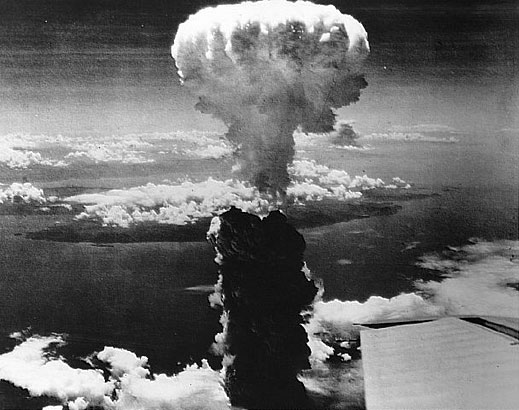
This is my indignation going up in smoke.

There are certain advantages that come from making an incorrect conclusion and publicizing it: sometimes you learn something valuable.

Here’s what I have learned about the diplomatic cable discussed in my post, “How Do I Write A Measured Ethical Analysis When I Am Shaking With Indignation and Rage?“:

1. The officer was reporting a hypothetical situation that the Japanese government official raised during the planning stage of the Obama’s visit.

2. The White House never proposed an apology. The fear of the Japanese was that if he went to Hiroshima, some groups within the country would expect an apology.

3.This key paragraph contains the officer’s assurance to the American Ambassador that the Japanese government would prevent any call, from the Japanese, for a public Presidential apology.

I have all of this from a reliable, credible diplomatic source who I know personally and who was in Japan at the time the cable was sent. This is no credit to me: I received an e-mail that said, in effect, “You Moron! You have no idea how to read diplomatic cables!!! Here’s what really happened…” Continue reading

Double Standard Ethics: What the “Occupy Wall Street” Demonstrations Have Revealed So Far

1. When well-behaved middle-class Americans held rallies protesting specific U.S. policies, notably excessive spending, a CNN  reporter challenged them on camera and accused the effort of being a creation of Fox News. When incoherently chanting anarchists, radicals and unemployed youths hold rallies advocating nothing constructive whatsoever, reporters are invariably respectful.

2. Thanks to the efforts of snickering CNN and MSNBC hosts, the emerging Tea Party was immediately referred to using a crude term for a gay sexual act. No such denigrating term has been employed to describe “Occupy Wall Street.” Continue reading

Patrick B. Pexton: Worst Ombudsman Ever

Interestingly, you can find Patrick B. Pexton's picture in the dictionary under both "bad ombudsman" and "bad hair."

Well, at least we know that the Washington Post’s new ombudsman, Patrick B. Pexton (who apparently escaped from a Charles Dickens novel) is a dud. That’s one good thing that came out of his column about his employer’s unethical coverage of the “Niggerhead” rock, otherwise known as “Let’s smear that scary Republican, Rick Perry, so he’ll never come close to being President.” Other than that useful but unfortunate fact, however, Pexton’s piece represents the most incompetent and ethically clueless analysis by a media ombudsman that I’ve ever read, and I’ve read a lot of them.

Pexton, who is supposed to present an objective and critical response to ethical issues in Post reporting and editing, instead adopts the stance of its partisan defender. Wrong. That’s not his job. His job is to keep his paper honest and to reinforce stringent journalistic ethical standards. Continue reading

Unemployment Check Ethics: “The Ethicist” Gets It Right

I regularly check the competition, and “The Ethicist,” Ariel Kaminer, has been solid lately. This past week, she avoided falling into a trap that I am certain her predecessor, Randy Cohen, would have charged into.

The questioner asked Kaminer whether it was unethical “for a relatively wealthy person” to receive unemployment checks, even if he or she met  the requirements. Moreover, “Is the answer different in times like the present, when government resources are extremely strained?” Continue reading

Why Lawrence O’Donnell’s Interview With Herman Cain Wasn’t Unethical Journalism

Lawrence O’Donnell’s unconscionable roast of GOP presidential candidate Herman Cain —-no fair journalist would call it an “interview”—made me realize that broadcast journalism ethics have fractured to the point where it is unfair to apply the same ethics standards to different networks and programs. My initial reaction to seeing O’Donnell’s over-the-top performance was that it represented a new low in broadcast journalism interview ethics. Now I think that is unrealistic and unfair. O’Donnell’s conduct was what MSNBC’s audiences want to see, and what critics should expect to see. Herman Cain, the target in this case, consented to the abuse. Where’s the unethical journalism? There was no journalism. Continue reading

“Hmmmm!”: Conflicts of Interest, Appearance of Impropriety, the National Parks Service

David Uberuaga, real estate whiz

David Uberuaga, then superintendent of Mount Rainier National Park sold his Ashford, Washington home to the owner of Rainier Mountaineering, Inc. for three times the property’s assessed value, while Uberuaga was charged with oversight of the concessionaire. Later, Park Service Director Jon Jarvis, at one time Uberuaga’s immediate boss, saw that Uberuaga was appointed the superintendent of Grand Canyon National Park. This is especially interesting in view of the fact that Jarvis’s older brother, Destry Jarvis, has been a lobbyist on behalf of motorized river runners on the Colorado River, which runs through that park.

Hmmmm.

Do you agree with that? “Hmmmm”? Because in government ethics, “Hmmmm” is enough to indicate that the appearance of impropriety threshold has been crossed. The public isn’t supposed to think, “Hmmmm.” In this case, however, how could they not? To prevent “Hmmmm,” Jarvis needed to remove himself from any decision affecting a National Park that is being lobbied by his brother. To prevent “Hmmmm,” Uberuaga can’t have business transactions, especially mysteriously enriching ones, with a company that seeks contracts with a park that he manages. Continue reading

Ethics Confusion in Ken Burns’ “Prohibition”

I enjoy all of Ken Burns’ documentary series, and I am grateful for them. They do a better job of teaching history than the schools, and they are always thought-provoking and, of course, beautifully executed. At the same time, I am aware of the limitations in Burns’ approach, beginning with his genre. Documentaries are inherently misleading works, more misleading in the hands of some, like Michael More, than others. The sifting of which material to use, how to balance issues, choices of photographs and film footage and even the inflections of voice betrayed by narrators (To his credit, Burns has all of his narrators deliver their script in the exact same measured and deliberately-paced tones; I found myself wondering how many times Burns forced “Prohibition” narrator Peter Coyote to listen to previous Burns stand-ins David McCullough and John Chancellor in “The Civil War” and “Baseball” until he sounded as much like their clone as they sounded like identical twins) unavoidably slant the final product, sometimes unintentionally, but usually with a motive. To the extent that viewers realize this, it is an ethical medium, but for most, especially those unfamiliar with the subject matter and with no independent knowledge to draw on, it is not.“Prohibition,” Burns’ latest PBS series that debuted last week, has a more obtrusive agenda supported with more dubious logic than his previous documentaries, reminding me, at least, that his historical conclusions should always be taken with a measure of skepticism. Continue reading

Attorney General Holder, Fast and Furious, and Congressional Perjury

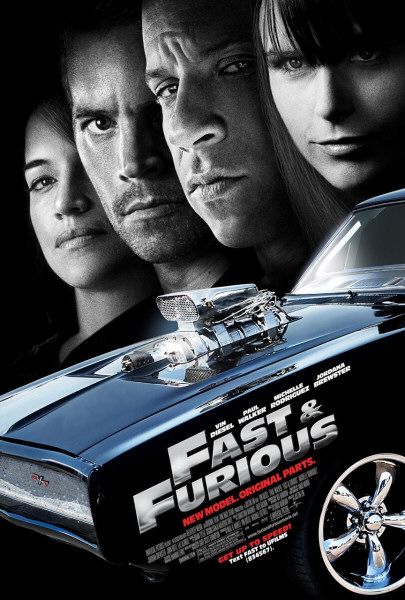
"Oh, NOW I see where the confusion is...AG Holder thought the Congressman was asking about when he saw the MOVIE called 'The Fast and Furious.' It's an honest mistake. The Attorney General loves his Netflix!"

It is looking increasingly likely that Attorney General Holder lied to Congress on May 2, 2011, when he was asked by House Oversight Committee Chairman Darrell Issa about when he knew about the Bureau of Alcohol, Tobacco, Firearms and Explosives’ Fast and Furious gun-running fiasco. In this he is following a grand tradition among U.S. Attorney Generals: the last one, Bush crony Alberto Gonzalez, almost certainly lied under oath to Congress too.

Fast and Furious was a botched gunrunning enforcement operation in which illegal guns that the Bureau of Alcohol, Tobacco, Firearms and Explosives intentionally allowed to be smuggled into Mexico ended up being used to kill an Immigration Customs Enforcement agent and a U.S. border patrol guard.  Holder was called before Issa’s committee in a typical “what did the top guy know and when did he know it?” inquiry. In response to the latter part of that question, Holder told the Committee that he was “not sure of the exact date, but I probably learned about Fast and Furious over the last few weeks.”

CBS and Fox News have uncovered a series of e-mails and memos that show unequivocally that this was not true. Continue reading

Hank Williams, Jr.: Victim of a Political Correctness Mugging

Wait---Hank Williams Jr. thinks Obama is like Jennifer Aniston?

On the Fox News morning couch-fest, country singer Hank Williams, Jr. had this exchange with the hosts:

HANK WILLIAMS: Remember the golf game?

    STEVE DOOCY: Boehner?

    HANK WILLIAMS: That was one of the biggest political mistakes ever.

    CO-HOSTS: Why?

    HANK WILLIAMS: That turned a lot of people off. You know, watching, you know, it just didn’t go over.

    GRETCHEN CARLSON: You mean when John Boehner played golf with President Obama?

    HANK WILLIAMS: Oh, yeah! Yeah. And Biden and Kasich, yeah. Uh-huh.

    GRETCHEN CARLSON: What did you not like about it? It seems to be a really pivotal moment for you.

    HANK WILLIAMS: Come on. Come on. It would be like Hitler playing golf with Netanyahu, OK?

It wasn’t OK, apparently. Headlines sprouted up like weeds claiming that Williams had “compared Obama to Hitler,” or “said Obama was like Hitler.” So because ESPN figured much of its audience would think that Hank Williams compared the President to Adolf Hitler, since the media was reporting his words that way, ESPN, that paragon of courage, fired Williams as the voice of Monday Night Football. No longer will his song introduce the festivities. Continue reading