Should Abortions Be Ruled “Non-Essential” Medical Procedures In The Pandemic Crisis? An Ethics Decision-Making Exercise

News Item:

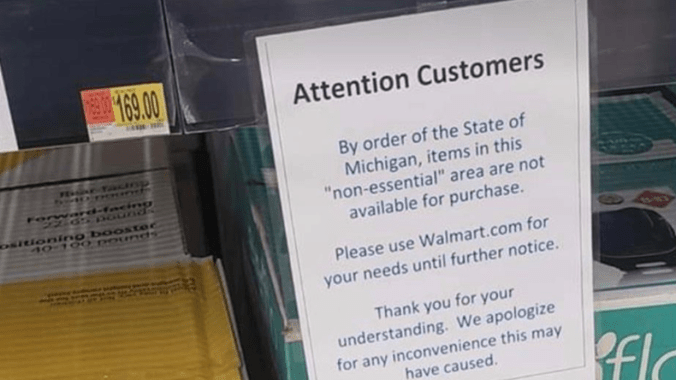
Texas and Ohio have included abortions among the nonessential surgeries and medical procedures that they are requiring to be delayed, setting off a new front in the fight over abortion rights in the middle of the coronavirus pandemic in the United States.

Both states said they were trying to preserve extremely precious protective equipment for health care workers and to make space for a potential flood of coronavirus patients.

But abortion rights activists said that abortions should be counted as essential and that people could not wait for the procedure until the pandemic was over.

On Monday, Ken Paxton, the attorney general of Texas, clarified that the postponement of surgeries and medical procedures announced by Gov. Greg Abbott over the weekend included “any type of abortion that is not medically necessary to preserve the life or health of the mother.” Failure to do so, he said, could result in penalties of up to $1,000 or 180 days of jail time.

Oh-oh.

Is abortion truly a non-essential medical procedure? Is it ethical to treat it as one? This is a perfect storm of an ethics conflict colliding with an ethical dilemma, with so many of the factors that confound ethical analysis present. For example, is the shortage of beds and the stresses on medical services really the only factors being considered by those in making the policy decisions in Texas and Ohio? Is the pandemic really a cover, in whole or in part, for other motives, like a desire to limit abortions generally for as long as possible? Is the ethical response by a pregnant woman to comply with the policy, even to the point of giving birth. There are many ethics decisions involved here.

Let’s just focus on one of them, the decision to call abortions non-essential procedures, and run it through one of the ethics decision-making systems. I’m going to use Professor Laura Nash’s 12 Questions, from her Harvard Business Review article, “Ethics without the Sermon” (1981)]

1. Have you defined the problem accurately?

In other words, “What’s going on here?” Continue reading

“Dark Waters”

“Dark Waters” is another ethics movie, and a very good one. Like all ethics movies involving real events, it is also educational—disturbingly so.

The film, which was released late last year, dramatizes the story of attorney Robert Bilott and his nearly two decades of battling DuPont over its deliberate (okay, “negligent”) poisoning of citizens and the entire nation with the chemicals used to manufacture Teflon. Yes, “the entire nation”: that’s not hyperbole. It is believed that the unregulated and toxic chemical called PFOA is in the system of everyone living in the U.S. as a result of DuPont’s conduct.

The movie has not been a prominent success, perhaps because is treads along the well-worn path of earlier movies about similar corporate scandals and class action law suits, like  Julia Roberts’ “Erin Brockovich” ( Pacific Gas and Electric Company ) and  John Travolta’s “A Civil Action” (Beatrice Foods and W. R. Grace and Company). The star (and producer) of “Dark Water,” Mark Ruffalo, isn’t quite in the same star category as Travolta and Roberts, but an A-list cast was assembled to back him, including Anne Hathaway, Tim Robbins,  Victor Garber, Mare Winningham, and Bill Pullman.

“Dark Waters,” horrifying to say, is mostly accurate. It was also one of those films where I was left wondering, “How did I miss this? Was it me, or was the story under-reported? If it was the latter, why was it under-reported?” The film was based on the 2016 New York Times Magazine article “The Lawyer Who Became DuPont’s Worst Nightmare” as well as that lawyer’s memoir. Exposure,” giving  Bilott’s perspective on his 20-year legal battle against DuPont. In the end, the company paid over $600 million  in a settlement, which was far less than they should have paid; I’m sure the company regards this as a victory. (Its stock went up after the announcement.)

Imagine: Continue reading

When Ethics Alarms Don’t Ring (Or Were Never Installed): The Covidiots

Once again, one has to ask:

What’s the matter with these people?

The Beach

California Gov. Gavin Newsom issued a shelter in place order for the Golden State’s  nearly 40 million residents to stay at home from March 20 to the foreseeable future. California is third among the states in number of Wuhan virus cases. So, naturally, people went to enjoy themselves at the beaches, hiking trails and parks.

The Hosts

New Jersey police arrested  Eliyohu Zaks last week after a neighbor notified law enforcement that a large crowd had been observed at his home. It was a wedding. Police dispersed the crowd of at least fifty and charged Zaks with “maintaining a public nuisance.”  Earlier in the week, police broke up two other weddings in the same neighborhood, and the day before, a fourth homeowner, Shaul Kuperwasser, was also charged with “maintaining a public nuisance” by hosting more than fifty friends at his residence.

This is something of an epidemic of its own. “The Lakewood Police is asking that its citizens be responsible and obey the directives set forth by the State of New Jersey for the safety and health of all,” local law enforcement said in a statement. “Those that choose not to will be subject to criminal prosecution.” Continue reading

Once Again, “The Good Illegal Immigrant.” Once Again, I Am Not Sympathetic

Nor should I be.

Nor should you.

Once again, the New York Times has published another of its entries into what I call “The Good Illegal Immigrant” files. The “good illegal immigrant” is a contradiction in terms, as much as “the good embezzler” or “the good bigamist.” This ongoing propaganda by the Times as the journalistic vanguard of the open borders mission of the American Left is in its fourth year. These features are stuffed with emotionally manipulative tales and quotes about the travails of residents of the United States who broke the law by coming here, and who continue to stay here, reaping the benefits that are supposed to be reserved to citizens while being nauseatingly self-righteous about it. The Times surpasses itself this time, with “Telling the Truth Wasn’t An Option” by Julissa Arce, illegally in this country from the age of eleven, whose dilemma was finally resolved when she married an American citizen.

It’s convenient that the title itself embodies a rationalization, indeed a couple whoppers from the Ethics Alarms list: #25, The Coercion Myth: “I have no choice!” and #31. The Troublesome Luxury: “Ethics is a luxury we can’t afford right now.” Telling the truth is always an option if one has the courage and integrity to be accountable. The headline applies to anyone who is engaged in an ongoing crime, or guilty of a past one, except that in this case, the individual feels uniquely entitled to not only avoid the just consequences of  her own actions, but to seek sympathy for her discomfort in doing so. Continue reading

Ethics Dunces: Apparently More Than A Couple Teens, Which Is Already Too Many…

From the Purcellville, Virginia Police Department:

Yesterday, March 18, 2020, an incident occurred at a local grocery store involving juveniles reportedly coughing on produce, while filming themselves and posting it on social media. Police responded and are currently investigating the incident. The grocery store immediately removed the items in question, and has taken appropriate measures to ensure the health of store patrons.

We are asking for parental assistance in monitoring your teenagers’ activities, as well as their social media posts to avoid the increase of any further such incidents. We have learned that this appears to be a disturbing trend on social media across the country, and we ask for help from parents to discourage this behavior immediately. Please talk with your children and explain to them why such behavior is wrong, especially given the current situation regarding the spread of Coronavirus (COVID-19). …

Ah, those wacky, wacky kids! Well, they’ll grow out of it, right?

Here’s a poll:

Ethics Train Wreck Analysis: The Richard Jewell Case

“Richard Jewell,” Clint Eastwood’s excellent but much maligned film about a historical episode with many ethics twists and turns, is extremely accurate and fair in all respects, except for the glaring exception of the screenwriter  Billy Ray’s representation that reporter Kathy Scruggs obtained the information that Jewell was under suspicion by the FBI in exchange for one night stand with the agency’s lead investigator. This was the point where the Richard Jewell Ethics Train Wreck of 1996 acquired a car containing the 2019 movie “Richard Jewell.”

Let’s look at those other cars.

I. Jewell

Jewell was a socially awkward, lonely, obese man who lived with his mother. He was in many ways a stereotypical misfit with low  self-esteem, who developed ambitions about becoming a law enforcement officer, a job that would would provide him with the respect and power that he lacked and wanted. The film begins with Jewell’s stint as an office supply clerk in a small public law firm, where he becomes friends with attorney Watson Bryant. Jewell quits to pursue his dream of becoming a law enforcement officer, and Bryant, in saying good-bye, asks his friend to promise that if he ever acquires the authority he seeks, he won’t become a jerk, and abuse it.

This was a real life conversation. Bryant recognized that Jewell was a border-line Asperger’s sufferer, whether or not he knew the name or the clinical condition, and exactly the kind of personality who should never be given a shield and a gun.

Jewell took a job as a campus security officer at Piedmont College, and rapidly realized Watson Bryant’s worst fears by reacting to his authority by abusing it, being over-zealous and generating an unusual number of complaints from students. Jewell was fired, but the need for security personnel at the upcoming Atlanta Olympics gave Jewell another chance at some authority at least. He probably shouldn’t have had such a chance. Jewell was not a man who should have been in the security field or the law enforcement field; his judgment was poor, and his emotional problems made him a bad risk.

Thus the conditions for the ethics train wreck were put in place. It was up to moral luck whether hiring Richard Jewell would turn out to be a disaster, or a  fortunate near miss. Instead, it turned out to be something else entirely, a classic example of a bad decision having a good result—at least for a while.

2. The Bomb

In the early morning of July 27, 1996, Jewell, now working in Atlanta’s Centennial Park as part of the Summer Olympics security force, noticed an abandoned backpack by a bench. Over-zealous, officious and a fanatic about following procedure, Jewell insisted on reporting the pack as a “suspicious package,” despite the chiding of his colleagues, who wanted to take it to Lost and Found. If, as was overwhelmingly likely, the backpack had been just a backpack, Jewell probably would have been mocked. But again moral luck took a hand. He was right. It was a bomb. Jewell and other officers began clearing the area, and the bomb went off, killing one victim, Alice Hawthorne, and wounding many, still  far less serious damage than what might have occurred had Jewell not been so scrupulous in his discharge of his duties.

3. The Hero, the Scapegoats, and the Tip
Continue reading

Ethics Dunce, But He Doesn’t Care: Senate Intelligence Committee Chair Richard Burr (R-NC)

I know this is unfair, but in almost every non-posed photo I found of Burr, he looks like he’s hiding something.

The Chairman of the Senate Intelligence Committee, Senator Richard Burr,  sold off  between $628,000 and $1.72 million of his stock holdings on February 13 in 33 separate transactions. At the time, Burr had received the government’s most highly classified Wuhan virus briefings. About a week after Burr unloaded stocks that figured to be affected, the stock market began its dive and has lost about 30% of its value since

Today  NPR revealed  a secret recording from February 27 in which the Senator gave a GOP group at an exclusive social club a gloomy preview of the economic impact of the approaching pandemic. According to the NPR report, Burr told attendees of a business executives group luncheon held at the Capitol Hill Club:

“There’s one thing that I can tell you about this: It is much more aggressive in its transmission than anything that we have seen in recent history … It is probably more akin to the 1918 pandemic.”

Continue reading

High Noon Ethics Warm-Up, 3/19/2020: O.J. Being O.J., Honestly Unethical Journalists, A Zealous Defense Lawyer, And Pandemic Jerks

Y-y-yup!

Started this one at precisely 12:00. Finished at exactly 1:30 pm.

An administrative note: I don’t censor comments by the regulars, but I’m going to be more aggressive in sending off-site notes of displeasure when homophobic, sexist and gratuitous ad hominem insults turn up. (Note: it is always acceptable to refer to someone as an idiot who has written something idiotic, if you explain why it’s idiotic.) We’ve never had a problem here with racist language (in part because I keep spamming comments from the Chimpmania mob), and I will continue to allow wide latitude regarding comments that are self-indicting (making fun of Hillary’s legs, for example, is a jerk move). But while no forum where intelligent participants exercise sharp critical judgment on lazy assertions and knee-jerk positions will ever be “safe,” no one who comes here should ever feel personally attacked or denigrated. I need to do a better job making sure of that. All assistance will be appreciated.

1. Wuhan Virus jerk update:

  • This (Pointer: valkygrrl):

I assume everyone now knows that O.J. is a stone-cold sociopath, but it’s considerate of him to keep reminding us. At least he didn’t say that he was furious that the Wuhan Virus restrictions on travel were impeding his search for Nicole and Ron’s killer.

  • “You know: morons!” Jennifer Rubin, the completely Trump Deranged NeverTrump conservative whose constant eruptions of hate and anger regularly embarrass the Washington Post, recently wrote that more Republicans than Democrats would die in the pandemic because the former slavishly follow Fox News. Uh, no.  If she’s right, it will be pure demographics. The Millennials  appears to be, like all of its predecessors at a similar age, dumb as bricks. CBS reports that the kids are flocking to Florida for Spring Break, while posting and saying things like this from Brady Sluder, spring breaker from Ohio and moron: ,”If I get corona, I get corona. At the end of the day, I’m not gonna let it stop me from partying. We’re just out here having a good time. Whatever happens, happens.”

This does explain the intellectual basis for Bernie Sanders’ support, however. Continue reading

How I Boarded The “Richard Jewell” Ethics Train Wreck

It is unusual to see an ethics train wreck continue to  roll along to the extent that it affects the movie about the ethics train wreck, but that was what happened with the Richard Jewell saga. Remember the definition of an ethics train wreck: an episode in which virtually everyone who becomes involved in it, however tangentially, becomes entangled in ethics mistakes and misconduct. The  “Richard Jewell” Ethics Train Wreck (or the Richard Jewell Ethics Train Wreck) even yanked me on board.

I’ve already written about the film, directed by Clint Eastwood and a 2019 holiday bomb (no pun intended). My focus then was on the single unethical feature of the screenplay, its unfair portrayal of the real-life Atlanta-Constitution reporter, the late Kathy Scruggs, who broke the FBI leak that the security guard who had become a national celebrity by detecting the deadly pipe bomb that had exploded at the 1996 Atlanta Olympics  was suspected of making the bomb himself. Though film reviewers usually register few rejections when films smear the deceased in pursuit of a more compelling narrative, “Richard Jewell’s” claim that Scruggs traded sex for the leak walked into the #MeToo buzzsaw, and on that basis alone, Clint’s movie was trashed  by reviewers and pundits alike.

Me Too, and I hadn’t seen it. I wrote in part,

I strongly doubt the average viewer passed on the film because it may have been unfair to a dead reporter. Who had the genius idea that releasing a film about the press’s abuse of a strange, sad, fat man played by an unknown actor would be a Christmas season hit? I had no interest in seeing the movie, and I’m an admirer of Eastwood and will cheer on any further proof of how rotten our journalism has become, but why pay to see the news media falsely try to destroy a security guard in 1996 when the same institution has been trying to destroy the President of the United States for three years?… So the news media was incompetent and vicious to Richard Jewell? That’s supposed to get me to the movie theater?

Nevertheless, let me be clear: I hate what the movie did to Kathy Scruggs, just as I detest it every time an individuals can’t defend themselves are lied about in a movie, misleading audiences and scarring their reputations….

Unless Eastwood had strong evidence that the reporter was trading sex for information, he should not have used her name. He owes the Scruggs family an apology, and I’m glad his movie is tanking.

Gee, the seats on the “Richard Jewell” Ethics Train Wreck are so comfy, and the fare on the snack car is excellent! Continue reading

An Unethical Quotes Of The Week Cornucopia!

So many people are saying so many irresponsible, dishonest and stupid things in the throes of the Wuhan Virus freakout that I can’t possibly run all of them, or even a representative percentage, but I can’t let these pass.

1. President Trump, yesterday…

“This is a pandemic. I felt it was a pandemic long before it was called a pandemic.”

Sometimes I think the President is actively trying to make people’s heads explode. As the New Yor Times quickly documented (on the front page), this is historical revisionism, gaslighting, or insanity.

  • On Jan. 22, asked by a CNBC reporter whether there were “worries about a pandemic,” President Trump replied: “No, not at all. We have it totally under control. It’s one person coming in from China, and we have it under control. It’s going to be just fine.”
  • On Feb. 26, at a White House news conference, he said,  “We’re going to be pretty soon at only five people. And we could be at just one or two people over the next short period of time. So we’ve had very good luck.”
  • On Feb. 27: “It’s going to disappear. One day — it’s like a miracle — it will disappear.”
  • On March 7, when asked if he was concerned that the virus was spreading closer to Washington: “No, I’m not concerned at all. No, I’m not. No, we’ve done a great job.”

As I have written here before, I refuse to make a big deal out of Trump being Trump, and those who do are simply being self indulgent. Some irresponsible statements are worse than others, and yesterday’s was especially outrageous. It’s in the category of lies that are almost not lies because no one could possibly believe them, like if the President said he was a Stegosaurus. However, if the public knows that whatever he says might be a temporary fantasy, his leadership ability is seriously handicapped. The problem with this kind of statement isn’t that it’s so obviously untrue, but that saying it is so spectacularly self-destructive and stupid.

2. MSNBC Analyst Glenn Kirschner, a former Assistant U.S. Attorney, in a tweet: Continue reading