Deferred Action for Childhood Arrivals (DACA) Ethics

President Trump, we are told, is considering or has decided to end President Obama’s Deferred Action for Childhood Arrivals, reportedly with a six month delay to give Congress a chance to  pass a law addressing the issue. The Obama-era program, instituted by executive order,  grants two-year renewable work permits to those brought into the country illegally as children.

There are legitimate arguments for and against this policy. Even saying this is blasphemy for its supporters, whose brains, reasoning and sense of national interest have been completely swallowed by Ethics Alarms Rationalizations #55, “We’re Better Than This!” and #56, “Think of the Children!”

Jenifer Rubin, the conservative Washington Post blogger who has been driven both leftward and also near madness by her hatred for Donald Trump, authored a post titled “Ending DACA would be Trump’s most evil act.” Evil! Naturally, she attributes the decision to racism. On Facebook, the progressive echo chamber where most of my friends dwell doesn’t even require an explanation  of why eliminating DACA is proof of a malign soul. “Trump will end DACA Tuesday!” a distinguished Trump-hater writes, as if it were self-explanatory, like “Trump will broil and eat Nancy Pelosi with a nice Chianti.”

I guess I’m evil too. To begin with, Obama violated the Constitution with his unilateral edict that should have been a bill, passed the old-fashioned way, with it being voted on by Congress and signed into law, or not, by the President. The President should end every single one of Obama’s over-reaching, unconstitutional end-arounds of Due Process that exceeded his office’s powers, whether Trump agrees with them or not. The integrity of our system is the most important thing of all, and he is sworn to protect it.

That is the procedural and precedentiary justification to end DACA. There are ethical and legal reasons too. Never mind, apparently. What matters in this issue are feelings. The argument is so marinated in sentiment and emotional blackmail—if you don’t love “the dreamers,” then you are a monster—that a coherent and responsible debate is literally impossible. All of the emotion-based arguments employed to argue that the illegal immigrant children who piled up at the border during the Obama administration should be allowed to cross the border, or that the U.S. should accept, barely vetted, refugees from nations packed with terrorist activity because their children weren’t terrorists have been repurposed in this debate, plus others. I am especially unmoved by the Hurricane Harvey line of argument: because some “dreamers” have done yeoman rescue work  in the wake of the flooding, the fact that they are in the country illegally should be forgiven, and not only that, take that fact as validation of the desirability of ALL “dreamers.” Continue reading →
Morning Ethics Warm-Up, 9/3/17: A Troubling MLB Suspension, Anti-Trump Mania Update, And Announcing “US Race Relations Have Finally Reached The Point Where They Make No Sense Whatsoever” Sunday

Good Morning!

1.I dread this, but it is looking like it is going to be “US Race Relations Have Finally Reached The Point Where They Make No Sense Whatsoever” Sunday. I have accumulated three stories that fit under that heading, because each one of them is simultaneously annoying, sensitive,  under-reported, and difficult to process. Procrastination isn’t ethical, however, so today is the day. Ugh.

2. Today’s New York Times Sunday Review is again light on President Trump Hate, after last week’s orgy. I was discussing yesterday’s post about the draft letter excitement with my sister, a not-quite-resistance member who is a better lawyer than I am and intermittently reasonable despite hating and fearing the President worse than she does that Four Horsemen of the Apocalypse. She agreed that the news media’s elevation of the draft letter to front page status was biased journalism and self-evidently silly. “The news media believes that Trump is so incompetent that it is their job to try to help the country get rid of him as quickly as possible,” she said. She also confirmed that this is the attitude of the “resistance,” Democrats and progressives as well, and she hangs out with all of them.

Her candor was welcome. It’s also an admission, in my view, and I told her this, of an anti-democratic and unethical attempt to undermine our institutions. We remove Presidents by elections, not manufactured impeachments or 25th Amendment removals on contrived grounds. What my sister calls fear of dangerous  incompetence is really objections to style, rhetoric and policy, none of which are justifiable reasons to remove a President before an election.

I also pointed out to my sibling that it is not the news media’s job to conspire with partisan opponents to remove a President. In fact, it is unforgivable.

3. What’s the difference between the National Football League and Major League Baseball? Well, one difference is that when a star NFL player is caught on a video cold-cocking his wife-to-be  in a hotel elevator, the NFL’s first response is to do nothing, and when a second string catcher’s ex-fiance says she was abused on social media and then deletes the post, that’s enough for MLB to suspend the player under its domestic abuse policy. Ethically, I’m not sure which is worse. Continue reading →

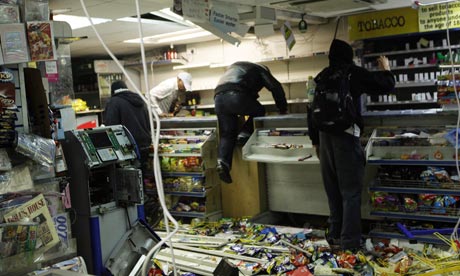
Another Harvey Ethics Quiz On Looting….

The comments on the Ethics Quiz on shooting looters was edifying. Now let’s examine the question of “legal looting,” according to a Yale Law School professor.

In a post for Bloomberg, Stephen L. Carter argues that “Peacefully taking what you need from a supermarket isn’t the same as looting.” he writes in part,

Should we conclude that people taking food from an empty store during an emergency are not committing a crime? That’s exactly what we should conclude — they are not lawbreakers — but it’s important that we understand exactly why.

Let’s start by considering our own instincts. If I were trapped and my family was starving, I would grab the food; I suspect most readers would too. Already our instincts tell us, then, that the moral situation in which we find ourselves is different when a disaster has struck. I believe, very deeply, in the importance of strong property rules. In an emergency, however, we should interpret the rules differently…. A well-known example in the Model Penal Code posits a hiker who, trapped by a blizzard, breaks into a cabin and eats the food to survive. The hiker has taken both food and shelter without the permission of the owner. By choosing to violate a property rule rather than starve to death or die of exposure, the hiker has selected the lesser of two evils. This is one form of the defense known as “necessity,” and is generally considered to mean that there is no crime.

(You need to read the whole post to fairly consider Carter’s argument.)

Your Ethics Alarms Hurricane Harvey Ethics Quiz of the Day is…

Is looting an abandoned supermarket for food still a crime?

Continue reading →

Morning Ethics Warm-Up, 9/2/17: Keith Olbermann Tweet, The Rifleman On The Melting Pot, and What The Editors Of the New York Sun REALLY Wanted to Tell Little Virginia…

GOOOOOD MORNING!

1. For some strange reason AMC and the Sundance movie channel alternate showing multiple episodes of “The Rifleman” every Saturday morning. Like most of the old TV Westerns, but even more than the rest, the Chuck Connors half-hour drama about a single-father rancher who doubled as part-time lawman was about ethics, despite the fact that Chuck as Lucas McCain killed over almost tw0-hundred men over the course of the show. In one of today’s episodes, young Mark, Rifleman Jr., played by the excellent child star Johnny Crawford, fought off some bullies who were abusing a young Chinese boy who was dressed in his native clothes and wearing long hair. As the boy’s father thanked Lucas and  Mark, the Rifelman pointed out that the boy would be tormented as long as he wore his hair “like that.” “His hair is worn in the manner accepted in my country,” the father replied.

“Yes, but you’re not living in China, you’re living in the United States,” Chuck said, wrinkling his brow.

That message was not a controversial one in 1880, or in 1960, but it would be today. Still, The Rifleman was right. There is cultural pressure on immigrants to accept and adapt to U.S. culture and values, and that is for the benefit of everyone involved.  Mark made it clear that he would keep fighting for the right of the young Chinese boy to wear his hair as he chose and Chuck endorsed that, because it’s another American core value. Still, being an American citizen should mean more than just an address. Our culture used to send that message powerfully and regularly, in TV dramas and elsewhere. Now it sends the opposite message most of the time. That’s a tragic change, and the results are becoming apparent.

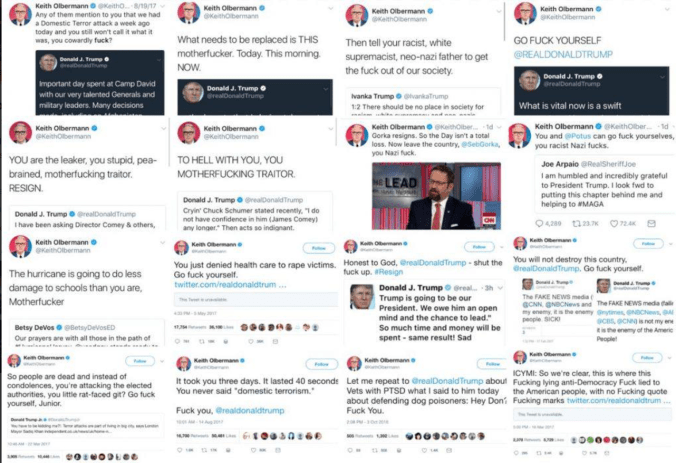
2. Now THIS is an uncivil tweet: The degree to which the unhinging of the Trump-hating left has reached frightening proportions was illustrated last week by a tweetstorm meltdown by onetime MSNBC star Keith Olbermann, who is still anchoring a public affairs commentary show somewhere, I think. It reached its apotheosis with this masterpiece or reason, nuance, and civility:


Olbermann finally took down the tweet, but the rest remained:

I don’t think Olbermann is significantly more addled by blind rage at Trump’s election than a large number of prominent journalists, editors, academics, professionals and others, or more emotional in his hate.  He  just has less restraint than most in giving vent to it, that’s all. Continue reading →

Comment Of The Day: Morning Ethics Warm-Up, 9/1/17: …A Sarcastic Cop

The news item involved a Georgia traffic cop being fired for a dash-cam video showing him sarcastically telling  a DUI motorist who was resisting his requests on the grounds that she had seen videos of police shooting unarmed motorists, “But you’re not black! Remember, we only kill black people. Yeah, we only kill black people, right?”

My post took the position that in the current environment for police departments, the officer had to be fired despite hsi obvious intent. Esteemed long-time commenter Charles Green articulated the opposing view, which I must admit is more ethical than mine on its face. I wonder if it is realistic, but I’m thinking, Charlie, I’m thinking.

Here is Charles Green‘s Comment of the Day on the post, Morning Ethics Warm-Up, 9/1/17: Richard Simmons, Stilettos, A Sarcastic Cop:

Regarding the sarcastic cop: as I’ve said many times in this column, I think comments have to be understood in context. This is no different.

As you note, it was obvious from the context what he meant. I’ve made the point numerous times about “black lives matter,” and about how the same words when uttered by black people have different meanings when uttered by white people.

I think this is the same. If it was obvious what he meant, then why should we defend the police department for bowing to perceived PC implications? The department should back him up and make an intelligent, forceful statement about how cops are required to make on-the-spot judgments about the individual in front of them, and not be slaves to the perception outside.

I wouldn’t even have fired him, much less go after him to make an example. By that logic, all the statues should come down (which I don’t agree with either).

Morning Ethics Warm-Up, 9/1/17: Richard Simmons, Stilettos, A Sarcastic Cop, And The Post Sides With Palin

GOOD MORNING SEPTEMBER!

1.Good riddance to August, which had the worst fall-off in traffic here relative to the previous year of any month in Ethics Alarms history. I only have theories, the main one being that last August’s surge was an anomaly fueled by the Presidential campaign and the fact that Ethics Alarms was analyzing the ethics deficits of Hillary, Trump, the news media and both parties in roughly equal measure, since they were misbehaving in roughly equal measure.  Since “the resistance” and their allies in the news media, academia and elsewhere decided to reject democratic institutions like elections and the office of the Presidency in their revulsion, and mount a dangerous perpetual assault on the President with the objective of  undermining his leadership and having him removed extra-Constitutionally, the left-leaning end of the blog-reading pubic has become rigid and unyielding, and unable to tolerate even considering any position but their own. I’m seeing it on Facebook, every day. Their position is indefensible on the facts, so they find any critical analysis of their conduct and attitudes unpleasant. Then again, it could be because Google is burying my posts for being insufficiently politically correct, or because I suck.

2. Here’s a perfect example of the kind of ethics issue that only deserves Warm-Up status: Melania’s shoes as she boarded Air Force One on the way to  Houston.

(She was in sneakers when she landed, and was mocked for that, too.)

The New York Times and other Trump-Hate news sources actually thought this fashion choice by the ex-model was worthy of criticism. In Melania Trump, Off to Texas, Finds Herself on Thin Heels , Vanessa Friedman spend hundreds of words dissecting how the stilettos were “a symbol for what many see as the disconnect between the Trump administration and reality.” Apparently the First Lady broke the “No high heels when leaving a disaster” rule in the First Family Ethics Manual. Letter writer Dennis Donalson correctly chided the Times, writing in part,

The fact that she wore high heels when boarding a plane, regardless of her destination, is not newsworthy. Sometimes a cigar is just a cigar and shoes are just shoes, not “the go-to stand-in for more nuanced, complicated emotions and issues.” Give Melania, and us all, a break.

Dennis notwithstanding, I’ve decided stories like this are wonderful: they are smoking gun evidence for anyone who isn’t similarly deranged that the news media is so consumed with anti-Trump mania that it is literally unable to determine what is or isn’t fair, proportionate and reasonable coverage. If the Times thinks Melania’s shoes are such a big deal, no wonder it goes nuts over what the President says to the Boy Scouts…and no wonder it is no longer reasonable to accord such a paper any credibility or respect at all. Continue reading →

From The “Didn’t I Tell You To Stop Making Me Defend President Trump?” Files, An Ethics Alarms Popeye: More On The Joe Arpaio Pardon

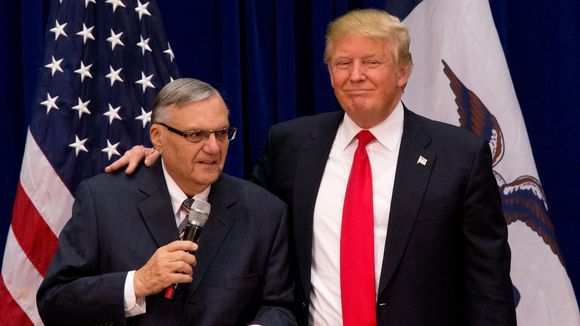
I would prefer not to keep talking about the Joe Arpaio pardon, but the news media and the “resistance” won’t let the pardon go, because in the absence of anything legitimate giving them cause to scream for an impeachment, they have to latch on to whatever they can. So this is a Popeye: I’m writing it because, as the spinach-living cartoon sailor would say, “That’s all I can stands, cuz I can’t stands no more!”

Oh, before I forget: here’s what the Southern Poverty Law Center says about the pardon:

“By pardoning Joe Arpaio, President Trump has demonstrated his contempt for the rule of law and the racism at the core of his agenda. Arpaio, a Trump favorite on the campaign trail, is the former sheriff of Maricopa County, Arizona. He was convicted of criminal contempt of court for intentionally violating a federal court order prohibiting racial profiling. As a result of President Trump’s pardon, Arpaio will never be held accountable for his unconstitutional conduct.”

Following this logic, by pardoning drug dealers President Obama proved that at heart, he is a drug dealer. By pardoning Chelsea Manning, President Obama proved that sharing classified information with our enemies is at the core of his agenda. This is a “law center”  including such tripe on its website? It sounds like the legally ignorant accusation often made against defense lawyers (like Hillary Clinton) that they endorse the crimes, motives and values of their clients.

In a front page article on Sunday, the New York Times tried to break its own record for desperately trying to make a case for Presidential wrongdoing while still stating the undeniable fact that no wrongdoing had occurred:

  • The Times states, correctly, “that there is nothing in the text of the Constitution’s pardons clause to suggest that [Trump] exceeded his authority.” But it tracks down yet another law professor who has allowed the anti-Trump brain virus to swallow his integrity. Noah Feldman, a law professor at Harvard, claimed that pardoning Arpaio “would express presidential contempt for the Constitution.”

Good thinking. The President expressed contempt for the Constitution by engaging in an action described and enacted in the Constitution. A better argument, though still unfair, would be that President Obama was expressing contempt for the Constitution by not using its pardon power provision even once within his first 400 days in office.

  • More from the Professor: “Arpaio didn’t just violate a law passed by Congress…His actions defied the Constitution itself, the bedrock of the entire system of government.” Yes, and so what? If that same document gives the President an open-ended power to forgive any crime, and it does, then this is just huffing and puffing.

All Feldman is saying is that he doesn’t believe that Arpaio’s particular crime should be pardoned. When you’re President, Professor, by all means let that standard be your guide.

  • By saying Mr. Arpaio’s offense was forgivable, Professor Feldman added, Mr. Trump threatens “the very structure on which his right to pardon is based.”

Note to  Professor Feldman: Get help. The reason the President has unlimited pardon power is because, in the view of the Constitution’s authors, any offense IS forgivable. Presidents have pardoned traitors, those who have killed American citizens. They have pardoned terrorists, and a President of the United States who plotted to subvert justice and our democracy itself. No Harvard Law professor has made the claim that any of those offenses were unpardonable (that is, literally, unforgivable). Why is that? Well, a) Trump is special and doesn’t deserves to be judged by the same standards as other Presidents, and b) the Left hates Arpaio beyond all proportion, because of his opposition to illegal immigration.

  • The Times writes, “It was the first act of outright defiance against the judiciary by a president who has not been shy about criticizing federal judges who ruled against his businesses and policies.” If this pardon is “outright defiance against the judiciary,” then most pardons are. Almost all pardons erase a judicial sentence or verdict.

This is misleading, biased, inflammatory, unethical journalism.

  • The Times writes,

“Mr. Trump could pardon any of the subjects of the special counsel’s Russia inquiry, though some legal specialists believe he could increase his risk of prosecution if he is seen as abusing his pardon power.Were Mr. Trump to announce that he has pardoned himself, impeachment would remain possible. A prosecutor might also test the limits of the pardon power by indicting Mr. Trump notwithstanding such an announcement. That clash could lead the Supreme Court to weigh in on the limits of the president’s power to spare himself from punishment for criminal wrongdoing.”

This story has nothing to do with impeachment! No evidence has been found that suggests the President has committed any impeachable acts. The Times story is about the Joe Arpaio pardon. How can the Times justify suddenly piling tangential hypothetical on top of tangential hypotheticals in this article to get to a scenario where the Supreme Court has to determine whether President Trump can pardon himself for crimes as yet unalleged and undiscovered? Well, the reporter is Adam Liptak, the epitome of what Instapundit calls “Democratic operatives with bylines.” He’s not reporting here; he’s promoting a nakedly partisan narrative. Continue reading →

Morning Ethics Warm-Up, 8/31/17: Southern Poverty Law Center Edition

A Cayman Islands sunrise!

Good Morning, Everyone!

1.For the second time in two months, I had the wrong date on yesterday’s Warm-Up. This time, I was six days off. That’s incompetence, not malice. If I made anyone miss a birthday, anniversary of other appointment, I am so, so sorry.

2. D. James Kennedy Ministries of Fort Lauderdale, Florida, an evangelical Christian ministry, is suing the Southern Poverty Law Center for calling the ministry a hate group because of its stance against LGBT rights. The SPLC is an Alabama-based, self-styled  watchdog group that tracks tracks what it considers extremist organizations, and it publicly names organizations it considers hate groups. It considers hate groups to be any group that is sufficiently aggressive in opposing certain core progressive positions. The entire operation is a masterpiece of self-validating virtue. The name was carefully chosen to signal unimpeachable virtue: it’s “Southern,” so its stance against discrimination is obviously defient and in opposition to its surrounding culture and biases. Though little of its activity involves poverty, the name also signals charity and virtuous motives.  What’s a law center? Well. I grdauted from one, and that was a law school. The Southern Poverty Law Center isn’t a law school, but doesn’t the name sound impressive? Originally, the SPLC acted as a public interest law firm (I would call its use of “law center” misleading, and a breach of several states’ legal ethics rules if it were still a law firm), but now it is a progressive activist and propaganda organization. Not that there’s anything wrong with that, but part of its schtick is to designate organizations as hate groups because, well, they say so. Then the left-leaning news media accepts their verdict as fact. You will read articles saying that there are 917 hate groups in the U.S. No, there are 917 groups the Southern Poverty Law Center calls “hate groups.” .Many of the organizations on the SPLC’s list are undeniably racist and violent. Many are not, or may not be. Lumping them all together as “hate groups” is an effective way to demonize dissent. “Hate group” has no accepted definition, but SPLC defines a ‘general hate group” thusly: “These groups espouse a variety of rather unique hateful doctrines and beliefs that are not easily categorized.”

Got it. The Southern Poverty Law Center is a hate group by its own definition. To be a reliable arbiter of whether a group is promoting hate rather than a just a controversial policy position, a group would have to be non-partisan, objective and politically neutral. all things that the SPLC is not. This is an organization that designates groups that espouse views that it hates as hate groups.

I hate that. Continue reading →

First Parmesan Cheese, An Now This: A Judge Bends Over Backwards To Let The New York Times Escape Its Abuse of Journalism Rights

Oh, we knew Palin had nothing to do with this wacko, but it sure felt good to stick it to her anyway…

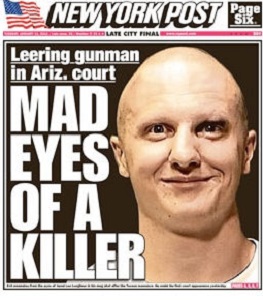
Federal judge Jed S. Rakoff  has dismissed Sarah Palin’s defamation lawsuit against The New York Times, ruling that she had failed to show that the Times  defamed her in its June editorial stating that she was responsible in part for the Tucson shooting of Rep. Gabrielle Giffords and others by the deranged Jared Loughner. Rakoff’s  ruling argued that the statements in the Times editorial were ambiguous (where have I heard this before?), and thus did not qualify as “provably false,” resulting in insufficient evidence that the Times had written the story with “actual malice.”

“[I]f political journalism is to achieve its constitutionally endorsed role of challenging the powerful, legal redress by a public figure must be limited to those cases where the public figure has a plausible factual basis for complaining that the mistake was made maliciously, that is, with knowledge it was false or with reckless disregard of its falsity,” Rakoff wrote.

Right. Except that to write what it did, the New York Times Editors had to be unaware of what the Times itself had reported regarding Palin’s alleged culpability for the shooting. The Times reported, in great detail at the time, that the claim that Palin’s website had inspired Loughner was completely without merit.

A newspaper’s editors impugning a public figure by blaming her for multiple murders and the attempted assassination of a Congresswoman without checking its own reporting doesn’t qualify as “reckless disregard of its falsity”? If that isn’t reckless disregard, what is? Continue reading →

Professor Volokh’s Ethics Dissent On The Vicious, Pazuzu-Blaming Professor’s Firing

‘Yes, I know he’s an idiot, but we should support idiots as highly paid teachers of our children, for the protection of the non-idiots…‘

Eugene Volokh is one of the best and most objective legal minds in the country. If he finds himself on the Supreme Court when Kennedy retires or Ginsberg shuffles off this mortal coil, we will not have suffered through the ugliness of the Trump years in vain. When he opines, I listen, as we all should, and he has now opined regarding the now fired idiot that I wrote about this morning, ex-University of Tampa visiting sociology professor Ken Storey.

Storey used Twitter, in the middle of the still-unfolding human disaster in Houston and soon New Orleans, to announce that flooding victims who were Trump supporters or Republicans deserved to die. He did this twice, so his later claim that his words did not intentionally convey what his words were obviously intended to convey was a desperate and obvious lie.

I wrote:

The university or college that fires an employee like Storey is protecting its reputation as a responsible institution, by stating in clear terms that people with terrible judgment and cruel and unethical instincts who are motivated by hate and intolerance are not qualified to teach….because they aren’t. That professors increasingly have no ethics alarms beeping when the prepare to publish sentiments like Storey’s (or worse) shows how thoroughly the leftist echo chambers of most campus faculties turn academics into Pat Robertson, which is to say, rigid, mean, and dumb. Once upon a time, liberals giggled themselves silly over the evangelical huckster’s periodic pronouncement about how a disaster was God’s way of punishing the U.S. for not abusing gays sufficiently, or similar bile, Now they do the same thing, and expect their colleagues and students to applaud.

Today, in the Washington Post, Professor Volokh advocates a different position:

Storey’s comments were nasty and mean-spirited; and I should note that the University of Tampa is a private university, in a state that doesn’t limit private employers’ ability to fire employees for their speech. The university’s actions thus seem legal (assuming they didn’t breach any contract). And Storey’s comments also weren’t academic or likely to be part of a serious political debate.

But the university’s action strikes me as further undermining the freedom of expression and debate at American universities, including the freedom to say things that are much more thoughtful. If you were an untenured faculty member at the University of Tampa, would you feel free to express your views on controversial subjects, when you saw how the university reacted to this tweet? Even if your views were very different politically, what do you think the University would do if people started pressuring for your dismissal, pointing to the Storey incident as precedent?

I’ve talked before about “censorship envy,” one mechanism through which these sorts of speech restrictions can grow: “If my neighbor — and especially my political adversary — gets to ban speech he reviles,” the thinking goes, “why shouldn’t I get to do the same?”

If a university has a strong policy of protecting speech, including offensive speech, administrators can point to that policy as a means of resisting calls for firing a controversial faculty member, and they can appeal to people’s desire to see speakers on their own side protected, and use that desire to help protect speakers on all sides. But once the university starts firing some people for speech “that do[es] not reflect [the university’s] community views or values,” that makes it much harder to resist calls for more suppression. Indeed, at that point tolerating speech starts implicitly conveying the message that the speech does reflect the university’s community views or values — and to avoid that implication, the university would have to fire any speaker who offended some sufficiently influential constituency.

I am very confident that in this rare case, Prof. Volokh is dead wrong. Continue reading →