No Charges In The Keith Scott Shooting, And An Ethics Test For Black Lives Matter

stephanie-clemons-thompson-fb-post

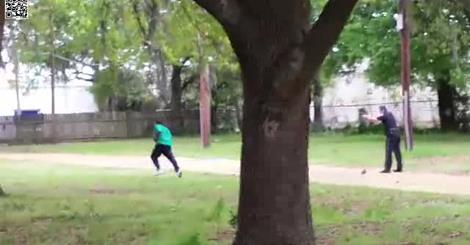
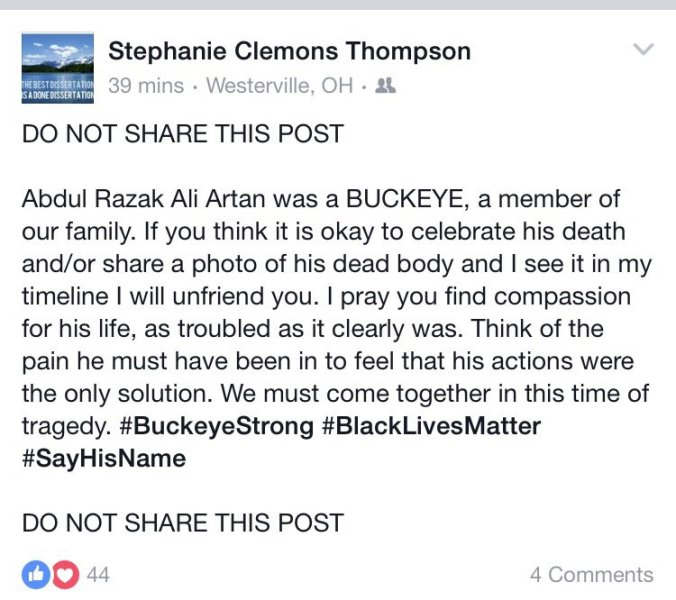
Yesterday,  Mecklenburg, North Carolina District Attorney Andrew Murray announced that the investigation into September’s fatal police shooting of Keith Lamont Scott had found no legal wrongdoing. This meant, in addition to the fact that officer Brently Jackson, who is black, would not face trial, that the two-days of riots inflicted on Charlotte after the Scott’s death were even more inexcusable than riots generally are. People who claimed on social media that they had seen the shooting and that Scott was unarmed admitted to investigators that they hadn’t seen what they said they saw. Evidence in the case showed that Scott stepped out of his SUV  holding a gun—his DNA was retrieved from the weapon found at the scene—and ignored at least ten commands from the five officers on the scene to drop it. Individuals who behave like that are likely to get shot, and deserve to be. No case, no outrage, no systemic racism.

Following the shooting, however, this was a Mike Brown encore, complete with angry, loud, false accounts and social media rumors focused on making Scott’s death another rallying point for race-hucksters, politicians who felt they could benefit from dividing the country by color, and irresponsible pundits.

From the Ethics Alarms post on September 21: Continue reading →

Presenting Rationalization #64, “Yoo’s Rationalization,” And How It Missed Getting On The List This Long, I’ll Never Know

no-means-yesRationalization #64, the eighty-first rationalization overall when you add up the sub-rationalizations on the Ethics Alarms Rationalizations List, is a major one, and should be near the top. (One of these days I’ll re-arrange and renumber them.) It is in evidence almost every day, and embodies the human fallacy of denial, as well as confirmation bias and contrived ignorance. Named after John Yoo, the Bush lawyer who wrote the infamous memo declaring that waterboarding, an “enhanced interrogation technique,” wasn’t technically torture, Rationalization #64, Yoo’s Rationalization or “It isn’t what it is,” is one of the most effective self-deceptions there is, a handy-dandy way to avoid logic, conscience, accountability and reality.*

I saw a prime example of it this morning, in former Homeland Security Secretary Janet Napolitano’s op-ed about the “Deferred Action For Childhood Arrivals Program,” a euphemism for “amnesty for illegal immigrants who arrived as kids with their parents, so they can grow up and vote Democratic.”

She writes,

“This narrative about an initiative that has given temporary haven and work authorization to more than 700,000 undocumented minors, the so-called Dreamers, still has critics howling about presidential overreach, about brazen nose-thumbing at the rule of law and about encouraging others to breach the borders of the United States. But there’s a problem with this take on the program. It is dead wrong.”

What the program really is, she explains, is “prosecutorial discretion,” like the case by case discretion prosecutors have to use to avoid misusing resources.  This is Rationalization #63. Continue reading →

Trump’s Critics And The “Julie Principle” Follow-Up: And If You Don’t Pounce On Every Silly Trump Tweet Like It Was A Threat To The Constitution, You Won’t Be As Likely To Have THIS Happen…

doh-dohFrom PHILADELPHIA (CBS/CNN) —

“President-elect Donald Trump is coming under fire that there should be “consequences” for flag burners, but in 2005, Hillary Clinton backed a bill that would have criminalized burning the American flag.

While she was senator of New York, Clinton co-sponsored the Flag Protection Act of 2005, which would have outlawed “destroying or damaging a U.S. flag with the primary purpose and intent to incite or produce imminent violence or a breach of the peace.”

You see, another benefit of practicing”The Julie Principle” is that it provides some protection from confirmation bias, which, as Ethics Alarms keeps telling you, makes you stupid, and cognitive dissonance, which warps your perception. Let me return to another section of the original “Julie Principle” post: Continue reading →

The Michael Slager Trial: When The Ethical Course Is To Not Exercise a Right

shooting_of_walter_scott

Michael Slager is the white North Charleston police officer who stopped African American Walter Scott for a taillight violation on April 4, 2015, and in the ensuing events, ended up fatally shooting Scott as he fled the scene, in the back, as recorded on a cell phone video. Of all the many police-involved shootings, this is the least equivocal. Slager is guilty of murder of one kind or another: in South Carolina, there is only one kind, and  mitigating circumstances are reflected in the sentence. He could receive life in prison, or much less time.

But every criminal defendant has the right to be tried by a jury of his peers before the law finds him guilty, and Slager is taking full advantage of the right. In doing so, he is forgoing his last clear chance at redemption. The former officer—he has already been fired for the episode and not just put on paid leave, as is usually the case—is understandably trying to avoid a conviction and jail time, even though, should he be acquitted by some miracle or act of mass hypnosis, it would be certain to provoke even more anger and distrust in the black community, and, I would hope, among non-African Americans as well. A justice system that finds, no matter how it reaches such a conclusion, that an officer who shoots a fleeing man dead like Slager did is not guilty needs to be blown up and seeded with salt. When Slager’s first lawyer saw the video, he quit.

Do you think an acquittal is impossible? Don’t. All that is needed is a jury full of people who “think,” and I use the word generously, like the signers of this petition. I’m pretty sure that there are more than twelve of them available. Continue reading →

Surprisingly, Many California Lawyers Want To Have The Option Of Having Sex With Their Clients

It's all your fault, Arnie...

It’s all your fault, Arnie…

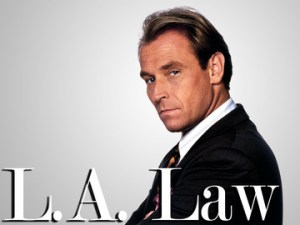
For most of the last century, sensible and rational lawyers accepted that exploiting the attorney-client relationship to have sex with their clients was unprofessional and unethical, without needing a formal rule to tell them the obvious. Then along came Steven Bochco’s popular TV drama “L.A. Law,” the over-heated saga of a high-rolling Los Angeles law firm and its libidinous lawyers. Most libidinous of all was domestic law specialist Arnie Becker, played by the then-blonde and dashing Corbin Bernsen. Arnie habitually slept with his clients when they were wealthy, sculptured, beautiful trophy wives trying to shed their husbands. This was not the image that the family law bar wanted to see broadcast to America, so lobbying efforts were undertaken in many state bars to formally declare Arnie’s nocturnal client conferences unethical, as they undoubtedly were.

California, being partially at fault for the uptick in the public’s false belief that lawyers use their practice as a virtual dating bar, was among the first states to pass an “Arnie Becker Rule,” though it had company, like Oregon, which amusingly anticipated Bill Clinton by including a strangely specific definition of what sexual intercourse was, and New York, which narrowly limited its prohibition to Arnie Becker and domestic relations lawyers like him. Other jurisdictions demurred, as well as the American Bar Association, which is supposed to seek consistency in the legal ethics rules. California’s new rule was one of the more wishy-washy ones, with Rule 3-120 stating that Continue reading →

More Ethics Movies For The Holidays: “Woman In Gold”

portrait-of-adele-bloch-bauer-i-by-gustav-klimt

The movie critics site “Rotten Tomatoes”calls “Woman in Gold” dull, which tells you pretty much all you need to know about “Rotten Tomatoes.” No, there are no explosions, no sex scenes, no CGI, just a well-acted, powerful story of how justice can take a long time to prevail, but given enough dedication, integrity and luck, it still does prevail with sufficient frequency to stave off despair.

“Woman in Gold” is a 2015 film starring Ryan Reynolds and Helen Mirren. It is a virtual docudrama telling the true story (mostly accurately) of Maria Altmann (Mirren), a plucky Jewish refugee in Los Angeles, who, assisted by her young lawyer, Randy Schoenberg, battled the government of Austria  to obtain the return of Gustav Klimt’s renowned portrait of her aunt, Adele Bloch-Bauer. That painting, along with more by Klimt and  other painters as well, were among the art treasures stolen by the Nazis  prior to World War II. The legal battle ended up before the Supreme Court of the United States, and the conflict was finally settled by a shocking decision by an Austrian panel of mediators. You can read about the real case here.

It may be dull to dull minds, as Red Smith famously said about baseball, but I have seen the film twice now, and it moved me to tears both times. “Woman in Gold” shows once more, as I fervently believe, that right can and often does triumph over bureaucracies, greed, power and stupidity, and that lawyers, maligned as they are, are often essential to that process. Schoenberg shows us the epitome of a zealous and courageous lawyer, making personal and professional sacrifices for a cause he comes to believe is important both to his client and to humanity. Continue reading →

Holiday Ethics Assigment: Quick! Watch These 25 Great Old Ethics Movies Again Before You Go Bonkers Too!

movie-theater

I am compiling a new list of great ethics movies to help those troubled by the recently completed Presidential campaign, the election and its aftermath. I haven’t decided whether to reveal it piecemeal, or collectively as I have before, but I do need to begin by presenting the previous list of 25, actually the combination of several previous posts. Ethics films I have covered individually since those lists debuted, like Spotlight and Bridge of Spies, will eventually be added.

For now, here’s the top 25. Don’t pay attention to the order.

1. Spartacus (196o)
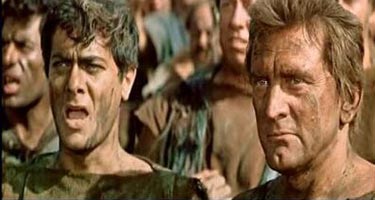
The raw history is inspiring enough: an escaped gladiator led an army of slaves to multiple victories over the Roman legions in one of the greatest underdog triumphs ever recorded. Stanley Kubrick’s sword-and-sandal classic has many inspiring sequences, none more so than the moment when Spartacus’s defeated army chooses death rather than to allow him to identify himself to their Roman captors (“I am Spartacus!”)

Ethical issues highlighted: Liberty, slavery, sacrifice, trust, politics, courage, determination, the duty to resist abusive power, revolution, love, loyalty.

Favorite quote: “When a free man dies, he loses the pleasure of life. A slave loses his pain. Death is the only freedom a slave knows. That’s why he’s not afraid of it. That’s why we’ll win.” [Spartacus (Kirk Douglas)]

2.  Hoosiers (1986)
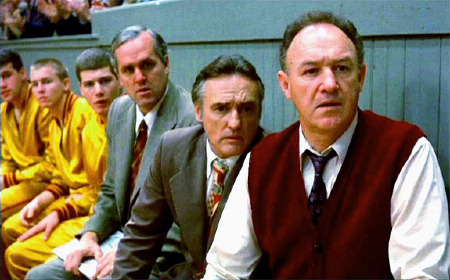
“Hoosiers” is loosely based on true story, but its strength is the way it combines classic sports movie clichés—the win-at-all-costs coach down on his luck, the remote superstar, over-achieving team—into a powerful lesson: it isn’t the final victory that matters most, but the journey to achieving it.

Ethical issues highlighted: Forgiveness, generosity, leadership, kindness, courage, loyalty, diligence, redemption.

Favorite quote: “If you put your effort and concentration into playing to your potential, to be the best that you can be, I don’t care what the scoreboard says at the end of the game, in my book we’re gonna be winners.” [ Coach Norman Dale (Gene Hackman)]

3. Babe (1995)
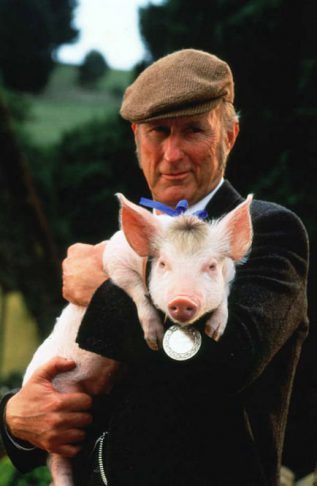
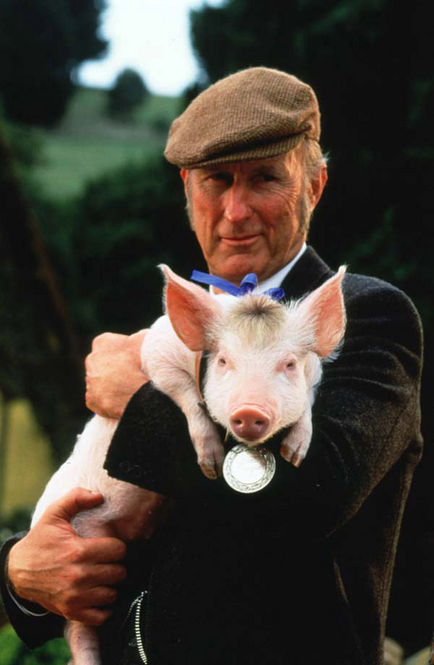
A wonderful movie about the virtues of being nice, the greatest civility film of all time. Second place: “Harvey.”

Ethical issues highlighted: Civility, kindness, reciprocity, loyalty, courage, love, friendship, bigotry, bias.

Favorite quote: “Fly decided to speak very slowly, for it was a cold fact of nature that sheep were stupid, and there was nothing that could convince her otherwise…The sheep decided to speak very slowly, for it was a cold fact of nature that wolves were ignorant, and there was nothing that could convince them otherwise”  The Narrator (Roscoe Lee Browne) Continue reading →
Thanksgiving Ethics From The “Fear Of Being Shot Causes Broken Ethics Alarms” Files

Bridgeport, Connecticut police stopped cars on the day before Thanksgiving, and surprised the motorists by handing them turkeys rather than tickets.

Awww!

Too bad it’s per se unethical conduct, an abuse of power and position, and a dangerous precedent. This is unpleasant déjà vu, for I’ve written this post before, more than once, and as many times in this year than the previous seven years combined. It’s pretty obvious why. Police, who were being shot and ambushed all over the country last week, are desperate to endear themselves to citizens and validate their role as a beneficent force in the community, which needs no validation.

“It’s a way of giving back, reaching out to the community and making sure everyone has a meal for thanksgiving,” says Bridgeport Police Capt. Roderick Porter, not getting it at all. I wonder what would have happened if one of those turkey stops was a fleeing felon. Would objections have been raised if the white cops only stopped black motorists, to say “We like you! We really like you! Here’s a turkey!”

Here comes the déjà vu again: As I wrote about the ice cream caper, which was pretty much the same thing: Continue reading →

More Noose Ethics: In Virginia, Affirmation That The Constitution Permits One To Be Racist And Talk Like A Racist, But Not To Do THIS

nooseThe Virginia Court of Appeals took on the case of a man convicted of violating a state law prohibiting displaying a noose with the intent to intimidate, in violation of Va. Code § 18.2-423.2. Actually, Jack Turner did a bit more than that. The noose was hanging from a tree on his property and was on the neck of a dummy appearing to portray a black man. However, the law only prohibits a citizen from displaying a noose in a public place, and this was, his lawyers argued, Constitution-protected speech on private property. Turner was appealing his sentence of five years in prison (all but six months were suspended).

No doubt about it, this was “hate speech”; Turner admitted it.  After his African American neighbor reported the display to police, who questioned him about his intent, Turner initially said that the hanging black dummy was “a scarecrow.” When it was pointed out that he had no garden, Turner elaborated by explaining that he was a racist, and “did not like niggers.”

At the trial, one of Turner’s African American neighbors testified that after seeing the hanging dummy he was especially upset when he saw the dummy because nine African-Americans had been killed in the Charleston South Carolina church shooting earlier in the same day. The neighbor’s wife testified that she now feared for her family’s safety.  After the incident, the parents no longer allowed their sons to walk past Turner’s house, because, they said, they didn’t know what else a man who hanged such a warning was capable of doing. For his part after he was forced to remove the hanging black effigy, Turner continuously hung a Confederate flag in a window  facing his neighbor’s home. Great neighbor.

Hate speech, however, is still protected speech. As the Supreme Court confirmed last session, to be legally prohibited hate speech must constitute a “true threat,” meaning that a speaker means to communicate “a serious expression of an intent to commit an act of unlawful violence to a particular individual or group of individuals,” even where the speaker does not “intend to carry out the threat.” Prohibitions of true threats protect individuals from “fear of violence and from the disruption that fear engenders.”

The Court of Appeals didn’t have to exert itself to find that when a man hangs a noose with a black figure dangling from it within view of his African-American neighbors’ house, it indeed constitutes a “true threat.” The Court found the display, after reviewing the history of lynchings in Virginia and the powerful symbolism carried by Turner’s noose, comparable to a burning cross, Continue reading →

Trump, Master Of Rationalizations, Scores A Perfect #4 AND A Perfect #5!

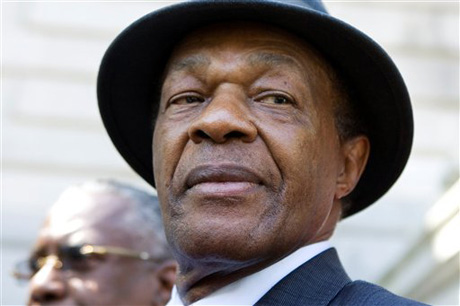
Former District of Columbia Mayor Marion Barry attends a news conference on the steps of Washington's city hall Monday, July 6, 2009. At the news conference Barry's attorney Frederick Cooke said Barry vehemently denies the allegation by Donna Watts-Brighthaupt, and that he's confident the stalking charge will be dropped. Barry, 73, stood behind Cooke but said nothing. (AP Photo/Manuel Balce Ceneta)

Somewhere, Marion Berry is smiling…

This is juuuust the beginning…

I have noted before that our President Elect never expresses any ethical awareness, and uses rationalizations exclusively to explain and justify his conduct. This is typical of say, 12-year-olds, but is less common among professionals in responsible positions.

Trump just authored a classic example, following the expression of concerns about his conflicts of interest, which are massive, unavoidable, and which should have been addressed seriously long ago, like in a Presidential debate, and at length. Unfortunately, Hillary Clinton and various journalists felt it would be more helpful to their cause to spend time talking about what Trump had said about an over-weight Miss Universe and in a private conversation with Billy Bush. How did that work out for you, guys?

Now various lawyers and ethics experts are saying that Trump “must” sell off his business holdings because his company’s myriad business entanglements will cast many White House decisions under a cloud. The President Elect has a neat answer for them, to wit:

“The law’s totally on my side, meaning, the president can’t have a conflict of interest.”

— Donald Trump, interview with the New York Times, Nov. 22, 2016

Bravo! This is a perfect expression of Ethics Alarms Rationalizations #4, and #5…

4. Marion Barry’s Misdirection, or “If it isn’t illegal, it’s ethical.”

The late D.C. Mayor and lovable rogue Marion Barry earned himself a place in the Ethics Distortion Hall of Fame with his defense of his giving his blatantly unqualified girlfriend a high-paying job with the DC government. Barry declared that since there was no law against using the public payroll as his own private gift service, there was nothing unethical about it. Once the law was passed (because of him), he then agreed that what he did would be wrong the next time he did it.

Ethics is far broader than law, which is a system of behavior enforced by the state with penalties for violations. Ethics is good conduct as determined by the values and customs of society. Professions promulgate codes of ethics precisely because the law cannot proscribe all inappropriate or harmful behavior. Much that is unethical is not illegal. Lying. Betrayal. Nepotism. Many other kinds of behavior as well, but that is just the factual error in the this rationalization.

The greater problem with it is that it omits the concept of ethics at all.  Ethical conduct is self-motivated, based on the individual’s values and the internalized desire to do the right thing. Barry’s construct assumes that people only behave ethically if there is a tangible, state-enforced penalty for not doing so, and that not incurring a penalty (that is, not breaking the law) is, by definition, ethical.

Nonsense, of course. It is wrong to intentionally muddle the ethical consciousness of the public, and Barry’s statement simply reinforces a misunderstanding of right and wrong.

Continue reading →