Why Dan Pabon’s DUI Stop Matters To Everyone, And Why He Must Resign

Pabon Apology

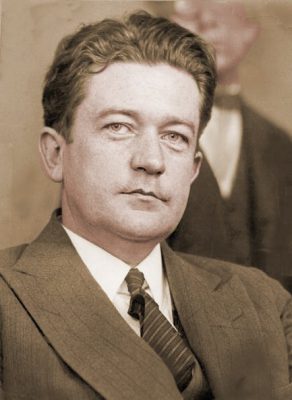
Colorado Rep. Dan Pabon (D. North Denver) was considered a rising political star. Among his well-publicized public policy triumphs was to  help pass a law forcing convicted drunk drivers to appear before a DUI victim-impact panel.

Then Pabon himself was pulled over in his vehicle on St. Patrick’s Day evening for driving under the influence of alcohol. Instead of Pabon accepting his fate as an honest lawyer and elected official should, the video of the stop shows the legislator trying to persuade the officer who stopped him not to make the  arrest. He tells the officer that he is a state representative who is driving a car without his legislative plates. He asks the officer to call a supervisor or the city attorney so they can direct the officer to give him mulligan. When Officer Brian Bienemann explains that he cannot let Pabon off and indeed would be subject to discipline if he did,  Pabon pleads,  “Is there any way we can avoid this possibility? This is going to change my life.”

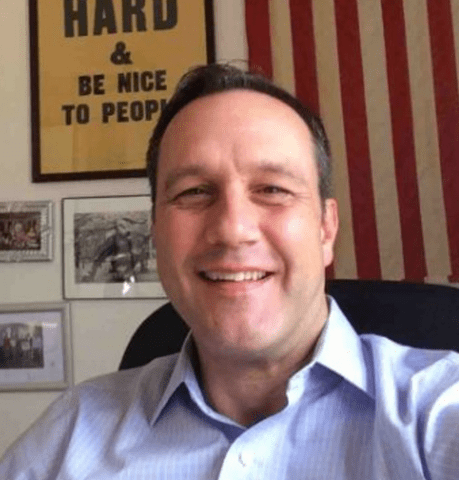
After Pabon pleaded guilty and gave an emotional apology (above) to the public and the legislature, saying  “I have taken full responsibility. I have done everything above board,” the editors of The Denver Post begged to disagree. They called for his resignation in an edotorial. They were correct, but they weren’t clear enough about why.

The Post was upset that Pabon didn’t specifically apologize for trying to use abuse his position and power to avoid legal accountability for a serious violation of the law, even after the video of the stop was leaked to the news media. Of course he didn’t. Like most current elected officials, he didn’t see anything wrong with that. Don’t they deserve special consideration and privileges?

There can be no sufficient apology for what Pabon did. Elected officials and other government personnel must not view themselves as deserving special immunity from the laws and regulations they impose on society. Pabon’s attitude and attempt to play the “Do you know who I am?” card is poison to democracy, and exactly the kind of “fix” Donald Trump’s speech last night correctly condemned.

The public sees a Secretary of State expose sensitive information to discovery by the enemies of the United States, and not only is she not punished, she is selected to run for President. The public sees HUD Secretary Julian Castro blatantly violate the Hatch Act, combining an official appearance with campaigning for Clinton, and  then learns that the President will not discipline Castro in any way. Casrto is also considered a “rising political star.” A nation in which individuals who break the law are still considered “rising stars” and prospects for national leadership has its values in a tangle. Continue reading

As The Fourth Officer Charged In Freddie Gray’s Death Is Correctly Acquitted, What Do African Americans Mean By “Accountable”? [ Partially Restored ]

Lt__Brian_Rice

In Baltimore, Circuit Judge Barry G. Williams acquitted Lt. Brian Rice of all charges  related to Freddie Gray’s arrest and death. As he had with two other officers charged in the case (the trial of the third ended in a hung jury), Judge Williams cleared Rice, ruling that the prosecution hadn’t proved its case. This was the result widely predicted by legal ethics, because it was apparent that State’s Attorney Marilyn Mosby had rushed the decision to prosecute and proceeded without sufficient investigation or evidence.

Williams said prosecutors failed to meet their burden of proving the charges against Rice beyond a reasonable doubt, and instead had asked  the court to rely on “presumptions or assumptions.” He said that the court “cannot be swayed by sympathy, prejudice or public opinion.”

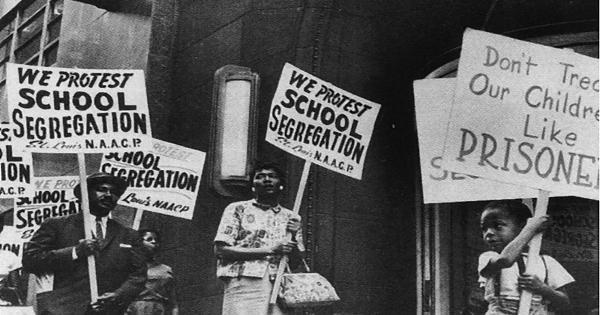
The result spurred a predictable response from activists.”So far, nobody’s been guilty for this man’s death,” said protester Dornell Brown. “Nobody’s been held accountable. Verdict after verdict after verdict, they’ve been getting off. Who’s gonna be held accountable for that man’s death?”  “This is a man who had chain of command responsibility for Freddie Gray and so he should be held responsible and accountable for what happened to Freddie Gray,” Brian Dolge, another protester said. Protester Arthur Johnson, who has held a sign outside of each of the four trials of the officers  connected with Gray’s death, said,

“It’s just what I and the community expected. You’ve got an individual that interacts with six other individuals over something trivial and that individual ends up dead and we can’t even get reckless endangerment.”

[ NOTICE: This is all I could recover from the original post, which was up, then disappeared when some glitch crashed it with the last Melania post. More than a thousand words followed, and it was, I think, an important post, but I have neither the time nor the heart to try to reconstruct it. So, with apologies, I will summarize the main points

. I also apologize for the comments to that post, which somehow ended up with Melania, where they now make no sense. I had to delete them. Ugh. This has never happened before. I hope it doesn’t happen again., though because I don’t know why it happened at all, that is just a hope.]

In summation:

1. These statements represent a false definition of accountability and justice. The concept appears to be that any time a black citizen dies at the hands of a police officer without incontrovertible  proof that the citizen was threatening the life of the officer with a deadly weapon, accountability mandates criminal charges, a trial, and a conviction. Anything less is not justice or accountability.

2. This is not American justice, and should not be. No charges should be brought without probable cause and sufficient evidence to convict. No conviction should occur unless a fair trial finds an officer guilty beyond a reasonable doubt.

3. The version of justice and accountability that black activists are promoting is ancient tribal justice, primitive justice based on “an eye for an eye” and vengeance. Unless blood pays for blood, there has been no accountability.

4.  Disgracefully, States Attorney Marilyn Mosby pandered to this dangerous and retrograde version of  accountability and justice, further entrenching it and validating it in Baltimore and the black community nationally.

5. In fact, there has been accountability for the death of  Gray. Baltimore paid a multi-million dollar settlement to Gray’s family for the acts of the city’s employees resulting in Gray’s demise. It is likely that some of the police officers, perhaps all, will face administrative discipline.

6. Why does the African-American community so widely reject the evolved justice system of modern America? Sociologists can argue about that. I believe it is a result of frustration, history, the problem of living in high crime areas, and confirmation bias. There is also great and dangerous ignorance across all segments of the public regarding how the justice system works, and why. Tribal justice, like gang justice, is simple: one of us has dies, so the killer must be punished. The details don’t matter. It takes no knowledge or understanding of jurisprudence to conclude that if “one of us” is hurt or killed, the responsible party has to suffer.

7. There will be no resolution to the current societal divide  and racial distrust until there is a threshold consensus on what accountability and justice means in this society. What has occurred in the Gray trials is justice. The prosecution failed its burden of proof. African Americans benefit from that standards of justice too.

8. Unless some eminent, trusted, respected, persuasive, and influential black leaders have the courage to confront black activists and make them understand that the versions of accountability and justice they are demonstrating for are destructive, divisive and wrong, the police/black and black/white conflicts will become more bitter.

Comment of the Day: “Prelude: Intent, Gross Negligence, And ‘Extremely Careless’”

eyes closed driving

Long-time commenter (and blogger) Glenn Logan has authored not one but three COTD-worthy posts of late. I have chosen his commentary on the gross negligence/extremely careless distinction for the honor, but any of them would have been worthy choices. You can find the others in the threads here and here.

Before I get to Glenn, I want to point out that a recent and ridiculous news story illustrated the difficulty of the gross negligence/extreme carelessness distinction perfectly:

A North Florida woman is saying her prayers after running her car into a home — after saying her prayers.

The 28-year-old woman was driving in the tiny town of Mary Esther, located west of Fort Walton Beach in the Florida Panhandle. Deputies from the Okaloosa County Sheriff’s Office say the driver told them she was praying and had her eyes closed before the incident took place.

According to NWFDailyNews.com, authorities say she ran a stop sign, going through an intersection and into the yard of a home. The driver tried to back out, but her car got stuck in sand and dirt around the home. No one was hurt inside the home and the driver was taken to a nearby hospital for evaluation. She was cited for reckless driving with property damage.

Gross negligence would be praying, driving, and closing her eyes knowing well that it endangered others, and doing it anyway. Extremely careless would be praying, driving, and closing her eyes assuming that no harm would come of it, perhaps because God would be driving the car. “Reckless,” however, may cover both.

Here is Glenn’s Comment of the Day on the post, “Prelude: Intent, Gross Negligence, And ‘Extremely Careless’”: Continue reading

Pokémon Go Ethics: Beware The Terms Of Service Agreement!

pokemon-go-starters

I had a hard time finding anything unethical about Pokémon Go, the smartphone GPS scavenger hunt game that sends players all over the landscape to find and trap those adorable Japanese monsters that caused a trading card craze and more a decade ago. (I assume that anything that seems really dumb is likely to have ethics problems. You’d be amazed how often I’m right.) It seems benign. The game can be good exercise, it’s engaging for people who have no more productive avocation, and best of all, it gives American something to obsess about not named Bill or Hillary. There are some troubling signs: administrators at the National Holocaust Museum and Arlington National Cemetery felt that they needed to ask visitors not to play the game while contemplating the murder of six million Jews and the fallen heroes of foreign ways—what is these spoilsports’ problem?—and some people are letting the game endanger themselves and others, leading to these morons falling off a cliff, causing this idiot to drive  his car into a tree, and prompting this in Arizona…

Pokemon go traffic sign

Continue reading

Four Supreme Court Decisions: Abortion, Guns, Affirmative Action, Corruption…And Ethics. Part 3: Whole Woman’s Health v. Hellerstedt

shrinking-number-of-abortion-clinics-in-texas

[The Supreme Court came down with four controversial and ideologically contentious decisions in June, and I apologize for taking almost a month to cover them all. One of the reasons Ethics Alarms occasionally launches a series like this one is to ensure that developing ethics stories of importance do not push important issues to the sidelines. The fact that this four part series had only finished parts 1 and 2 was an irritant to me, as well as some readers.]

In Whole Woman’s Health v. Hellerstedt, decided on June 27, the Supreme Court held in a 5-3 majority that two provisions of a Texas law, one requiring physicians who perform abortions to have admitting privileges at a nearby hospital and another requiring abortion clinics in the state to have facilities comparable to an ambulatory surgical center,  places a substantial and unconstitutional obstacle in the path of women seeking an abortion, because they constituted an undue burden on abortion access.

Life would be so much simpler if our elected officials and activists employed an adaptation of the Golden Rule, and looked objectively at issues from the other side’s point of view. This is especially true in the realm of rights.  Second Amendment absolutists insist that virtually any laws regulating who can purchase guns, when and where they can purchase them, and how and how quickly they can be purchased are efforts to whittle away the right to bear arms. They also argue that such regulations have the ultimate goal of  eliminating that right entirely, which, in many instances is the case, especially if you listen carefully to the rhetoric of the legislators proposing such measures. There is little difference from this and what anti-abortion advocates are attempting to do with laws like House Bill 2 (H. B. 2).

The bill ostensibly is designed to make abortions safer, thus protecting women’s health, just as many gun laws are promoted as safety measures. Oddly, virtually all of the supporters of the Texas bill would make abortion illegal if they could. I’m sure it’s just a coincidence, just as it’s a coincidence that the authors of bills requiring potential gun owners to jump through increasingly burdensome hoops and deal with mandatory trigger locks and “safe gun” technology would gladly repeal the Second Amendment if they could. The ethical principle is the same in both matters: a right isn’t a right if legal obstacles make it difficult to exercise that right.

The question is, what’s a reasonable obstacle? Any regulation imposed on a constitutional right must not create “a substantial obstacle” and must be reasonably related to “a legitimate state interest.” The Supreme Court uses the language and logic of case precedents, which are its previous examinations of these issues and the balancing they require. One such case, though I did not find it mentioned in the majority opinion or dissents in Hellerstedt, would be the voter ID decision of many years ago, in which a strong majority ruled that the state interest in preventing fraudulent voters and maintaining the integrity of the election process justified inconveniencing those who were subjected to the extra burden of obtaining appropriate identification. In recent years, this decision has been questioned because many believe the motive behind voter ID laws is not really to protect the franchise, but to keep likely Democratic voting blocs from the polls.

Is there a difference legally between a bill that is authored with the intent to restrict the right to vote of older, poorer, and darker citizens while claiming that its sole purpose is to make sure non-citizens don’t affect the results of elections, and an identical  bill that is genuinely intended to safeguard the voting rolls, without any political motive at all? No, or at least there shouldn’t be. The Court’s job is to evaluate what the law does, not try to read the minds and hearts of those who wrote it. Justices only should try to do the latter when there is a debate over what the law says.

Ethically, however, there is a significant difference between a law using a public purpose as a sham to accomplish unethical ends, and a law with a legitimate purpose that has some negative side effects. Trying to restrict a citizen’s rights because one doesn’t respect those rights (or perhaps the citizen) is unethical.

The SCOTUS majority, in its typical examination of a balancing case like this, looked at whether there was a sufficient public safety benefit to a law that had resulted in a precipitous reduction in abortion services: Continue reading

Ethics Quote—But Not Necessarily ETHICAL Quote!—Of The Month: Supreme Court Justice Ruth Bader Ginsburg

i-was-wrong

“On reflection, my recent remarks in response to press inquiries were ill-advised and I regret making them. Judges should avoid commenting on a candidate for public office. In the future I will be more circumspect.”

—- Justice Ruth Bader Ginsberg, officially apologizing for making remarks sharply critical of Donald Trump last week, including suggesting (in jest) that if her were elected President, she might “move to New Zealand.”

Observations:

1. Supreme Court justices almost never apologize, and I only say “almost” because I can’t do enough research right now to safely say “never.” They don’t apologize because the don’t have to: they are, ethically, a law unto themselves, and accountable to nobody unless impeached and convicted. (Justice Samuel Chase, was impeached by the U.S. House of Representatives on March 12, 1804, on charges of arbitrary and oppressive conduct of trials; it was a purely political attack. He was, correctly, acquitted by the U.S. Senate on March 1, 1805.)

2. An apology was appropriate, however. Justice Ginsberg proved herself smarter, better, more ethical and more principled than the embarrassing, crypto-facsist “these are not ordinary times” crowd, including the folks at Salon and other left-wing blogs, this guy, and too many of my dear friends on Facebook, whose expressed opinions really are beginning to make me wonder if they will solemnly send me to a Lobotomy Man when I oppose President Clinton’s declaration of open borders, ban on fossil fuels, race and gender quota in all hiring and admissions to (free) colleges, and confiscation of 50% of my property to help pay for national health care including late-term abortion on demand and tax-payer funded recreational drugs.

3. She apologized because any fool could see that her comments did undermine trust in the institution of the Supreme Court, and that her critics were right. Some of my more misguided colleague in the legal ethics field opined that it was silly to think that Justices don’t have political opinions and biases, just as it is silly to think journalists do not, so why shouldn’t she exercise her First Amendment rights? This  lame notion was decisively rebutted by a lawyer whose name I wish I could reveal, except that his comments were on a private list. He wrote in part… Continue reading

The Black Lives Matters Effect, Part I: The Tenor And The Blogger

Singing the right lyrics also matters, you boob...

Singing the right lyrics also matters, you boob…

One thing you have to say for Black Lives Matters: it is good at making people make asses of themselves. “Late Night” host Seth Myers was yesterday’s example, but there are oh-so-many-more, and much worse.

For example, in the pre-game ceremonies of the Major League Baseball 2016 All-Star Game in San Diego, a Canadian tenor, apparently driven to distraction by the reverential treatment given to a group that promotes race hatred and a color-based standard for law-enforcement, snapped while performing the Canadian national anthem. Remigio Pereira, a member of  the vocal group The Tenors tapped to sing the anthem, held up a handwritten sign that read “All Lives Matter” altered the lyrics in the line “With glowing hearts we see thee rise. The True North strong and free” to “We’re all brothers and sisters, all lives matter to the great.”

This doesn’t fit the music, and is even worse than the real lyrics, which is quite a feat. Of course, Remigio was unethical to do this, expropriating an event that had nothing to do with Black Lives Matter, nor race, nor politics to make his own grandstanding statement (come to think of it, baseball does have something to do with grandstands. The stunt was disrespectful of everyone—his hosts, Major League Baseball; San Diego; the captive audience in the stadium, the TV audience, Canada. It was also a breach of trust that directly and perhaps fatally wounded his group, which immediately suspended him (Can we say F-I-R-E-D, Tenors? Sure we can) and issued an abject apology.

The statement was not unduly disrespectful to Black Lives Matter, however, which has shown itself to be unworthy of respect, as all divisive hate groups are.

The Black Lives Matters effect is wide-ranging, however, as this episode shows. It not only makes Canadian tenors irresponsible, but sportswriters too. Over at NBC Sports online, baseball blogger Craig Calcaterra couldn’t perceive the unethical nature of a performer hijacking a paid gig for his own purposes, but lectured his readers on the sin of using the term “All Lives Matter,” writing,

This may not seem terribly controversial to some, but in the context of the Black Lives Matter movement that has risen over the past few years, “All Lives Matter” has come to be seen as a reactionary response which fundamentally misunderstands — often intentionally — the purpose of the Black Lives Matter movement. And is used to belittle and marginalize the Black Lives Matter Movement. The phrase “black lives matter” does not mean that “black lives matter more than any other lives.” If it did, sure, maybe “All Lives Matter” would be a reasonable response. But “Black Lives Matter” is a response to a society and, particularly, police, which treat blacks as lesser persons and who do not face repercussions for harming and in some cases killing black people through excessive force. It’s “black lives matter too” — a necessary statement, sadly — not “black lives matter more.”

Sigh. Continue reading

Prelude: Intent, Gross Negligence, And “Extremely Careless”

falling bowling ball

By now I intended to have published a thorough essay deciding the question of whether conservatives, and their claims that James Comey was part of a Justice Department conspiracy to save Hillary from indictment, were more unethical that Clinton supporters in the news media and elsewhere pronouncing her “exonerated” because she’s not facing trial. Alas, pressing matters have intervened, but no matter: I will present it soon. Meanwhile, however, allow me to clean up a relevant controversy.

Much of the mockery of Comey’s explanation of the FBI’s recommendation, since accepted with a big “Whew!” by Loretta Lynch, arises from his assertion that while Hillary’s handling of classified information was “extremely careless,” it did not arise to the standard of “gross negligence” specified in the relevant statute. Too many pundits and commentators to mention have snorted at this, arguing that there is no practical difference. Comey did not help, when he was asked the question in his Congressional testimony, by explaining the difference as one of enforcement: in a century, he said, no conduct similar to Clinton’s has ever been found to meet the “gross negligent” standard sufficiently to warrant prosecution. Attorney General Lynch, when she was asked the same question by Rep. Jim Sensenbrenner (R-Wis), just repeated how she accepted the recommendations of Comey not to indict Clinton.

There is a difference, however. I don’t know why neither Comey nor Lynch could articulate it, but it exists, and I will now make it clear.

For this analogy I owe thanks to a D.C. lawyer, ethics expert and law professor friend of long-standing with whom I was recently discussing the Clinton matter. He has a gift for  analogies, and said this…

“Intent, is when you drop a bowling ball out of an office building window, aiming so that it will kill somebody by falling on the victim’s  head.”

“Gross negligence is when you toss a bowling ball out of an office building window without looking in order to get rid of it, knowing full well that it is mid-day and very likely to fall on someone’s head.”

“AH HA!” I interrupted. “Then ‘extreme  carelessness’ is when you toss the bowling ball out of an office building window without looking, in order to get rid of it, because it’s 3 AM and you mistakenly/ignorantly/ stupidly  assume nobody will be walking on the sidewalk at that time of night!”

“Exactly!” he said.

More to come…

Ethics Dunce: “Late Night” Host Seth Meyers

meyers-giuliani

Seth Meyers is a comedy writer and performer, and his job, on the show following the Tonight Show, is to be funny, not to use the program as a platform for his political views. His predecessor twice-removed, David Letterman, increasingly ignored that line as time went on and he moved to CBS. This stratified his audience, and abused his role, but massaged Letterman’s massive ego. (Meyers’ immediate predecessor, current Tonight Show host Jimmy Fallon, may not always be funny, but he knows his place.) Meyers is relatively new to the job, and this week went much, much farther than Letterman ever went, while being supremely smug about it. Here were his hilarious comments last night:

MEYERS: So there were some incendiary and counterproductive responses to the tragedy in Dallas, but there were perhaps no worse response than that of former New York City mayor Rudy Giuliani, who complained, in perhaps the most galling and offensive way possible, that those peacefully protesting for police reform should shift their focus.

RUDY GIULIANI (on video): If I were a black father and I was concerned of my child, really concerned about it, and not in a politically activist sense, I would say, “be very respectful of the police. most of them are good. some can be very bad. and just be very careful.” I’d also say, ‘Be very careful of those kids in the neighborhood and don’t get involved with them, because son, there’s a 99% chance they’re going to kill you, not the police.’

MEYERS: Okay, first of all, don’t ever start a sentence with the phrase, “if I were a black father.” If you are black father, you don’t need to say it. And if you’re not, you should probably just shut the fuck up. And if Giuliani’s willing to say that some police can be very bad, you would think he’d see the value in the Black Lives Matter protests. But instead, he condemned them.

Observations: Continue reading

Donald Trump Candidacy Ethics Train Wreck Passenger List Update: Georgetown Law Prof. Paul Butler Scores A Perfect Rationalization #28

We're real sorry about this, but these are not ordinary times...

We’re really sorry about this, but these are not ordinary times…

The human ethics train wreck named Donald Trump is now in the process of exposing how thin the veneer of professionalism is for many alleged intellectuals, scholars and lawyers. On an e-mail list of most of the legal ethicists in the country, one of them posted this in reaction to Justice Ginsberg’s unethical and unjudicial shots at Donald Trump:

“I love RBG way too much to be critical of her in any way . Long may she live!”

This opne expression of willful denial, from not merely a lawyer, but an ethics specialist! It is the epitome of one of my father’s favorite quotes, “My mind’s made up, don’t confuse me with facts.” I responded to the list that it was the most depressing statement I had ever read from any of the list’s participants.

Paul Butler’s op-ed in the New York Times isn’t much better. The Georgetown Law Center professor defended Ginsberg’s indefensible comments by arguing that these times are special, and thus suspend the ethics principles that must govern judges if the judiciary is to engender any respect or trust at all. He writes:

“Normally Supreme Court justices should refrain from commenting on partisan politics. But these are not normal times. The question is whether a Supreme Court justice – in this case, the second woman on the court, a civil rights icon and pioneering feminist — has an obligation to remain silent when the country is at risk of being ruled by a man who has repeatedly demonstrated that he is a sexist and racist demagogue. The answer must be no.”

No, Professor, the answer must be “yes.” Continue reading