The Ethics Of Demanding Charity

Joanna Leigh

Joanna Leigh

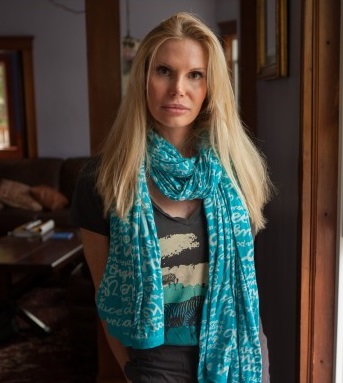
I can not imagine much more heartbreaking plights than that of Boston Marathon bombing victim Joanna Leigh.

By April 14, 2013, Leigh, 39, had a newly minted doctorate in international development, and a promising career as a consultant. On April 15, she was at the finish line of the marathon, waiting for a friend to cross it, when the second of two bombs exploded ten feet from her. She was shielded from the deadly flying metal by other spectators, but still knocked unconscious. When she awoke, there was chaos around her, people screaming, maimed, covered with blood. She helped some injured find help, and then, dazed, walked home. For various reasons, she did not get herself checked out at a hospital until more than a week had passed.

Gradually, however, the symptoms of her injuries began appearing. Soon, it became obvious that the closed head injuries she suffered in the explosion have caused devastating long-term damage to her brain, and it is doubtful that her life will ever be normal again. Today, she says, she has to sleep most of the day. She cannot work or drive, and is easily disoriented, even getting lost on her own block. She has blurred vision, her hearing is impaired and she cannot avoid the constant ringing in her ears. Concentration has become difficult, and the simplest everyday tasks are overwhelming.   Continue reading

Hindsight Bias Case Study: Shooting D.C.’s Post Partum, Mad-Dog Driver

"Ok, now, let's talk about this: what other options do we have to stop this mad-dog driver, other than shooting her? Ma;'am, will you pleas take 5 in your murderous rampage while we meet? Ma'am?"

“Ok, now, let’s talk about this: what other options do we have to stop this mad-dog driver, other than shooting her? Ma;’am, will you pleas take 5 in your murderous rampage while we meet? Ma’am?”

Hindsight bias isn’t the worst or most pernicious reasoning fallacy, but it may be the most annoying, and is certainly the most common. After an event in which one or more instant decisions had to be made in seconds or minutes, critics with time a-plenty solemnly explain how they would have done things differently, and how the original decision-maker was stupid, cowardly, misguided, incompetent, unethical, or even criminal. The most striking example of a hind-sight bias victim in recent years is Penn State’s Mike McQueary, but at least in his situation there is room for argument, though I argued here that few of his critics can know how they would have responded under similar circumstances. In the case of this week’s shooting of a crazed Capitol Hill kamikaze motorist, later determined to be a troubled dental hygienist who may have been suffering from post-partum depression, I don’t think the criticism is rational, fair or justified, and shows hindsight bias at its worst.


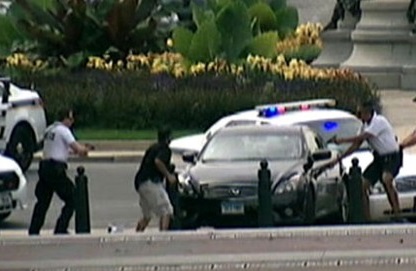
Of course the Secret Service had to shoot her. It would have been reckless and negligent had they not. She had tried to crash through the White House barricades in an automobile. She had run down one officer, for all anyone knew at the time, fatally. She was refusing to stop, and was near D.C.’s Union Station, where there are people everywhere, and a car can easily run up on the sidewalks, which are wide. She had to be stopped immediately, or innocent people, maybe many people, were likely to die.

After she expired from the shots fired at her (but not before peeling away at a high speed), it was determined that the driver, later identified as Miriam Carey, was unarmed. The shooting agents didn’t know that, so it’s irrelevant. Besides, she was armed, with a deadly vehicle, and her motives were unclear. For all the officers knew, she was trying to kill as many pedestrians as she could. This wasn’t a typical situation or traffic stop. This was occurring at the center of our government, and security officers have to take enhanced precautions. The welfare of the individual causing the threat is not, and should not be, the primary concern.

Two factors in the incident seem do drive the unethical amateur second-guessing. One was that the woman’s toddler was in the car, and might have been harmed. This was not the Secret Service’s problem. Carey put her daughter in harm’s way, and if her conduct resulted in the child’s injury or death, she would have been totally responsible, not the agents who shot into the car. (They apparently were not aware of the child’s presence, so again, this in not a fair factor to consider after the fact.) The other factor: guns were involved. Thanks to programmed paranoia and gun-phobia irresponsibly planted in the culture by anti-gun zealots, many, too many, Americans arrive at a reflex position that any gun-related death is unnecessary, because guns, after all, are evil and should be banned. Such opinions should be treated as the products of deranged minds, or excessive Piers Morgan viewing.

A Facebook friend (and regular friend too), a distinguished and intelligent former journalist who I’m sure won’t mind my quoting him, asked his social network, “WAS THERE NO OTHER WAY?” That question is the epitome of hindsight bias. Sure there were other ways. Maybe an agent could have dived in the car window and dislodged her. Maybe a well-aimed shot at her hands could have made it impossible to drive. Perhaps they could have shot out the tires, hoping that the driver didn’t realize that you can still make a car with flat tires move at a pretty good clip, at least for a while. An electro-magnetic pulse might have stopped all the engines in the vicinity, neutralizing the car. Maybe Batman was nearby, or Corey Booker. None of that matters, because the security officials involved were in a unique and unprecedented situation, and had to accomplish their prime objective, stopping a dangerous individual in a highly populated area, under pressure, while in peril themselves, as quickly as possible. The proper question is not whether they could have done better, upon calm analysis and reflection. The question should only be, “Was the response reasonable under the circumstances?”

It was.

________________________________

Sources: Washington Post 1, 2
Ethics Quiz: Peter’s Problem

40 years from now, would you book Kaitlyn Hunt for your Congressional campaign fundraiser? Should you...if she's become a famous and beloved singer?

40 years from now, would you book Kaitlyn Hunt for your Congressional campaign fundraiser? Should you…if she’s become a famous and beloved singer?

Shelly Stow, an occasional commenter here who blogs provocatively at With Justice For All about the harassment and persecution of former sex offenders, raised the topic of today’s Ethics Quiz. She  posted about the plight of Peter Yarrow, the Peter in Peter, Paul and Mary, now, thanks to cruel mortality, just Peter and Paul. I was not aware of this, but in 1970, when he was 30 and a rather significant star, he had sexual relations with a 14-year-old girl. Shelly is wrong to call this “consensual,” for 14 is statutory rape territory. The law declares that a 14-year girl is a child and not capable of meaningful consent, and fans of  Roman Polanski, Woody Allen and Kaitlyn Hunt notwithstanding, it is quite right. He pled guilty to something less than rape, and served a three-month sentence; he is also, as a result, a registered sex offender. President Jimmy Carter pardoned him in 1981.

Yarrow, as Sixties folk singers tend to be, is a social activist, and is politically active as well. Not for the first time, his child molesting past became an issue recently when he  agreed to sing at a campaign event for Martha Robertson, a Democrat running for Congress in New York against incumbent Republican Tom Reed. A spokesman for the RNC told the media,

“It is absolutely deplorable that Martha Robertson would kick off her congressional campaign by having a convicted sex offender headline her fundraiser. If Robertson’s judgment is so bad that she would even entertain the idea of raising money with a man who molested a 14-year-old girl, she has no business representing the people of the 23rd District of New York in Congress.”

He also said Robertson should cancel the fundraiser and return any money she raised with Yarrow’s support.

Shelly writes,

“What is wrong with this scenario? Our criminal justice system is comprised of one part punishment and one part rehabilitation. The purpose of the punishment is to bring about rehabilitation. Sometimes it works like it is supposed to. Mr. Yarrow committed a crime in 1969. That is over 40 years ago. He served his court ordered punishment, and in light of the fact that there has been no re-offense in over 40 years, I think we are safe in declaring him rehabilitated. Everything worked just like it is supposed to. What then is the problem? Is rehabilitation not good enough for some? Is there some other standard of measure needed?”

This launches the Ethics Alarms Ethics Quiz for this weekend, which I will phrase this way:

Is it unfair for Peter Yarrow to still face criticism, suspicion and condemnation based on his crime of 40 years ago, for which he has been both punished and pardoned?

For this one, I am not at all certain of the answer, and will be very interested in your responses, not that I am not always.

Here are some of the considerations that have me, to paraphrase the title of one of the hit pop songs Mr. Yarrow helped to write, “Torn Between Two Answers.Continue reading

Ten Ethics Observations On The Government Shut-Down

lincoln_memorial

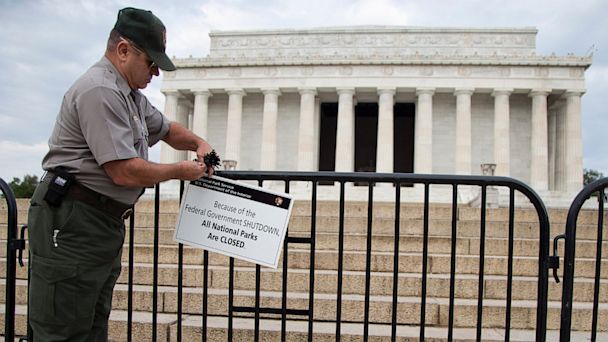
Stipulated: I am not in generally favor of government shutdowns, just as I do not favor strikes, boycotts, Massada-style mass suicides, wars, or any other destructive tactics, strategies and actions in response to impasses over important matters. Sometimes, however, they are necessary and responsible. Sometimes, they are not.

1. It is fascinating reading the comments on the shutdown from my friends on Facebook. It is startling how many of them simply parrot back partisan talking points they have heard on CNN and MSNBC, but especially striking are the angry rants of the government employees who appear to take the shutdown as a personal affront. How dare the evil Republicans disrupt their lives, their paychecks, their work schedule, their vacations! I wonder if my friends have the same reactions to labor strikes, wars and national disasters. Do they really believe that those elected officials struggling to decide on crucial matters of policy, firmly believing in a course that is right for the nation and reaching an impasse, should just shrug off the serious implications of the issue at hand and say, “But, hey, Joe Finsterwald will have a tough time if his agency has to shut down, and the Bradys’ DC vacation will be ruined, so the heck with it: go ahead with that law we think will be a disaster for the country. We’ll back off.” Do those Facebook complainers really think that would be responsible governance? You know, guys, this isn’t personal: it’s called politics and two party government. It’s part of the deal. Disagree with the policy arguments if you have the knowledge and perspective to do so, but taking the position that the entire business of running the country revolves around your convenience over the next few days or weeks is as juvenile as it is irresponsible. If you work for a private company, you risk disruptions because of business failures, competition and re-organizations. If you work for the government, you risk things like this. It’s not only about you.

2. What various polls show about what the American public believes or doesn’t believe is irrelevant, and anyone on either side of the dispute who cites them as support for the Affordable Care Act or gutting the Affordable Care Act is either naive or trying to deceive. Continue reading

Question: Why Is Supporting The Use Of Children As Soldiers Better Than Using Torture In Interrogations?

child-soldier5

The Child Soldiers Prevention Act of 2008 requires the United States to withhold any form of aid from nations that use children in their armies, a clear human rights violation.  President Obama  waived the provision in 2010, as Samantha Power, then the National Security Council senior director for multilateral affairs and human rights, assured the media and the nation  that “the waivers would not become a recurring event.” By the terms of the law, the President has to notify Congress that he is waiving it within 45 days of making the decision. Monday afternoon, with Congress on the eve of a government shutdown and knowing that any such announcement would be largely ignored by the public and the press, the White House press announced yet another waiver of the law The new Child Soldiers Prevention Act waiver applies fully to Chad, South Sudan and Yemen. Congo and Somalia received partial waivers.

Here’s the text of the Presidential determination, signed by Mr. Obama: Continue reading

Encore: “The Ethics of Letting a Lying Defendant Testify”

"Objection! The defendant's pants are clearly on fire!"

“Objection! The defendant’s pants are clearly on fire!”

I’m in Ohio today, talking about legal ethics with a large law firm, and the discussion there turned to the difficult problem of the lying criminal client. Here is a post on the topic from the early days of Ethics Alarms, slightly updated, and the disturbing thing is that we are no closer to finding a satisfactory and ethical solution to the problem.

What do you do when your guilty client wants to claim he’s innocent in the witness chair, under oath? Continue reading

The Klan’s Birthday Cake, Individual Boycotts And The Ethics Of Refusing to Give Service To Jerks

"Happy Birthday to You! Happy Birthday to You! Happy Birthday, Dear Racists..."

“Happy Birthday to You! Happy Birthday to You! Happy Birthday, Dear Racists…”

[UPDATE: Apparently, the “news story” that prompted this post is a fake. In that case, I want to thank the hoaxers for  inadvertently sparking a useful discussion—nothing in my post is dependent on the factual nature of the story. I wasn’t the only one fooled, and I originally noted the links on reliable sites. On the other hand, to hell with people who plant fake stories that are not obviously tongue in cheek or satirical: it’s a despicable practice, and abuse of the web, and right down there with public vandalism and creating computer viruses as unforgivable public conduct. I apologize to readers here for misidentifying a false story as true, but I’m not the unethical jerk involved. If anyone knows who that is, please forward their names. I have some choice words for them.]

As I wrote the first time I stuck my ethics big toe into this kind of controversy, I am conflicted over the current trend of forcing certain kinds of service providers to serve customers they just don’t feel like serving. I have consistently come down on the side of the rejected customer, even when the service, as in the case of bakeries and photography salons, edges perilously close to art. I think I am there still, but my resolve is weakening. I think. Let’s look at this again, in the context of the kind of recent case that always eventually occurs when one sits on the slippery slopes.

A three judge panel of a Georgia appellate court recently ruled in favor of Marshall Saxby, the Grand Wizard of a local KKK chapter, after he sued a local bakery for refusing to bake a cake for the KKK chapter’s  annual birthday party. Elaine Bailey, who owns Bailey Bakeries, said she rejected the Klan its activities violated her religious beliefs, and Saxby claimed that Bailey’s refusal of service discriminated against his religious beliefs.

The difficulty with making an ethical call on this case and others like it (and sort of like it, arguably like it or a little bit like it) is that the crucial question in ethics analysis, “What’s going on here?” cannot be answered with certainty or clarity. There are ethical arguments and ethical principles, on both sides, making the issue an ethical conflict (rather than an ethical dilemma). In an ethical conflict, we must prioritize among important ethical principles that are opposing each other.

Let’s answer “What’s going on here?” in some of the various ways this case allows, as if only one of these ethical principles were in play: Continue reading

Ethics Dunce: Sen. Rand Paul (R-Ky)

dunce-capSenators should not intentionally set out to make the American public stupid, or to validate invalid ethical constructs. Thus this explanation of his current proposal from Sen. Rand Paul needs to be derided, and should also cause concern for anyone who thinks it’s important for the Republican party to find some leaders who are trustworthy. Paul, in the course of pushing his stillborn, grandstanding plan to use a constitutional amendment to require government bigwigs to live with the same health care laws they impose on the rest of us, said this to The Daily Caller:

“My amendment says basically that everybody including Justice Roberts — who seems to be such a fan of Obamacare — gets it too. See, right now, Justice Roberts is still continuing to have federal employee health insurance subsidized by the taxpayer. And if he likes Obamacare so much, I’m going to give him an amendment that gives Obamacare to Justice Roberts.”

See, the fact that U.S. Supreme Court Chief Justice John Roberts refused to declare the Affordable Care Act unconstitutional using a highly-controversial legal distinction in no way suggests that he personally “likes” it, and anyone who thinks that is what judicial opinions, especially Supreme Court Opinions, mean is shockingly ignorant of the judicial system, the legal system, the law, the role of judges in society, the Constitution, and by extension, pretty much most of the principles that give government, management and leadership any integrity or competence. The fact that such an anyone has risen to the level of U.S. Senator goes beyond shocking to terrifying. Continue reading

Online Review Ethics: Yelp And The Law Firm

"...and so do our own employees!"

“…and so do our own employees!”

Is it professional misconduct for members of a law firm or the non-lawyer assistants for which they are responsible to post fake reviews of their work to a consumer website? I would argue that could be: it is almost certainly deceptive advertising, which is prohibited to a greater or lesser degree in all state ethics codes, and it is dishonest and misleading communications of the sort that has drawn discipline for some attorneys in other circumstances. Whether or not such a slimy, if common practice (at least among other professions, like wrtiting) is sufficient to raise “a substantial question as to that lawyer’s honesty, trustworthiness or fitness as a lawyer in other respects” will be determined by lawyers themselves, and you would be amazed at what many of them  don’t consider sufficient to do this. I am admittedly extreme on this issue: I don’t think lawyers should lie, and take a dimmer version of even harmless deception than most in my field. This is profession that depends on trust, and the more someone lies—I don’t care about what—the less trustworthy they are.

These issues arise because the online consumer site Yelp appears to have caught employees of the law firm The MacMillan Group posting fake positive reviews about itself, on behalf of fictional clients. Continue reading

More Name Ethics: An Incompetent Judge Blocks An Irresponsible Name

"Mom...Dad! It's your son Messiah!"

“Mom…Dad! It’s your son Messiah!”

Let us stipulate that while  parents in the United States have an absolute right to name their children whatever they please, it one of those aspects of free speech that is often horribly abused by irresponsible, self-centered or just plain dumb parents who treat their children as bumper stickers or social science experiments. Naming your boy “Sue,” (You know) or your daughter “North West,” (Kanye West) or your daughter “Fifi Trixibelle” (Bob Geldof) is unforgivably and gratuitously cruel, virtually guaranteeing that your child will be a target, a head case, or will change his or her name the second legal majority comes around. Nonetheless, the state doesn’t raise children in America—yet—and parents can still decide what they wear, watch, learn and eat, as well as the name they have to answer to. The operative term is “free country.” Many of our fellow citizens don’t like or understand that concept, which is also their right in a free country. Judges, however, must not only understand the concept but constrain their power by it.

This is why Cocke County (Tennessee) Child Support Magistrate Lu Ann Ballew needs to be a) removed from her job and b) set on a more appropriate career path, like say, taking tolls in a tunnel or orders at Papa John’s. She ruled—it doesn’t matter how or why this came about—you can read the ridiculous story here-–that the parents of a baby couldn’t name him “Messiah,” because, she said in an interview with a reporter whose mouth had to be surgically closed afterward, “The word ‘Messiah’ is a title, and it’s a title that has only been earned by one person – and that one person is Jesus Christ.”  Continue reading