Dwarf Tossing Is Back. So What?

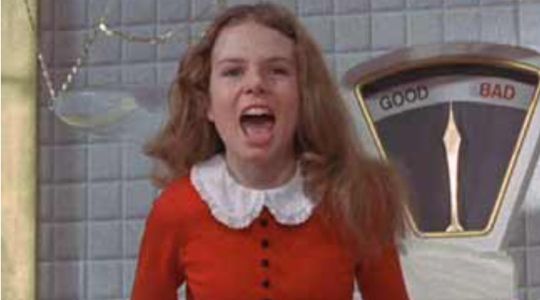
The traditional "throwing out the first dwarf" ceremony....

Dwarf tossing, a bar sport or spectacle or satire or something, was briefly in the news early last decade. Helmeted and padded little people were used as discuses or bowling balls by large, burly, often intoxicated men. It was weird; it could arguably be funny. Advocates for the unusually small got the activity banned in Florida and New York, and in Canada, while bills to ban it failed, public opinion opposing the games pretty much made dwarf tossing obsolete, like making fun of Paris Hilton.

Now comes the news that a strip joint in Ontario is reviving the sport, and  has scheduled a competition. Critics are horrified and outraged, because, well, they are horrified and outraged. Dwarf tossing, they say, is unethical.

Why? Continue reading

Comment of the Day: Ethics Blindness at Joe Pa’s Memorial Service

Paterno's inaction: bliviousness...or willful blindness?

In the ongoing debate among Joe Paterno sympathizers (and I don’t mean that pejoratively) and those who believe the late Penn State icon failed his ethical obligations miserably and deserved all the criticism he received, several interesting themes have arisen, including whether “obliviousness” is an excuse, whether critics are engaging in “wahlberging”–that is, claiming that they would have handled a difficult situation better when it costs them nothing to make the claim—and whether the Sandusky incident should be permitted to cloud Paterno’s legacy at Penn State, or should be over-shadowed by it. In this Comment of the Day, Proam covers these topics in response to a commenter who wrote, “Other posters who have tried to in any way justify Paterno’s actions/lack of action – GET REAL!”  Here is his comment, to the post, “Ethics Blindness at Joe Pa’s Memorial Service.” I’ll have some reactions at the end. Continue reading

Ethics Dunce: Sen. Rand Paul

Sen, Rand Paul, protester.

Sen. Rand Paul, libertarian and Republican U.S. Senator from Kentucky, has a choice: he can be a high elected official of the United States government, or he can engage in civil disobedience. He cannot do both.

Sen. Paul was detained today by the Transportation Security Administration in Nashville, Tenn., after refusing a full body pat-down following an image scan that did not clear him through security. I feel his pain. But a United States Senator must obey the law and cooperate with all lawful activities of the U.S. government and its agencies. If he objects to pat-downs so much, he has the power and influence to wield to try to change procedures and policies. Apparently they were not so burdensome while thousand of other citizens endure them every day.  Now that Sen. Paul is facing a feel-up from a gloved stranger, he is suddenly over-come with principle. Easy for him, too, since unlike us mortals, Senators are exempted by the Constitution from being detained while on the way to work.

For a U. S. Senator to defy a TSA agent who is attempting to keep the skies safe in the manner determined to be appropriate by the U.S government encourages and implicitly endorses defiance by everyone else.  That is a breach of Paul’s duty as a high elected official of the United States.

The Corruption Problem

“Maybe, just maybe, the legislative and judicial systems have been corrupted, by, dare I say it, corporations?”

—Ethics Alarms commenter and OWS warrior Jeff Field, in his comment regarding the weekend post, The Marianne Gingrich Ethics Train Wreck

I don’t know how Jeff reaches the conclusion that the judicial system has been corrupted by corporations. Judges, unlike legislators, do not grow rich as a result of their inside knowledge and corporate connections. Judges, unlike revolving-door Congressional staffers and lawyers, do not generally come from corporate backgrounds. The fact that a judicial decision benefits the interests of some corporations, and many do not, does not mean that the decision was not just or was influenced by more than persuasive legal arguments. Those who believe that begin with the biased and untenable position that any decision that benefits a corporation must be, by definition, wrong.

So let me put that dubious assertion aside as the result of excessive reformer’s zeal and crusader’s license, and deal with the general proposition that corporations corrupt the legislative system, and society generally. Well, sure they do, but the statement is misleading, and, I would argue, meaningless because it places disproportional importance on the corrupting influence of this one, admittedly important, societal force.

Yes, corporations can be corrupting influences. So can government, and the lure of public office. The news media is a corrupting influence on the legislature, and upon society generally. Religion corrupts; as does popular culture, with its celebration of empty celebrity, glamor and wealth. Non-profits and charities are corrupted by their tunnel vision of specific worthy objectives to the neglect of others; the civil rights movement corrupts, as does feminism and all other advocacy efforts, which often, if not usually, succumb to an “ends justify the means” ethic, which is unethical. Indeed, freedom corrupts, as does dependence. Cynicism corrupts, and corrupts with a vengeance. Ignorance corrupts; so does the belief, however well-supported, that one knows it all. Ideological certitude and inflexibility corrupts.

Education, and the cost of it, corrupts. Sports, both professional and collegiate, corrupt people, students, and institutions. Science corrupts; technology corrupts. Heaven knows, the internet corrupts. Leisure and success; triumph and defeat; wealth and poverty, love and hate, desperation, patriotism; kindness, loyalty, sex, lust; intellectual superiority, beauty, physical prowess, passion. Talent corrupts. Kindness and sympathy too.

Self-righteousness. Fear. Worry. Envy. Stupidity. Zealotry.

And, as we all know, power and the love of money.

All of these and more corrupt human beings and the institutions, organizations and governments that they make up. If individuals are corruptible, something will corrupt them, as sure as the sun rises and the quinces ripen. To focus upon any one of the limitless and abundant sources of corruption and to say, “This, above all, is the cause of our problems” is naive and unfair. By all means, we must seek ways to limit the opportunities for corruption and the damage it can do, but we must also recognize that the ability to corrupt does not mean that something or someone does not or cannot contribute much good to society as well. Heroes can corrupt, as we saw in the tragedy of Joe Paterno, but we need heroes. Leaders can corrupt, and often do, but we still need leaders.

Ultimately,  the best way to stop people and things from corrupting us is to understand what corruption is and how easy it is to be corrupted. Our inoculation is ethics, understanding right and wrong and how to recognize both, and learning to recognize when we are biased, conflicted, or being guided by non-ethical or unethical motivations. Shifting the blame for corruption away from ourselves is comforting, but intimately counter-productive. We have the power to resist corruption, just as it is within out power to select public servants who are not likely to be corrupted. It is our responsibility to do so.


Now THIS Is Professional Misconduct!


"Ed, you have to stop blaming yourself...you did nothing wrong!"

Dr. Thomas Wilson is accused of breaching professional ethical standards by having sexual relations with a patient while the doctor was still a student in Oklahoma. Normally a student’s misconduct would not result in sanctions almost two years later, after graduation and certification, but, you see, Wilson is a veterinarian, and his patient at the time of their illicit relationship was a horse.

The good doctor, who now practices at an animal hospital in Pennsylvania, is charged in Oklahoma with a “crime against nature,” but the ethical aspects of what he did go far beyond that. It is a breach of the trust with a patient incapable of  informed consent.  It is an abuse of power. It is animal cruelty. It is really, really, icky.

Are there such things as registered animal-sex offenders? I certainly hope so. Dr. Wilson should not be allowed within 100 yards of a race track, a rodeo, a farm, the Central Park carriages, or the set of AMC’s “Hell on Wheels.” The idea that he will be able to just pay a fine, go to some therapy sessions, and then blithely return to his equine practice without having to tell Mr. Ed’s owner that be has a record of horse-rape is unthinkable. Please tell me, Pennsylvania, that some kind of law protects your horses against sexual predators in sheep’s clothing?

[Thanks, I think, to Drew Curtis’s Fark for the link]

Occupy Brain Pans

Allow me to translate: "Duh!"

The latest, dumbest and most telling of the endless Occupy group protests occurs today, as 111 Occupy Wall Street spin-offs across the country engage in “Occupy the Courts,” a protest to mark two years since the 2010 landmark U.S. Supreme Court decision in Citizens United v. Federal Election Commission, which held that the government cannot ban organizational spending on political campaigns. Move to Amend, the group that is sponsoring the protests, says that the goal is to build support for a constitutional amendment that would abolish corporate constitutional rights, such as the right to free speech, and declaring that political campaign spending is not a form of speech protected by the First Amendment.

If I were optimistic and naive, I would assume that this nonsense would finally shame the imprudent members of the media, Democratic Party and Obama administration who cynically hitched their wagons to the Occupy Wall Street anvil, hoping that eventually the groups would do or say something that justified all the attention and expense lavished on them. Instead, the Occupy movement has featured rapes, robberies, beatings, riots, obscenity, anti-Semites, homeless hangers-on, demonstrators defecating on cars, a woman placing her baby on railroad tracks, another child being abandoned to shiver in a tent, a pseudo-bomb being thrown at the White House, a demonstrator shooting a rifle at the White House, violated permits, squalor, disease and rats….all while the news media showed its stripes by maintaining with a straight face that this display was no different or worse than the comparatively dignified, focused and streamlined Tea Party demonstrations. Nonetheless, the facilitators of this embarrassment in the annals of civil protest seem determined to keep the faith until it blows up into a genuine tragedy or slinks away. If Occupy the Courts won’t convince the pols and journalists that they made an epic mistake, nothing will. But at least it settles the matter. These people have no idea, none, what they are doing. Continue reading

The “I Have A Dream” Speech Ethics Train Wreck

Dr. King's familiy says this was a "performance" not a speech. Funny: I thought he was just speaking the truth. I guess I was dreaming.

Take Martin Luther King Day, turn right at the “Stopping Online Piracy Act” (SOPA/ PIPA) protests, and you get to the ridiculous fact that you are breaking the law anytime you circulate a recording or video of the Martin Luther King’s immortal “I Have A Dream” speech.

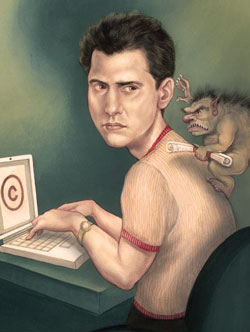
Through a baroque combination of expediency, legal maneuvers, luck and greed, this vital part of American thought, rhetoric, culture and history is restricted by the copyright laws, and will not be in the public domain until 2037, or more than 70 years after King’s words were spoken in front of the Lincoln Memorial. Now, under SOPA/PIPA, if it passes, any educational website that includes a video of the King Video could be taken down by the Feds, but that’s a side issue. I am no expert on the bill, but you can brief yourself on what all the fuss is about here, here, here, and here, the bill itself. Similarly, if I tried to explain the legal process by which courts agreed that a critical chapter in American history should be unavailable to Americans unless they pay a fee, it would 1) bore you stiff, 2) confuse you, and 3) probably be wrong. So I recommend this post by Alex Pasternak over at Motherboard, who does a great job laying out the whole, tortuous, tragic story.

I’ll concentrate on the ethics train wreck feature, of which the basic elements are these: Continue reading

Creating Captain Costanzas

Metaphor

I think I stopped finding George Costanza funny when I saw the “Seinfeld” episode in which he panicked at a kids party after smelling smoke and trampled the children rushing to be the first out the door. (His callous reaction to his fiancée’s death from licking envelopes had paved the way for my inability to laugh at George.) The thought of a real-life George Costanza, the most unethical character on a show about unethical characters, serving as the captain of an imperiled ship full of passengers is horrifying, but that’s basically what befell the unsuspecting tourists on board the cruise ship that tipped over after hitting a rock off the coast of Italy. Having caused the accident, it appears, by irresponsibly changing course, captain Francesco Schettino hit the life boats before most of his passengers, and claimed to be directing the evacuation from the relative safety of a lifeboat as he defied orders from the Italian Coast Guard to return to the ship. Continue reading

Ethical Lawyers? There’s an App For That!

At least in New York.

The New York bar has launched a Mobile Ethics App that allows judges, lawyers and law students to access legal ethics advice from their smartphones.

The State Bar has made its catalog of more than 900 legal ethics opinions,available on an app for iPhones, Android phones and BlackBerrys, as well as iPads, through their respective app marketplaces. “Ethics questions can arise in many different contexts. The NYSBA Mobile Ethics App will allow judges, lawyers and others to access the opinions of the Association’s Professional Ethics Committee on the spot from the convenience of their mobile devices,” said Association President Vincent E. Doyle III of Buffalo (Connors & Vilardo). “The State Bar is pleased to provide this service to its members and the legal community.”

This is a terrific idea, and it is to be hoped that other bar associations follow suit.

Now if someone will  develop an app for government ethics…

[Thanks to Robert Ambrogi for the news]

UPDATE: Shortly after this was posted, I learned that another bar association has an app for ethics: the Alabama Bar, which launched the first organized code of professional responsibility that was adopted by the American Bar Association in 1908.

Ethics Hero AND Ethics Dunce: Secretary of the Interior Ken Salazar

U.S. Interior Secretary Ken Salazar scores a rare twin honor: He is an Ethics Dunce and an Ethics Hero in the same week.

Occupier, or just a vistor, Mr. Secretary?

First the good news, the Ethics Hero part.  Salazar has given the National Park Service  30 days to fix the inaccurate, misleading and truncated quotation on the Martin Luther King Jr. National Memorial. He did this after giving the inept King Memorial Foundation plenty of time to do its job. It didn’t, and he took the initiative. Harry Johnson, president of the Foundation, told the AP he wasn’t sure what changes could be made. Well, how about using a real quote instead of a made-up one that makes Martin Luthor King sound like a preening Newt Gingrich?

Chiseled into the monument’s left flank because there wasn’t room for the actual quote is “I was a drum major for justice, peace and righteousness.” What King really said in a 1968  speech was: “If you want to say that I was a drum major, say that I was a drum major for justice. Say that I was a drum major for peace. I was a drum major for righteousness. And all of the other shallow things will not matter.” When Maya Angelou and others complained that the pompous-sounding non-quote make King sound like a boasting egotist (and one speaking from the grave!), the Foundation shrugged and erected the monument unchanged. Continue reading